Home / About us

About us

Laser Ray Tools helps South African workshops keep fibre and CO2 laser machines running with practical repair, parts and testing support. From our Boksburg base, we work with fabricators, signage teams and job shops that need short downtime and straight answers.

About us

Built In Boksburg For Workshop Reality

Laser Ray Tools started in 2011 with one clear focus: repair laser machines and cutting heads for people who depend on them every day. We are based in Boksburg, Ekurhuleni, close to heavy industry, transport routes and the kind of workshop work that cannot wait until next week. Our clients include cutters running single shifts and plants running long hours, often with pressure from delivery dates, load-shedding interruptions and equipment that has already had a hard life.

We work on fibre and CO2 systems, and we keep the service practical. That means inspection, fault finding, part replacement, alignment, pressure testing and return to service checks. If a head has been knocked out of line, worn through normal use or damaged in a collision, we look at the full assembly and not only the obvious broken piece. That approach saves time and helps prevent repeat failures.

  • Boksburg base with support for nearby industrial areas
  • Service for workshops, fabricators and signage plants
  • Short turnaround thinking for production downtime

What We Repair And Why It Matters

Laser cutting equipment is sensitive to dust, heat, vibration and poor handling. A small issue in a nozzle seat, lens window or sensor ring can cause uneven cuts, burnt edges or repeated alarms. In coastal areas, humidity can make contamination and corrosion worse; inland, fine metal dust and daily use can wear parts faster than expected. We see all of it, from routine wear to the aftermath of a hard collision.

Our repair work covers the parts that keep a cutting head performing properly, plus the checks needed to confirm the machine is ready for work again. We keep the process focused on the actual fault, with no wasted steps. If a component can be restored safely, we do that. If replacement is the better option, we explain why and supply the correct part.

  • Strip and inspection
  • Collision damage repair
  • Nozzle seat restoration
  • Lens replacement and window replacement
  • Sensor ring service and ceramic holder change

How Our Team Works On Site And In The Workshop

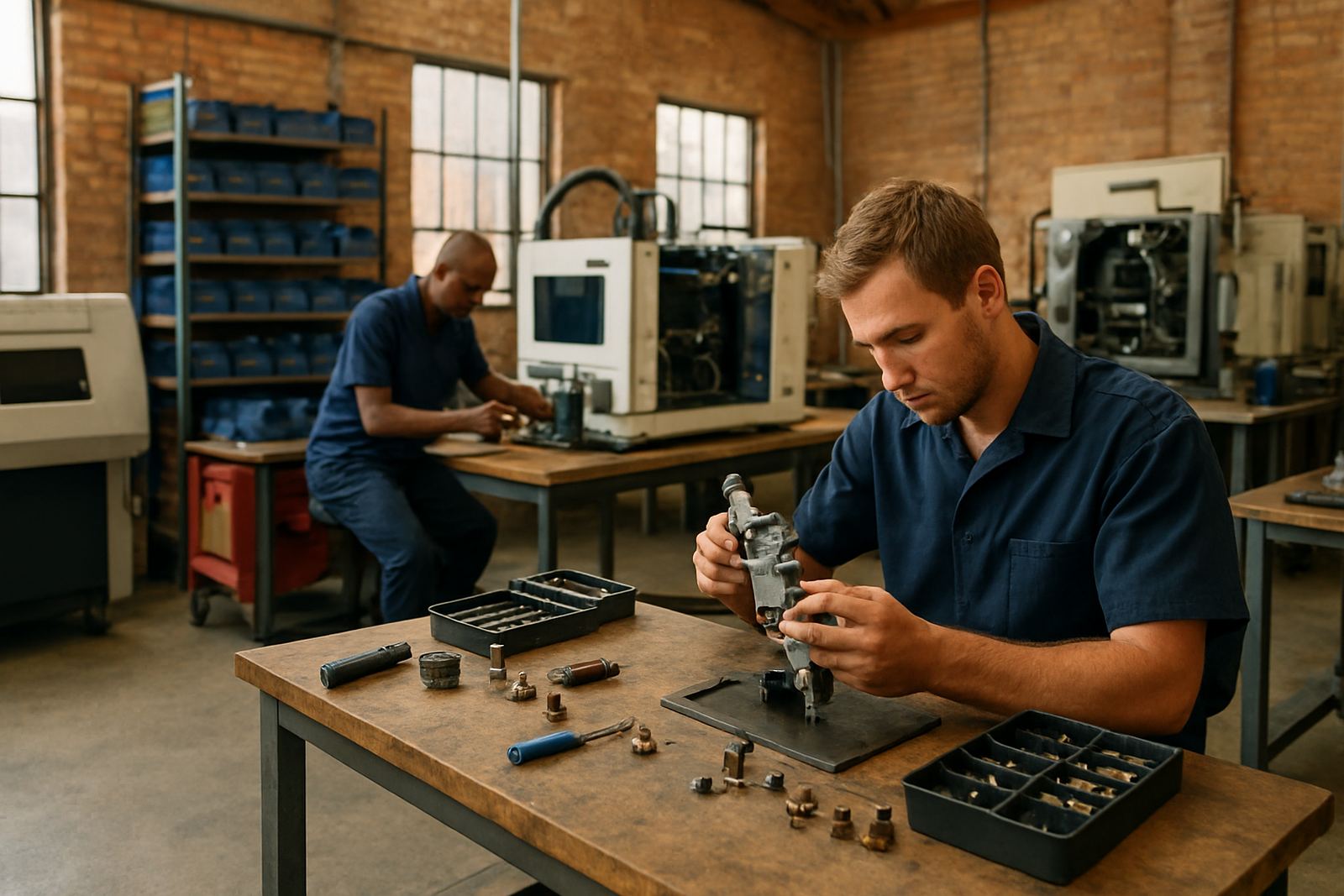
Some jobs are best handled on the bench, where the head can be cleaned, measured and tested in a controlled space. Other jobs need on-site attendance because the machine is large, the production line cannot be moved, or the fault needs to be seen in the actual working setup. We handle both. That gives customers in Johannesburg, Pretoria, Vanderbijlpark, Durban and Cape Town a workable route, whether they are dealing with a one-off breakdown or an ongoing maintenance plan.

The team is structured for practical support. Sibusiso Mthembu oversees the business and customer direction, Johan van Rensburg leads technical work, Lerato Ndlovu keeps service flow moving, Ayesha Khan handles parts and stores, Thabo Molefe covers field service, and Megan Naidoo manages workshop administration. Each person has a clear role, which helps us stay organised when a machine is down and every hour counts.

  • Bench repair for detailed head work and testing
  • On-site service for urgent fault finding and restoration
  • Parts supply matched to the fault and machine type
  • Clear handover once the head passes checks

Service Values That Keep Production Moving

Our values are simple. Be honest about the fault, do the repair properly and keep the customer informed. Workshop people do not need grand claims, they need straight information on what failed, what can be saved and what must be changed. That is how we work from the first inspection to the final return to service test.

We also believe in keeping repair work local where possible. A head that can be serviced instead of replaced outright can save a business a lot of Rand, especially when the machine is part of a tight production schedule. At the same time, we do not cut corners. If a component is too worn, warped or contaminated to trust, we say so. Better to stop and fix it properly than send it back and risk another breakdown within days.

  • Honest fault reports and practical repair advice
  • No unnecessary replacement of usable parts
  • Work done with production pressure in mind
  • Careful testing before the unit goes back into service

Support Across South Africa's Working Centres

From our base in Ekurhuleni, we support customers across the main industrial corridors. Local branches and service areas help us respond to the needs of Boksburg, Johannesburg, Pretoria, Germiston, Kempton Park, Vanderbijlpark, Durban and Cape Town. Those are places where fabrication never really stops, and where a machine failure can affect an entire schedule, not just one job.

We understand the different conditions that workshops face. Inland sites often deal with heat, dust and long operating hours. Coastal sites can face corrosion and moisture that affect sensitive components. Municipal compliance matters too, especially where workshops need tidy systems and safe handling of gases, air lines and machine access. We work with that reality, not around it.

  • Boksburg Support
  • Johannesburg Support
  • Pretoria Support
  • Vanderbijlpark Support
  • Durban Support
  • Cape Town Support
  • Germiston Support
  • Kempton Park Support

Getting A Laser Head Back To Work

The repair process starts with an enquiry through our contact page, followed by a discussion of the fault, the machine type and the urgency of the job. From there we decide whether the unit should come in for bench work or whether an on-site visit is the better option. If we need to test pressure, inspect the gas path, check alignment or confirm the return to service result, we build that into the job from the start.

Our standard service steps include inspection, internal cleaning, gas path service, head alignment check, bench pressure test and return to service test. That structure helps us keep the work consistent and gives the customer a clear idea of where the machine stands before it goes back into production. It is practical, careful and built for businesses that need their laser gear to earn its keep.

  • Diagnosis before parts are ordered
  • Repair path based on actual wear or damage
  • Final testing before handover

Questions we get asked

What types of laser machines do you repair?

We repair fibre and CO2 laser machines, with a focus on cutting heads, wear parts and performance faults that affect cutting quality and uptime.

Do you work on site as well as in the workshop?

Yes. Some repairs are best done on the bench, while others need on-site attendance at the customer’s premises in Gauteng or further afield.

How do customers request support?

Customers reach us through the enquiry form on our contact page. We then assess the fault, advise on the next step and arrange the most suitable service path.

Planning something? Send the team a message.

Contact form