

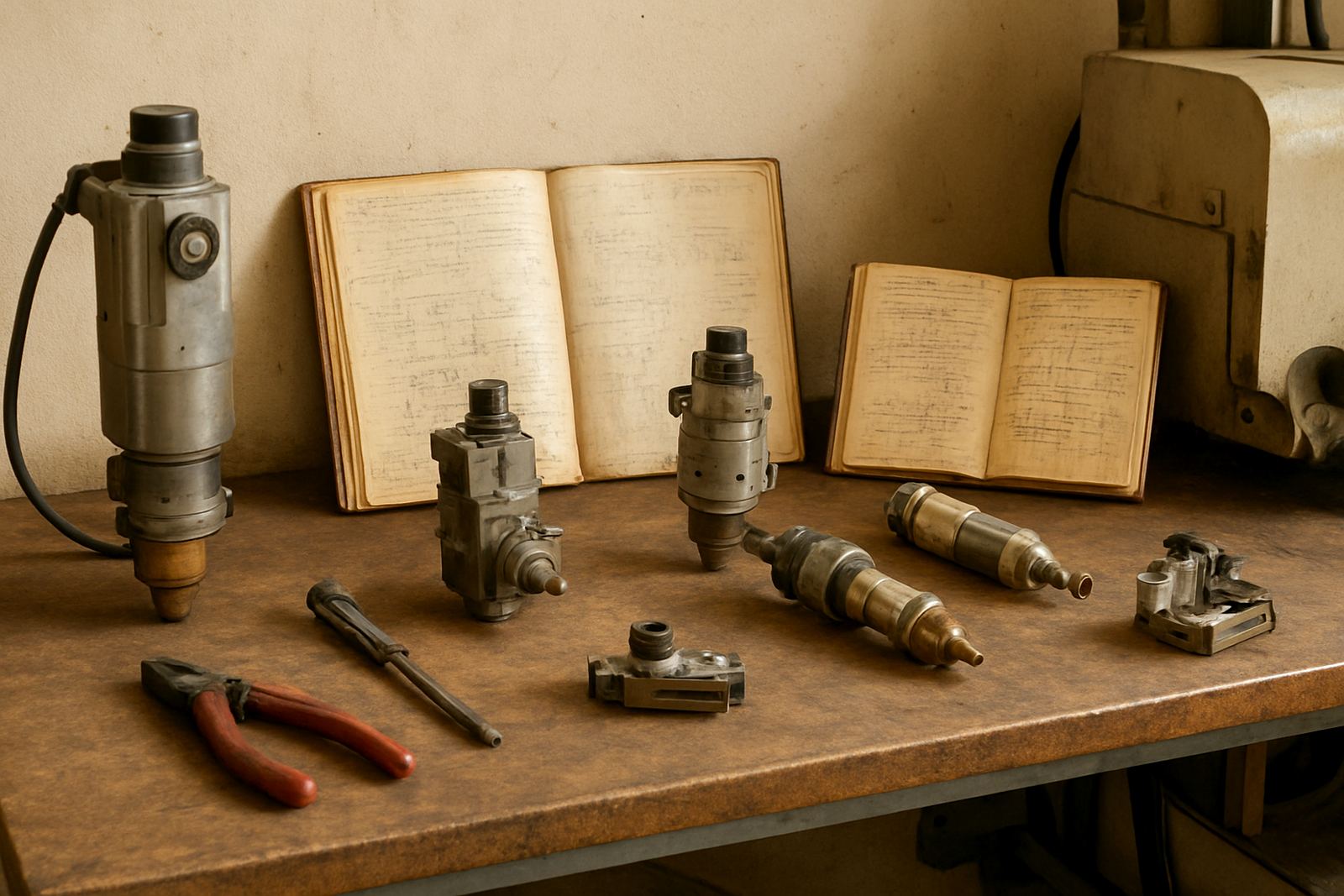
2011: A small workshop built around urgent repairs
Laser Ray Tools opened in Boksburg in 2011 with one focus, repair laser machines and cutting heads quickly enough to keep local work moving. The first jobs came from job shops and metal fabricators that needed help with damaged nozzles, worn lenses and machines that had gone out of alignment after a crash or bad wear. In the early months, the work was straightforward but critical: strip the head, inspect each part, clean what can be saved, and replace what cannot. That approach set the tone for everything that followed.
From the start, the team understood that downtime costs more than the repair itself. A machine sitting idle because of a cracked protective window or a dirty gas path can push a full day of work behind schedule. So the service model was built around practical response times, clear fault finding and honest parts advice. No fancy talk, just the kind of support workshops need when a production line is waiting.
2012 to 2014: Service routines take shape
As more customers came through from Boksburg, Germiston and Kempton Park, the repair process became more structured. By 2012 the workshop was handling repeat work on fibre and CO2 systems, with regular strip and inspection tasks, nozzle seat restoration and sensor ring service becoming part of the weekly routine. This period also saw a stronger focus on bench testing, because a head that looks fine on the outside can still fail under pressure if the air and gas paths are not right.
In 2013 and 2014 the team added better intake checks, parts control and return to service testing. That helped reduce repeat faults and made it easier to track whether a repair had solved the original problem or only masked it. Customers began to rely on the fact that a head would be checked properly before it left the bench or went back on site. A small thing like a loose ceramic holder or a damaged window can cause a poor cut edge, and those are the details that were being caught more often.
- Strip and inspect work on damaged cutting heads
- Lens and window replacement for worn optical parts
- Collision damage repair after crashes or table strikes
2015 to 2018: Wider reach beyond Ekurhuleni
Once the repair process was stable, the next milestone was reach. By 2015 the business was supporting workshops beyond Boksburg, with calls and collections coming in from Johannesburg, Pretoria and Vanderbijlpark. The work was still centred on the bench, but on-site help became more common for machines that could not be moved easily or needed quick assessment where they stood. This suited larger job shops and signage plants that could not afford long delays while waiting for a head to be sent away.
During these years, the service list grew in a practical way rather than by chasing trends. Internal cleaning, head alignment checks and gas path service became standard parts of the repair flow. In South African conditions, dust, workshop heat and load-shedding all play a part in fault development, and the team learned to look at the whole setup not only the broken component. A head can be repaired in a day, but if the machine is running with dirty air lines or poor maintenance, the fault comes back. That lesson shaped the way advice was given and the way each machine was handed back.
2019 to 2021: Keeping pace through harder operating conditions
From 2019 onward, customers were asking for faster turnaround and more direct support because production schedules were tighter and equipment was working harder. The business responded by tightening its parts handling and increasing the speed of diagnosis. Nozzle seat restoration, sensor ring replacement and ceramic holder changes became common on heads that had seen long service or suffered collision wear. This period also brought more work from coastal and inland clients who needed stable performance across very different environments.
The team had to pay closer attention to contamination, storage and transport. Fibre systems in particular need careful handling, while CO2 units often show wear in different areas depending on usage patterns. The workshop grew into a place where diagnosis, bench repair and return to service checks were all done with the same level of care. For customers this meant fewer surprises, clearer quotes and a better chance of getting the machine back into production without repeated faults. The company name began to stand for one thing above all else: keeping cutters running.
- On site support for urgent production stoppages
- Parts supply for nozzles, lenses and protective windows
- Bench pressure test before handover
2022 to 2024: A stronger service team and wider support network
By 2022 the business had developed into a fuller service operation with clear roles across the team. Sibusiso Mthembu led the company direction, Johan van Rensburg handled senior technical work, Lerato Ndlovu managed service coordination, Ayesha Khan oversaw parts and stores, Thabo Molefe covered field work and Megan Naidoo kept workshop administration moving. That structure made it easier to handle jobs from Durban, Cape Town and the larger Gauteng centres without losing track of a machine’s fault history or the parts used in a repair.
This was also the period when customers began to expect a more organised service journey. They wanted diagnosis, a proper report on the fault and a sensible plan for repair or replacement. The company met that need by separating jobs into clear stages: inspection, repair, test and return to service. It is a simple system, but it works. For fabricators running night shifts or filling municipal and private contracts, the value lies in getting accurate information early, so the right decision can be made before downtime grows.
Today: Practical laser support from Boksburg to the rest of South Africa
Today Laser Ray Tools continues to work from its Boksburg base with support for Johannesburg, Pretoria, Vanderbijlpark, Durban, Cape Town, Germiston and Kempton Park. The work still comes down to the same core promise made in 2011: repair fibre and CO2 laser machines and cutting heads properly, then test them before they go back into service. Whether the job is a worn lens, a broken protective window, a collision damaged head or a deeper internal fault, the aim is to keep downtime short and results predictable.
What has changed over the years is the scale of support. The workshop now handles more varied machine faults, more parts requirements and a broader range of production pressures. What has not changed is the mindset. The team still treats each head as a working part of a production system, not just a component on the bench. That practical view has carried the business from its first year of trading to today, and it remains the reason so many South African workshops turn to Laser Ray Tools when uptime matters most.
Customers still reach the team through the enquiry form on the contact page, and each request is handled with the same aim that guided the early years, fix the fault properly and get the machine back to work. It sounds simple because it is, but in laser repair, that kind of consistency is what keeps businesses moving.