Jet Park workshop brief and the pressure on uptime
The client was a busy job shop in Jet Park, Ekurhuleni handling short runs and repeat work for local manufacturers. Their fibre laser cutter was still running, but the cutting head had taken a hard knock during production and the machine started showing inconsistent cuts, spatter on the nozzle and poor edge finish on thinner sheet. For a subcontract workshop that earns by keeping material moving, even a small fault can back up the whole cutting queue.
The brief was simple enough to say and hard to deliver quickly: repair the head, confirm which parts were still usable, replace the damaged items only where needed and get the machine back to cutting without dragging the job out for a week. The workshop could not afford long downtime because it was already booked on mild steel, stainless steel and aluminium work for several customers in Johannesburg and the East Rand.
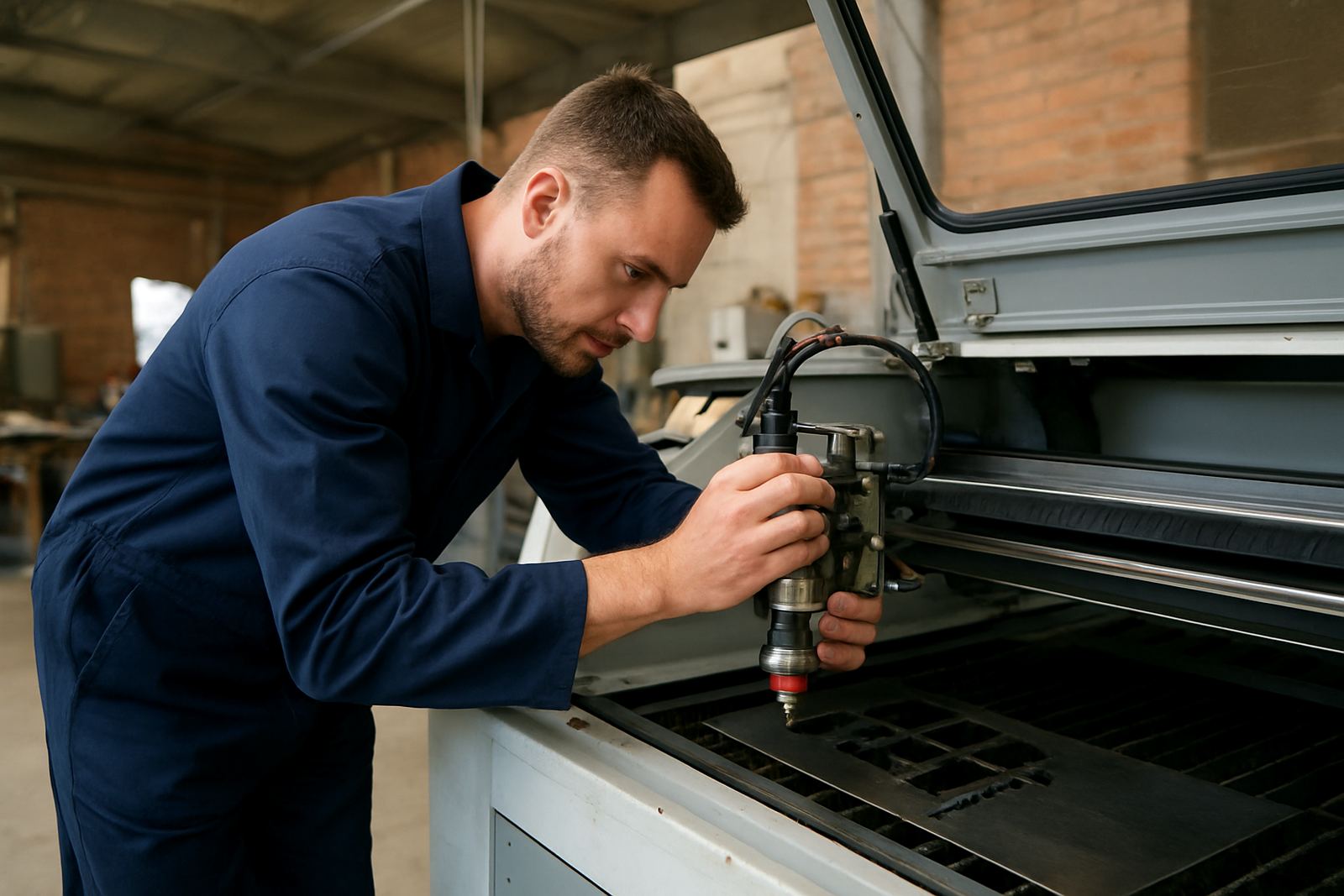
We collected the head for bench work and started with a strip and inspection. That gave us a clear picture of the damage and let us separate the collision issues from normal wear. The head had signs of impact at the nozzle seat and protective window area, plus contamination in the internal path. We also found that one of the alignment points had shifted, which explained why the cut had gone off centre on some jobs.
Strip, inspection and the parts that needed attention
On the bench we stripped the head fully and checked every working section, from the external body to the internal gas path. The lens, protective window, nozzle seat and ceramic holder all got measured and inspected against the cut symptoms. Where parts were still within tolerance we kept them. Where the collision had marked or distorted a component, we replaced it with the correct matching item and made sure the build stayed true to the original head setup.
- Nozzle seat restoration to recover concentricity and stable gas flow
- Lens replacement where the optic had been marked by contamination and heat
- Protective window replacement to remove strike damage and clouding
- Ceramic holder change for a clean, secure fit
- Sensor ring service and internal cleaning to remove fine dust and residue
The key was not to chase a full replacement when repair would do the job properly. That keeps cost down and avoids unnecessary lead time. It also means the workshop gets a head that is matched to the machine and the cutting parameters they already use on site. In this case, the head body itself was still serviceable, so the rebuild made more sense than swapping out the entire unit.
Bench repair work and the checks before return
Once the damaged parts were out, we cleaned the head internally and checked the gas path for dirt, build-up and any signs of leakage. A laser head can look fine on the outside and still lose performance if the air path or seating surfaces are not right. We ran a head alignment check, then pressure tested the assembly on the bench so the client was not taking a guess back to production.
After that we did a return to service test and confirmed that the rebuilt head was holding its alignment and pressure under normal working conditions. The nozzle sat correctly, the window was cleanly seated and the focus path was stable. For a shop working under load-shedding and tight deadlines, that matters as much as the repair itself because they need predictable performance when the power is back and the orders are waiting.
- Strip and inspection completed first to confirm the actual damage
- Optical parts checked for heat marks, chips and contamination
- Gas path cleaned and tested before final assembly
- Alignment checked against the machine setup before release
- Pressure test carried out on the bench before dispatch
The full turnaround took 2 weeks from collection to return-to-service sign off. Part of that time was spent waiting on the client to confirm the machine symptom list and part condition, which helped us avoid changing items that were still serviceable. The actual workshop work moved quickly once the head was on the bench.
What changed once the cutter was back in production
After reinstalling the head, the workshop reported cleaner cut edges, better pierce consistency and less dross on the common thicknesses they run every day. The head held its setting through a normal production shift, which was the real test. A collision repair is not just about making the part look tidy. It is about getting the machine back to a point where the operator can trust the cut without constantly stopping to check the edge.
The restored head also reduced the amount of rework on parts that had previously been coming off the bed with rougher edges. That meant less grinding, less operator frustration and fewer wasted sheets. For a subcontract shop in Jet Park, that translates directly into better output because the machine can stay on the cutting program instead of drifting into corrections and repeat checks.
The client asked for a repair that would hold up in normal workshop conditions, including dust from cutting, regular nozzle changes and the stop-start rhythm that comes with mixed jobs. We made sure the head was returned in a state that could cope with that, not just pass a quick test on the bench.
Why this repair suit a busy subcontract shop
This kind of work is common in production shops that run hard and cannot afford to wait for a full machine overhaul. A fibre laser cutting head can be repaired successfully when the body is still sound and the damage is limited to the wear parts and alignment surfaces. That is where practical diagnostics matter. You do not need to replace everything when the right strip down, inspection and parts selection will restore the head properly.
For Jet Park and the wider Ekurhuleni industrial area, we often see the same pattern: a machine is still earning, then one knock or one contaminated cut turns into a performance problem. The right response is to isolate the fault, rebuild the damaged section and test the unit before it goes back to the floor. That keeps the downtime short and avoids chasing symptoms one by one.
- Best for fibre and CO2 laser systems with head or optical faults
- Suitable when the machine is still mechanically sound
- Helps reduce downtime after collisions, wear or contamination
- Works for job shops, signage plants and metal fabricators
We would handle this job the same way again: bench strip, inspect properly, replace only what was damaged, verify alignment and pressure, then return the head with a clear sign-off. It is a practical process and it works because it respects the actual condition of the equipment rather than guessing at the cause.
Aftercare, follow-up and the next service window
Once the head was back in service, we advised the client to keep an eye on nozzle wear, protective window condition and any repeat signs of strike marks during the next production cycle. That kind of follow-up is important after a collision repair because a fresh fault can show up quickly if the machine has not been checked around the same time. A short review after the first few shifts usually catches anything early.
If the machine starts showing gas instability, poor pierce results or off-centre cutting again, the next step is another alignment and pressure check, not a blind parts swap. That approach saves time and avoids unnecessary spending. It also fits the reality of a busy shop that needs reliable laser uptime more than anything else.
From our base in Boksburg, we support workshops across Johannesburg, Pretoria, Vanderbijlpark, Durban and Cape Town, with bench repair and on site service where needed. For this Jet Park job, the result was a cutter back in production with the head performing properly again, and the workshop able to get on with the next batch instead of waiting on a major delay.
Key facts
| Project type | Collision damaged laser cutting head rebuild |
|---|---|
| Client location | Jet Park, Ekurhuleni |
| Work type | Bench repair and return-to-service testing |
| Machine types | Fibre laser system, with CO2 support if needed |
| Turnaround | 2 weeks |
| Service items | Strip And Inspection, Collision Damage Repair, Nozzle Seat Restoration, Lens Replacement, Window Replacement, Sensor Ring Service, Ceramic Holder Change, Internal Cleaning, Gas Path Service, Head Alignment Check, Bench Pressure Test, Return To Service Test |