What a lens cartridge does in a laser cutting head
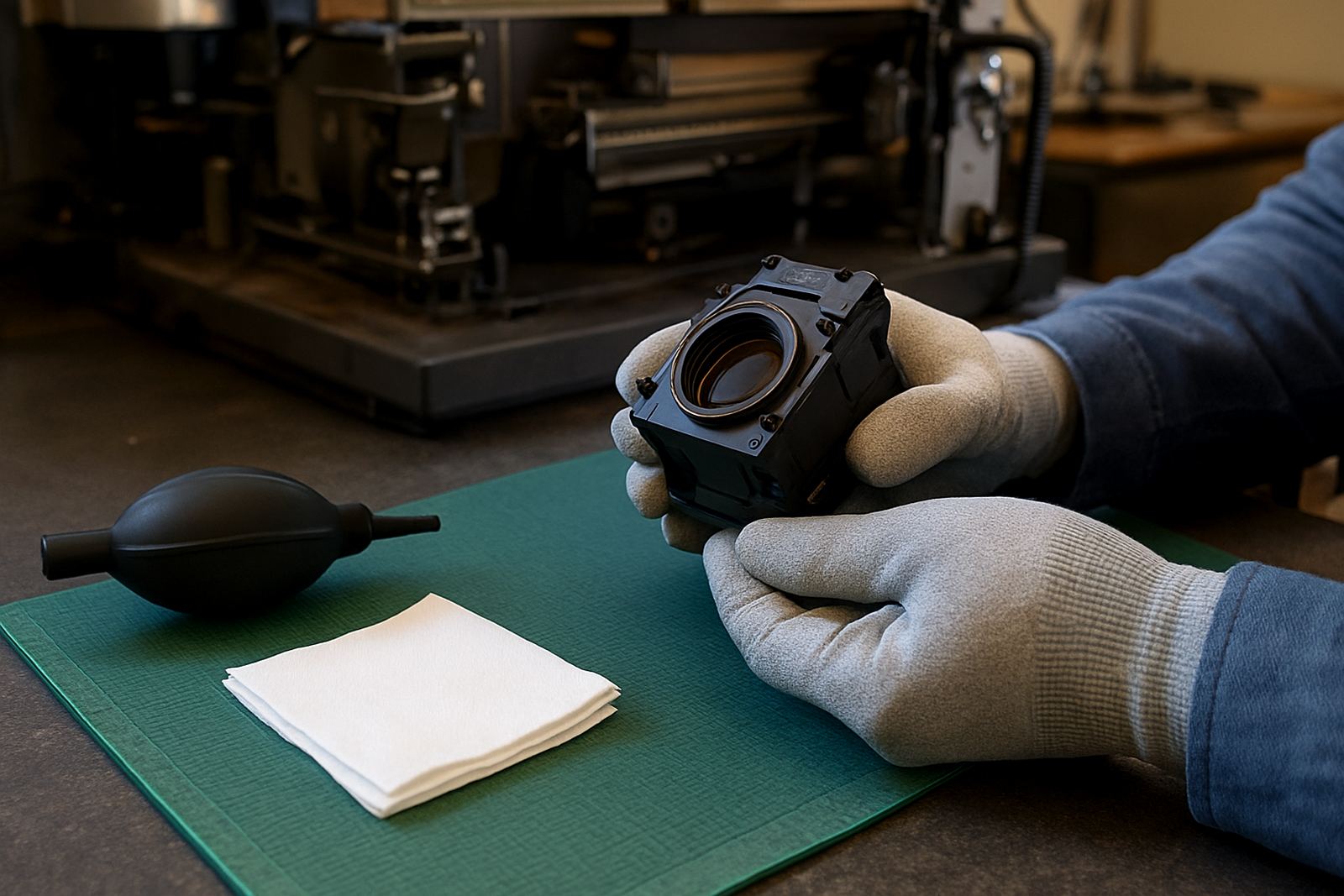
A lens cartridge holds the focus lens and keeps it aligned inside the cutting head, with the protective window and seal surfaces working together to keep dust, fumes and spatter out of the optical path. When the cartridge is clean and true, the beam stays stable, the assist gas works as intended and your cut edge is easier to control.
Once the cartridge has heat marks, contamination, a warped seat or damage from a collision, the head can start cutting poorly even if the machine itself is still in good condition. You may see burrs, rough edges, poor pierce performance or a cut that starts clean then fades across the sheet.
Our lens cartridge service is meant for exactly that point. We strip the cartridge, inspect the critical surfaces, clean the assembly and replace the worn parts that affect focus and beam protection. It is practical work for South African shops that need the laser back on line, not guesswork.
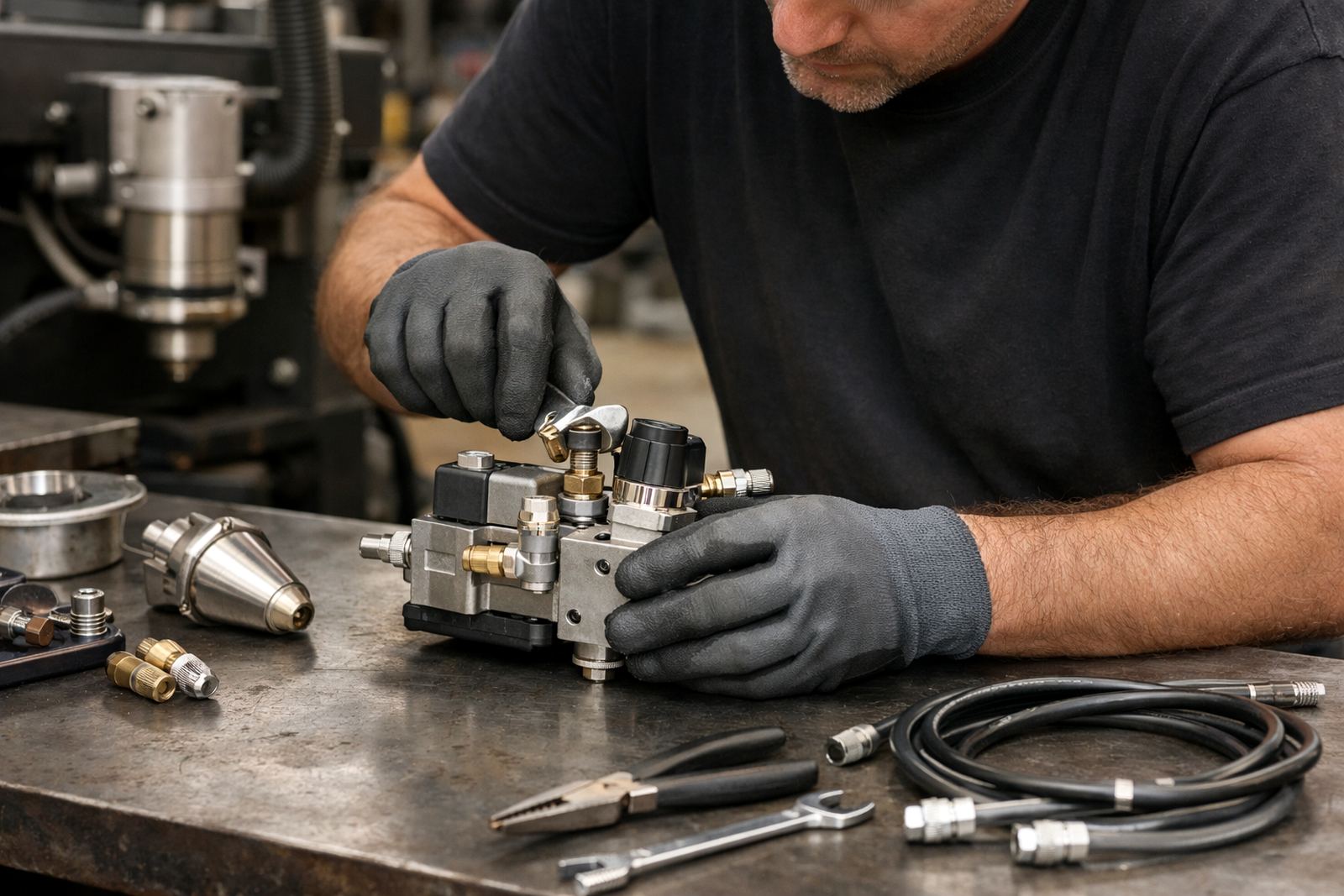
Cleaning, inspection and replacement on the bench or on site
We handle lens cartridge service on the bench in Boksburg or on site where access and production planning make more sense. For busy fabricators in Johannesburg, Pretoria, Vanderbijlpark, Durban and Cape Town, we plan the visit around machine access, power isolation and the condition of the head.
The service normally includes strip and inspection, internal cleaning, cartridge condition checks, lens replacement if needed and a return to service test. If a collision has pushed the head out of alignment, we also check the nozzle seat and related optical parts before handing the machine back.
- Contamination from cutting fumes, oil mist or dust
- Heat damage from long shifts or poor cooling conditions
- Spatter marks from piercing or unstable gas flow
- Wear on seals, seats and retaining parts
- Damage after a nozzle strike or head crash
Sizes and cartridge options we work with
Different laser heads use different cartridge layouts, but the service approach stays the same: protect the optics, restore the seating surfaces and make sure the cartridge fits properly in the cutting head. We work with common cartridge formats used on fibre and CO2 systems in South African workshops, from smaller sheet metal machines to larger production cutters.
Options depend on your head model and the optical stack in use. In practice, that means checking the lens diameter, focal length, retaining method and the type of window or sensor ring fitted around the cartridge. If the wrong part goes in, cut quality suffers and the head can be damaged again, so we always verify before fitting.
- Standard focus lens cartridge service
- Cartridge service with protective window replacement
- Cartridge service after collision or head strike
- Cartridge service for heat or contamination issues
- Matched replacement parts supplied where the old parts are not serviceable
Where this service suits best in local production
Lens cartridge service suits job shops, signage plants, tube and plate cutters, general fabricators and maintenance teams that run lasers every day. If you cut mild steel, stainless steel, aluminium or coated sheet, the cartridge carries a lot of the wear from heat, fumes and repeated start-stop cycles. Coastal humidity in Durban and salty air near the coast can also speed up contamination and corrosion on exposed parts.
It is especially useful when a machine is still running, but the cut edge has started changing from shift to shift. A quick lens cartridge inspection can catch the problem before it becomes a full head rebuild. That saves material, gas and a lot of wasted time when load shedding already makes planning harder.
- High-volume sheet cutting lines
- Short-run workshops with varied material thicknesses
- Sites running long shifts and weekend catch-up work
- Plants where dust, oil mist or fume extraction is inconsistent
Installation, power requirements and gas conditions
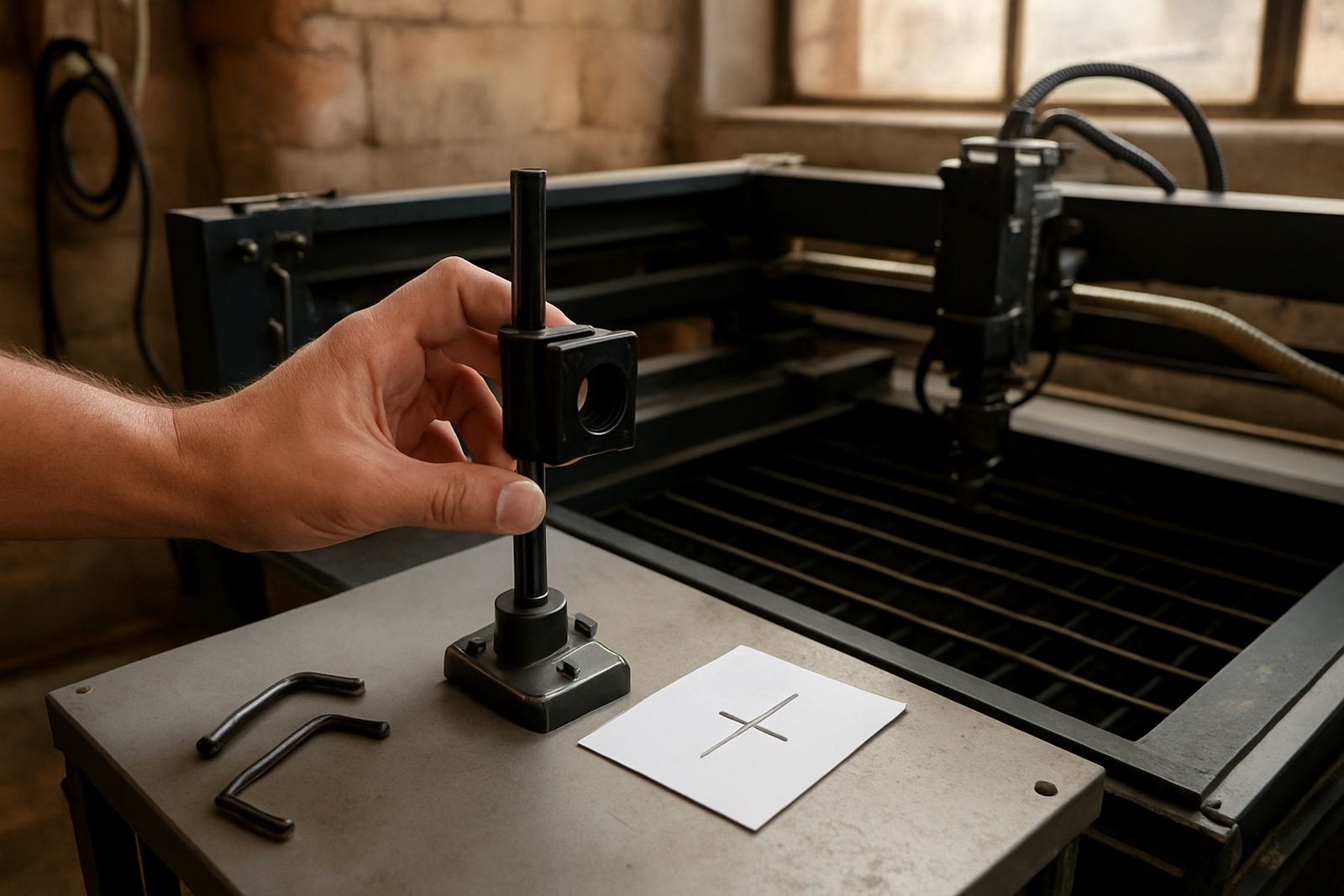
Lens cartridge replacement is not just a parts swap. The head must be isolated correctly, the optics handled in a clean area and the seating checked before the machine is returned to production. We confirm the cartridge orientation, seal condition and head alignment, then run a pressure and cutting check before release.
For the machine itself, stable electrical supply matters. Clean power helps protect the controller and head electronics, while proper earthing reduces nuisance faults during long shifts or after outages. Assist gas quality also matters, because dirty or wet gas can cloud the cartridge faster than expected. If your gas line has moisture or oil carryover, the new cartridge can fail early.
- Isolate the machine and lock out power before any head work
- Use dry, filtered assist gas at the correct pressure
- Check cooling performance on water-cooled systems
- Confirm there is no stray spatter path into the head
- Keep the lens path clean during installation
Care after service and what to check when ordering
After service, keep the lens cartridge cleaner for longer by checking daily wipe points, extraction performance and the condition of your nozzles. Small contamination builds up fast on busy machines, so a short routine at the start of each shift is worth it. If the machine starts leaving dross or the pierce sound changes, stop and inspect before more damage is done.
When you order or request service, send the head model, machine type, fault symptoms and any photos of the damaged area. That helps us bring the right parts and avoid delays. If the cartridge has been hit, tell us whether the machine is fibre or CO2, what material was being cut and whether the fault started after a collision or gradually. Those details usually point to the real cause quicker than a long fault description.
- Machine make and head model
- Fibre or CO2 system type
- Lens diameter and focal length if known
- Symptoms such as burr, poor pierce, burn marks or cut fade
- Any recent crash, alarm or cooling issue
Why South African workshops call Laser Ray Tools
Laser Ray Tools is based in Boksburg, Ekurhuleni and supports fibre and CO2 laser machines across South Africa with bench repair and on-site service. Our team handles diagnosis, parts supply and return to service work for workshops that need the cutter back in production without unnecessary delay.
Sibusiso Mthembu leads the business, with Johan van Rensburg, Lerato Ndlovu, Ayesha Khan, Thabo Molefe and Megan Naidoo supporting the workshop and field work. Clients reach us through the enquiry form on our contact page, and we cover Boksburg, Johannesburg, Pretoria, Vanderbijlpark, Durban, Cape Town, Germiston and Kempton Park through our local support areas. If the lens cartridge is the part holding your head back, we can inspect it, service it and tell you plainly whether it can go back into work or needs replacement.
Key facts
| Service type | Cleaning, inspection and replacement of lens cartridges |
|---|---|
| Machine types | Fibre laser and CO2 laser cutting systems |
| Where serviced | Bench in Boksburg or on-site at client premises |
| Common fault signs | Heat marks, contamination, poor cut edge, pierce problems, collision damage |
| Related checks | Nozzle seat, protective window, alignment, pressure test, return to service test |
| Coverage | Johannesburg, Pretoria, Vanderbijlpark, Durban, Cape Town and surrounding areas |