
What the pneumatic valve does in a laser cutting system
The pneumatic valve controls the flow and switching of assist gas to the cutting head. In a typical laser cutting setup, that means opening and closing the gas path at the right moment, then holding the correct pressure while the machine cuts mild steel, stainless steel or aluminium. When the valve sticks, leaks, or switches late, you get poor edge quality, inconsistent pierce results and wasted gas.
We service valves used on fibre and CO2 machines in job shops, signage plants and fabrication bays where the machine runs long shifts and cannot sit idle for long. The problem is often not the valve alone. Dirty air, moisture in the line, worn seals, damaged solenoids or a tired pressure control section can all cause the same fault. Our job is to find the actual cause and sort it properly, not just swap parts and hope for the best.
Valve service options for fibre and CO2 machines
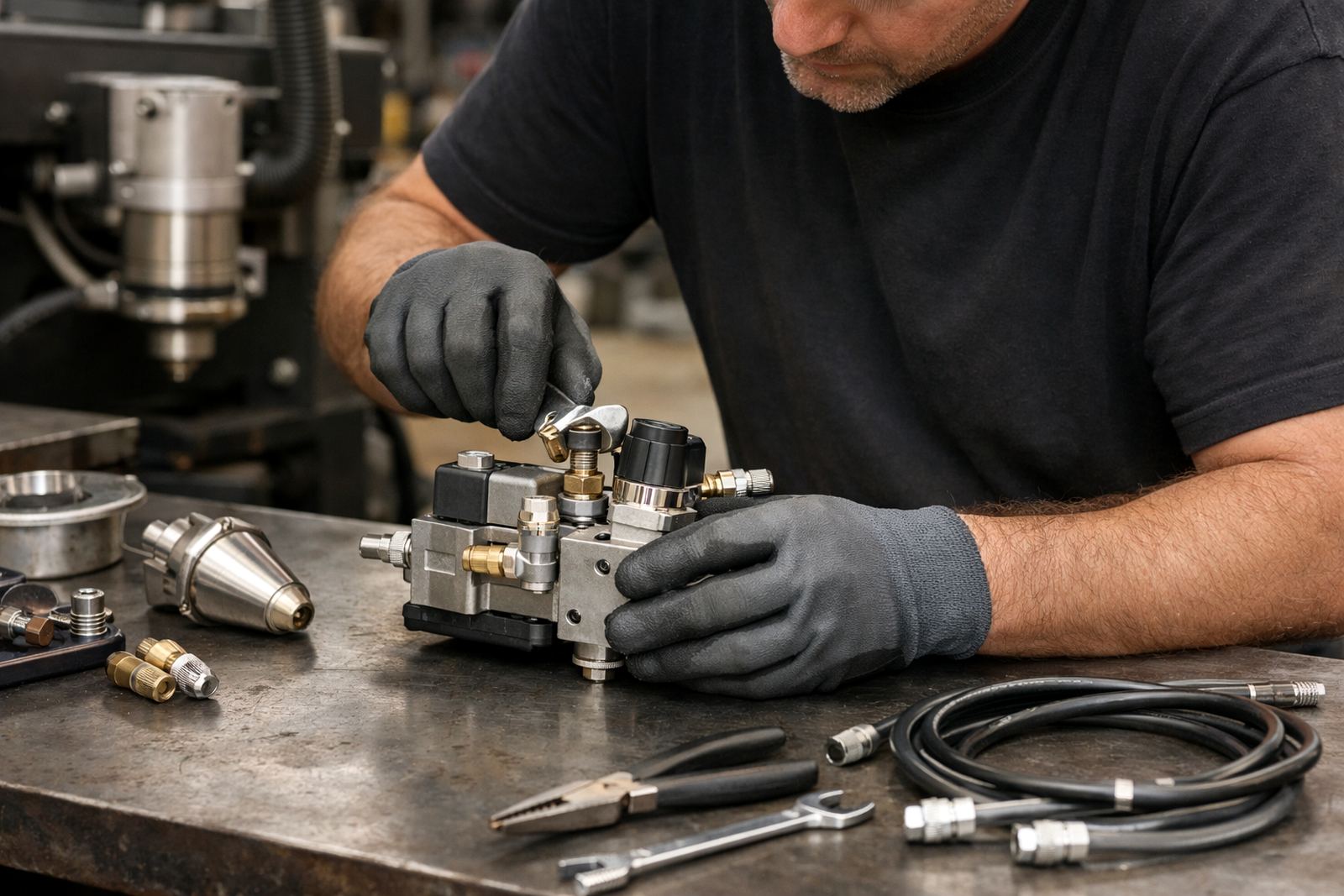
Our pneumatic valve service covers strip cleaning, fault finding and replacement where needed. Some valves can be restored on the bench after a proper inspection. Others need new internal seals, a new coil, or a full replacement because the body is scored or the switching response is too slow. We also check the surrounding fittings because a cracked push-in connector or damaged tube can look like a valve fault.
- Cleaning of internal passages and spool areas
- Seal inspection and replacement where possible
- Solenoid coil checks and replacement if required
- Pressure switching fault diagnosis
- Leak testing before return to service
Where a machine has had a head collision or repeated pressure alarms, we can check the related gas path parts at the same time. That includes nozzle condition, fittings near the head and the control response from the main gas line. In many cases the valve is only one part of the issue, so the service has to be complete or the fault comes back.
Where this service suits best
This service suits workshops that cut daily and need steady assist gas control for repeat jobs, especially where steel thickness changes during the shift. It also suits sites that work near the coast, where humidity can bring extra moisture into air lines and speed up internal corrosion. In places like Durban and Cape Town, a valve may start sticking sooner if the air treatment is poor or the plant room is dusty.
We support customers in Boksburg, Johannesburg, Pretoria, Vanderbijlpark, Germiston, Kempton Park and further afield. If a machine is used for short production runs, the issue may only show up on certain materials or at higher pressure settings. If it is used on long runs, the valve might fail more obviously with delayed switching or an unstable cut face. Either way, the symptoms need proper checking before the fault spreads to the rest of the gas system.
- Job shops with frequent material changes
- Metal fabricators running daily production
- Signage plants working with fine detail cuts
- Machines in humid or dusty environments
Installation, air supply and gas needs
Pneumatic valves do not run on electrical power alone. They need the correct electrical control signal, a clean air supply and the right assist gas setup for the machine. If the compressed air has water or oil in it, the valve can gum up or corrode inside. If the air pressure is unstable, the valve may switch but still fail to maintain the pressure the cutting head needs. That gives poor cut consistency, and the operator usually sees it first at the nozzle.
Before fitting or reusing a valve, we check the line condition, the regulator settings and the machine's switching logic. We also make sure the fittings match the existing tubing size and pressure rating. The common mistake is to fit a new valve into a dirty system and expect it to last. It wont. A proper install starts with clean air, dry lines and a checked signal from the control side.
- Clean, dry compressed air supply
- Stable assist gas pressure as specified by the machine
- Correct electrical switching signal from the control system
- Matched fittings, tubing and pressure rating
- No visible leaks in the gas line or head connection
Care and servicing that keeps the valve working
Regular care makes a big difference to valve life. We recommend checking air filters, drains and moisture traps on a set schedule, especially if the machine works through load-shedding starts and stops or sits overnight in a workshop with poor temperature control. Condensation builds up fast in South African conditions, and that moisture ends up where it should not be.
During service we look for slow response, pressure drift and wear on the internal moving parts. If a valve is starting to hang, the machine may still run but the cuts will not stay consistent. A small fault can turn into a full shutdown later in the week, which means lost hours and pressure on the production queue. A quick bench check now can save a full strip down later.
- Drain water traps often in humid weather
- Replace blocked air filters before they collapse
- Inspect tubing for cracks, kinks and heat damage
- Watch for delayed switching or weak assist gas flow
- Keep spare nozzles and seals on hand for busy periods
What to check when ordering a replacement valve
When you enquire, have the machine model, valve type and the fault symptoms ready. If possible, share the assist gas pressure range, the tube size and whether the issue is on nitrogen, oxygen or air. That helps us identify the right part faster and avoid sending out the wrong unit. If the old valve has a label or part number, send that through too.
Also tell us whether the fault is constant or only appears under load. A valve that leaks all the time is different from one that only sticks after a long cutting shift. For bench repair or on-site support, we need to know if the machine is still safe to run or if it should be parked until the gas path is checked. The more detail we get, the faster we can plan the repair and get the machine back into production.
- Machine make and model
- Type of laser system, fibre or CO2
- Gas type and pressure range
- Tube size and fitting style
- Fault symptoms and when they started
- Any previous repairs or part changes
Key facts
| Service type | Pneumatic valve cleaning, fault diagnosis and replacement |
|---|---|
| Machine compatibility | Fibre laser and CO2 laser cutting systems |
| Typical fault symptoms | Delayed switching, gas leak, pressure alarm, poor cut edge |
| Service method | Bench repair, on-site support or return-to-base assessment |
| Common related checks | Air supply, fittings, seals, tubing and assist gas pressure |
| Coverage | Boksburg base with support across South Africa |