
What a control cabinet service covers
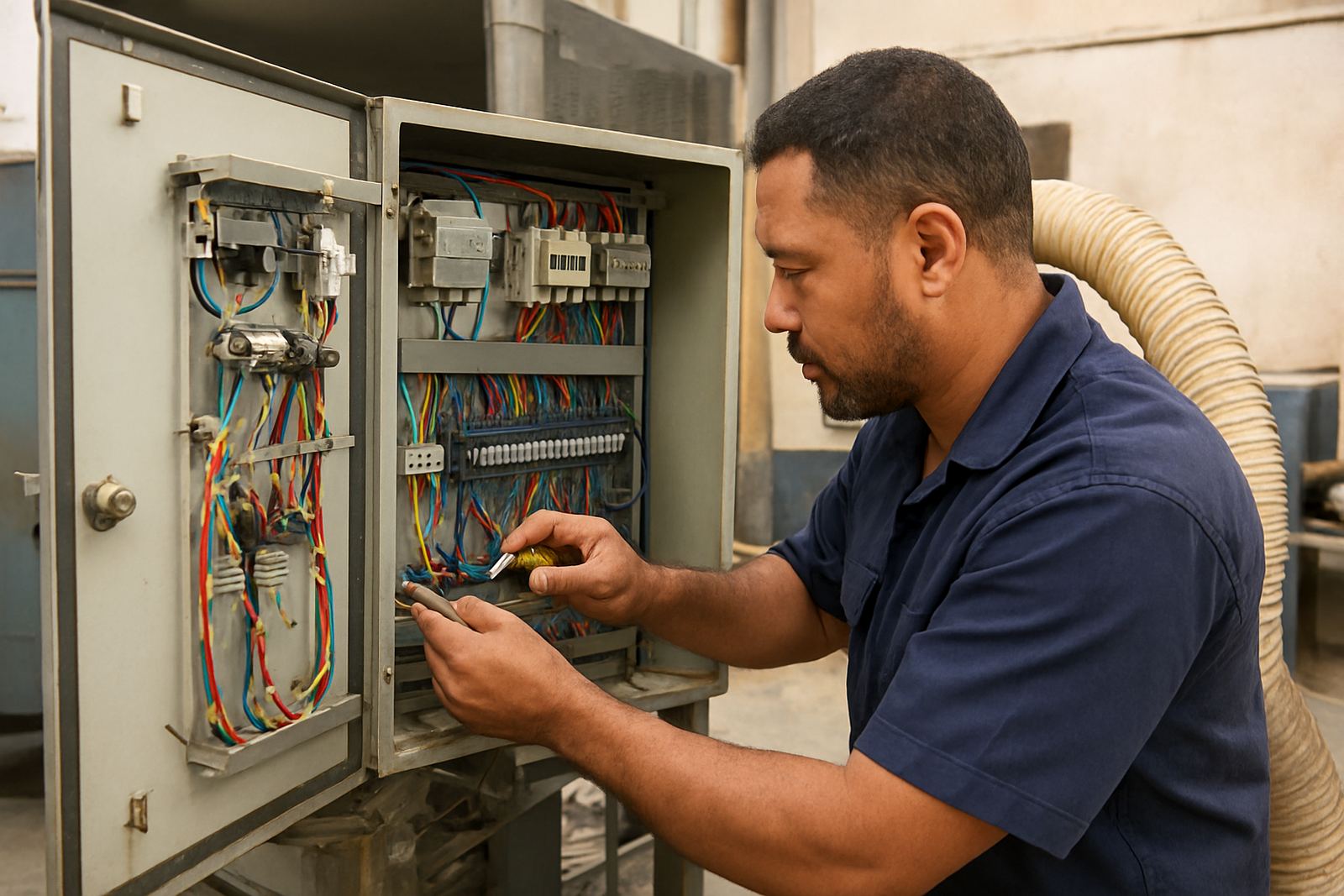
A control cabinet service is a hands-on check of the electrical cabinet that runs the laser machine. We open the cabinet, clean out dust, look for heat damage, tighten loose terminations and trace faults that can cause nuisance trips, random stops or hard starts. In local workshops, especially where grinding dust, mild steel fines and humid coastal air get into the machine room, small cabinet issues can turn into expensive downtime very quickly.
Our work focuses on the parts inside the cabinet that affect uptime: contactors, relays, terminals, cooling fans, filters, power supplies, protection devices and cable entries. We also check for signs of overheating, burnt insulation and vibration wear around the wiring, because a loose connection can be just as serious as a failed component.
When a cabinet clean and fault trace is needed
If your laser machine has started tripping, losing communication, running hotter than usual or showing intermittent alarms, the cabinet should be checked before the fault spreads. Cabinets often pick up metal dust, especially in job shops that cut daily and in plants that run through load-shedding recovery cycles. Heat build-up can push components past their working range and cause unstable behaviour.
- Machine stops without a clear cutting head fault
- Cabinet fan noise changes or airflow feels weak
- Burn smell, discolouration or warm panels near the electrical section
- Loose terminals after transport, vibration or a workshop move
- Trips after power dips, generator changeovers or surge events
- Faults that come and go with no repeatable pattern
In many cases the cabinet problem is not one single failed item but a mix of dust, heat and poor contact points. That is why we trace the fault methodically instead of replacing parts at random.
Sizes, layouts and service options
Control cabinets are not all built the same. Some are compact, single-door units on smaller fibre cutters, while larger machines may have wider cabinets with separate drive sections, PLC gear and cooling management. We service cabinet layouts found on small workshop cutters right through to larger production machines used in Johannesburg, Pretoria, Durban and Cape Town.
Service options depend on the machine and the fault pattern. We can work on the bench when the cabinet can be removed safely, or attend on site where the machine is fixed in place. For some installations the best option is a clean, tighten and test visit. For others the cabinet needs deeper fault tracing with live checks, thermal inspection and component testing.
- Bench cleaning and inspection for removable cabinets
- On-site fault tracing for installed machines
- Connection tightening and cable dressing
- Fan, filter and airflow checks
- Component testing for control and power sections
Where the service suits best
This service suits laser workshops that need steady running rather than guesswork. It is useful for signage plants, sheet metal fabricators, general engineering shops and job shops that rely on one or two machines to keep orders moving. It also suits sites where the machine room is warm, dusty or shared with cutting and grinding activity.
In coastal areas like Durban and Cape Town, moisture can accelerate corrosion on terminals and connectors. In inland areas such as Boksburg, Germiston, Kempton Park, Johannesburg and Pretoria, dust and heat are usually the bigger problem. If your machine has been moved, installed near a wall with poor airflow or running in a room with poor housekeeping, a cabinet service is a practical safeguard.
Power, cooling and site requirements
Control cabinet work is only reliable if the machine power and site conditions are right. Before any service we look at incoming power condition, earthing, cabinet ventilation and whether the machine is protected against surge events or unstable supply. If your site uses generator backup or inverter changeover during load-shedding, the cabinet should be checked for stressed components and signs of repeated switching.
We also check the physical environment around the machine. Cabinets need clean airflow, clear access for panels and enough space for inspection. Cables should not be crushed behind the machine, and filter openings must stay clear. If the cabinet sits in a hot corner of the workshop, extra cleaning or a filter change may be needed more often.
- Stable incoming supply and proper earthing
- Clear airflow around cabinet vents and fans
- Dry, clean floor area around the machine base
- Safe access for opening panels and testing points
- Plan for shutdown time during inspection and testing
How we care for the cabinet after service
Once the cabinet has been cleaned and fault traced, ongoing care keeps the machine running longer between visits. A cabinet that is left full of fine dust or left with loose connectors will usually fail again. We recommend regular visual checks, especially after a busy production run, a machine move or any electrical event on site.
During servicing we look for worn seals, blocked fans, dirty filters, overheated terminals and signs of moisture tracking. We also make sure the internal wiring is dressed neatly so vibration does not work a connection loose. That small bit of care saves time later, and the machine is less likely to stop at a bad moment.
- Inspect filters and fan guards every month
- Check for heat marks or darkened terminals
- Keep the cabinet door seals in good condition
- Do not store tools or offcuts near the cabinet base
- Book a service after repeated trips or power events
What to check when ordering a control cabinet service
When you enquire, have the machine model, fault symptoms and any alarm codes ready. Tell us whether the fault happens on start-up, during cutting or after the machine has been running for a while. If the machine has had a recent collision, power dip or site move, mention that as well because it often points to a specific area in the cabinet. A few clear notes can save time on diagnosis.
Please also tell us whether the unit is fibre or CO2, whether access is easy for an on-site visit, and whether the machine can be taken out of production for bench work. If there are repeated trips, smell, heat or loose wiring signs, do not keep restarting the machine. That can turn a serviceable fault into a bigger repair.
Key facts
| Service type | Cleaning and fault tracing inside control cabinets for laser machines |
|---|---|
| Machine types | Fibre and CO2 laser cutting systems |
| Service method | Bench repair or on-site inspection and testing |
| Common issues | Dust build-up, loose connections, heat damage, fan failure, nuisance trips |
| Typical applications | Job shops, signage plants, metal fabricators, engineering workshops |
| Base and coverage | Boksburg, Ekurhuleni with support across South Africa |