What the exhaust system service does on a laser line
An exhausted cut zone is not just about cleaner air in the workshop. When smoke hangs around the head, it settles on lenses, windows and the nozzle seat, then you start seeing poor edge quality, flare marks and more frequent stoppages. Our exhaust system service is aimed at the source of that problem, with inspection and repair of the extraction path so the machine can move air away from the cutting area properly.
This service suits job shops, signage plants and metal fabricators that cut mild steel, stainless steel, aluminium and sheet products where fumes build up fast. It is also useful after a move, after duct changes or where a system has been running with blocked filters, weak fans or poor duct routing. In many cases the issue is not one part alone, but a mix of reduced airflow, leaks and worn components.
We assess the extraction setup as part of the full cutting cell, because a healthy head can still struggle if smoke is not cleared from the bed and nozzle zone. You want the beam path protected, the cut kerf visible and the optics kept as clean as possible. That saves time on cleaning and helps avoid unnecessary parts replacement.
Sizes, layouts and options for different workshops
Every shop runs a little differently. A compact laser bed in Boksburg does not need the same extraction arrangement as a high-output fabrication line in Durban or a multi-machine workshop in Johannesburg. We work with bench repair and on-site service to match the extraction system to the actual duty cycle, the material mix and the available plant space.
- Single-machine extraction for smaller workshops and lower throughput
- Shared extraction for two or more cutting stations
- Local head capture arrangements for problem beds and high-smoke jobs
- Ducted systems for indoor routing over longer distances
- Filter-based setups where municipal or site rules limit discharge
- Heavy-duty options for higher dust load and longer daily run times
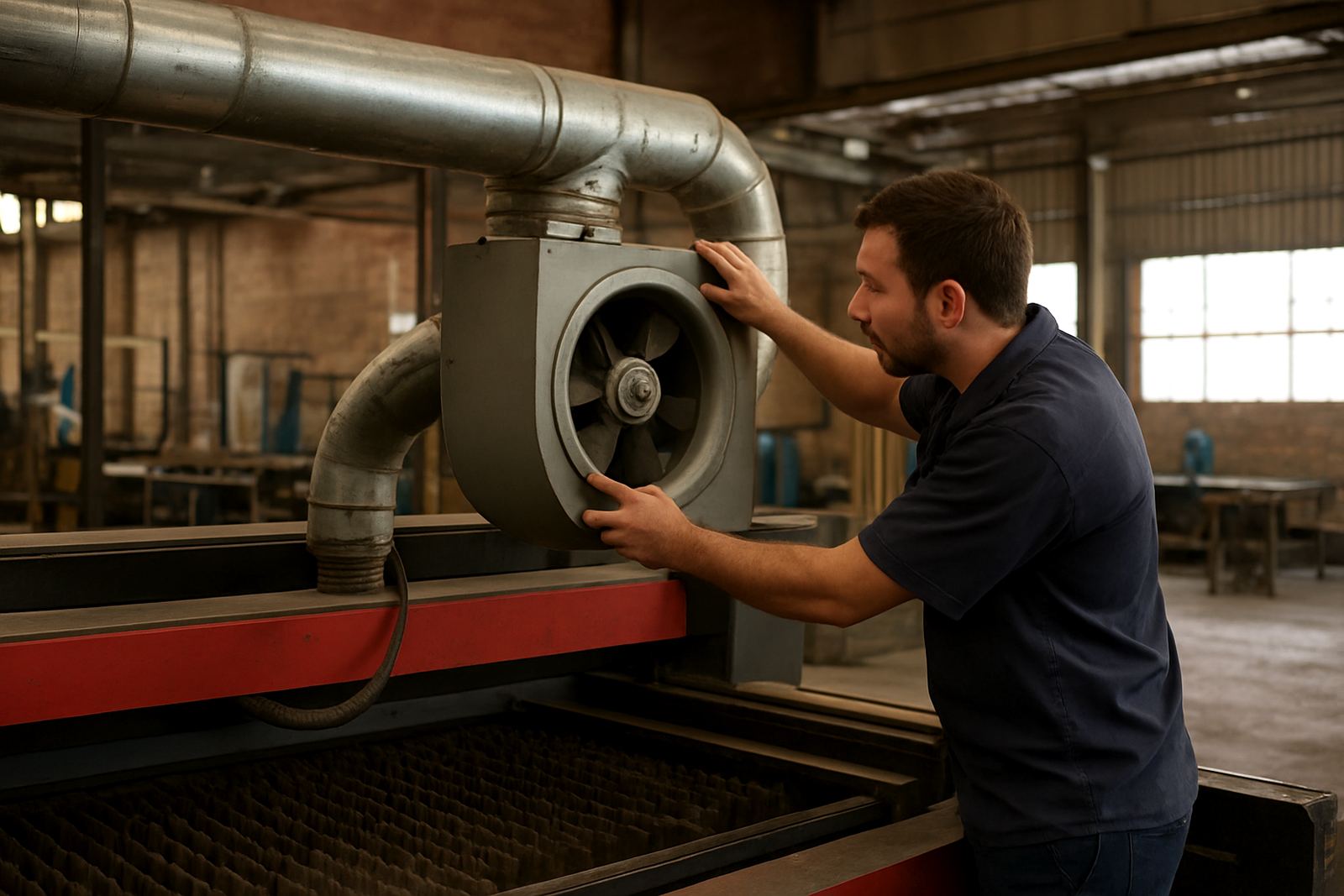
We also look at duct diameter, bend count, access points and filter position. Too many tight bends or undersized ducting can leave the fan working harder than it should. In a coastal area like Cape Town or Durban, moisture and salty air can also shorten the life of metal parts if the system is not chosen and maintained correctly.
Where it suits fibre and CO2 laser machines
This service suits fibre laser cutters and CO2 laser machines where smoke control affects cut quality, lens life or operator comfort. Fibre systems often need strong fume movement around fine cutting work, especially on coated sheet, stainless and reflective surfaces. CO2 machines can be even more sensitive to airborne contamination when cutting board, plastics or mixed material jobs. In both cases, if smoke lingers it can pull residue back into the head area.
It is a practical fit for workshops that run extended shifts, have frequent nest changes or operate in hotter bays where airflow is already under pressure. It also helps where the machine is installed near welding, grinding or pressing activity, because surrounding dust can add to the load on the extraction system. We find that many shops only notice the issue after cut quality drops or optics start needing cleaning too often.
For plants that work under municipal noise or discharge rules, we can discuss how the setup needs to be handled before installation or repair starts. That is especially important where the system vents outdoors, because filter choice and discharge position may matter. In some factories, the practical answer is not one large change, but a set of smaller fixes that restore proper flow.
Installation, power needs and site conditions
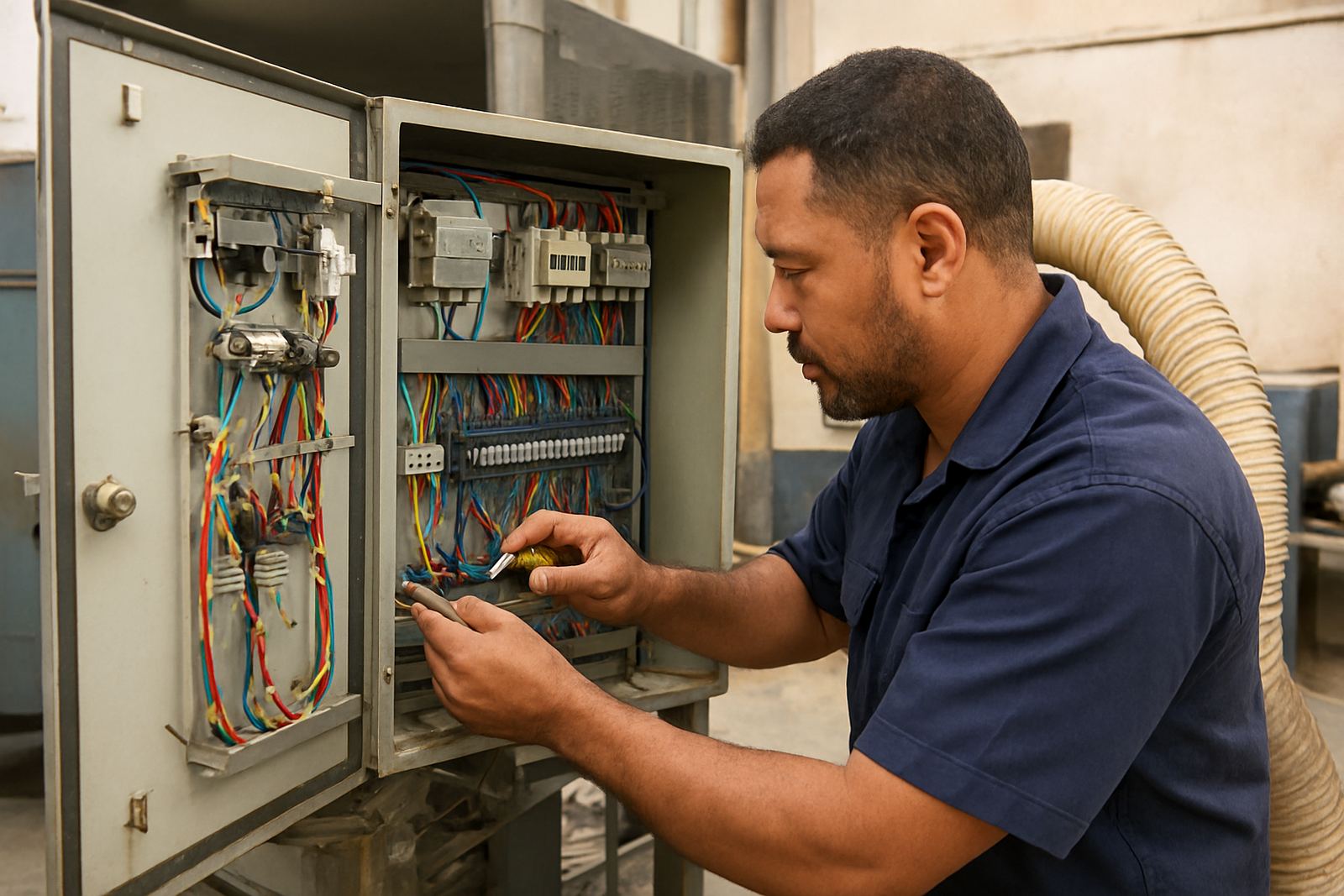
Installation depends on the machine size, duct length and whether the system runs from a fixed workshop supply or a machine linked control circuit. We check the available power, the start method, motor load and the space needed for access to filters and clean-out points. If a fan or extractor has been wired without enough headroom, it can trip during load-shedding recovery or when other plant starts up at the same time.
Power and site checks normally include:
- Supply voltage and phase arrangement
- Motor current draw under working load
- Breaker size and cable condition
- Space for ducting, access panels and filter changes
- Outdoor protection against rain, dust and coastal humidity
- Clear route for safe maintenance access
Where we repair on site, the aim is to keep disruption low. If a bench repair makes more sense, we remove the affected parts for inspection and return them once tested. That can be the better choice where a fan, damper or housing needs more careful work, or where the workshop cannot spare the machine for long.
Care, servicing and common warning signs
Extraction systems are often forgotten until smoke starts hanging in the beam path. Regular care keeps the system working and avoids a lot of nuisance faults. Filters, ducting and fan housings should be checked on a planned schedule, not only when the machine starts misbehaving. If you are cleaning optics more often, that is usually a sign the extraction is not doing its job properly.
Common warning signs include weak pull at the bed, smoke drifting back over the sheet, increased lens marks, hot smells at the head, blocked pre-filters and vibration from the fan housing. A change in sound can also point to a slipping belt, worn bearing or a restriction in the duct. It is worth checking for loose joints and dust build-up too, because a small leak can reduce performance more than people expect.
We recommend keeping a simple log of filter changes, motor checks and any downtime linked to smoke or dust. That makes it easier to spot a trend before it becomes a bigger repair. A good exhaust setup should support the machine quietly in the background, not become another thing the team has to fight with.
What to check when ordering or booking service
When you send an enquiry through the contact page, the more detail you can give us the faster we can assess the job. Please share the machine type, cutting material, bed size, whether the fault is constant or intermittent, and whether the problem is at one machine or across several stations. If the issue started after a collision, duct change or maintenance stop, mention that too.
- Machine make and model if available
- Fibre or CO2 system
- Approximate bed size or work zone
- Indoor or outdoor extraction route
- Symptoms such as smoke hang, poor pull or filter blockage
- Whether you need on-site repair or bench repair
If the system is in Johannesburg, Pretoria, Vanderbijlpark, Durban, Cape Town, Germiston or Kempton Park, we can plan support around the job and the machine downtime. For some clients the best result is a targeted repair. For others it is a full strip, inspection and return to service check. Either way, the goal is the same: keep smoke out of the cut zone and keep production moving.
Key facts
| Service type | Exhaust system inspection, repair and airflow restoration for laser cutting lines |
|---|---|
| Compatible systems | Fibre laser and CO2 laser machines, single or multi-machine extraction layouts |
| Typical issue addressed | Smoke lingering in the cut zone, dirty optics and weak extraction pull |
| Service format | On-site support or bench repair, depending on fault and access |
| Main checks | Fan performance, duct condition, filter condition, seals, vibration and airflow path |
| Coverage | Boksburg base with support for workshops across South Africa |