What a protective window does in the cutting head
The protective window sits in the beam path inside the cutting head and acts as the first barrier between the optics and the harsh conditions of cutting. It helps keep back spatter, fine dust, oil mist and vapour off the lens and internal parts, while still allowing the laser beam to pass through cleanly. When that window is chipped, burnt or cracked, you often see poor cut edges, inconsistent pierce starts and a head that runs hotter than normal.
In busy workshops around Boksburg, Johannesburg and Durban, protective windows are one of the parts that get forgotten until a fault shows up. We replace them as part of practical laser machine service, whether the damage came from a collision, dirty assist gas, a weak seal or normal wear. If the head has also taken impact, we can inspect the seat, internal body and related parts at the same time.
Window sizes and optical options we supply
Protective windows are not one-size-fits-all. They need the correct diameter, thickness, coating and fit for the head model and the beam setup on the machine. We supply common sizes for fibre and CO2 laser systems used by job shops, signage plants and metal fabricators, and we check the measurements before fitting so the new part sits properly in the holder.
- Round windows in common diameters for standard cutting heads
- Correct thickness for the beam power and head design
- Coated options for clean transmission and longer service life
- Windows matched to fibre or CO2 applications
- Replacement seals or retainers where needed
Where the old window has failed from heat or contamination, we also look at the nozzle seat and sensor ring area. A clean window with a damaged seat will not hold up well, so the full assembly needs proper attention, not just a quick swap.
Where this service suits and when to book it
This service suits workshops that cut mild steel, stainless steel, aluminium and similar sheet material on a daily basis. If your machine starts showing more dross, unstable piercing, haze on the window or unexplained alarms after a head knock, it is worth booking a check before the issue spreads to the lens or ceramic holder. That small delay can save a lot of money later on, especially when production is already tight.
We support customers in Boksburg, Germiston, Kempton Park, Pretoria, Vanderbijlpark, Cape Town, Durban and the wider country. Clients often bring the head to our bench for inspection, or ask for site support when the machine is part of a running line and cannot be lifted off quickly. The aim is simple: keep cutters running and avoid extended downtime.
- Repeated window burn marks or pitting
- Visible chip, crack or heat stain on the glass
- Poor cut finish even after nozzle changes
- Smoke or dust build-up inside the head body
- Unstable pierce performance after a collision
How we install and test the replacement
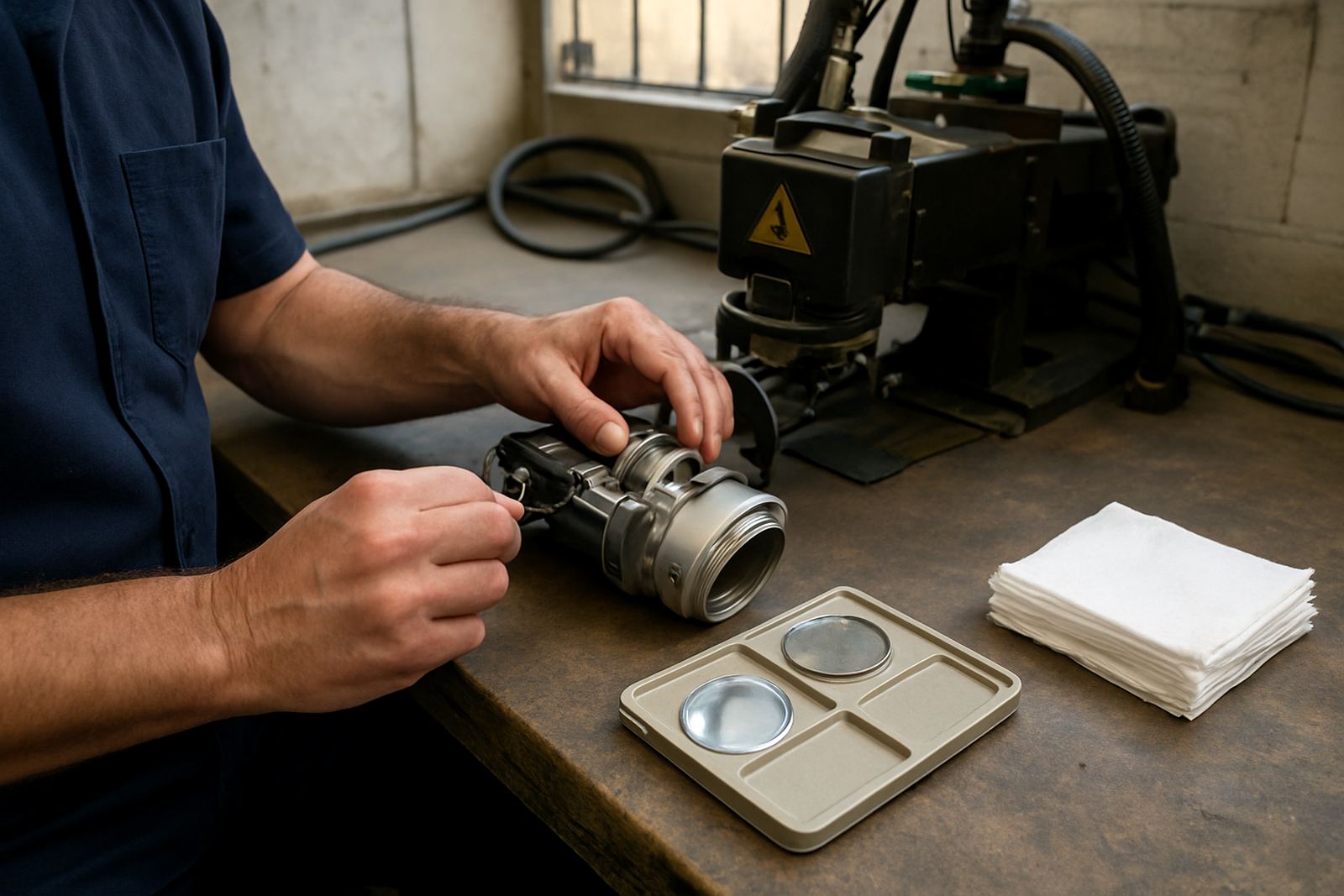
Protective window change starts with a strip and inspection of the affected head section. We check the seat, threads, retaining parts and internal cleanliness before the new window goes in. The replacement is handled in a clean working area because even a speck of dirt can affect beam quality and shorten the life of the part. On site, we work carefully around the machine and keep the area tidy so the job can continue with mínimal disruption.
After fitting, we carry out alignment checks and a bench pressure test where required, then confirm the head is ready for service. If the machine has been running with a damaged window, we may also recommend a return to service test once the machine is back in production. This helps confirm that the head is cutting properly under normal pressure and gas flow, not only on a static inspection.
Power, gas and working conditions to consider
A protective window itself does not need electrical power, but the head that uses it must be matched to the machine’s laser source, cutting gas and operating conditions. Fibre systems and CO2 systems place different demands on the optics and the cutting head, so we always verify the application before fitting the part. Assist gas quality matters too. If the gas path is dirty or the pressure is unstable, windows can fail early from contamination or heat stress.
South African workshops also deal with load-shedding, voltage swings and hot summer conditions, which can affect machine stability and cooling. Dusty environments, coastal humidity in Durban and salt air in Cape Town can shorten the life of optics if the machine is not kept clean. For that reason, we often advise a quick gas path service and internal cleaning when replacing a window, especially on heads that have not been opened in a while.
What to check before you order a replacement window
Before we supply a new protective window, we need the correct details so the part fits first time. A wrong size or coating can delay production and waste money, so it helps to check the following on the damaged part or machine plate. If you are unsure, send the head details through the enquiry form and we will help you confirm what is needed.
- Laser type: fibre or CO2
- Cutting head model and beam power range
- Window diameter and thickness
- Coating type and orientation if marked
- Whether the head also needs a nozzle seat or sensor ring check
- Whether the job is bench repair or on-site repair
We also look at the condition of the ceramic holder, lens housing and internal seals while the head is open. If the window failed after a collision, there may be hidden wear that only shows up under inspection. A proper check at this stage helps keep the next shutdown short and saves another trip back to the workshop.
Key facts
| Service type | Protective window replacement for fibre and CO2 laser cutting heads |
|---|---|
| Fitment | Bench repair or on-site service, depending on access and fault |
| Typical sizes | Common round window sizes to match the head model and beam setup |
| Associated checks | Nozzle seat, lens seat, sensor ring, ceramic holder and internal cleanliness |
| Use cases | Sheet cutting, job shop work, signage production and general metal fabrication |
| Service areas | Boksburg, Johannesburg, Pretoria, Vanderbijlpark, Durban, Cape Town and surrounding areas |