
What a cable chain repair does on a laser machine
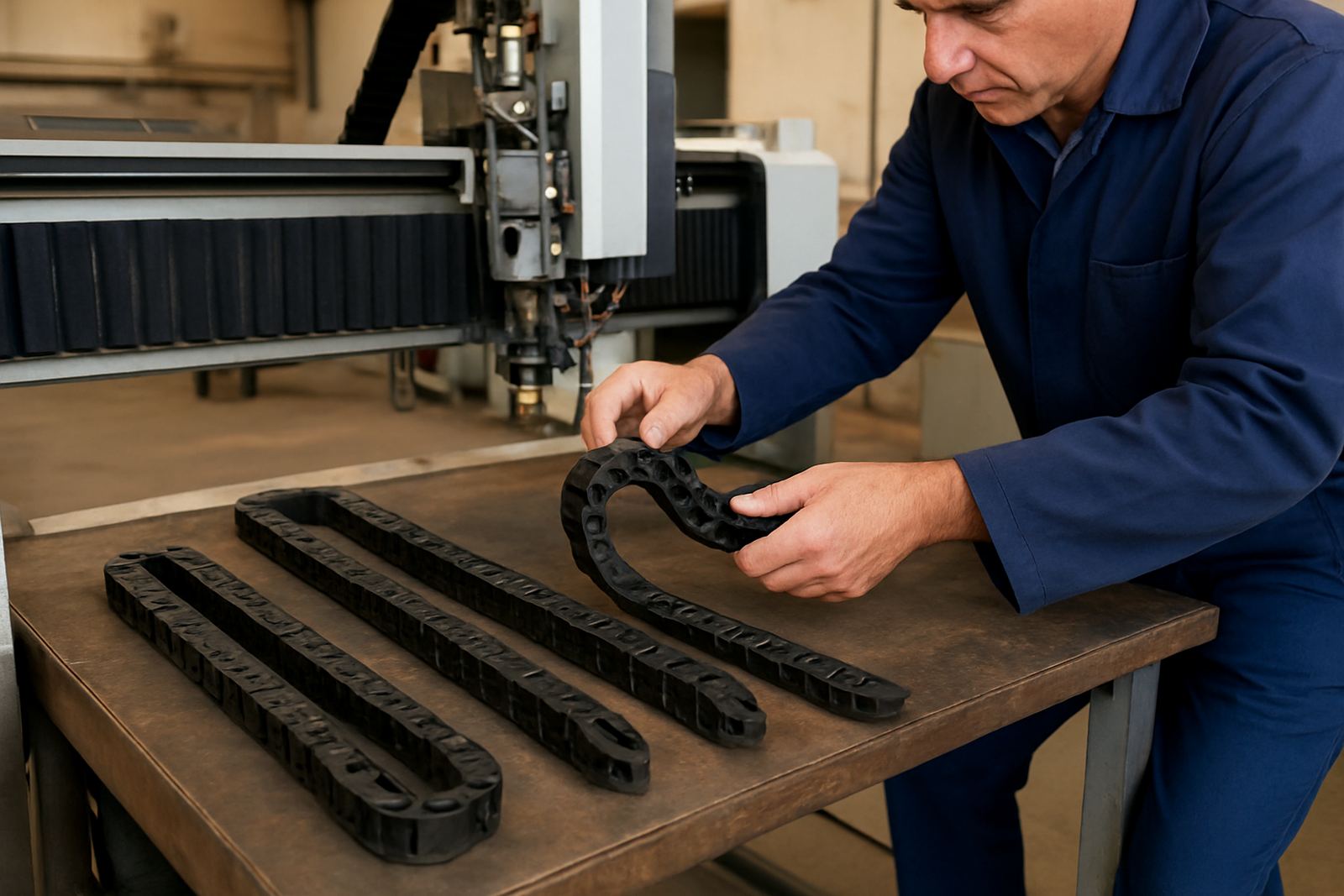
A cable chain, also called a drag chain, carries power, signal, gas and sensor cables as the machine axis moves. When links crack, the chain twists, or the cable bundle starts rubbing, the result is noisy travel, cable strain and unpredictable faults that show up as stopping, error alarms or intermittent cutting. On laser machines that run long shifts, especially in workshops where dust and heat build up, a damaged chain can become a repeat failure point very quickly.
Our repair work covers the chain itself and the routing that supports it. That means checking the full travel path, loose brackets, worn clips, damaged separators and cable bend radius. If the chain has been forced open during a collision or has brittle sections from age and heat, we replace the affected parts and re-route the bundle so it runs correctly again.
- Broken link and hinge repair
- Cable rerouting and bundle support
- Bracket, clamp and end fitting checks
- Inspection for pinch points and tight bends
Where cable chain repairs suit fibre and CO2 cutting systems
This service suits job shops, signage plants and metal fabricators that depend on steady motion over long production runs. We see it often on gantry systems, shuttle tables and moving heads where the chain works hard every day. Fibre machines in particular can be sensitive to cable strain on the head side, while CO2 systems may show routing wear on power, sensor and cooling related lines.
It is a practical repair for sites in Boksburg, Johannesburg, Pretoria, Vanderbijlpark, Durban and Cape Town, especially where vibration, dust or coastal humidity speed up wear. In coastal areas, corrosion can work into fixings and chain joints. In inland plants, fine metal dust and heat from summer shifts can harden cables and shorten chain life. If a machine has had a collision, or if an axis started sticking after maintenance, the chain should be checked before the fault spreads to other parts.
- Fibre laser cutters with moving cutting heads
- CO2 laser systems with long cable runs
- Machines showing intermittent alarms during travel
- Equipment that has suffered a head crash or table strike
Sizes, construction and repair options
We work on small and medium industrial cable chains, and on larger routing systems used on production laser machines. The right repair depends on chain width, travel length, cable fill and how much movement the machine sees in a shift. Some chains fail at a single damaged link, while others need a full section replaced because the bend radius has been compromised.
Options are selected to suit the machine and the cable load. A light bundle may only need a short section replaced and the cable reset. A heavier bundle, with multiple lines and sensor wiring, may need separators, new end fittings and a fresh support layout. We also check whether the chain is mounted too tight, too low, or too close to heat sources. That sort of misalignment causes repeat wear and is common on machines that have been moved between sites without a proper reset.
- Chain widths commonly matched to the cable bundle on the machine
- Standard and heavy duty link types depending on travel and load
- Openable and enclosed chain styles where access or protection is needed
- Single section replacement or full rerouting depending on damage
Installation needs, power and gas checks before handover
Cable chain work is not only about the chain itself. Before the machine goes back into production, we confirm the moving cables still have safe slack, the travel is free, and the routing does not pull on terminals, glands or connectors. If the machine uses auxiliary air, assist gas or cooling related lines through the moving section, those paths are checked too. A chain that looks fine on the bench can still fail early if the machine is reassembled with the wrong tension or a loose bracket.
We also look at practical site factors. A factory with unstable power, frequent load-shedding or rough changeover routines can put extra stress on cables and connectors when the machine starts up again. In dusty shops, the chain can collect grit that wears the links. In humid or coastal sites, fixings should be checked for early rust. If the machine has a gas service line near the moving axis, it must not rub or pinch as the head travels. That is why installation and re-test matter just as much as the repair itself.
- Check cable slack through full axis travel
- Confirm no pinch points at full speed and full reach
- Verify brackets, fasteners and cable glands are secure
- Test any air, gas or cooling lines routed near the chain
Care and servicing that help the chain last longer
Most cable chain failures start small. A cracked link, a loose clamp or a cable that sits proud of the track will usually show signs before it stops the machine. Regular cleaning and inspection help prevent that. On busy production floors, we recommend checking the chain whenever the machine is serviced, after any collision, and again after a move between sites.
Keep the chain free of swarf, offcuts and oily dirt. Avoid packing the bundle too tightly because overfilled chains flex badly and can damage internal cables. If the machine runs long shifts, inspect the head end and drive end for uneven wear. A chain that is noisy, jerky or hanging in a slight bow is already telling you something. Catch it early and the repair stays simple.
- Inspect after every collision or unusual noise
- Clean out dust, swarf and trapped offcuts
- Keep cable fill within the chain capacity
- Replace worn links before they split along the run
What to check when ordering cable chain repair
To quote the right repair, we need the machine type, axis location and the size of the damaged section. Photos help a lot, especially if the chain has broken at a mount or if the cable bundle has been pulled out of line. If you can give us the travel length, the width of the chain and whether the issue is on the cutting head side or the cable entry side, we can prepare the right parts and avoid wasted time on site.
It also helps to know if the machine is fibre or CO2, whether the problem started after a crash, and if any alarms have appeared during travel. Where possible, tell us if the chain is still moving but noisy, or if it has already split open. That tells us whether we are dealing with a local repair or a more complete route correction. For workshops in South Africa, that kind of detail keeps downtime short and avoids a second strip down later on. If your chain has failed at the worst time, we can inspect on site or remove the affected section for bench repair and return it once it passes testing.
Key facts
| Service type | Cable chain repair for laser machines and cutting heads |
|---|---|
| Machine types | Fibre laser systems and CO2 laser systems |
| Repair scope | Broken links, routing faults, clamps, brackets and cable support |
| Typical use | Cutting heads, moving axes, gantry systems and cable runs |
| Support mode | On site inspection or bench repair in Boksburg, Ekurhuleni |
| Coverage | Johannesburg, Pretoria, Vanderbijlpark, Durban, Cape Town and surrounding areas |