

Home / Repairs / Focus Module Repair

Repairs

Focus Module Repair

Focus modules that drift, stick or lose repeatability can throw off cut height and hurt edge quality fast. Laser Ray Tools repairs fibre and CO2 focus modules for workshops and fabricators in Boksburg, Ekurhuleni and across South Africa.

Focus Module Repair

What a focus module does in daily cutting work

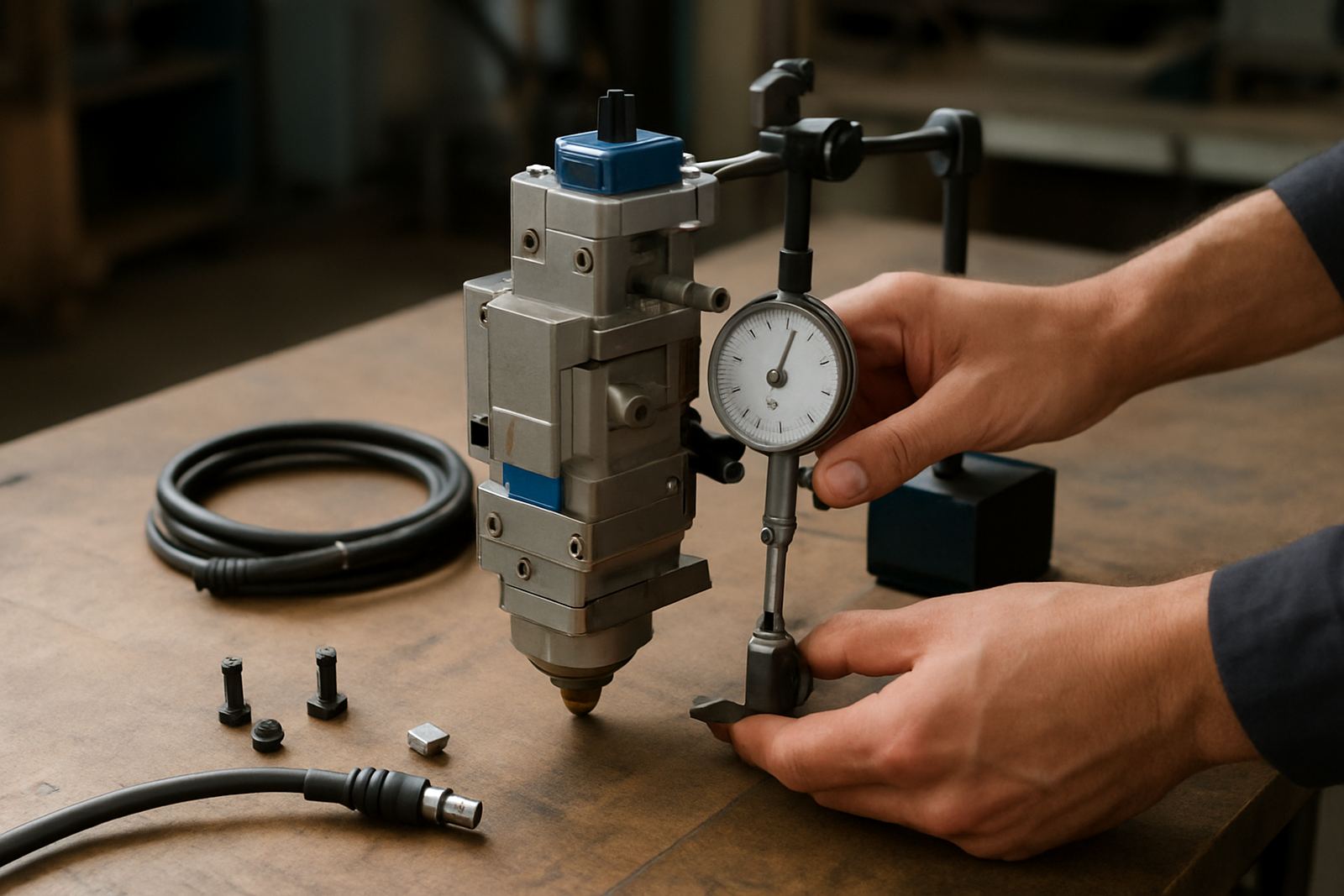
The focus module is the moving part that sets and holds the cutting focus inside the laser head. When it is in good condition, the head keeps a steady standoff, follows the set height accurately and gives cleaner cuts on mild steel, stainless steel and aluminium. When the module starts to wear, the symptoms show up as drifting height, uneven motion, noisy travel, poor repeatability or a head that will not home correctly.

We repair focus modules used on fibre and CO2 laser systems in job shops, signage plants and metal fabrication yards. In many cases the issue is not a full replacement. It can be worn guides, contamination, damaged internals or a collision that has shifted the module out of true. Our focus is practical repair work that gets the cutter back into service without unnecessary parts changes.

  • Drifting focus height during long cuts
  • Sticking or jerky motion on the Z axis inside the head
  • Repeated collision marks or a bent internal carrier
  • Excess backlash, play or unstable set height
  • Damage after a nozzle crash or material lift

Repair options for fibre and CO2 focus modules

Laser Ray Tools services focus modules on the bench and on site depending on the fault and the machine layout. Some units only need a strip, clean and reassembly with worn items replaced. Others need a full rebuild after a hard knock, contamination from cutting dust or long term wear. We check the mechanical travel, alignment and the condition of internal components before recommending the next step.

Our repair work covers the module itself as well as related head components that affect movement and repeatability. If the problem started after a collision, we also inspect the nozzle seat, ceramic holder, lens stack and protective window area because one fault often hides another. This saves time later and keeps the return to service proper, not just temporary.

  • Strip and inspection
  • Collision damage repair
  • Nozzle seat restoration
  • Lens replacement and window replacement
  • Sensor ring service and ceramic holder change

Sizes, travel ranges and common options

Focus modules come in different body lengths, mounting styles and travel ranges, so the correct repair depends on the exact unit fitted to the head. We work with compact heads used on smaller sheet cutters as well as larger units on higher power fibre machines. Some modules use manual adjustment, while others use motor driven height control with feedback from the machine control system.

For ordering and assessment, the main details are the mounting pattern, overall body length, travel stroke and the type of drive or sensor arrangement. If the module has been swapped before, the original label may no longer match what is actually installed. That happens often in workshops around Johannesburg, Pretoria and Vanderbijlpark where machines have had more than one repair over time.

  • Manual focus modules
  • Motor driven focus modules
  • Short stroke and extended stroke versions
  • Heads for fibre systems and heads for CO2 systems
  • Units with integrated sensor feedback or separate height sensing

Where this repair suits best in local production

This service suits operations that need steady cutting height and quick recovery after faults. It is a good fit for fabrication shops cutting plate every day, signage companies running mixed production and workshops that cannot wait weeks for a head change. In Boksburg and Germiston, where a lot of small and medium metal work is done, downtime often means missed deliveries and overtime later. A repaired focus module can be the difference between one lost shift and two lost days.

We also see these faults in coastal conditions, where humidity and fine dust can work into moving parts, and in yards where load shedding causes repeated restarts and extra wear on height control parts. Durban and Cape Town customers often ask for bench testing after repair so they know the module will hold its setting before it goes back into production.

Installation, power needs and gas connections

Focus module repair itself does not need a special utility feed, but the module must match the machine controls and the head setup it goes into. If the unit is motor driven, the electrical interface, signal feedback and homing function must be checked after installation. If the issue is on a complete head assembly, we verify that the module moves freely with no binding once fitted and that the machine can set focus consistently across the working range.

There is no direct gas supply into the module itself, but the surrounding head must keep clean assist gas flow and correct nozzle condition. Low gas pressure, dirty lines or a damaged nozzle seat can make a good focus module look faulty. We check that the gas path is clean and that the cutting head is not fighting air leaks or contamination.

  • Check machine compatibility before fitting
  • Confirm electrical travel and sensor signals on motor driven units
  • Verify clean assist gas delivery at the head
  • Test free movement after installation
  • Run a return to service test on the actual material used

Care, servicing and what to check before sending one in

Regular care keeps a focus module working longer. Keep the head area clean, replace worn nozzles before they bell out, and avoid running with damaged windows or loose consumables. After any collision, stop and inspect the head before the next job because even a light tap can shift the internal travel enough to cause poor cuts later. In our workshop we often find that what looked like a simple focus problem was really a mix of wear, dirt and a bent carrier.

Before sending a unit in for repair, please check the machine model, the head type, the fault description and whether the issue started after a crash, a maintenance change or an electrical fault. If the module was removed from the machine, keep the mounting screws, brackets and any shims together. That helps us assess the unit faster and avoids delays when parts are matched for reassembly.

  • Machine and head model details
  • Photos of the module in place, if possible
  • Fault symptoms and when they started
  • Any collision, contamination or overheating event
  • Related parts already replaced, such as nozzle or window

Bench testing and return to service checks

Every repaired focus module should be tested for smooth travel, repeatable position and stable operation under load. On the bench we check motion, play, alignment and response after cleaning or component replacement. Where needed, we carry out a pressure test and a return to service test so the unit is ready for real production work, not just a quick spin in the workshop.

Laser Ray Tools supports clients across Johannesburg, Pretoria, Vanderbijlpark, Durban and Cape Town, with collection and on site support where practical. Our base in Boksburg, Ekurhuleni lets us handle both bench repair and field service for workshops that need a fast turnaround. If the focus module can be saved, we will tell you plainly. If replacement is the better call, we will say that too.

Key facts

Service typeFocus module repair for fibre and CO2 laser heads
Condition faultsDrifting height, unstable motion, wear, collision damage
Repair methodsStrip and inspection, rebuild, alignment check, component replacement
Test proceduresBench pressure test, travel check, return to service test
Service areaBoksburg, Johannesburg, Pretoria, Vanderbijlpark, Durban, Cape Town
Support formatOn site or bench repair for workshops and fabricators

What our Laser Repair customers say

Verified Google reviews

Questions we get asked

How do I know the focus module needs repair rather than a full head change?

If the head still mounts correctly but the movement is rough, drifting or inconsistent, the module often needs repair rather than a full change. A proper strip and inspection will show whether wear, contamination or collision damage is the main cause.

Can you repair a module after a nozzle crash?

Yes. We regularly repair focus modules after crashes, then check the nozzle seat, ceramic holder, lens and window area as well. A crash can damage more than one part, so we inspect the full cutting head before return to service.

What details should I send with the enquiry?

Send the machine model, head type, fault description and any photos you have. If the unit was removed, include the mounting parts and note whether the fault started after a collision, cleaning or electrical issue.

Planning something? Send the team a message.

Contact form