Start With A Fault Report And Photo Set
When a laser cutter stops cutting cleanly, the fastest way to get help is to send a clear fault report through the enquiry form on our contact page. Tell us the machine type, the cutting head model if known, what happened before the fault, and whether the problem started after a collision, a lens change, or a power interruption during load-shedding. If you can, add photos of the nozzle, lens area, protective window and any error message on the machine screen.
That first detail helps us separate a simple wear issue from a deeper problem in the head or gas path. It also helps us advise if the machine should come in for bench work or if a technician should attend on site. In many cases a quick strip and inspection is the best first step, especially when the head has taken a knock or the cut quality has changed gradually.
Choose Bench Repair Or On-Site Call-Out
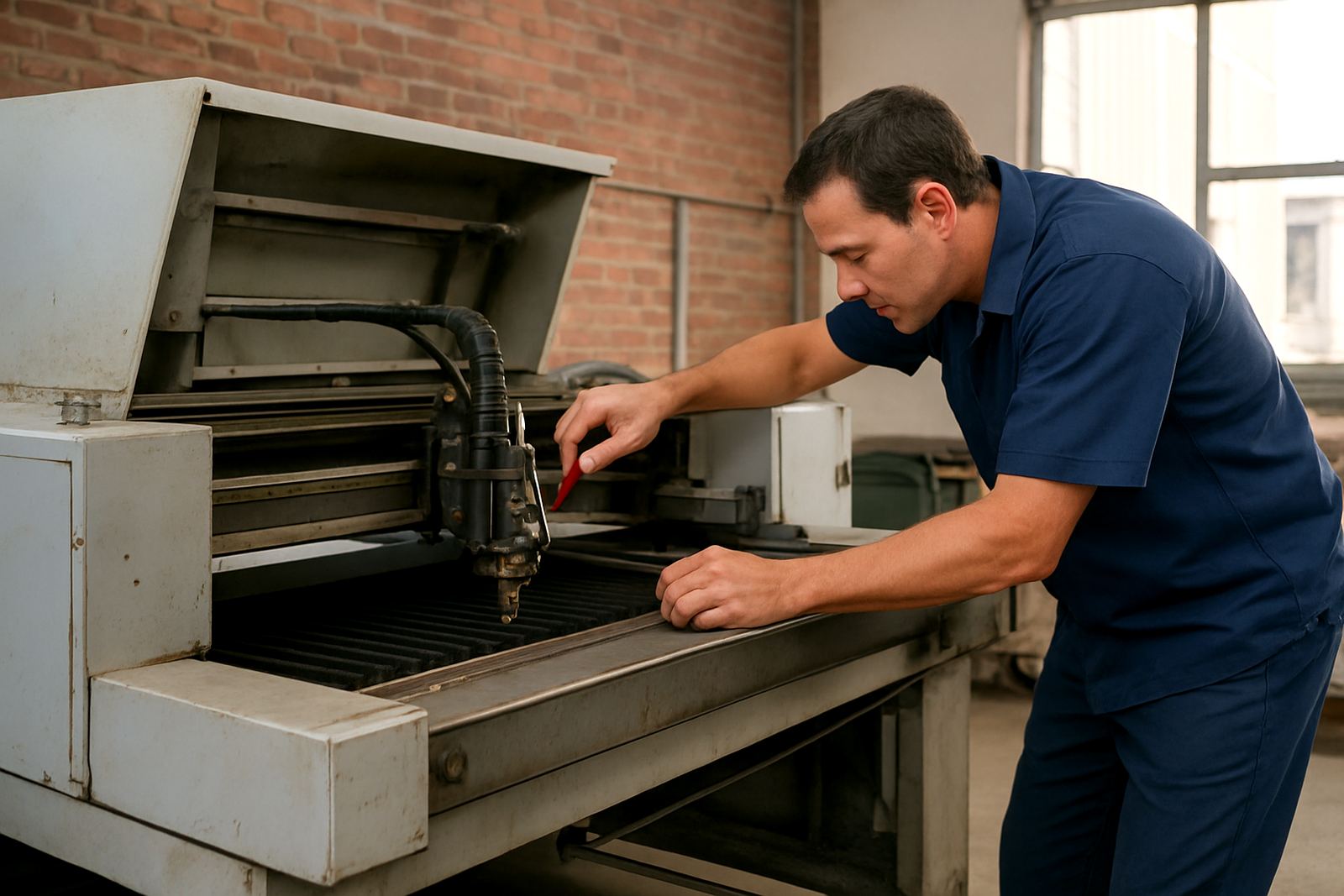
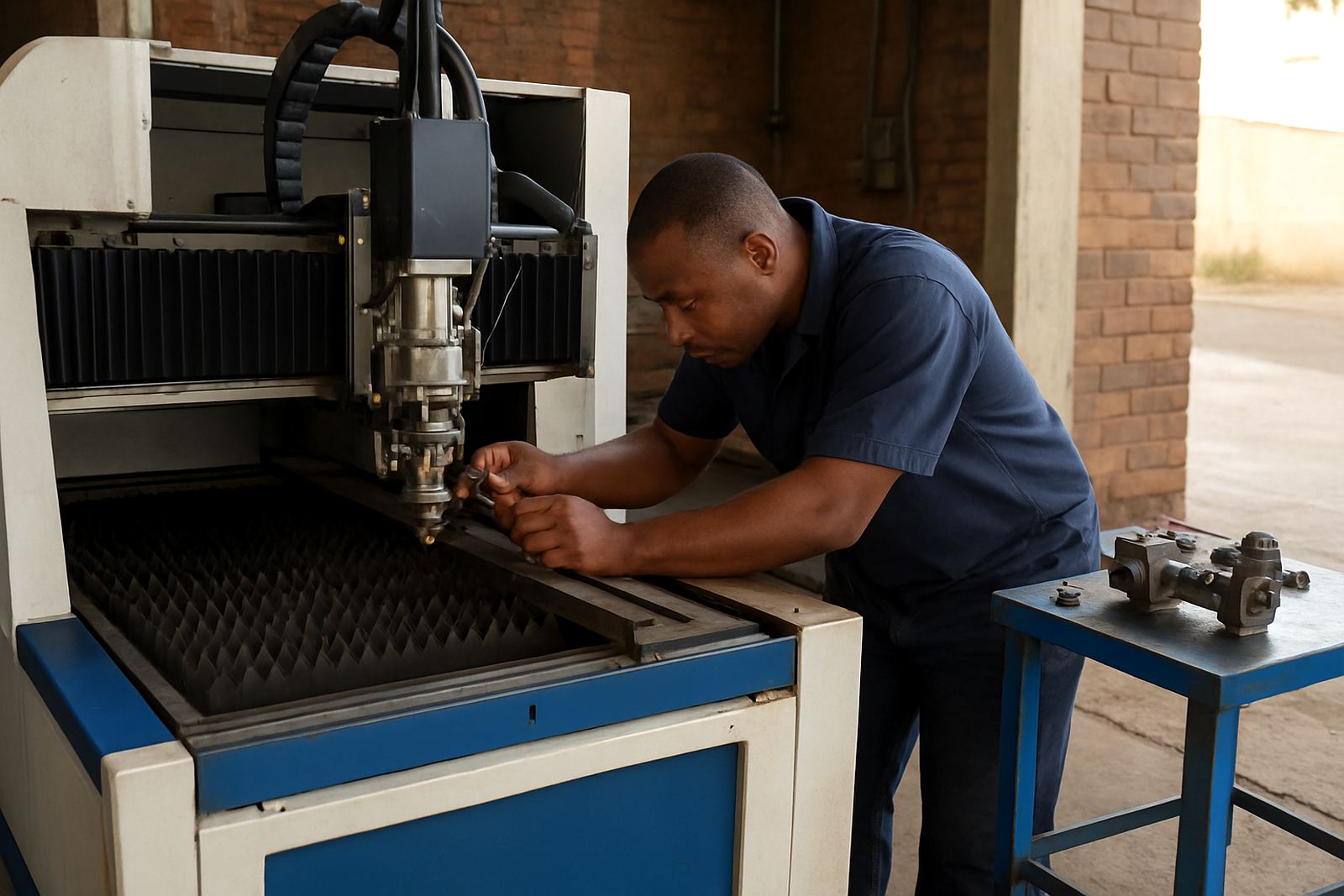
We support workshops in Boksburg, Johannesburg, Pretoria, Germiston, Kempton Park, Vanderbijlpark, Durban and Cape Town, with field service for suitable faults and bench repair for heads that need closer inspection. Bench work is best when the nozzle seat is worn, the internal optics need attention, or contamination has spread through the head. On-site service suits alignment checks, sensor ring faults, pressure testing and return to service testing after a minor repair.
- Bench repair: best for collision damage, internal cleaning, lens or window replacement, and detailed testing.
- On-site support: useful for fault finding, head alignment checks, gas path checks and production restart support.
- Urgent downtime: tell us if the machine is holding up a job, so we can prioritise the response.
We work with fibre and CO2 systems, and we keep the process practical. If the repair can be done on site, we will say so. If the head needs to come back to the workshop for a proper servcie, we will explain why and what the turnaround should look like.
What We Check During Strip And Inspection
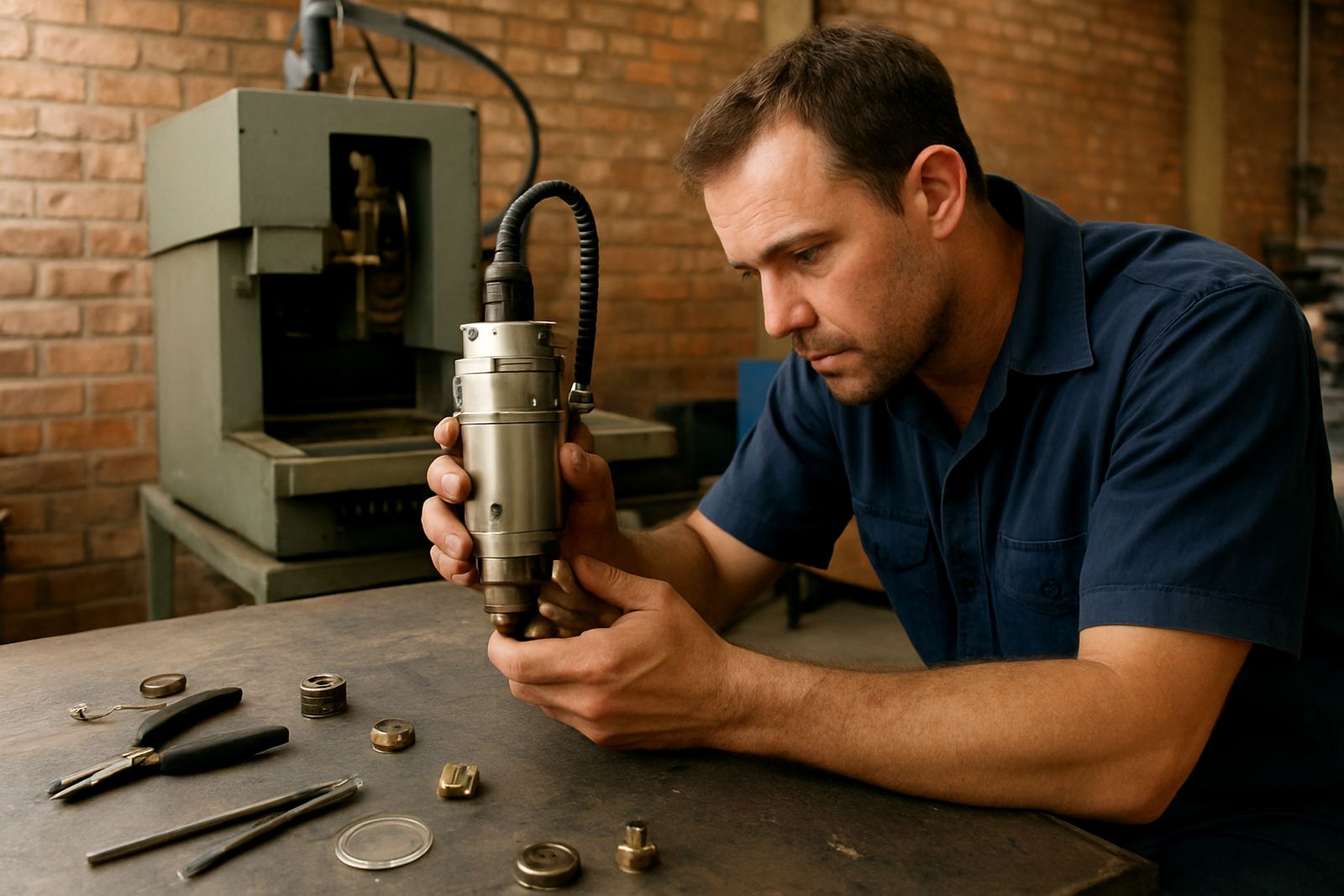
A proper inspection shows whether the fault is only on the outside or whether there is hidden wear inside the head. During strip and inspection we check the nozzle, ceramic holder, sensor ring, lens condition, protective window, internal contamination and the alignment of the beam path. We also look for signs of heat stress, water ingress and damage caused by poor assist gas or a blocked line.
That matters because a small flaw can turn into repeated scrap, rough edges and extra machine downtime. On South African shop floors, dust, humidity and power interruptions can all make a problem worse. If a machine has been standing after a long weekend or a municipal outage, we also check for contamination and moisture before handing it back into production.
- Collision damage repair after a head strike
- Nozzle seat restoration for poor cutting consistency
- Lens replacement and protective window replacement
- Gas path service and internal cleaning
Parts Supply For Heads That Need Rebuild Work
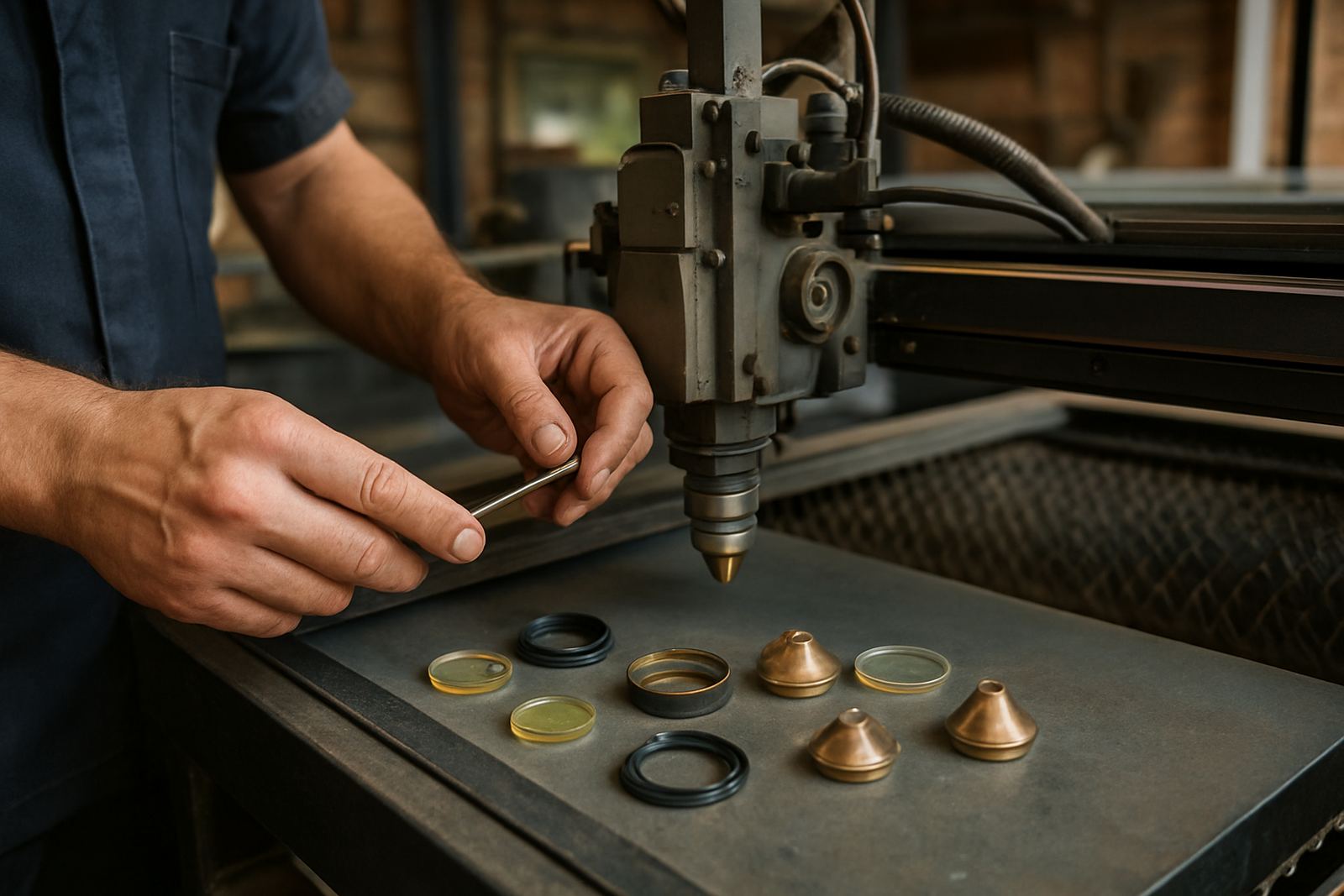
Some repairs need new parts before the machine can return to normal cutting. We supply common wear items for heads and supporting components such as nozzles, lenses, protective windows, sensor rings and ceramic holders. If the original part is damaged beyond use, we match the replacement to the head specification and the machine duty on your floor.
We do not treat parts as a side issue. A laser head can look fine from the outside and still lose performance because of a worn seat, a cracked window or a lens that has taken heat damage. Matching the right parts to the fault is what keeps the repair honest and keeps the machine cutting properly after it leaves the bench.
Testing Before Return To Service
Every repaired unit should prove itself before it goes back into production. We complete head alignment checks, bench pressure tests and return to service tests so the fault does not come straight back on the next shift. If the machine has been off line for a while, we also watch for unstable pressure, gas leaks and poor beam delivery that can spoil the first run of parts.
For fabricators running time-sensitive work, this final step is where confidence comes from. A clean return to service means less scrap, fewer stoppages and less back-and-forth with the workshop. It also helps your operators know the machine is ready for normal use again, not just able to switch on.
How To Book Support With Our Team
To book repair support, use the enquiry form on our contact page and give us the basics: your location, machine type, the fault symptoms and whether you need bench or on-site support. If you are in a rush, say so upfront. Our service coordinator will route the request and a technician or workshop lead will follow up with the next step.
- Tell us the town or area, for example Boksburg or Durban.
- List the fault symptoms in plain language, including any error code.
- Say if the problem started after a collision, power cut or lens change.
- Let us know if the machine is fibre or CO2 and whether production is stopped.
We support job shops, signage plants and metal fabricators that need a practical repair path, not a long sales pitch. If the problem is urgent, the sooner we get the details the sooner we can advise the right repair route. That usually saves time, and sometimes a second trip too.