Call When the Laser Stops Mid Shift
If your laser cutting machine has stopped after a collision, a cutting fault or a warning on the control panel, contact us as soon as you can. We support workshops in Boksburg, Johannesburg, Pretoria, Vanderbijlpark, Durban and Cape Town, with field and bench repair options for fibre and CO2 systems. The aim is simple: find the fault quickly, protect the cutting head, and get production moving again.
Common breakdowns include poor cut quality, burning on the edge, head crashes, dirty optics, nozzle strikes, low gas pressure faults, sensor errors and unstable height control. If the machine is still powered, stop the job and do not keep cutting through the fault. That can turn a small repair into a bigger one. On many sites in Gauteng, load-shedding and power dips also leave electronics and sensors in a poor state, so a proper check helps avoid repeat failure.
What To Do Before We Arrive
Before a technician arrives or you bring the head in for bench repair, a few steps can save time. Keep the machine isolated, note any alarm codes, and tell us exactly what happened just before the stop. If there was a collision, do not attempt to force the head back into position. If the lens or protective window is visibly marked, leave it in place for inspection rather than cleaning it with the wrong cloth or solvent.
- Switch off the machine safely and isolate the power supply.
- Record the fault code, alarm text or unusual sounds.
- Keep damaged nozzles, ceramic parts and removed optics together.
- Tell us whether the fault started after a crash, power issue or maintenance change.
- Share the material type and thickness being cut when the problem started.
That information helps us decide whether the issue is in the cutting head, gas path, alignment, sensing components or the laser source side. It also helps us arrive with the right spares and tools.
Bench Repair For Cutting Heads And Optics
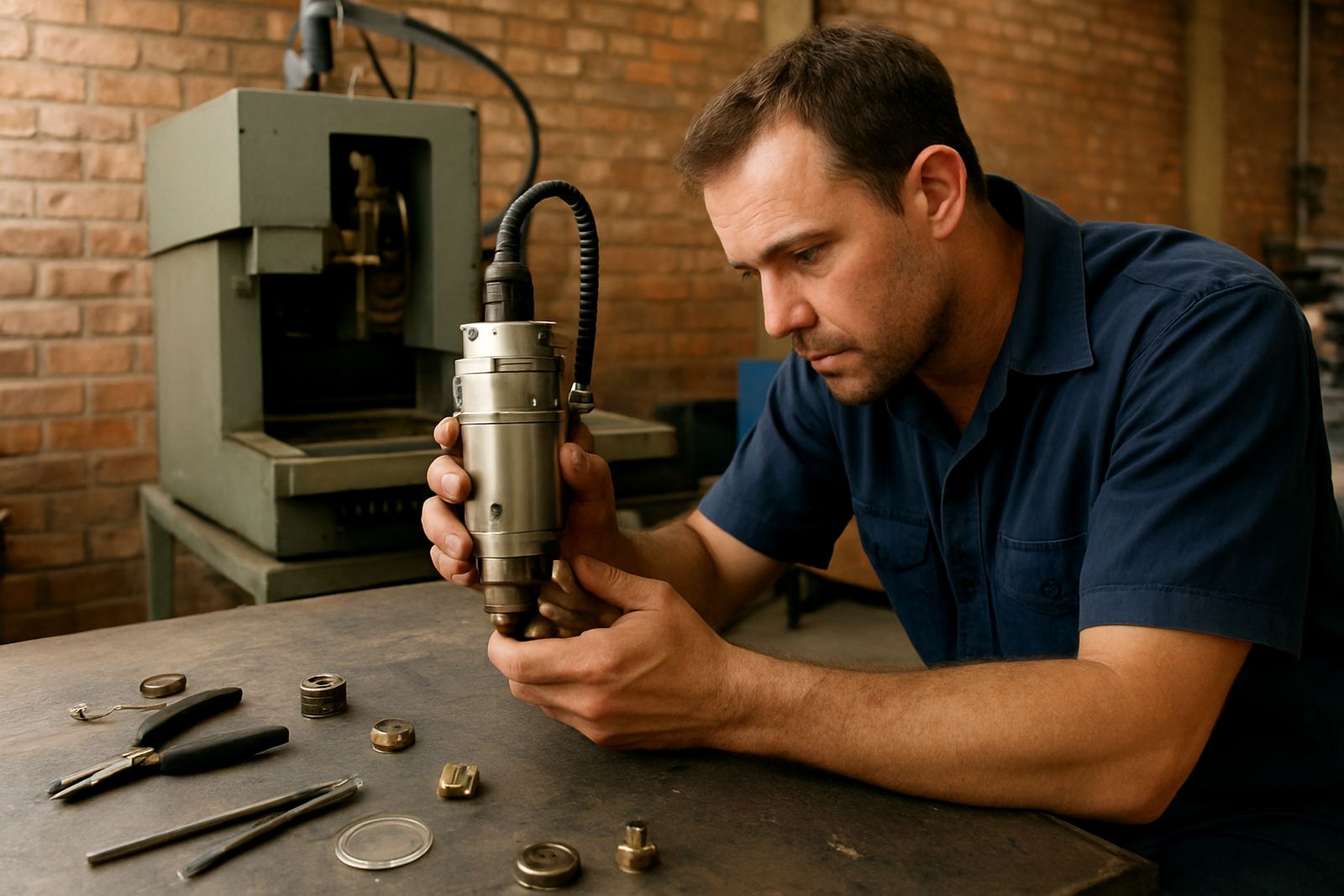
Many breakdowns are best handled on the bench, where the head can be stripped, measured and repaired properly. We carry out strip and inspection work, nozzle seat restoration, lens replacement, window replacement, sensor ring service, ceramic holder change and internal cleaning. Where needed, we also check the gas path and carry out head alignment checks before the unit goes back to site.
Bench repair is often the safest option after a heavy collision or when contamination has spread through the head. It gives the technician a clean area to inspect seating surfaces, sealing points and optical condition. In our workshop, we can test the unit under pressure, confirm the return to service condition, and make sure the head is ready for production. That matters for job shops and signage plants that cant afford a repeat stop the next day.
On Site Support For Running Workshops
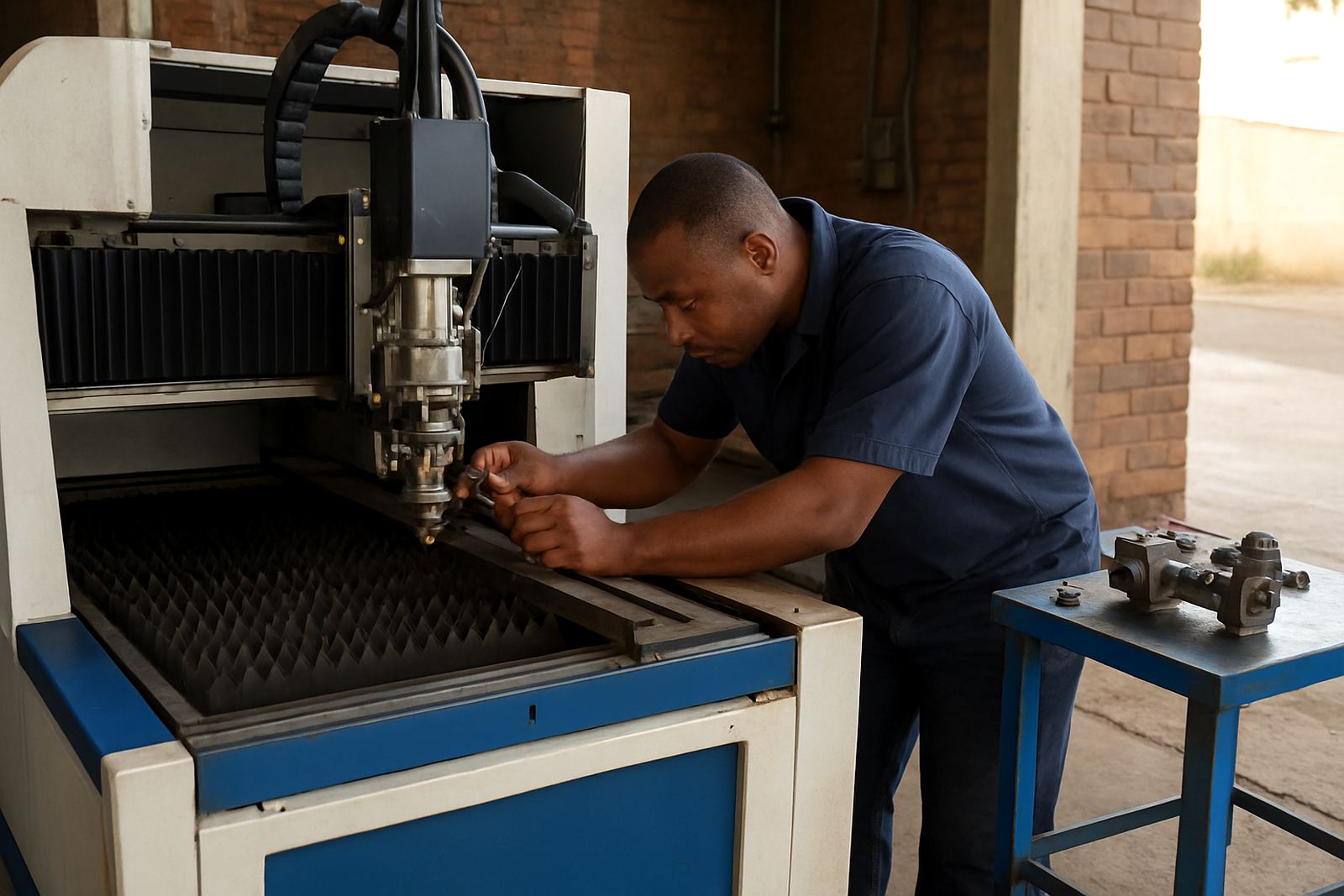
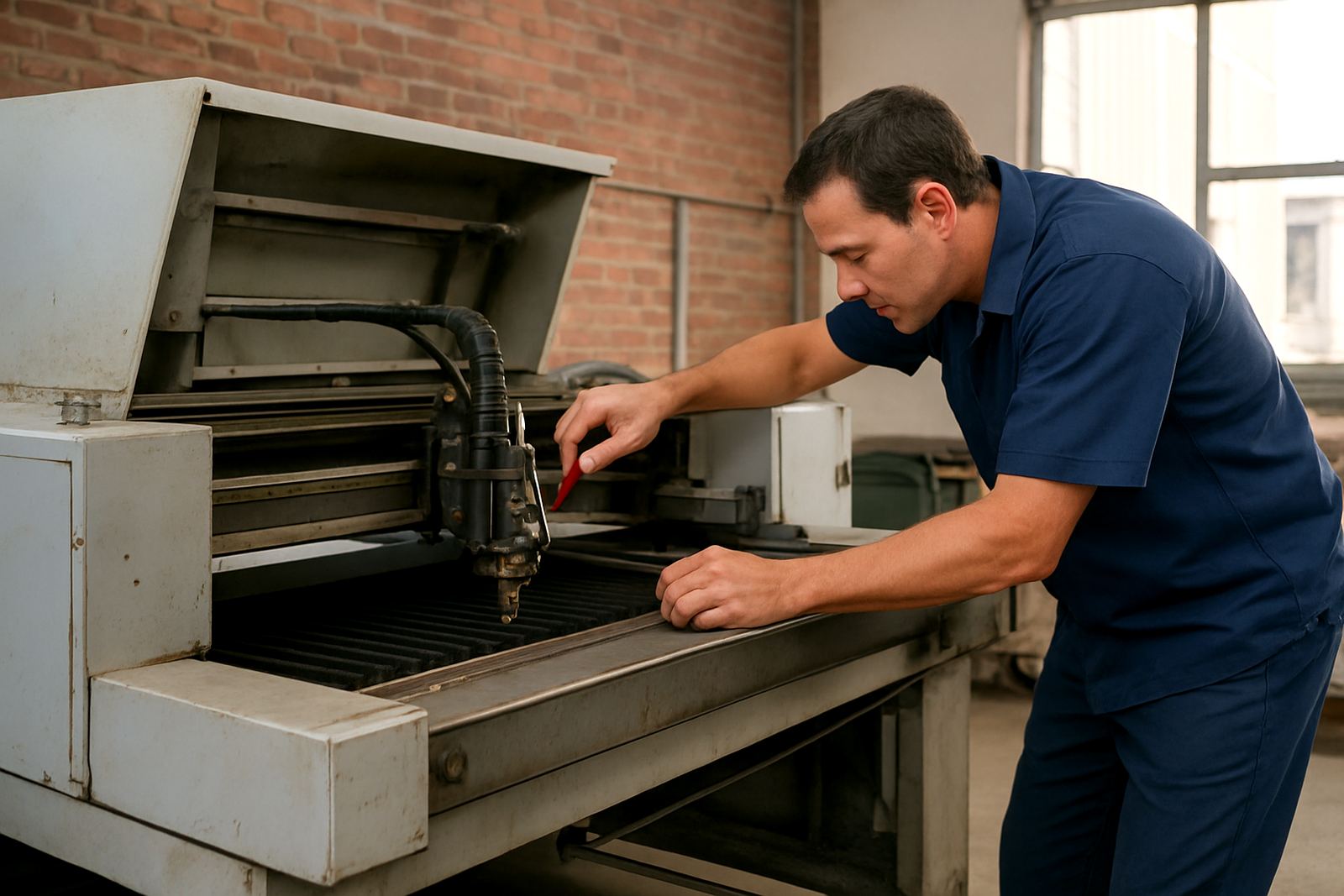
When moving the machine is not practical, we can attend on site and work around the plant’s production schedule. This is useful for larger fabricators, municipal contractors and busy job shops that need the cutter checked where it stands. On site support can include diagnosis, cleaning, head alignment checks, gas path checks and replacement of worn items that are causing the fault.
- Fibre laser cutters with cutting head errors or poor edge quality.
- CO2 systems with lens issues, beam path contamination or unstable cutting.
- Machines that stopped after a head strike, sensor fault or height control error.
- Sites needing fast turnaround before the next shift starts.
We work with practical site conditions in mind, including cramped bays, dust, heat and moisture. In coastal areas like Durban and Cape Town, humidity can affect optics and fittings if they are not kept clean and dry, so early inspection saves money.
Parts Supply And Replacement Work
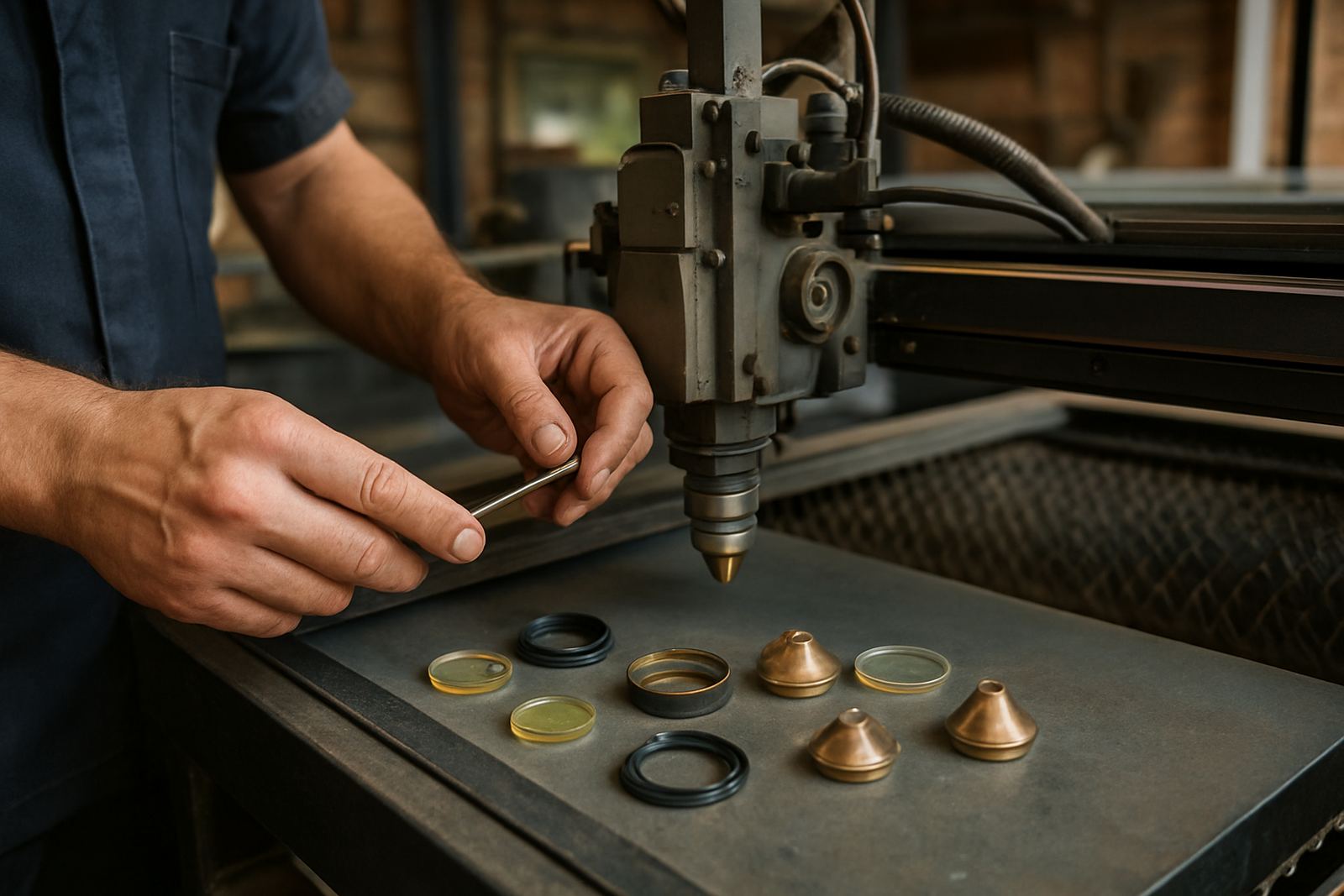
Breakdowns often come down to one worn part that has been ignored for too long. We supply and fit nozzles, lenses, protective windows and related head components for fibre and CO2 machines. If the ceramic holder has cracked, the sensor ring is damaged, or the nozzle seat has been marked by a collision, we replace or restore it before the machine goes back into service.
We keep the focus on parts that matter for uptime. That means less time waiting for guesswork and more time getting the cut quality back to spec. A clean optical path and correct seating can make a big difference to pierce quality, kerf consistency and edge finish. It also helps reduce rework on sheet metal, tube and signage jobs.
How To Get Help Today
Use the enquiry form on our contact page and send a clear description of the fault. Tell us your machine type, the symptom, the site location and whether you need workshop bench repair or on site support. If there is an urgent production deadline, say so at the start. We will use that information to route the request to the right person and arrange the next step.
Our team is based in Boksburg, Ekurhuleni and supports surrounding areas including Germiston and Kempton Park, as well as wider South African sites that need reliable laser uptime. From first diagnosis to return to service testing, the goal is to get your machine back to work with as little interruption as possible. If the head has taken a knock, dont wait and hope it clears itself. Early action usually keeps the repair smaller and the downtime shorter.