Why the repair path is different on fibre and CO2 systems
Fibre laser cutters and CO2 laser cutters do the same broad job, but the way they create the beam is very different. That changes everything from diagnosis to the parts that wear first. On fibre systems, damage often shows up in the cutting head, nozzle area, lenses and protective windows. On CO2 systems, technicians also deal with mirrors, alignment drift, tube output issues and contamination in the beam path.
In practice, a fibre machine may still power up and move normally while the cutting head is no longer holding focus properly. A CO2 machine might show weak cuts across the bed, even though the problem is hidden in mirrors, tube condition or alignment. Good repair work starts with the source of the fault, not just the visible symptom.
Typical fibre laser faults we see in workshops
Fibre cutters are common in job shops, signage plants and sheet metal workshops because they are fast and efficient. When they go wrong, the faults are usually concentrated in the head assembly or contamination around the beam exit. A collision, poor gas quality or dirty consumables can push a machine off spec quickly. In Boksburg, we often see units that still run but are leaving dross, burning edges or misfiring on corners.
- Nozzle damage after a head strike or sheet lift
- Protective window marking from back-reflection or dust
- Lens contamination from poor gas flow or bad maintenance
- Sensor ring faults that trigger alarms and stop cutting
- Ceramic holder cracking after repeated impact
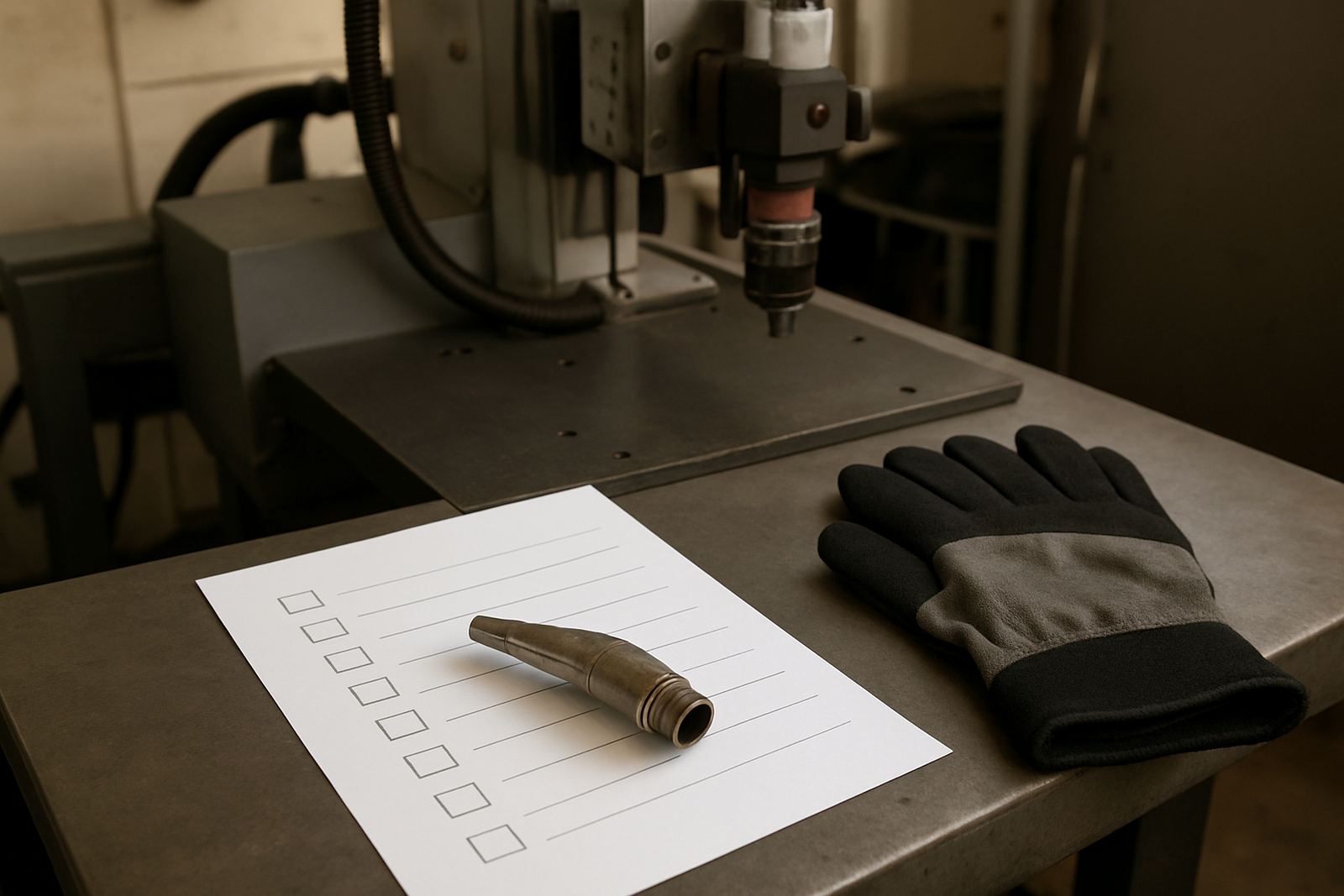
For fibre repairs, strip and inspection is usually the first step. That lets the technician check the nozzle seat, lens condition, window, alignment and internal cleanliness before the machine goes back into production.
How CO2 repairs differ on the bench
CO2 machines need a different kind of attention because the beam travels through mirrors and long optical paths. A small knock, a dirty mirror or a tube that is dropping output can change the cut over the full bed. The machine may seem fine on thin material, then struggle on thicker plate or produce uneven edges on one side of the table.
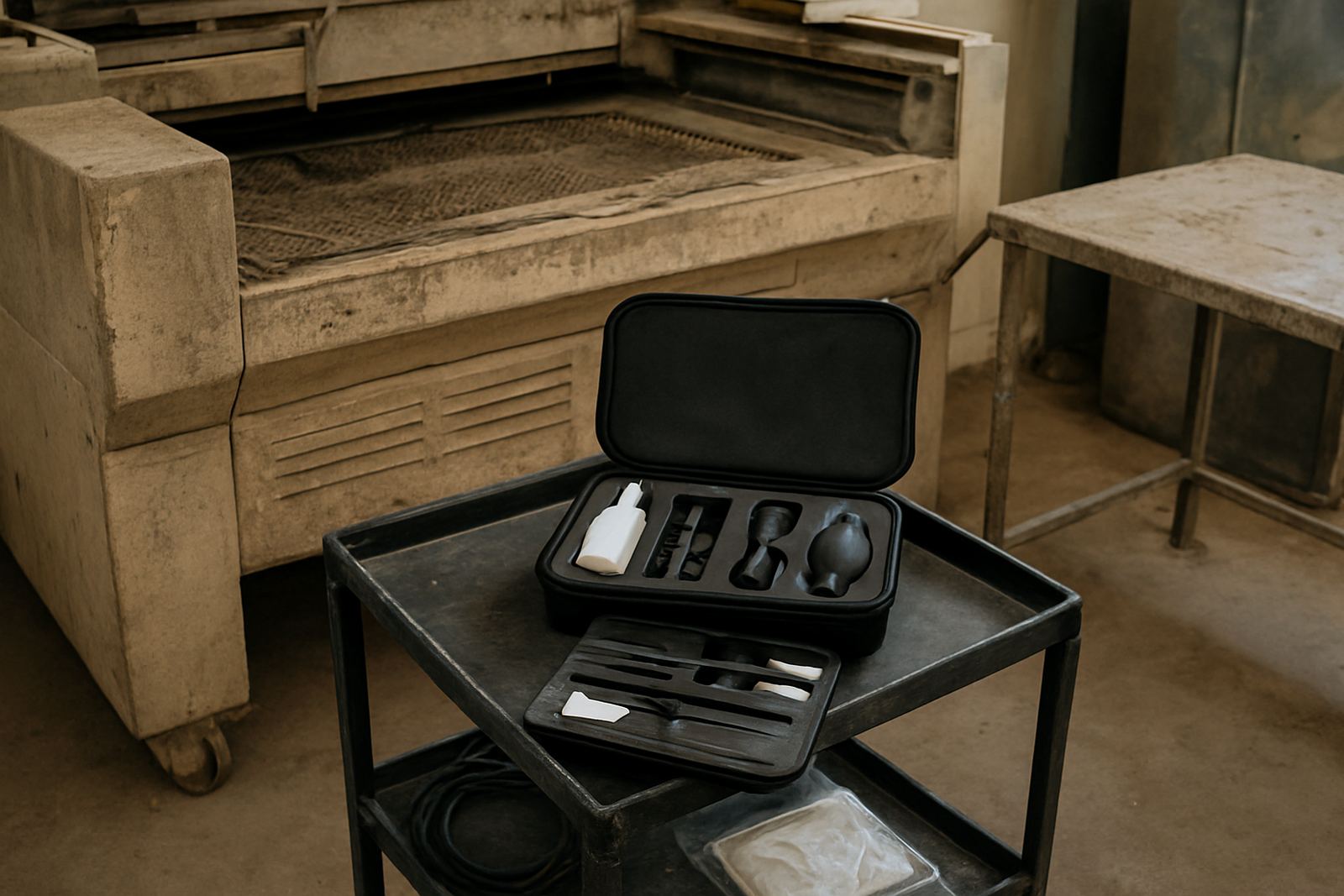
CO2 repair work often includes head alignment, mirror checks, internal cleaning and a pressure test before return to service. If the beam path is not true, the machine wastes power and can make a bad cut look like a software problem when it is really mechanical.
Here is the practical difference: a fibre head fault is often localised and quicker to isolate, while a CO2 fault can be spread across the full optical path. That is why bench repair is so important on CO2 systems. It gives the technician a clean way to test each section one by one.
What to check first before the machine loses a shift
Many downtime calls can be shortened if the workshop team watches for the early signs. A machine that still runs but cuts badly is usually giving warnings long before it stops completely. On fibre systems, the first clue is often a change in cut edge quality, more spatter or repeated head alarms. On CO2 systems, the cut may vary from one side of the sheet to the other, or power may drop off when the machine heats up.
- Check whether the fault is on all material or only one thickness
- Confirm if the alarm appears during movement, piercing or steady cutting
- Inspect nozzles, windows and lenses for visible damage
- Listen for gas flow changes or unstable pressure
- Look for repeat marks after a recent collision or sheet tip-up
If the symptoms are localised, the head may only need targeted repair. If the fault keeps returning after cleaning, the system probably needs a deeper strip and inspection.
A local example from an Ekurhuleni workshop
A metal fabricator in Ekurhuleni called after a fibre cutter started leaving rough edges on a batch of brackets. The operator had already changed consumables, but the problem kept coming back. On site, the machine still homed correctly and no major alarm showed, so it would have been easy to miss the real issue. The cutting head had taken a minor collision the week before and the nozzle seat was no longer true.
After bench pressure test, nozzle seat restoration and window replacement, the head was brought back into spec and the machine returned to production the same day. That kind of repair is common in busy shops, especially where one machine has to carry several jobs and there is no spare cutter waiting in the wings. In Durban and Cape Town, where humidity and airborne dust can also play a part, we see similar faults building up faster if the head is not cleaned and inspected regularly.
The repair route that keeps downtime short
The best repair route depends on how the machine failed, how quickly parts are available and whether the fault can be tested on site or only on the bench. For many South African workshops, the goal is simple: get the cutter back into production without guessing. That means diagnosis first, then parts supply, then repair and return to service testing.
For fibre systems, the most common short repairs are lens replacement, protective window replacement, nozzle seat work, sensor ring service and internal cleaning. For CO2 systems, alignment checks, mirror-related fault tracing and pressure testing are more likely. In both cases, a proper return to service test matters because a machine that only looks fixed can still lose a shift tomorrow.
Load-shedding adds another layer. Sudden shutdowns can leave optics dirty, cooling unstable or the machine mid-cycle. After an outage, it is worth checking the head, beam path and pressure settings before starting a full production run.
When to call for on-site work and when to bring it in
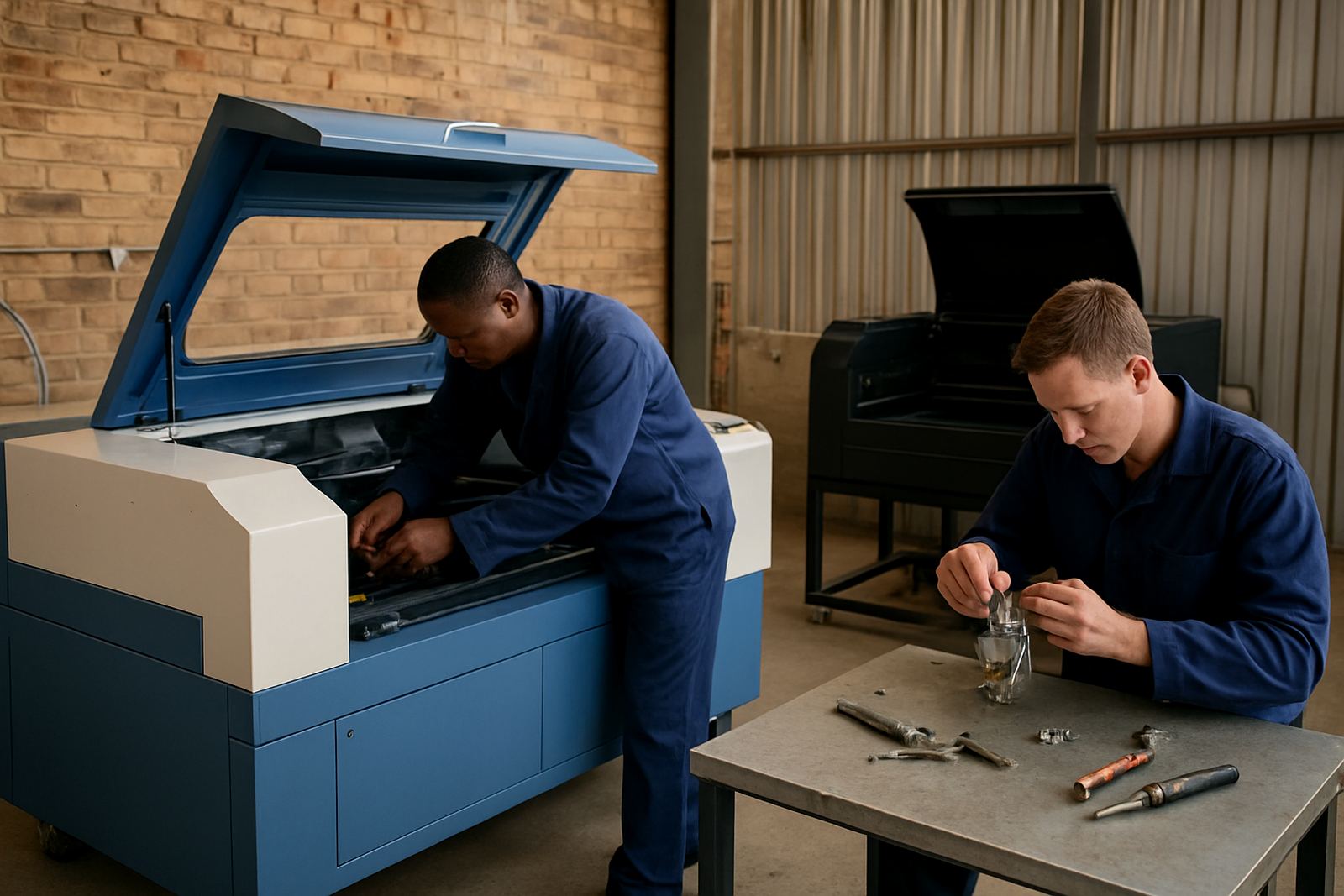
Some faults are best handled on site because the machine is large, the schedule is tight and moving it would cost more time than the repair itself. That is often the case for quick diagnosis, collision recovery and basic head checks. Other faults are better handled on the bench, especially when the head needs strip and inspection, pressure testing or detailed cleaning.
If the machine is still cutting but the quality is dropping, on-site support can stop the problem from spreading. If the system has repeated alarms, poor alignment or a damaged optical path, bench repair is usually the safer choice. That split approach works well for workshops across Johannesburg, Pretoria, Vanderbijlpark, Germiston, Kempton Park and further afield to Cape Town and Durban.
For fibre or CO2 systems, the aim stays the same: keep the machine cutting, keep the faults clear and keep the downtime as short as possible.