Why stock planning matters when a cutter stops
Most laser downtime is not caused by a major failure. It comes from small parts that wear out, get damaged in a collision, or slowly drift out of spec until the cut quality drops. If your team has to wait for a nozzle, lens or sensor ring while jobs back up, the delay gets expensive fast. That is true in a busy job shop in Boksburg and just as true in a fabricator’s plant in Cape Town where coastal humidity can add another layer of trouble.
A sensible parts plan gives you a buffer for the items that fail most often and the items that take time to source. You do not need to overstock every component. You do need enough on the shelf to keep the machine moving through normal wear, load-shedding interruptions and the odd collision that bends a cutting head out of line.
Consumables worth keeping on the shelf
The first stock line should always be the parts that touch the beam or gas stream most often. These are the parts that are cheap compared with lost production, and they are the ones most workshops forget until they need them.
- Nozzles in the sizes you use most often for your sheet thickness range
- Protective windows for each head type on site
- Focus and collimating lenses where the machine design uses separate optics
- Sensor rings and ceramic holders for the cutting head model in service
- Seals and small fittings used in the gas path
If your team cuts mild steel, stainless and aluminium in the same week, keep stock that matches those common jobs. A small shop in Germiston might only need a few sizes, while a larger plant in Pretoria often needs a wider spread because more than one operator is changing settings during the day.
What to hold for fibre and CO2 systems
Fibre systems and CO2 systems do not fail in exactly the same way, so the spare list should not be copied from one to the other. For fibre machines, keep a close eye on head optics, ceramic parts, windows and any item that protects the internal beam path from dust or splashback. For CO2 systems, lenses, mirrors where applicable, seals and cooling related parts need more attention because contamination and heat build-up can hurt cut quality quickly.
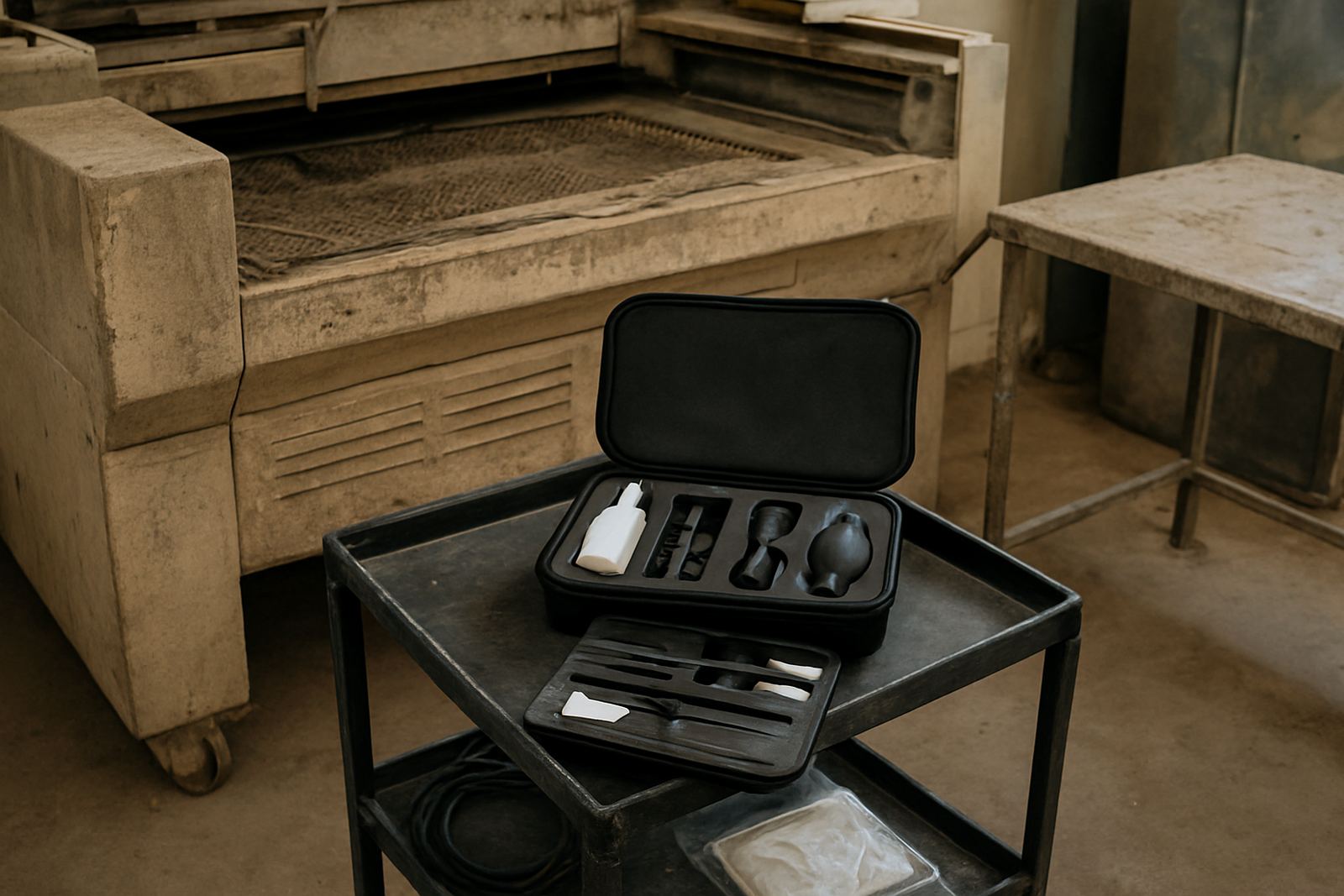
One practical rule is to stock the items that are hard to clean back to service once they are worn. A scratched window or pitted nozzle seat will keep causing problems, even after a quick clean. That is why many workshops keep a small bench kit for inspection and replacement rather than trying to nurse a damaged part through another shift.
- Keep one spare set for the most common head on site
- Hold backup optics for machines that run overtime or night shifts
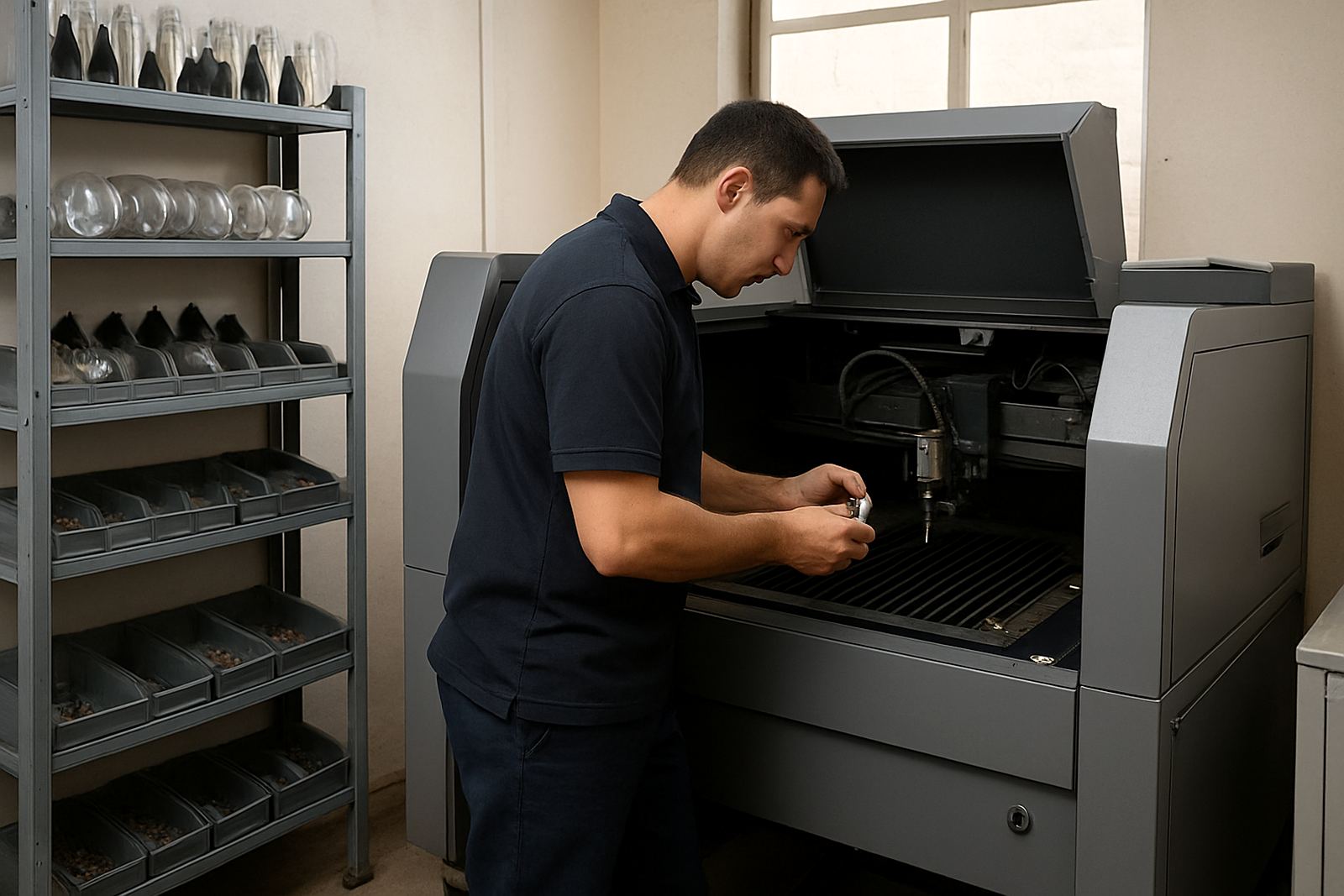
- Store parts in sealed containers so dust and moisture do not ruin them
- Label each item by head type, machine size and cut application
The parts that save you after a collision
Collision damage is one of the biggest reasons a cutting head leaves the machine before its time. A slight tap during programming, a lifted sheet, or a bad pierce can bend components that still look fine at first glance. Once that happens, the head may no longer hold alignment, and your cuts start showing burr, taper or inconsistent pierce quality.
The best stock for this kind of problem is not only the worn part itself. It is the set of items needed to restore the head properly. That usually includes a nozzle seat, ceramic holder, sensor ring, protective window and sometimes the lens. If you keep these in stock, a technician can strip, inspect and return the head to service much faster. A missing ring or holder can hold up the whole repair even when the damage is otherwise straightforward.
How much to keep without tying up too much cash
Parts stock should match your production risk, not just your budget. A workshop running one shift on light sheet work may only need a modest shelf. A plant in Vanderbijlpark cutting thick plate through the week will want more backup because the machine stops cost more per hour. The right balance comes from tracking what you actually replace over 3 to 6 months.
Start with the items you replace most often, then add one spare for anything that would stop the machine completely. Keep a second unit only where lead times are long or the machine is central to every order. That approach keeps cash in the business while still protecting uptime.
- Review usage monthly, not only when a part runs out
- Check lead times for imported items before stock gets low
- Separate fast-moving consumables from emergency repair parts
- Keep records of which operator or line uses which parts most
A local example from a Boksburg workshop
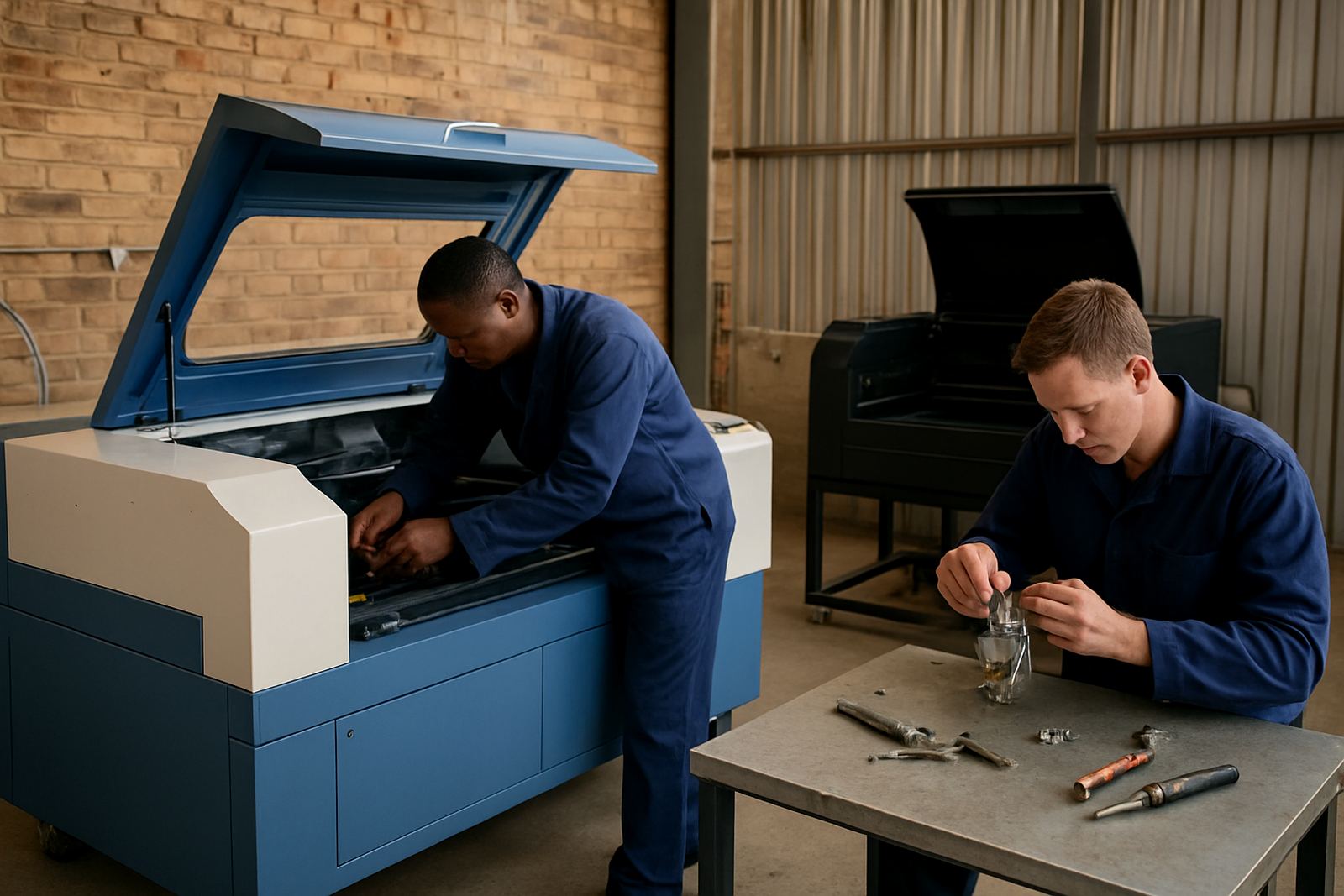
A metal fabricator in Boksburg was losing almost half a day every time a head issue showed up after a strike on the table. The machine itself was still sound, but the workshop did not keep the right small parts on hand, so every repair waited on sourcing. After a stock review, they started keeping nozzles, protective windows, a ceramic holder, sensor rings and one complete lens set for their main cutting head. They also labelled the spares by machine and cut type.
The next time the head took a knock, the repair moved much faster because the technician could strip, inspect and replace what was needed without pausing for missing items. The result was not magic, just better planning. Less waiting, fewer emergency calls and a better chance of getting the day’s work out on time, even when load-shedding interrupted the schedule.
A practical stock check before the next breakdown
If you want fewer surprises, walk through the machine area and make a simple list: what wears out, what gets damaged, what is hard to source, and what must be kept sealed. Then compare that list with your current shelf. If a part is critical and you do not have a spare, that is the gap to close first. If a part is cheap but often used, keep a deeper count. If a part only fails after a crash, keep one set ready and make sure everyone knows where it is stored.
Good parts planning is not about filling shelves for the sake of it. It is about making sure the machine can return to cutting as soon as the fault is found. In most shops, that is where the real savings are.