What collision damage repair covers
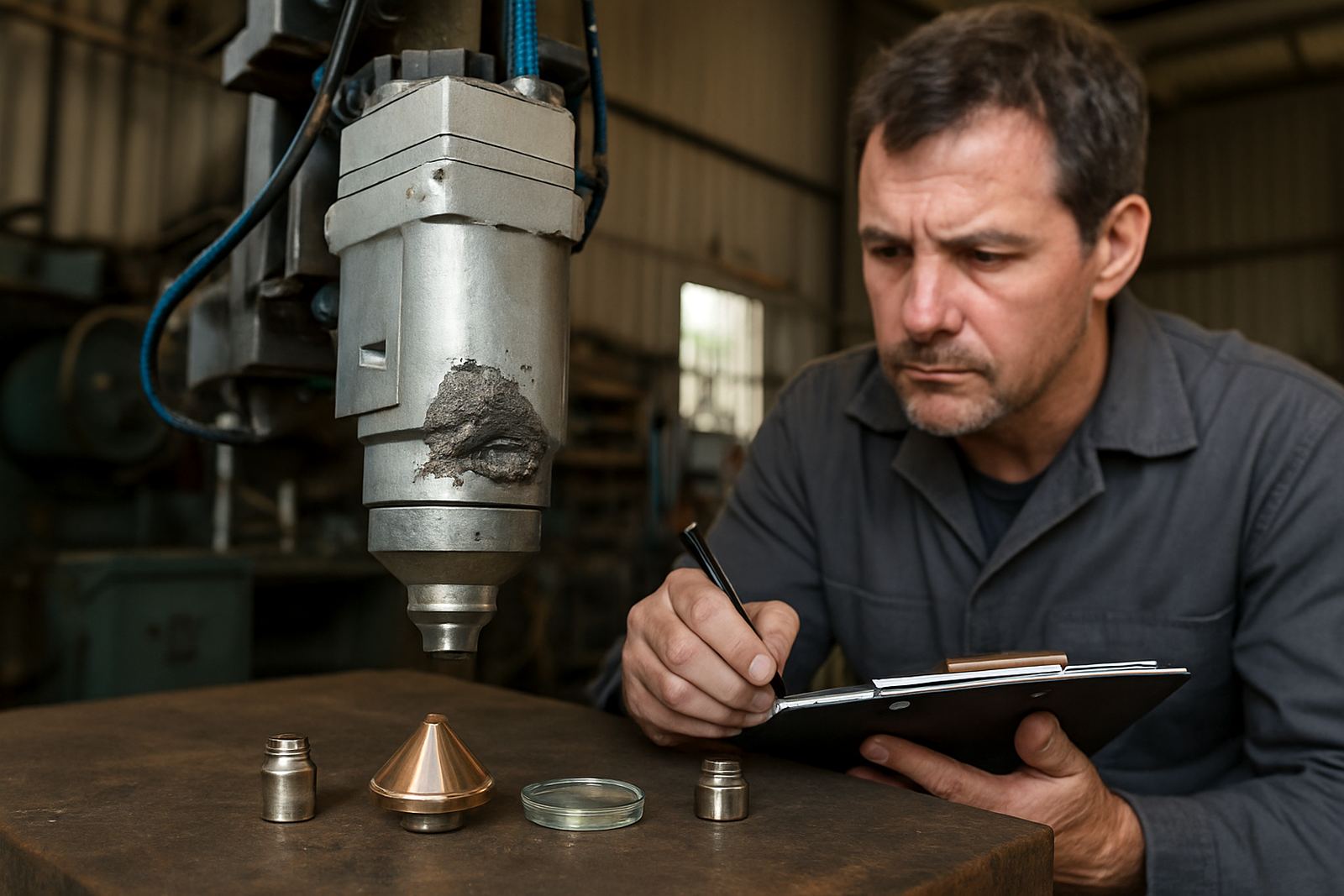
Collision damage repair is the corrective work needed after a crash, drag event or sudden head strike has bent the mounting, shifted the optical path or damaged internal sensor parts. In a busy shop that runs mild steel, stainless or aluminium, even one bad collision can affect pierce quality, cut height and edge finish. We inspect the head assembly, strip the affected parts and check what can be restored and what must be replaced.
Typical damage includes bent nozzles, marked nozzle seats, cracked ceramics, damaged sensor rings, loose internal optics, contaminated windows and disturbed alignment. If the crash was severe, we also check the head body, cable strain reliefs and mounting surfaces for distortion. The aim is not only to make the unit work again, but to return it to stable cutting conditions with proper centreing and clean beam delivery.
Our repair work suits job shops, signage plants and fabricators in Boksburg, Johannesburg, Pretoria, Vanderbijlpark, Durban and Cape Town. We handle fibre and CO2 systems, on the bench or on site depending on the fault and how quickly production must resume.
Signs the head needs repair after a crash
Some crashes are obvious, others only show up in cut quality. If the machine has suddenly started leaving dross, cutting off-centre or burning edges after a collision, the head should be checked before the fault spreads to lenses or upstream components. A small impact can move parts by fractions of a millimetre and that is enough to affect kerf control.
- Head alarm or height control fault after impact
- Visible bend on nozzle, holder or mounting face
- Repeated misfires, poor piercing or unstable cut height
- Black marks on the protective window or lens housing
- Scraping noises, dragging marks or contact with plate
- Sudden change in cut angle or edge quality on fine detail work
If the machine has had a near miss in a load-shedding restart, loose sheet on the bed or a collision caused by warped material, do not keep running it hard. Continued use can turn a repair into a full head rebuild.
Our repair process from inspection to return to service
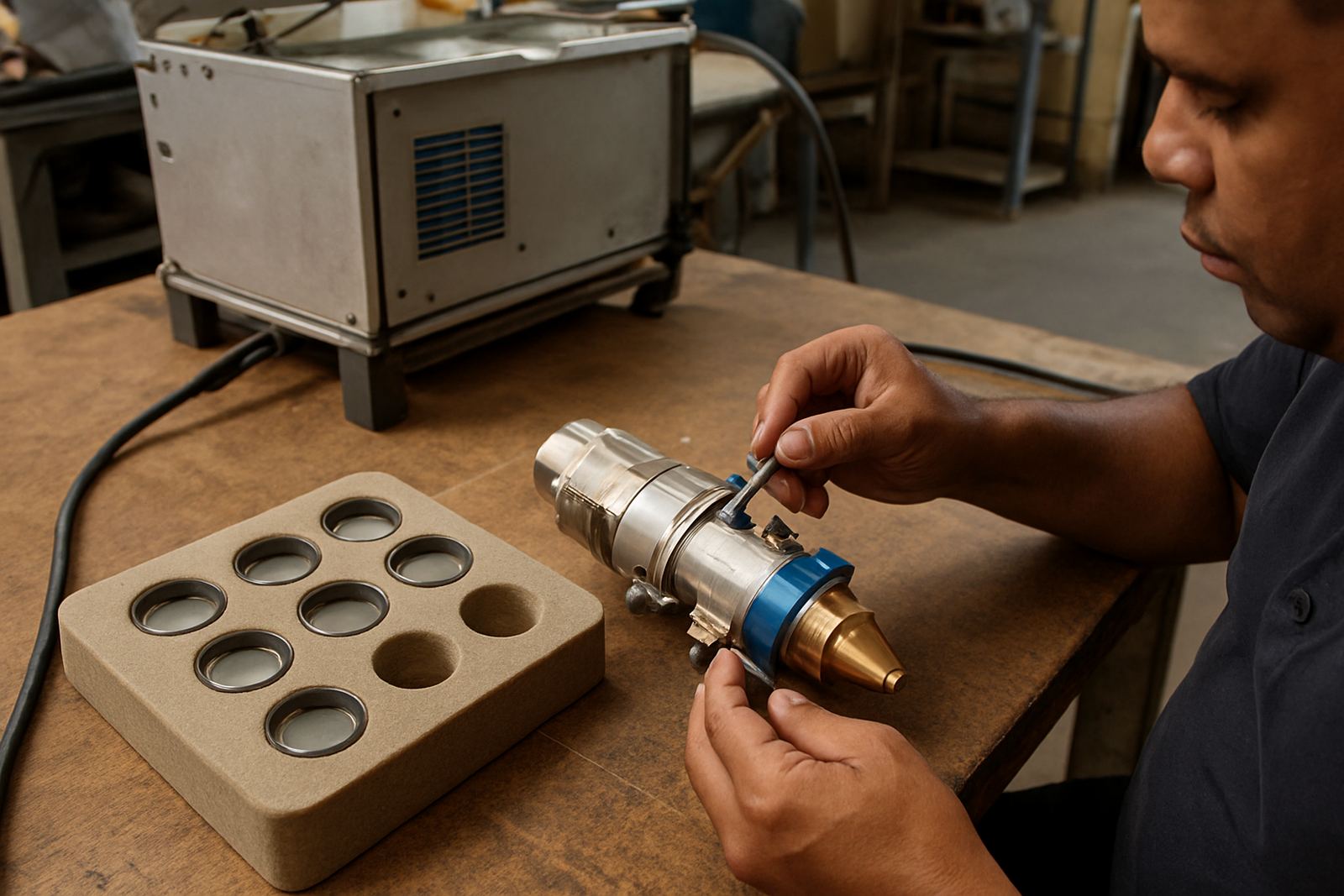
We start with a detailed strip and inspection to confirm the extent of the collision. The head is checked for mechanical damage, internal contamination, sensor faults and optical misalignment. We then separate reusable parts from items that have to be replaced, and we record the condition of the nozzle seat, ceramic holder, lens stack and window housing.
- Initial fault assessment and visual inspection
- Strip down of affected head components
- Measurement of mounting faces, seat condition and alignment points
- Replacement of damaged consumables and worn precision parts
- Cleaning of internal passages and optical cavities
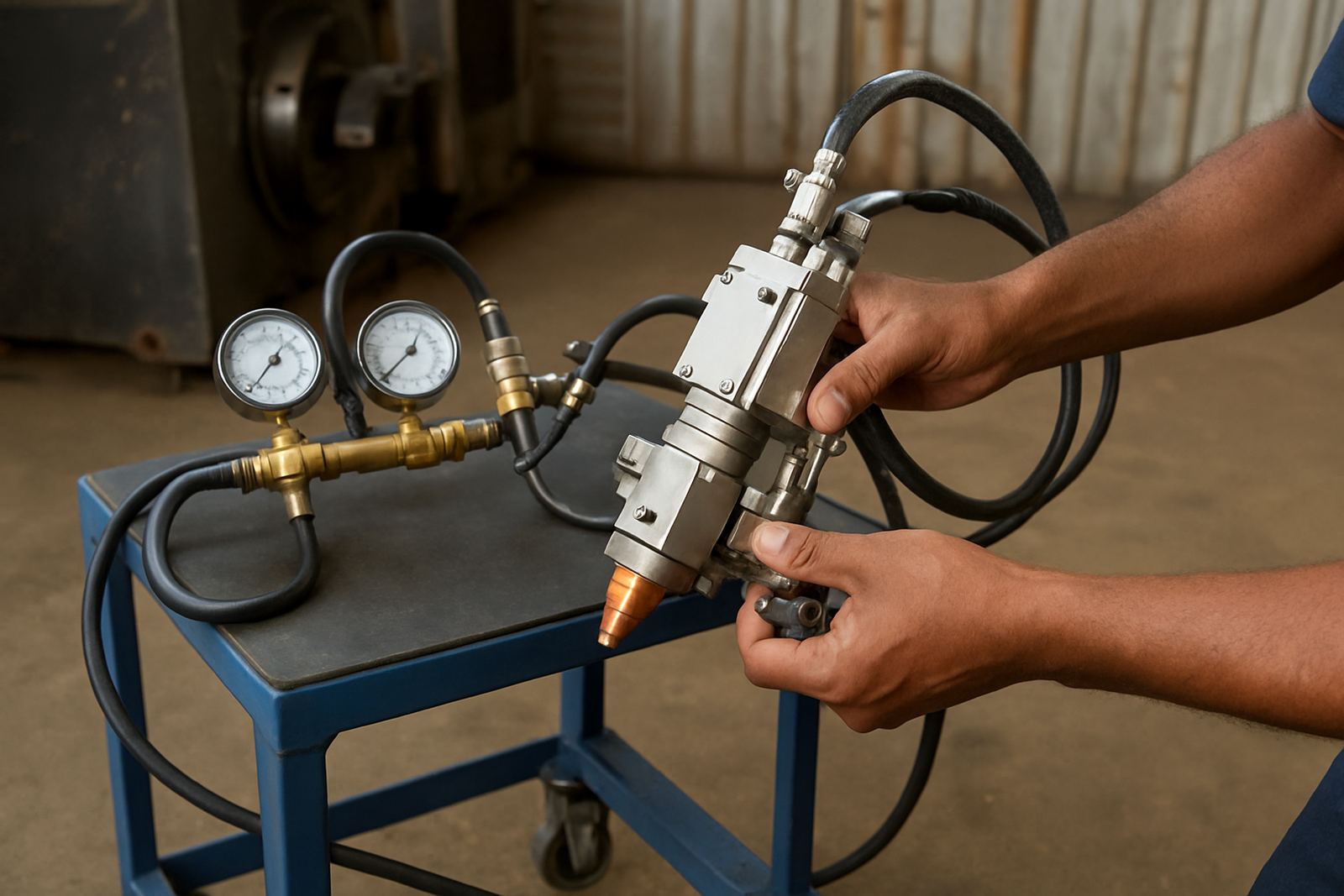
- Bench pressure test and return to service test after assembly
Where required, we also carry out head alignment checks and gas path service to make sure assist gas is moving properly through the repaired assembly. That matters for oxygen and nitrogen cutting, especially on thicker plate where flow consistency affects cut face and slag removal.
Bench repair or on-site intervention
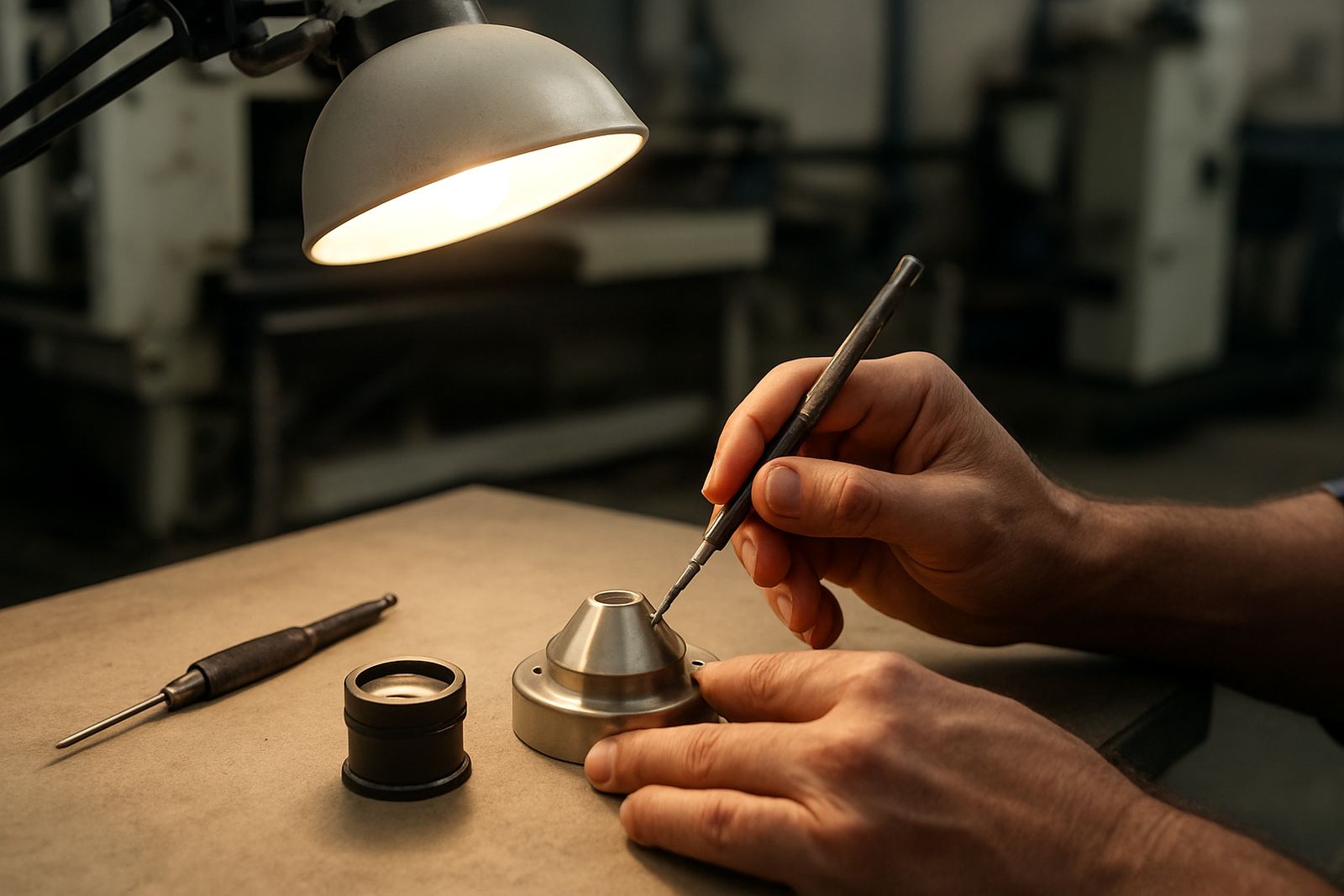
Some collision repairs are best handled in the workshop where we can strip the head fully, inspect under proper lighting and test it before return. Others need on-site attention because the machine cannot be moved or the production schedule is too tight. We support both approaches across South Africa, with field service focused on getting the line running again as quickly as possible.
On-site work is useful where the crash has affected the head but the machine frame, rails and control system are still sound. In the workshop, we can go deeper into precision checks, replace damaged parts and carry out pressure testing without the pressure of a live production bay. If the fault points to wider machine damage, we will say so early and not waste time chasing a repair that will not hold. That saves cost and avoids repeat stoppages.
For workshops in coastal areas such as Durban and Cape Town, we also look for corrosion, salt ingress and moisture-related contamination when handling the repaired head. Humid conditions can worsen a minor impact if the unit was left open after the crash.
Turnaround times and downtime planning
Turnaround depends on the severity of the collision, the availability of parts and whether the job can be completed on site. Minor repairs with common wear items are often turned around quickly. More severe damage, especially where optical parts and sensor assemblies are involved, takes longer because every step must be tested before the head goes back into production.
We work to keep downtime short by separating urgent repairs from longer rebuilds. If a workshop needs to keep cutting same day, we can advise whether a temporary repair is safe, or whether the head should be removed and bench repaired while production shifts to another machine. In many cases the fastest route is a controlled repair now rather than trying to nurse a damaged head through the week.
When booking a collision repair, it helps to provide the machine type, head model, fault symptoms and what happened during the crash. That lets us bring the right replacement items and reduces delay once the unit is opened.
Pricing approach and what affects the cost
Pricing is based on the actual fault, not a fixed blanket figure. A light collision that only damaged the nozzle seat and protective window costs less than a full repair involving sensor rings, ceramics, internal optics and alignment correction. We quote according to the condition found during inspection, the parts required and whether the repair is on site or in the workshop.
Cost is influenced by several factors:
- Extent of mechanical damage after the impact
- Need for optical parts or precision consumables
- Bench testing and alignment time required
- Travel for on-site service outside Boksburg and Ekurhuleni
- Whether the head needs a return to service test before release
We keep the pricing approach practical and transparent. If a part can be cleaned, measured and reused safely, we do not replace it just because the head has been opened. That matters for shops watching maintenance budgets and production cost per shift.
Recommended maintenance after a repaired collision
After a collision repair, the head should be monitored closely for the first few shifts. A repaired unit that is not checked properly can drift again if the underlying cause is still present, such as warped sheet, poor nozzle height control or contaminated assist gas. We advise a follow-up check after the first short run and again once the machine has returned to normal load.
Recommended intervals depend on duty cycle, cutting material and site conditions, but a practical guide is to inspect the head every 250 to 500 cutting hours, or sooner if the machine runs in dusty mild steel environments. In humid or coastal sites, shorter intervals help catch corrosion and condensation before they affect the optics.
- Inspect nozzle condition and centring after the first shift
- Check cut quality and pierce behaviour every week at busy sites
- Clean external surfaces and keep protective windows free of spatter
- Review height control and crash protection settings monthly
- Schedule a full head check at 250 to 500 hours, or earlier if faults appear
With the right follow-up, a repaired head can return to normal service and stay reliable. The important thing is to catch the root cause, not only the visible damage.
Key facts
| Repair scope | Collision damage, bent mounts, damaged sensors, disturbed optics |
|---|---|
| Head types | Fibre laser heads and CO2 laser heads |
| Service format | Bench repair and on-site intervention |
| Typical checks | Strip inspection, alignment check, pressure test, return to service test |
| Coverage area | Boksburg, Johannesburg, Pretoria, Vanderbijlpark, Durban, Cape Town and surrounding areas |
| Use cases | Job shops, signage plants and metal fabricators |