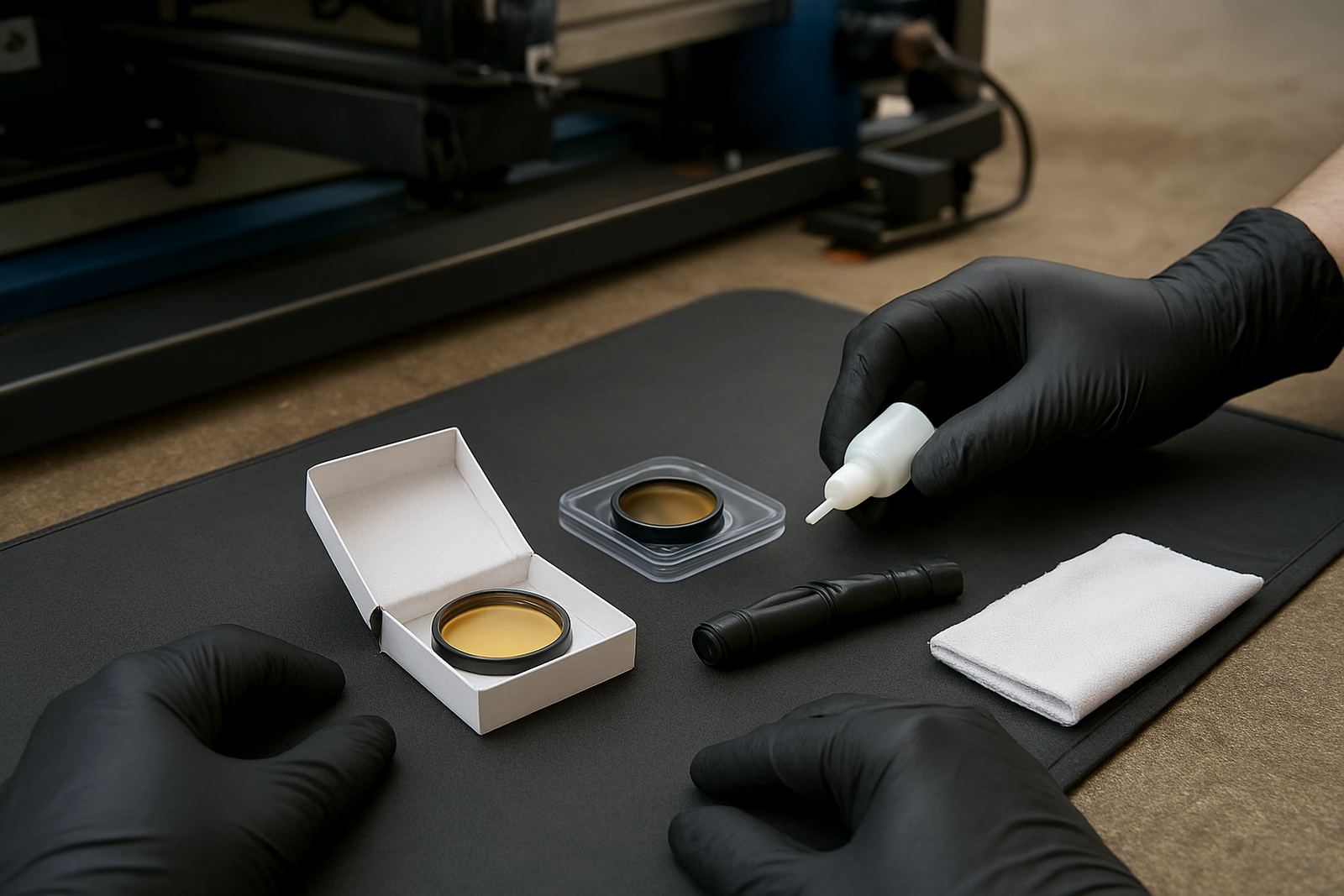
When a lens needs replacing
Lens replacement is not only for cracked glass. In local workshops we often see heat marks, spatter damage, haze from oil mist, moisture staining and edge chips that are small enough to miss at first glance but big enough to affect cut quality. On fibre and CO2 laser machines, a tired lens can show up as wider kerf, burr on stainless, poor edge finish on mild steel, rough corners and more frequent alarms from the cutting head.
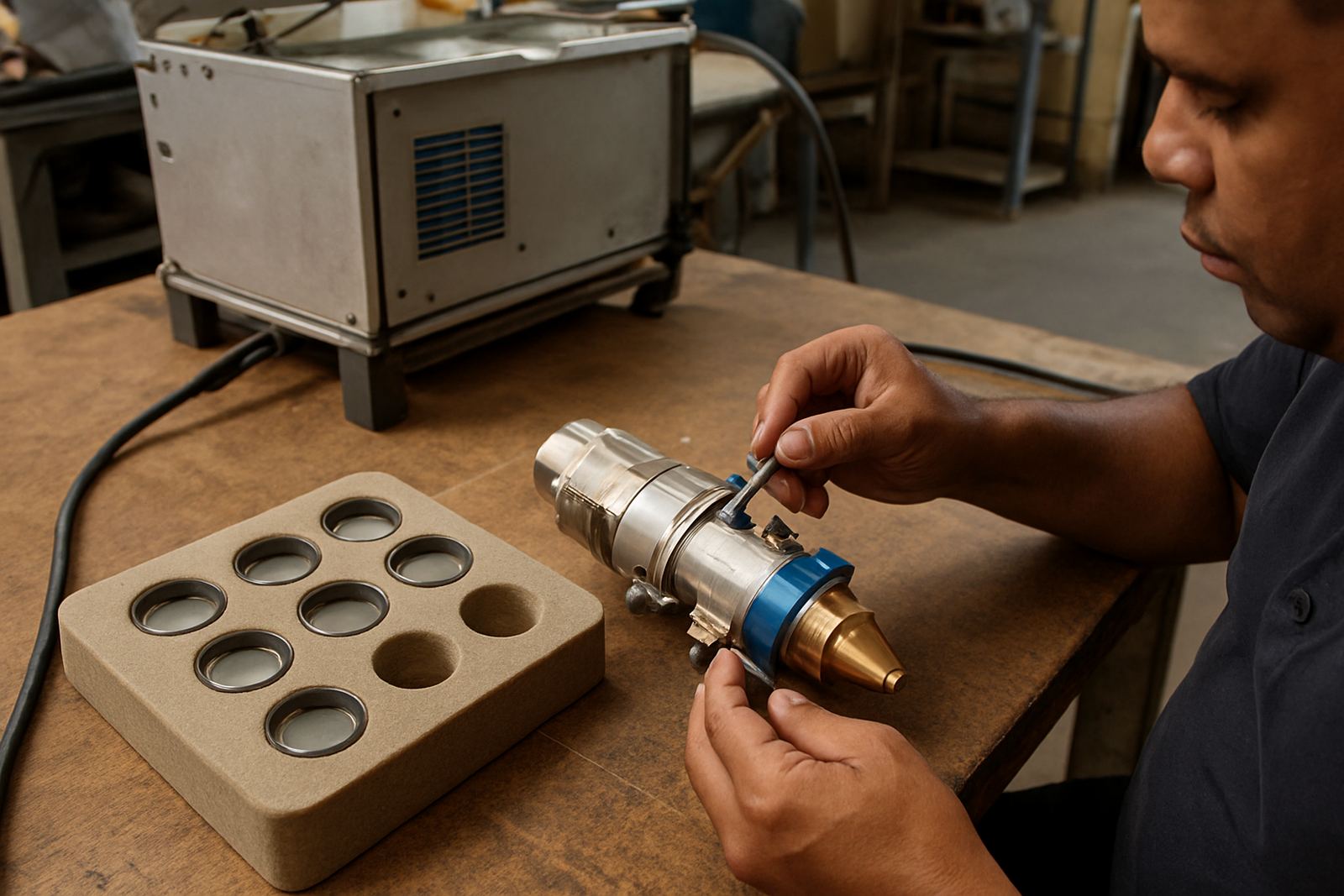
We replace focusing and collimating lenses during head service when the optic is worn, damaged or no longer cleaning up properly. If the head has taken a collision, we check the lens seat, ceramic holder, sensor ring and protective window too, because a new lens will not hold performance if the rest of the stack is still out of line.
- Cracks, chips or burn marks on the optic surface
- Clouding, haze or contamination that does not clean off safely
- Repeated pierce failure or unstable focus position
- Bad cut quality after a nozzle crash or head strike
- Heat spotting after long runs or poor assist gas delivery
What is included in the lens replacement service
Our lens replacement service is done as part of proper cutting head restoration, not as a quick swap and hope for the best. We identify the lens type, inspect the optical path and fit the correct replacement to suit the machine and cutting head setup. Where needed, we clean the internal housing, check seals and confirm the head is still sound before final assembly.
For workshops in Boksburg, Germiston, Kempton Park and the wider Ekurhuleni area, that often means a bench repair first and then return to site once the head is ready. For customers in Johannesburg, Pretoria, Vanderbijlpark, Durban and Cape Town, we handle the same process with practical packing and courier arrangements so parts and heads move safely.
- Inspection of the old lens and the full optical stack
- Supply and fitment of the correct replacement optic
- Cleaning of the lens seat, housing and internal surfaces
- Check of nozzle seat, ceramic holder and sensor ring condition
- Head alignment check after refit
- Bench pressure test and return to service test where required
How we replace the optic without causing more trouble
The process starts with strip and inspection. The technician opens the head carefully, records what is worn and checks for signs of contamination from dust, oil mist or assist gas carryover. If the lens is still intact but contaminated, we confirm whether it can be safely cleaned or if replacement is the better option. If there is any doubt, we recommend replacement because a damaged optic can fail again under load.
Once the correct lens is selected, we fit it with clean handling practices and verify seating depth, orientation and the condition of all nearby parts. The head is then reassembled and checked for leaks, looseness and any signs of misalignment. On some machines a lens change is straightforward, on others it is tied to collision damage repair or nozzle seat restoration, especially where the head took a knock on 1.5 mm to 12 mm sheet work. That extra step saves repeat failures later.
- Strip and inspection of the cutting head
- Optic identification and compatibility check
- Careful fitment of the replacement lens
- Seal and seating inspection
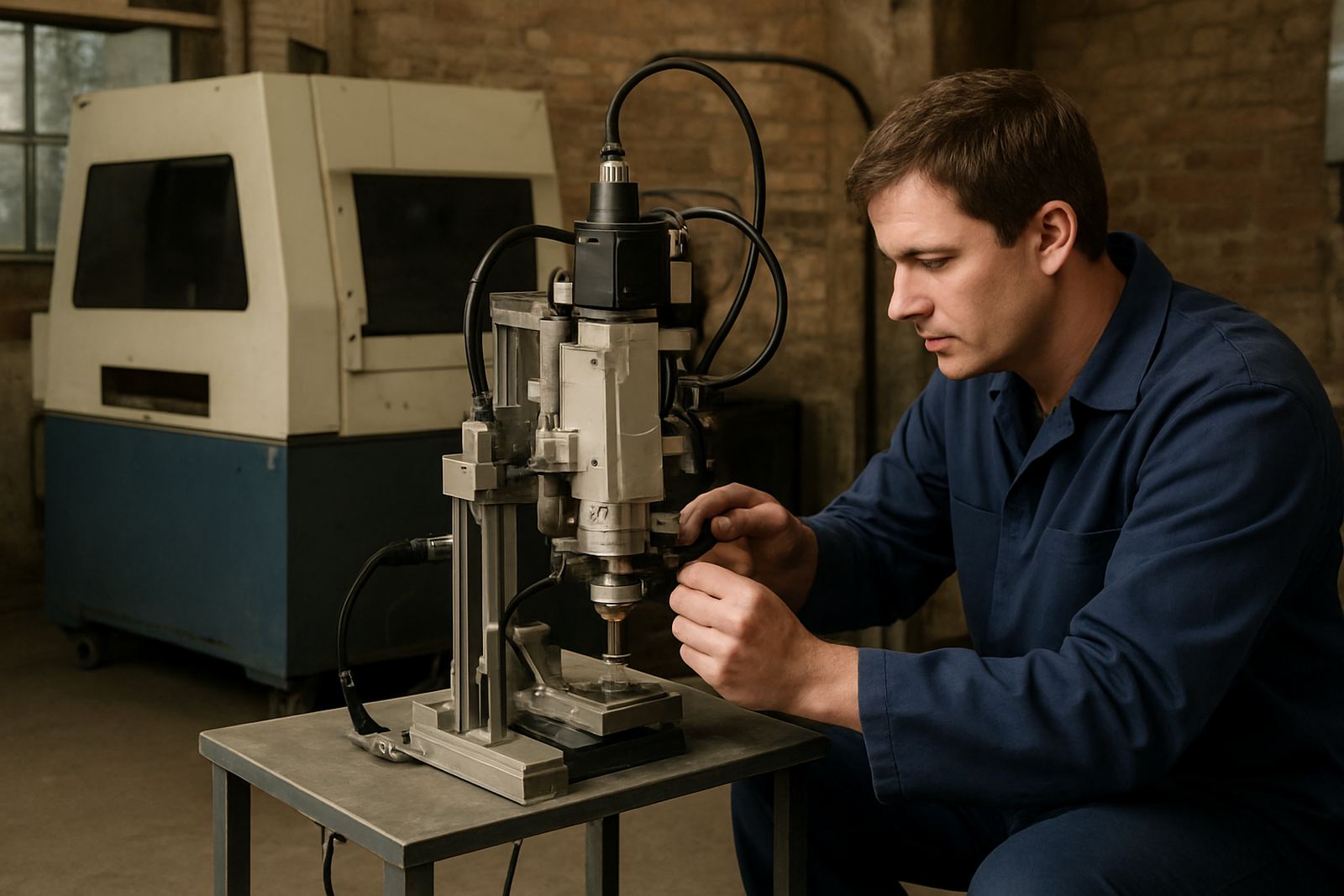
- Alignment check and pressure test
Specs we check before fitment
Lens replacement is only useful if the optic matches the machine setup. We check wavelength, diameter, focal length and coating type so the part suits the source and the cutting duty. For fibre systems, the wrong optic can shorten life quickly. For CO2 systems, heat load and beam characteristics also matter, especially on machines that run extended shifts through load-shedding windows and need to catch up after power interruptions.
We also look at the condition of the protective window, gas path and internal cooling around the head. High humidity on the coast can push contamination into the head faster than many operators expect, so a lens that seems fine on Monday may already be compromised by Friday if the cabinet sealing and maintenance routine are weak.
- Wavelength compatibility for fibre or CO2 systems
- Correct focal length for the cutting application
- Lens diameter and mount fitment
- Coating type suited to the laser head design
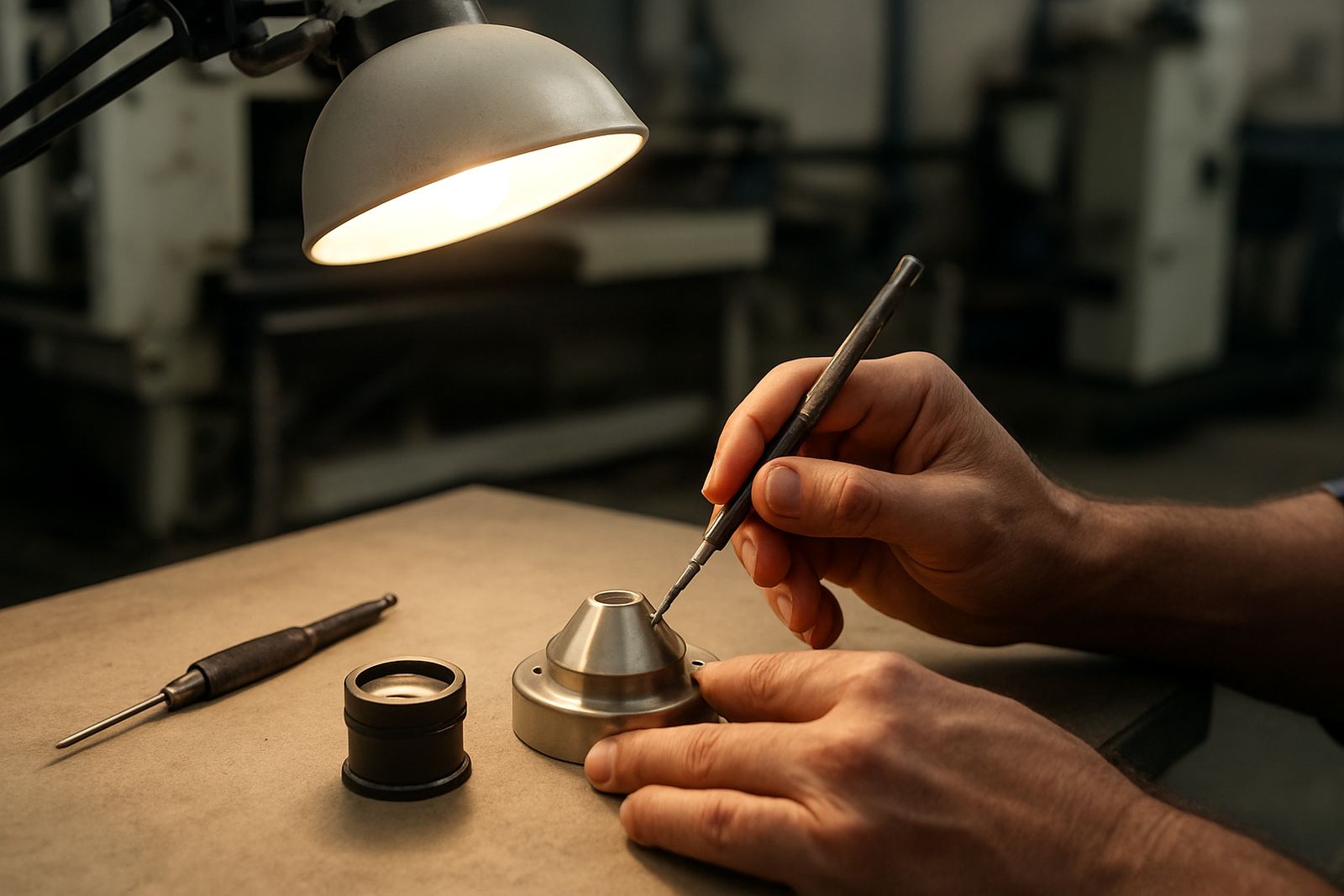
- Surface condition under inspection lighting
- Cleanliness of adjacent seals and windows
Turnaround and pricing approach
Turnaround depends on the head condition, the lens type and whether extra repairs are needed. A simple bench lens replacement can be quick once parts are available. If the head has taken a collision, the work can take longer because we may need nozzle seat restoration, internal cleaning or a return to service test before we release it. We always aim to keep downtime short and give a realistic lead time instead of promising what cannot be done.
Pricing is based on the head model, the optic required and the repair scope. We quote after diagnosis, so you pay for the actual work needed not a blanket rate that ignores the condition of the machine. If a customer only needs a lens replaced and the rest of the head is sound, the cost stays focused. If the problem includes damaged holders or a contaminated optical path, we explain the added items before work continues.
How often lens replacement should be planned
There is no single interval that suits every workshop, but many shops benefit from planned optic checks every 3 to 6 months, with replacement sooner if the machine runs long shifts, cuts reflective material or works in dusty conditions. A busy signage plant in Johannesburg may have a different wear pattern to a fabrication shop in Durban or Cape Town, especially where humidity and airborne dust are a problem.
As a rule, operators should inspect the lens after any crash, after repeated pierce faults, and whenever cut quality starts drifting. If you run a high volume job shop, add lens checks to the same routine as nozzle inspection, gas path service and internal cleaning. That keeps the head in better condition and helps avoid a sudden stop in the middle of an order.
- Inspect after any head collision or nozzle strike
- Check during scheduled service every 3 to 6 months
- Replace sooner if contamination returns after cleaning
- Combine with internal cleaning and gas path service for best results
Why South African workshops call us for lens work
Laser Ray Tools focuses on keeping cutters running. Our team works on fibre and CO2 laser machines from a base in Boksburg, Ekurhuleni, with support for Johannesburg, Pretoria, Vanderbijlpark, Durban and Cape Town. We deal with practical problems that stop production, from worn optics to heads that have been knocked out of line during everyday workshop use.
Clients reach us through the enquiry form on our contact page, and we arrange the next step from there. Whether the job is a single lens replacement or a full cutting-head repair, the aim is the same: restore reliable performance, reduce scrap and get the machine back into production without unnecessary delay.
Key facts
| Service type | Focusing and collimating lens replacement during cutting-head service |
|---|---|
| Machine types | Fibre laser and CO2 laser cutting systems |
| Typical work | Bench repair, on-site service, inspection and return to service testing |
| Condition checks | Lens seat, ceramic holder, sensor ring, nozzle seat and internal contamination |
| Common signs | Poor cut edge, haze, chips, burn marks, pierce faults and alignment drift |
| Coverage area | Boksburg, Johannesburg, Pretoria, Vanderbijlpark, Durban and Cape Town |