What the Alrode workshop was dealing with
The site was a busy metalwork shop in Alrode, Ekurhuleni, supplying ducting components for local installers and commercial projects. Their laser cutter was running daily, often in long shifts, and the cutting head had started giving poor edge quality, unstable pierces and occasional alarms tied to gas delivery. When a machine like that starts misbehaving, the whole production schedule feels it straight away.
The brief was simple: find the cause, fix the fault properly and keep downtime short. They did not want guesswork or a quick reset that would fail again next week. They needed a practical repair on the machine and cutting head, with clear feedback on what had worn, what had shifted and what should be monitored after the repair.
- Site type: ducting and sheet metal workshop
- Town: Alrode, Ekurhuleni
- Machine use: high-volume cutting for ducting parts and fittings
- Problem area: gas delivery, head condition and cut consistency
Fault tracing and strip inspection on the cutting head
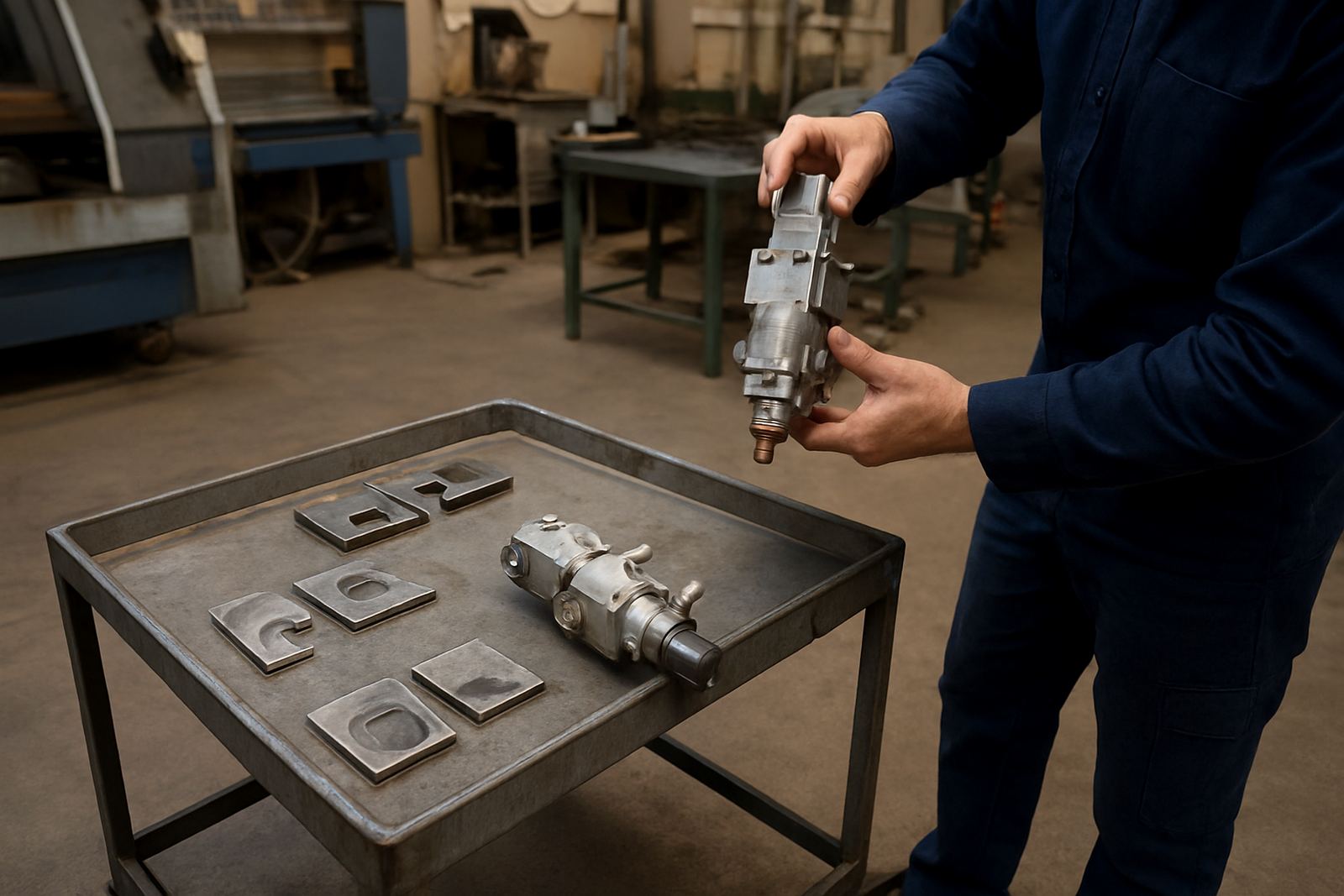
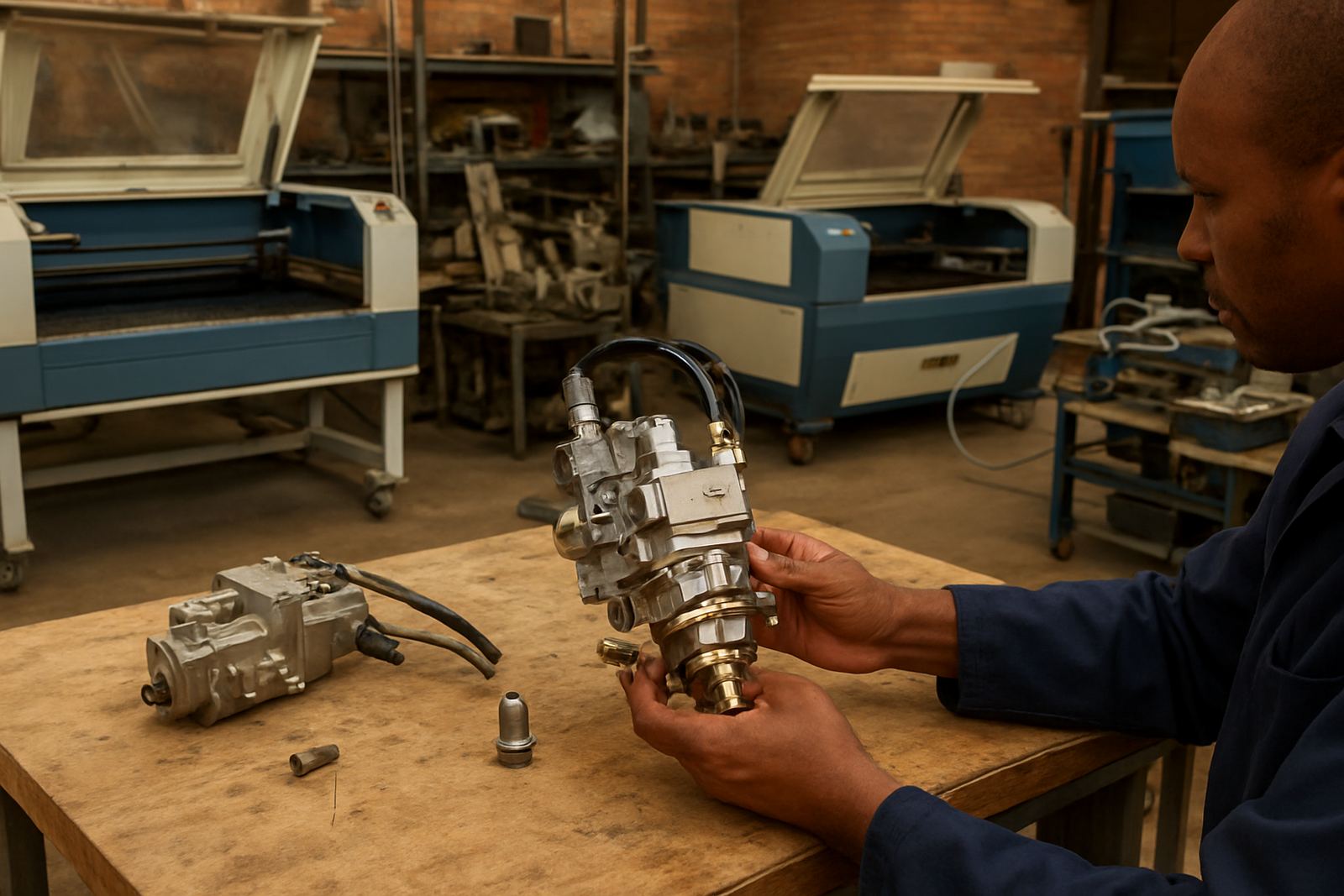
We started with strip and inspection on the cutting head, checking the nozzle seat, ceramic holder, internal cleanliness, lens condition and the protective window stack. The fault pattern pointed to restricted gas delivery and a head that had taken wear over time, rather than one single broken part. On busy machines, that sort of issue can creep in slowly, then suddenly show up as poor cuts and repeated rework.
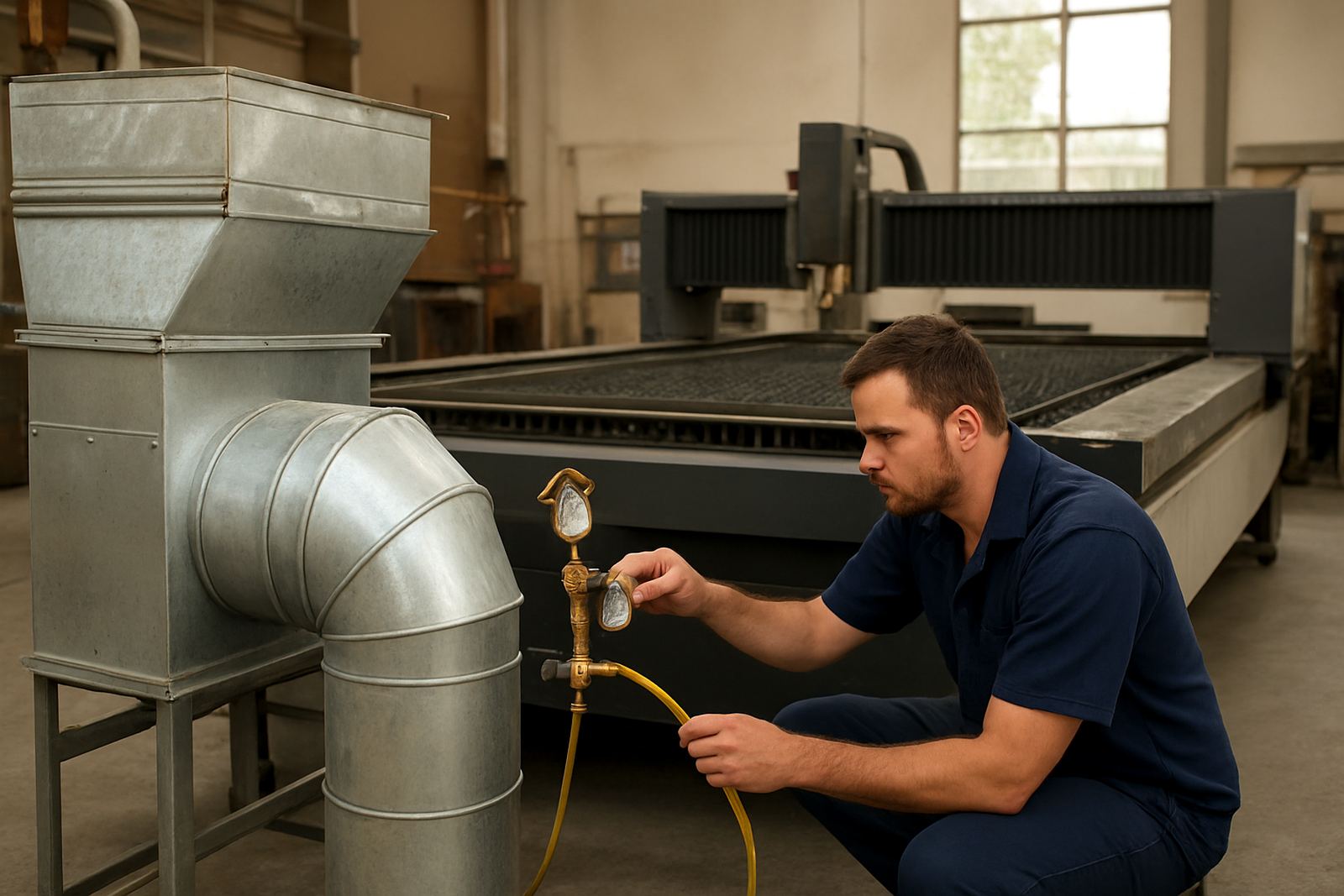
We carried out a bench pressure test and a head alignment check to confirm how the gas and optics were behaving under working conditions. The inspection showed contamination in the gas path, a tired nozzle seat, and a window that was no longer giving clean protection. There were also signs of a minor collision event earlier in the machine's life, nothing dramatic, but enough to knock the cutting-head performance off centre.
- Strip and inspection of the head assembly
- Bench pressure test for gas delivery consistency
- Head alignment check for cut quality and beam position
- Internal cleaning to remove dust and residue
Repairs carried out in the workshop and on site
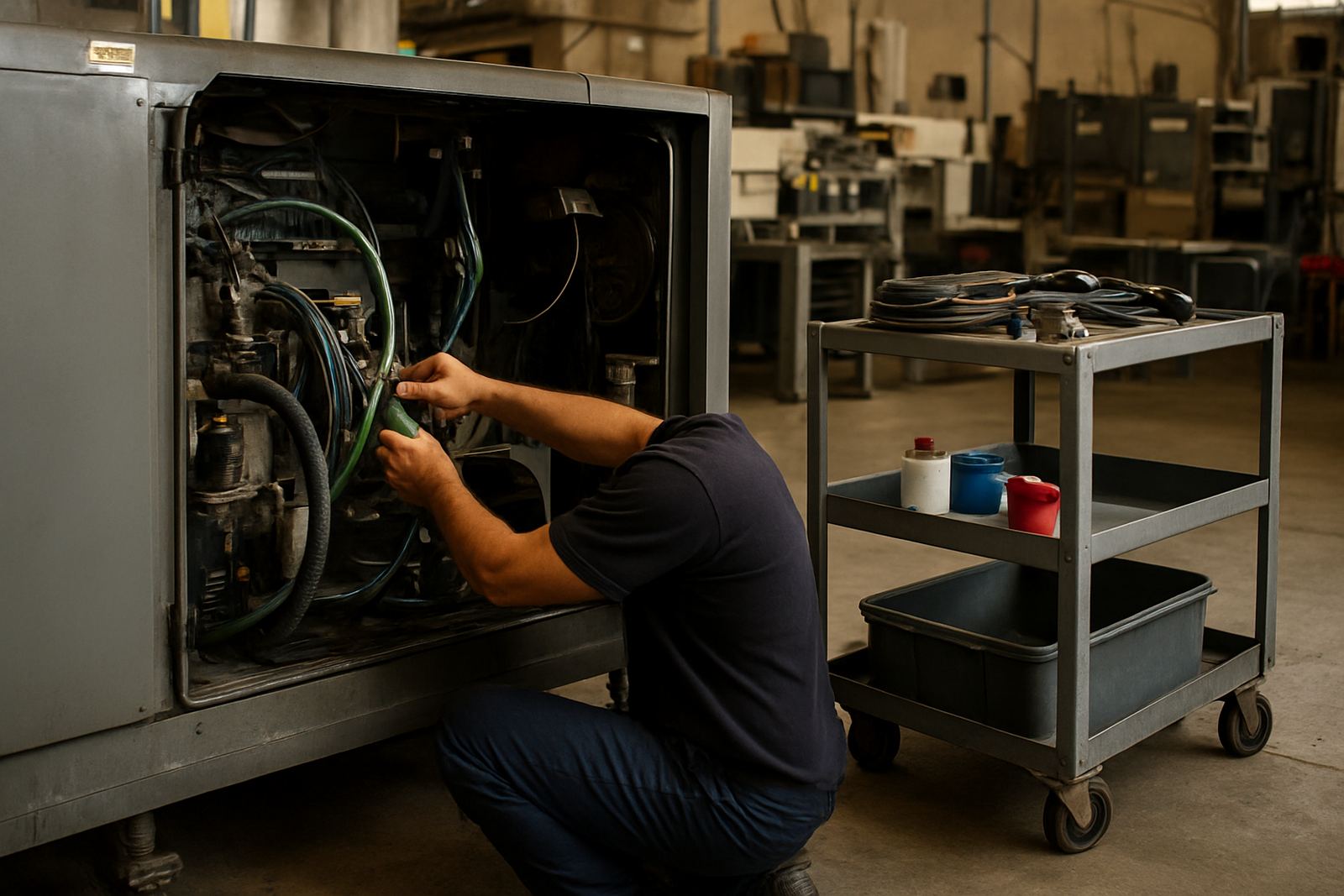
We handled the repair in a mix of bench work and on-site support, depending on what could be checked most efficiently at the machine. The nozzle seat was restored, the lens and protective window were replaced, and the ceramic holder was changed where wear had started affecting stability. We also serviced the sensor ring and cleaned the internal gas path so the head could deliver air and assist gas properly again.
Because the workshop had production pressure and limited spare time, we worked around their shift pattern and kept the machine open for the shortest practical window. Load-shedding was also part of the reality, so we planned the test period carefully and made sure the machine was only returned once power and compressed air conditions were steady. That matters a lot on fibre systems, and just as much on CO2 machines when cooling and alignment need to hold through a full cycle.
- Nozzle seat restoration for better gas flow
- Lens replacement and protective window replacement
- Sensor ring service and ceramic holder change
- Gas path service and internal cleaning
Timeline, testing and return to production
The job ran over two weeks from first call to final return to service. Week one covered diagnosis, stripping and parts assessment. Week two covered repair, bench testing and machine verification at cutting speed. The customer wanted proof that the issue had been solved, not only that the head looked clean, so we repeated the checks under practical cutting conditions and confirmed the results before handover.
Once the repaired head was back in place, we carried out a return to service test and watched for the things that usually betray an incomplete repair: unstable pierce, uneven edge finish, alarm repeat and drifting cut height. The machine held steady. The cut face cleaned up, the assist gas behaved properly again, and the team could resume production with less scrap. It sounds small, but on a ducting line even a few saved sheets makes a difference.
- Timeline: 2 weeks total
- Testing: bench pressure test plus return to service test
- Result: stable gas delivery and improved cut quality
- Production effect: reduced scrap and less rework
What changed after the repair
After the repair, the workshop reported cleaner starts, better edge finish and fewer interruptions during full runs. The head no longer drifted in the same way, and the gas delivery fault that had been causing uneven cutting was traced and corrected instead of being masked. That is the kind of outcome we aim for: practical machine reliability, not just a temporary patch.
For a ducting business in Alrode, uptime is tied to delivery dates and labour planning. When a laser machine stops, the rest of the floor starts waiting on it, and the whole schedule gets squeezed. By restoring the cutting head properly, we helped the team get back to predictable output. They could keep moving on standard parts without stopping to clean up bad cuts or reset alarms every few hours.
What we would do again on a similar job
On this kind of high-use machine, we would follow the same steps again: strip and inspect first, test gas delivery on the bench, replace worn optical consumables, then verify performance under real load. That sequence gives better answers than swapping parts at random. It also helps identify whether the issue is in the head, the gas path, the optics or earlier collision damage that has not been fully addressed.
For workshops in Alrode, Germiston, Johannesburg or Pretoria, the main lesson is to act early when cut quality starts slipping. Small changes in nozzle condition or gas flow can become full production faults if they are left too long. We handle fibre and CO2 systems on the bench and on site, so a workshop can get the right fix without dragging the machine around between different suppliers.
- Best practice: inspect before replacing parts
- Priority: confirm gas delivery and head alignment
- Useful for: ducting shops, signage plants and fabricators
- Coverage: on site and bench repair from Boksburg, Ekurhuleni
Key facts
| Project type | Laser cutting head fault repair for a ducting workshop |
|---|---|
| Location | Alrode, Ekurhuleni |
| Machine types | Fibre and CO2 laser machines |
| Services used | Strip and inspection, collision damage repair, nozzle seat restoration, lens and window replacement |
| Timeline | 2 weeks from diagnosis to return to service |
| Outcome | Restored gas delivery, steadier cut quality and reduced downtime |