Germiston job: unstable edge quality on production parts
The client was a metal fabricator in Germiston, working on repeat parts for local workshops and site work. Their fibre laser had started showing uneven edge finish, more dross than usual, and random cut variation across sheets. On thinner material the issue was less visible, but on higher volume runs the quality drift was enough to hold up dispatch.
The brief was simple: find the fault, confirm whether the cutting head could be recovered, and get the machine back to reliable cutting without pushing the workshop into a long shutdown. The team wanted a practical answer, not a parts swap that would still leave the system inconsistent.
- Town: Germiston, Ekurhuleni
- Equipment: fibre laser cutting head
- Problem: unstable edge quality and uneven cut finish
- Goal: restore production uptime with minimum delay
What we found during strip and inspection
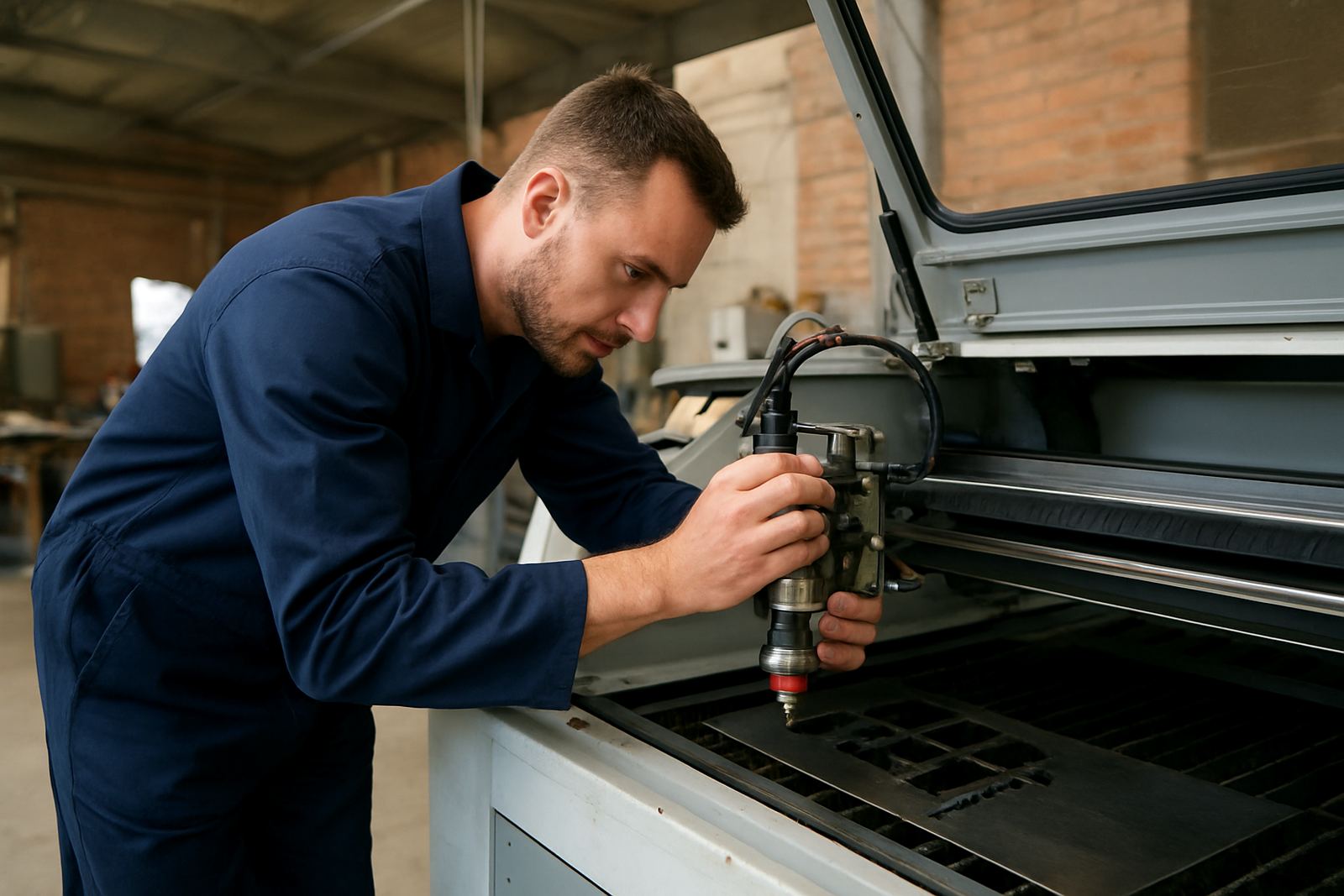
The head was stripped and inspected on the bench at our Boksburg base. The issue was not one single failure, but a mix of wear points that had built up over time. The nozzle seat showed damage, the internal surfaces needed cleaning, and the optical path had signs of contamination from normal production dust and handling. A prior collision had also left the head slightly out, which explained the inconsistency on edge finish.
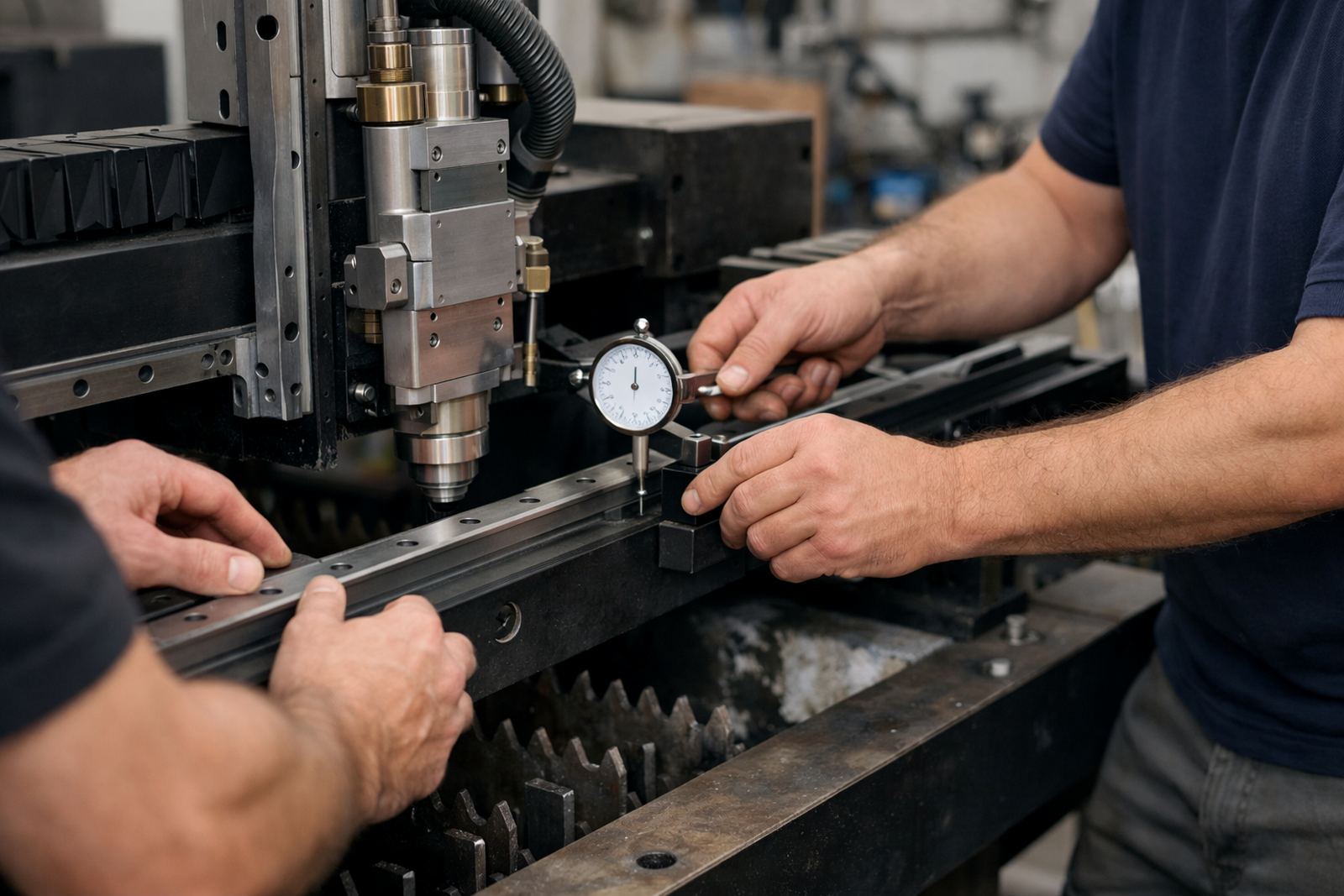
For this type of fault, the important thing is to check the head as a working assembly, not only one part at a time. We measured wear, checked alignment, and confirmed which items could be restored and which needed replacement. That let us keep the repair focused and cost-conscious.
- Nozzle seat wear affecting cut stability
- Contamination inside the head from routine use
- Minor collision damage and alignment shift
- Protective window condition below service standard
Bench repair work carried out on the cutting head
We completed the repair in stages over one week of bench work, with parts pulled from stock as needed. The head received a full internal cleaning, nozzle seat restoration, lens replacement, window replacement, sensor ring service, ceramic holder change and head alignment check. After that, the assembly went through a pressure test before final return to service testing.
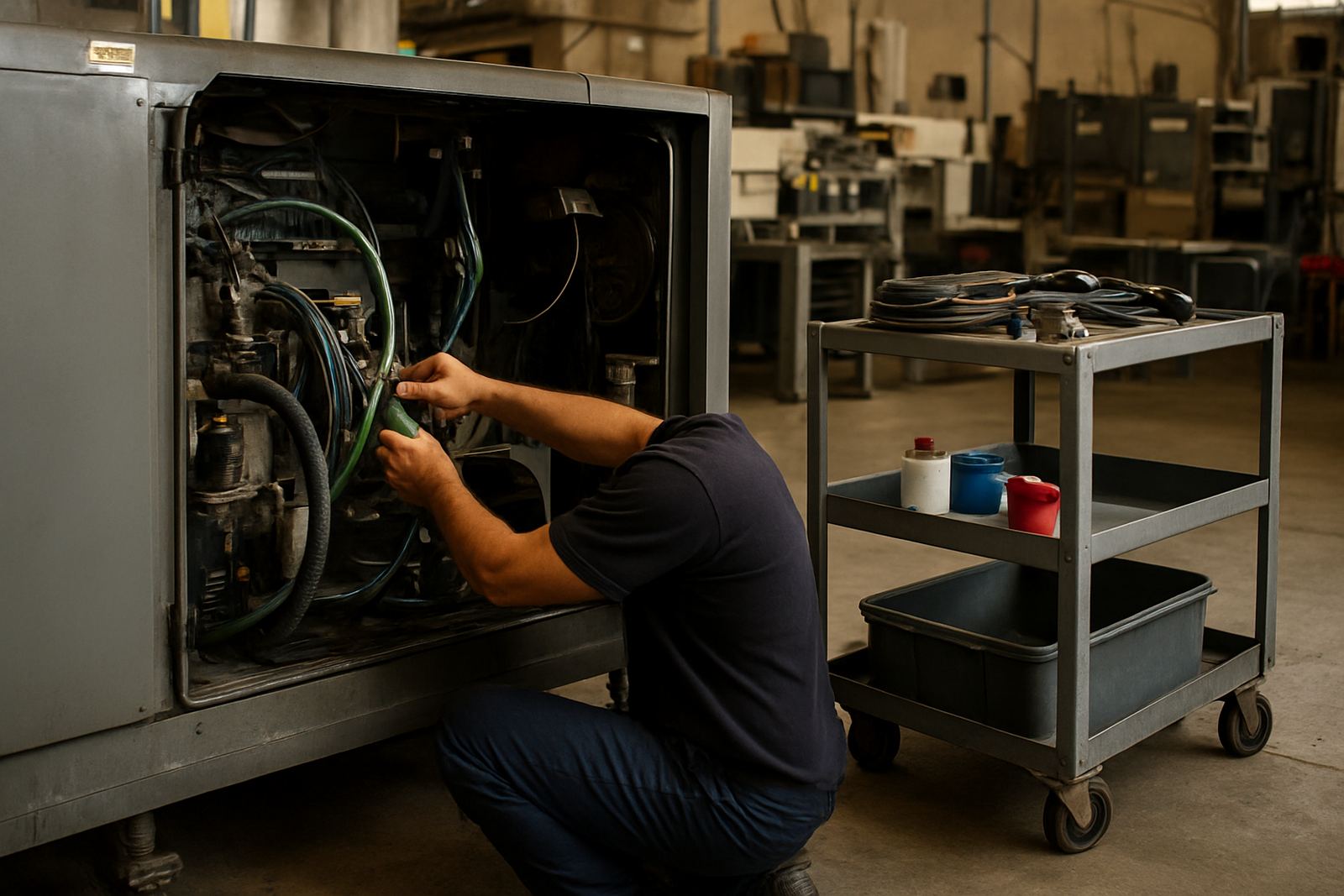
This is the kind of work that suits a bench repair setup, because the technician can go deeper into the fault without taking the production machine apart on site. It also gives a better view of the small things that cause trouble later, like slight contamination, loose tolerance on the ceramic holder, or pressure variation in the gas path.
- Strip and inspection
- Nozzle seat restoration
- Lens replacement
- Protective window replacement
- Sensor ring service
- Ceramic holder change
- Internal cleaning and gas path service
- Head alignment check
- Bench pressure test
- Return to service test
Why the workshop could not afford a long delay
The fabricator was running mixed jobs for local customers, so any long gap would have meant missed delivery dates and extra handling in the workshop. In Ekurhuleni that pressure is normal, especially where a cutting shop feeds multiple small clients from one machine. If one head starts drifting, the whole queue starts to back up.
Load-shedding also had to be taken into account. The client needed a repair plan that would not be stretched out by repeated machine stops or uncertain testing windows. We kept the work practical: inspect, repair, verify, then hand back ready for use. No unnecessary extras, just the checks needed to trust the head again.
- Keep downtime short
- Avoid repeat stops during testing
- Restore confidence in production output
- Work around power interruptions where needed
Results after testing and handover
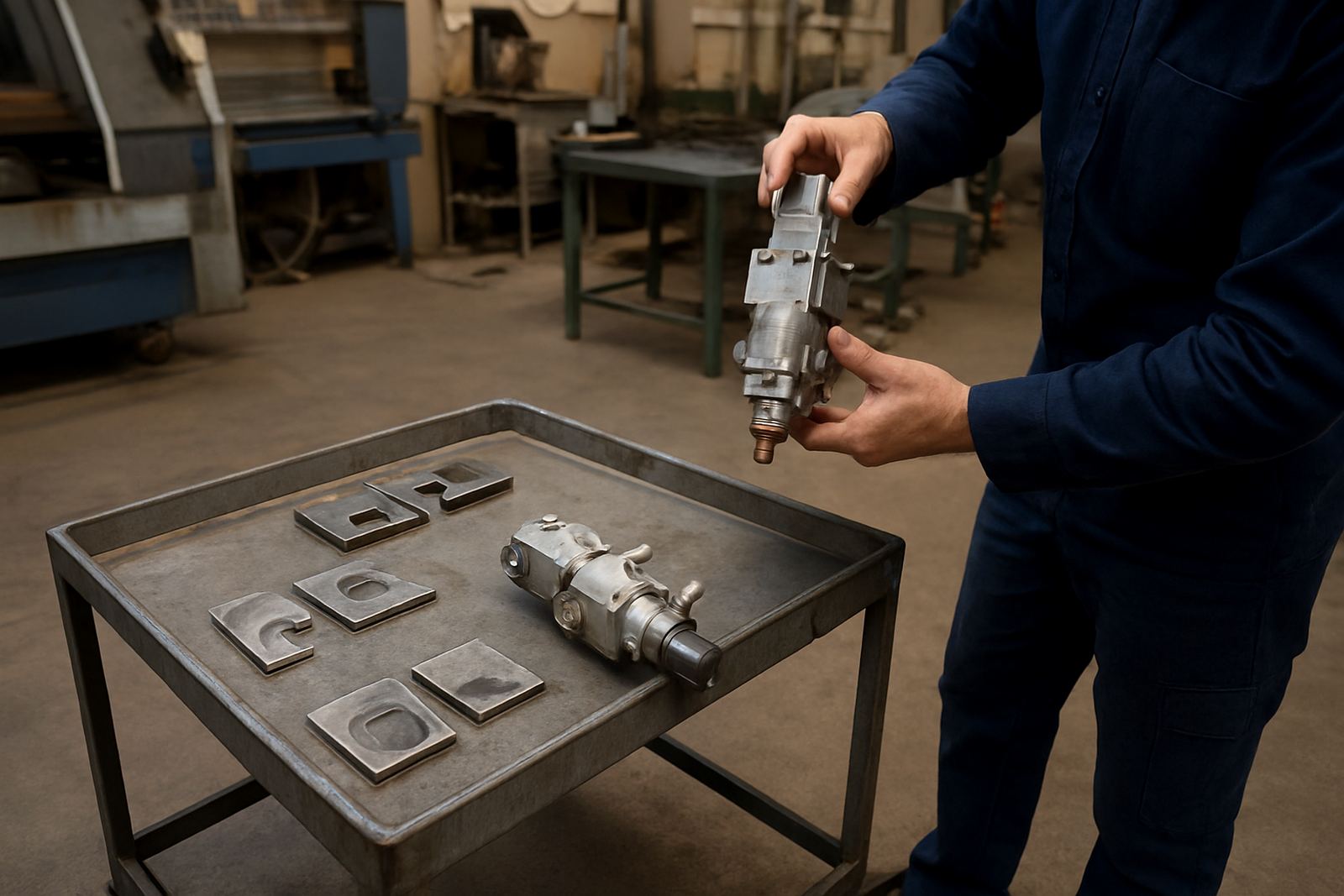
After the repair, the cutting head returned to service with steadier edge quality and more consistent cut behaviour across the sheet. The operator reported less variation on parts that had been giving trouble, and the workshop could run normal production without constantly checking for edge defects. Scrap from unstable cuts dropped off, which made the job easier to plan and easier to price.
The result was not just a repaired head, but a machine that could go back to dependable daily use. That matters for a fabricator, because the real cost is not only the repair bill, it is the hours lost when a cutter is producing marginal work and the team keeps stopping to inspect parts.
- Stable cut finish restored
- Less edge variation between sheets
- Reduced scrap from poor quality parts
- Machine returned to daily production use
What we would do again on a similar job
For a similar Germiston repair, we would follow the same approach: bench strip first, confirm the wear points, replace only what is needed, then pressure test and run a return to service check before handover. That sequence gives a clear answer and keeps the repair tidy. It also helps the customer understand what caused the fault, which is useful when the machine is running hard.
If the head has been hit, or if quality has drifted slowly over months, the safest route is still the same. Get the head off the line, inspect it properly, and test it before the next production run starts. That is how you avoid guessing, and it is how you keep a fibre or CO2 system earning its keep.
- Bench diagnosis first
- Replace worn parts only after inspection
- Verify alignment before return
- Test under working pressure before release
Key facts
| Project location | Germiston, Ekurhuleni |
|---|---|
| Client type | Metal fabricator |
| Equipment | Fibre laser cutting head |
| Service scope | Bench repair, parts replacement and testing |
| Turnaround | 1 week on the bench |
| Outcome | Stable edge quality restored and production downtime reduced |