
Rosslyn brief: stop heat build-up before it reached the cutting head
The client was a metal fabrication workshop in Rosslyn, Pretoria, running daily production on sheet and profile work for local industrial buyers. Their main concern was not a full breakdown yet, but rising coolant temperature, unstable flow readings and a warning that pointed to possible contamination in the loop. In a shop that relies on cutting slots for same-day collection and repeat orders, that kind of fault can turn into a costly stoppage very quickly.
They asked us to trace the fault, protect the laser optics and restore normal cooling before the system drifted into a shutdown. The machine was a fibre laser cutter with a water-cooled cutting head, used on medium-duty carbon steel jobs through long shifts. The immediate risk was heat soak in the head and early wear on the protective window, nozzle seat and internal seals.
What was on site and what made the job urgent
This was a practical production issue, not a cosmetic one. The workshop had limited spare capacity on the floor and no room for a long outage. Load-shedding had also complicated their schedule, because every restart meant re-checking temperatures, gas flow and cut quality before production could resume. The cooling loop showed signs of restriction, and the operator had already noticed that the head was running warmer after longer runs on thicker material.
- System type: fibre laser cutting machine with cooled cutting head
- Problem signs: elevated coolant temperature, reduced flow stability, warning alerts
- Risk area: optics, protective window, nozzle seat and internal seals
- Constraint: production had to resume within a short window, not after a drawn-out strip-down
- Site conditions: busy workshop floor, limited spare machine time, power interruptions affecting scheduling
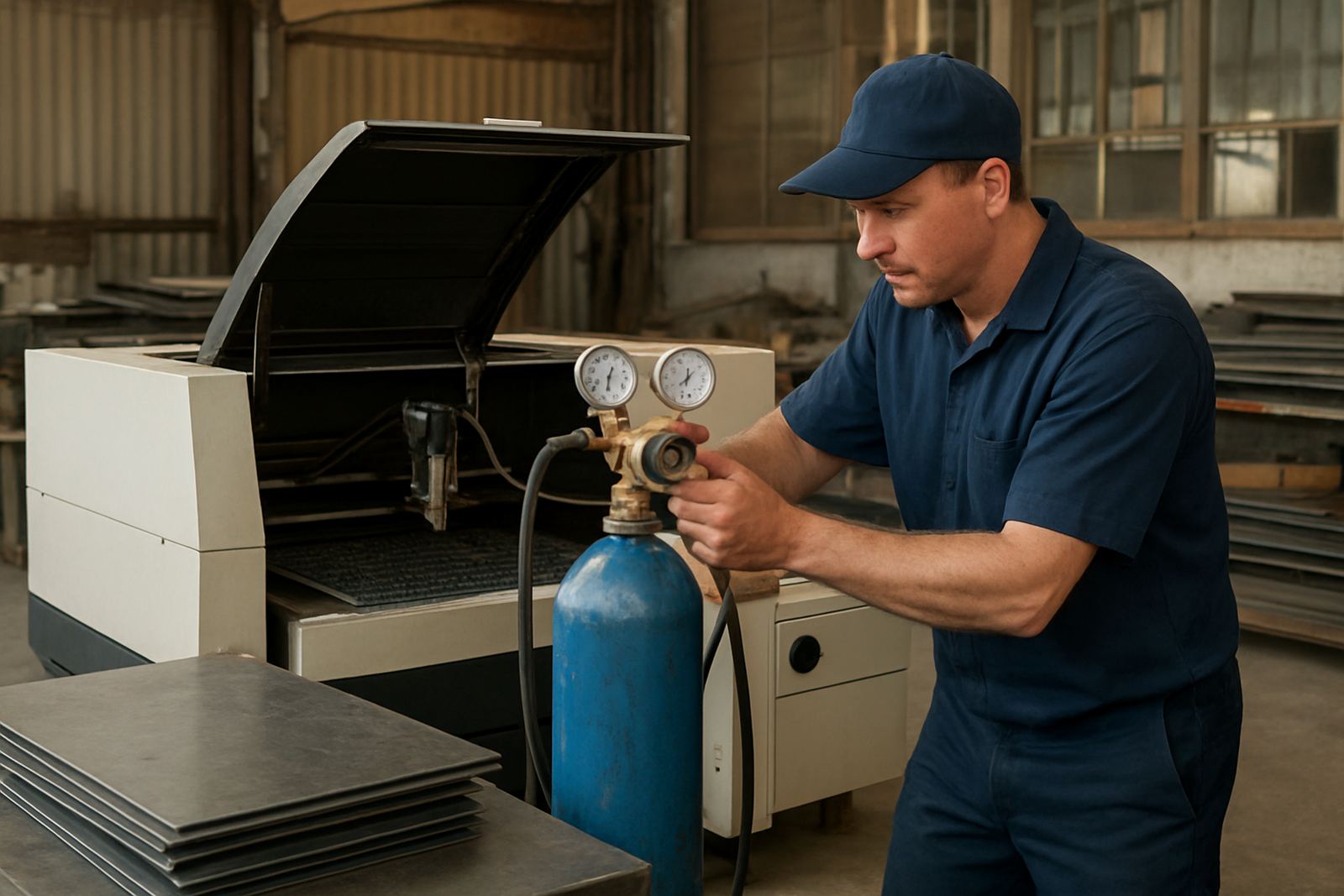
Because the machine was still cutting, the goal was to isolate the fault without adding unnecessary downtime. That meant checking the head, the loop and the related consumables in a controlled way, then deciding what could be saved and what needed replacement.
Bench checks and fault tracing carried out in two stages
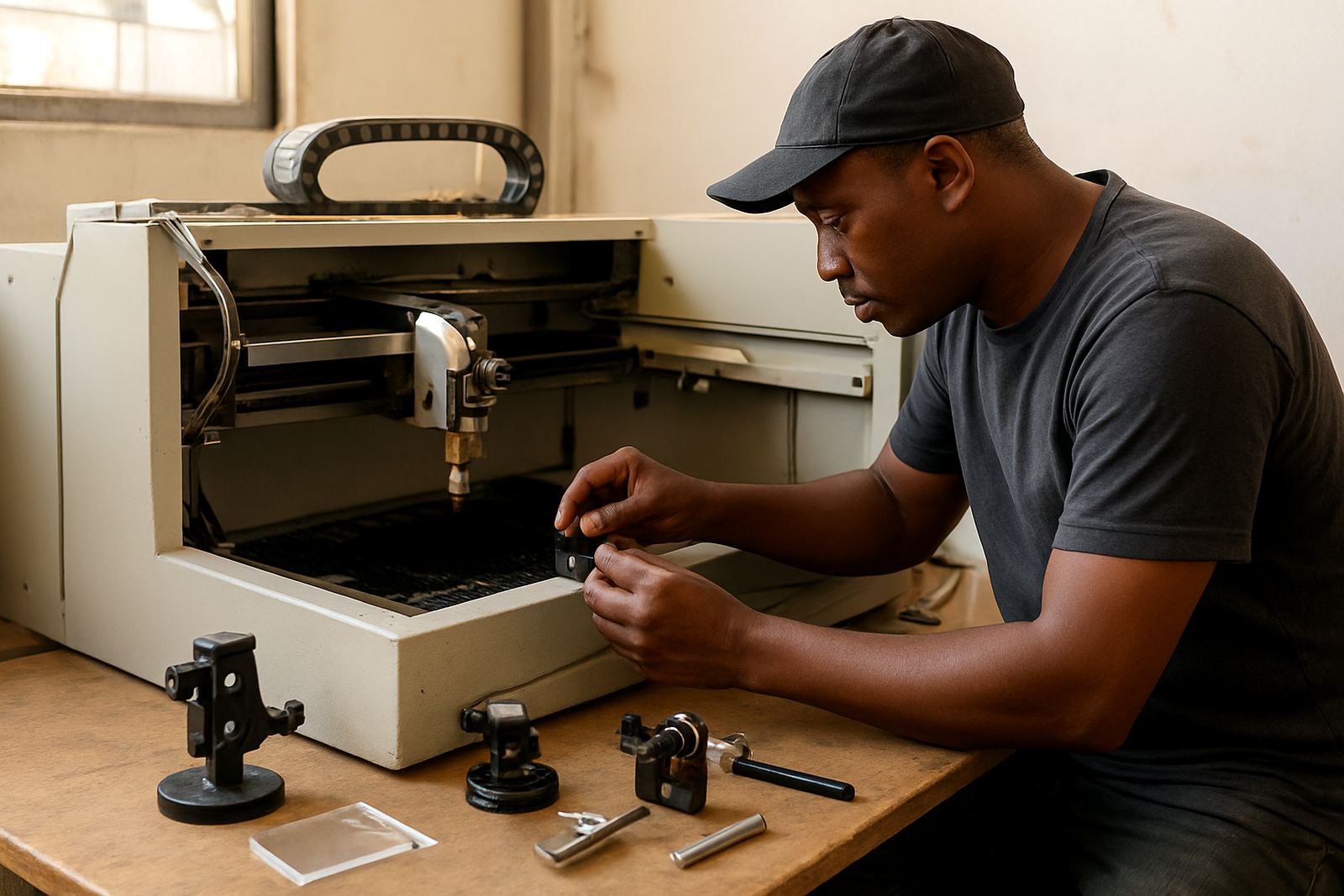
We started with an inspection of the cutting head and the cooling path, then moved the head to the bench for a closer strip and clean. The loop was tested for pressure stability, internal contamination and flow loss across the path. We also checked the condition of the nozzle, lens, protective window and ceramic holder, because a heat fault can leave more damage than the first warning suggests. In this case, the cooling issue had not yet reached the point of optic failure, which saved the client from a much bigger repair bill.
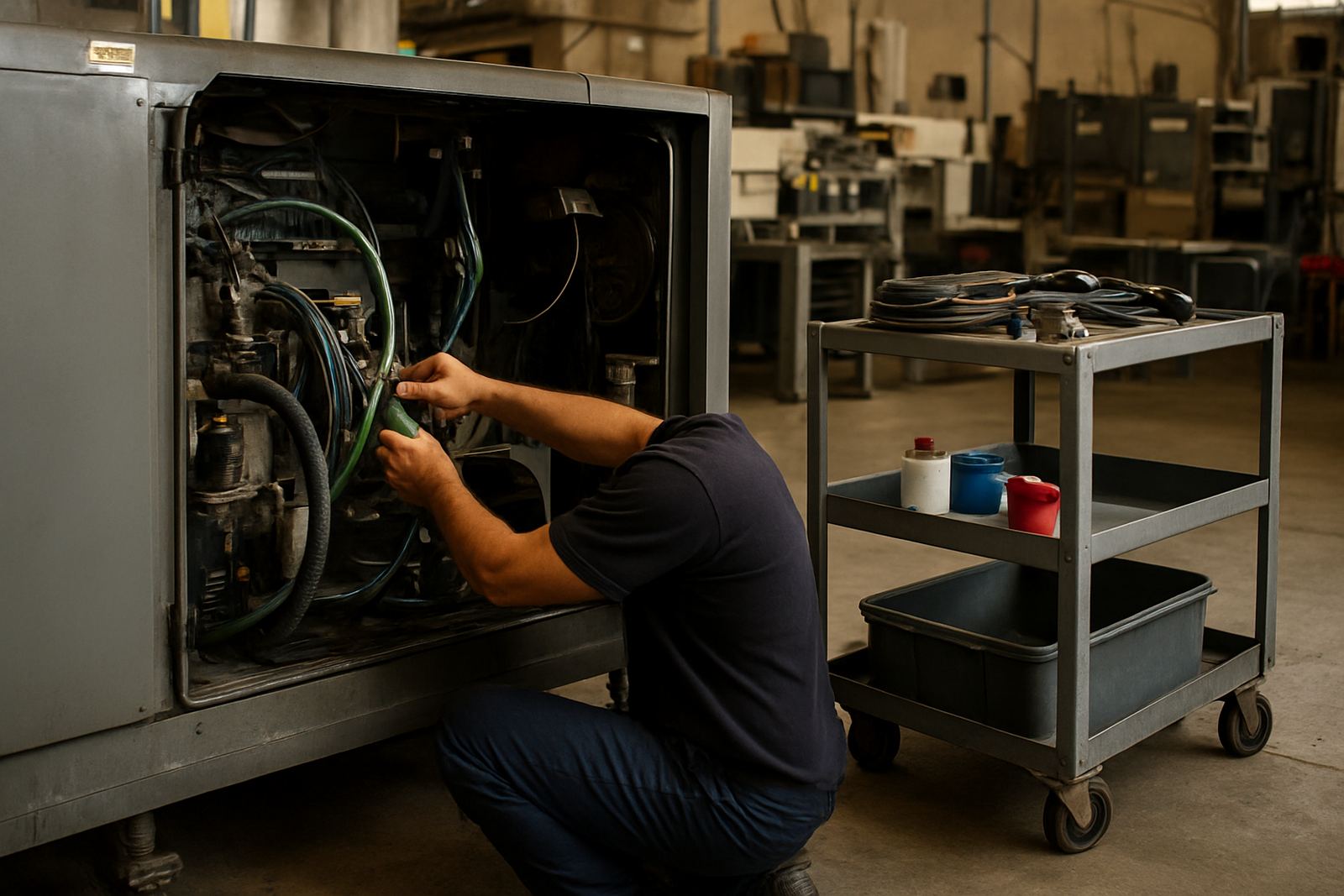
The cooling side needed the most attention. The loop had accumulated debris and restricted flow at a point that was not obvious from a quick visual check. Once that was cleared, temperatures settled back into the correct operating range. We then carried out alignment checks and a return to service test to confirm that the head was cutting cleanly and not drifting under pressure. The nozzle seat was restored and the internal cavity was cleaned out properly so the unit would not carry contamination forward into the next shift.
- Strip and inspection of the cutting head
- Cooling loop diagnosis and cleaning
- Head alignment check after service
- Bench pressure test to confirm stable flow
- Return to service test under working conditions
Parts replaced and service items cleared on the day
The fault did not require a full head replacement, which kept the work focused and cost sensible. The main service items dealt with were the protective window, one worn nozzle, the nozzle seat area and internal cleaning around the ceramic holder. We also checked the sensor ring and gas path for signs of heat stress. The machine had no catastrophic collision damage, but there were clear signs that the head had been running harder than it should for a few days. That is often where the warning starts, just before the optics take the hit.
Our parts and stores support meant the common wear items were available without waiting on a separate supply chain step. That kept the repair moving. The workshop got a clean record of what was changed, what was cleaned and what still had service life left. That matters for plants that want to plan maintenance properly, not just fix the immediate symptom.
- Protective window replacement
- Nozzle replacement
- Nozzle seat restoration
- Sensor ring service check
- Ceramic holder change where needed
Timeline, turnaround and how the job was handled
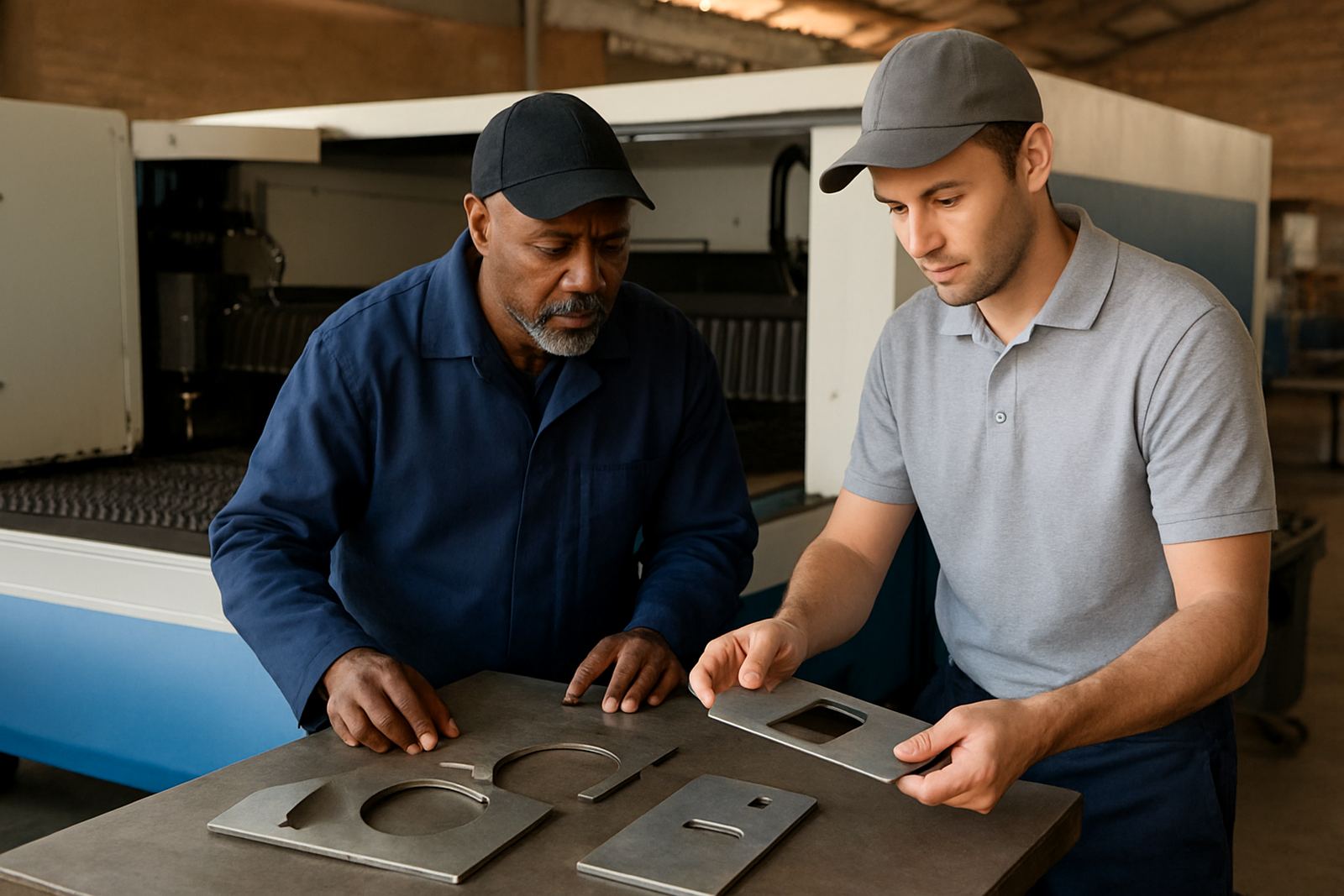
The work was completed over just under two weeks from first call to final sign-off, with the actual bench repair and testing done much faster than that. The first visit covered diagnosis and removal. The second stage covered repair, cleaning and pressure testing. The last stage was the on-site return to service check once the unit was back in production. The client wanted speed, but not at the cost of skipping verification, and that was the right call.
For a Rosslyn workshop, the main result was simple: the machine stayed in service and the cooling fault was stopped before it moved into the optics. Cut quality stabilised, the operator no longer had to manage temperature alarms through the shift, and the production plan could continue without an unexpected head failure. A small thing on paper, but in a workshop it can save a full day of work.
What we would do again on a similar Pretoria production fault
We would take the same approach again on any cooling-related laser fault in a busy production shop. Start with a full diagnosis, isolate the loop problem, protect the optics and test the head under real working conditions before handing it back. That sequence is what keeps downtime short without missing the root cause. If the machine is still cutting, it is easy to focus only on the warning message and miss the wear pattern developing inside the head.
For workshops in Rosslyn, Germiston, Boksburg and the wider Pretoria area, this kind of service is especially useful when production is tight and there is no spare machine waiting. The right fix is not just a quick reset. It is a proper repair that restores flow, temperature control and cutting-head performance so the team can get back to normal work with confidence.
Key facts
| Client type | Metal fabrication workshop |
|---|---|
| Town | Rosslyn, Pretoria |
| Machine type | Fibre laser cutting machine with cooled cutting head |
| Issue | Cooling loop restriction with rising temperature and flow instability |
| Timeline | Just under 2 weeks from first call to final sign-off |
| Services used | Strip and inspection, collision damage repair, nozzle seat restoration, lens and window replacement, bench pressure test, return to service test |