Why the job was sent out from Montague Gardens
The customer was a Cape Town fabricator in Montague Gardens producing steel parts for local fit-outs and general workshop orders. The main complaint was poor edge quality on thicker mild steel, with recurring dross showing up on the lower edge and pressure alarms appearing when the machine was under load. Their team had already tried small setting changes, but the faults kept returning and the cut quality dropped off after longer runs.
They needed a practical on-site visit rather than a long machine shutdown. The cutter had to keep working for the week's orders, so the brief was simple: find the cause, restore the cutting head performance, and limit the downtime to as little as possible. Because the machine was running in a dusty workshop near the harbour side, the head also needed a proper clean and inspection for contamination, not just a quick nozzle change.
What we found on the first inspection
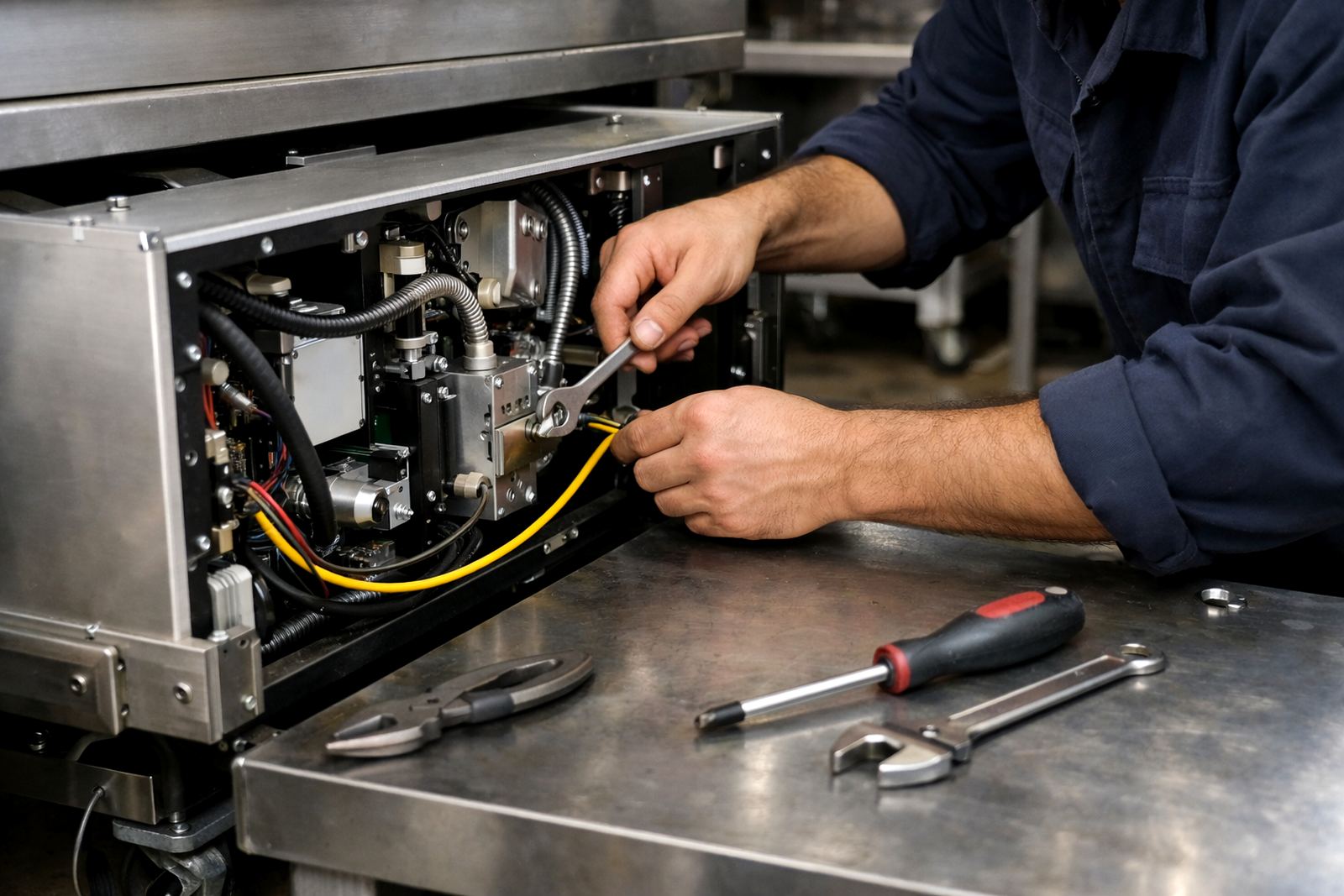
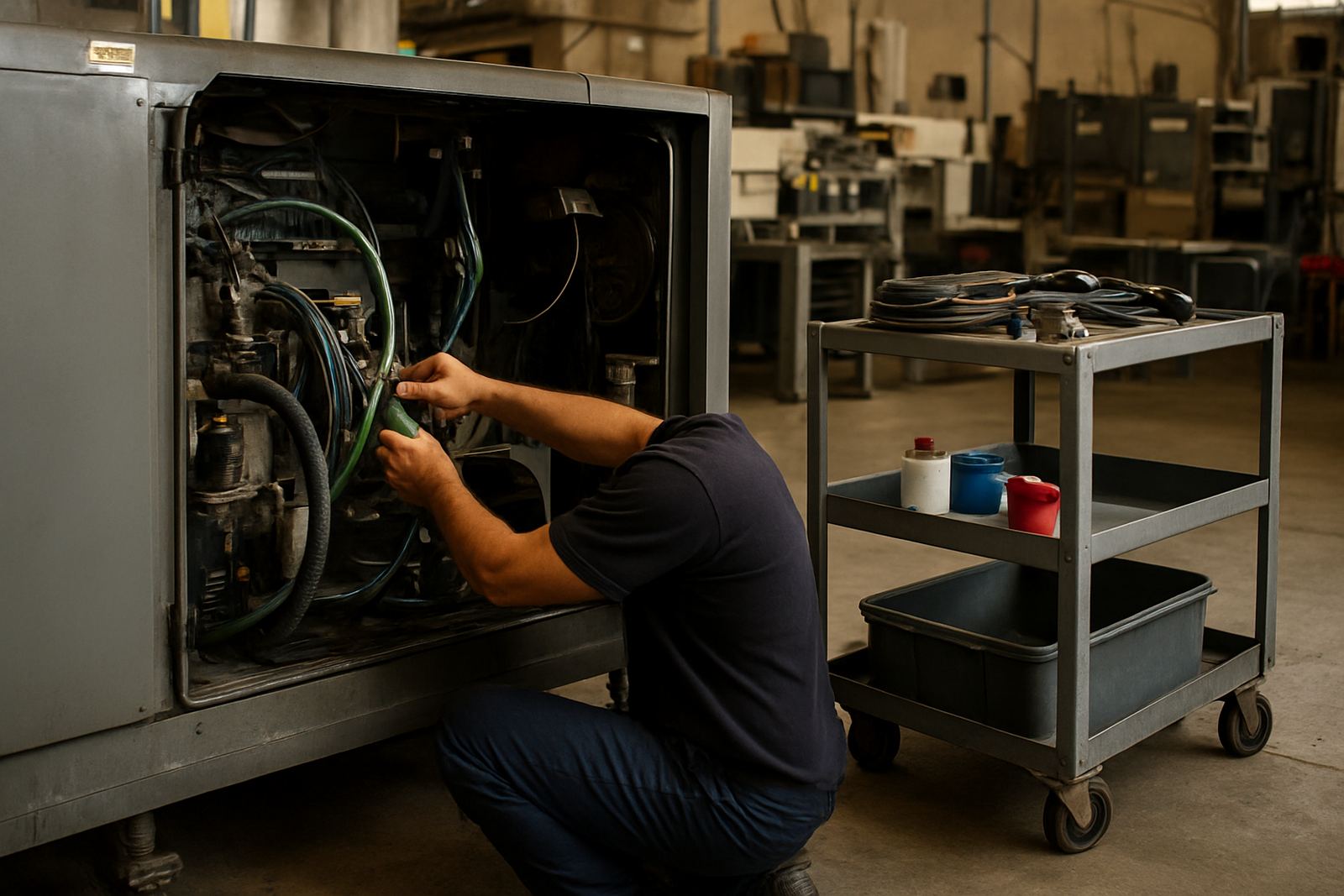
Our technician carried out a strip and inspection, then checked the nozzle seat, lens condition, protective window, sensor ring and the internal gas path. The head had signs of collision wear and a partially blocked airflow route. There was also contamination inside the optical path, which was enough to affect beam consistency when the machine ran for longer shifts. On this site, that sort of build-up can happen faster because of grinding dust and the coastal humidity, so regular checks matter.
- Recurring dross on thicker material, especially after longer runs
- Gas pressure variation under cutting load
- Wear at the nozzle seat and ceramic holder area
- Contamination on the protective window and internal surfaces
- Head alignment drift after a minor collision
We confirmed that the machine itself was still serviceable. The issue was in the cutting head assembly and the related gas delivery components, not a full system failure. That meant the repair could be targeted and quicker.
On-site repair and bench work completed
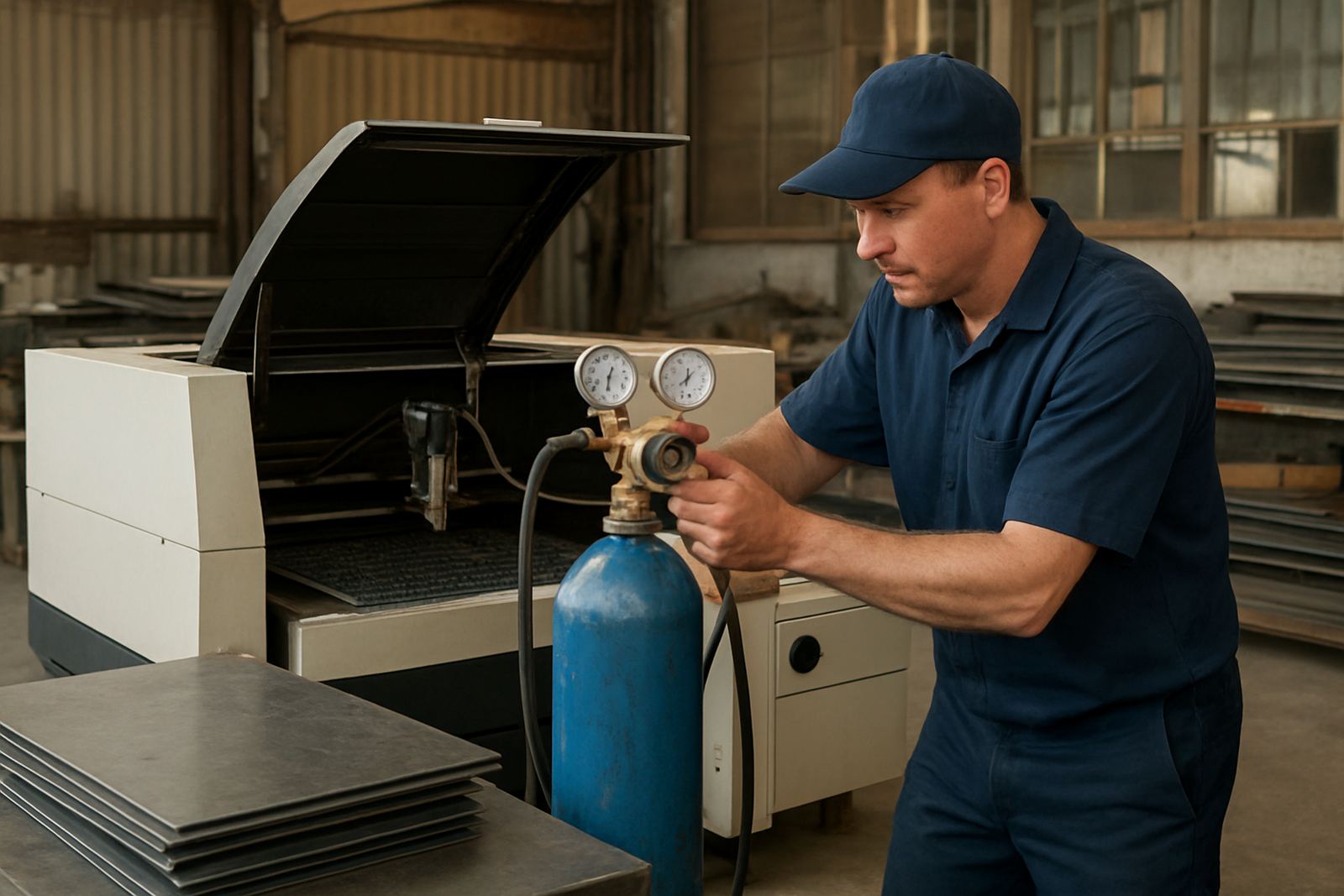
We completed the first phase on site in Montague Gardens, then removed the head for bench work at our Boksburg base. The job included head alignment check, nozzle seat restoration, lens replacement, window replacement, sensor ring service and internal cleaning. We also carried out a bench pressure test to confirm that the gas path was stable and that no leaks or restrictions were affecting the cut.
The nozzle seat was dressed back to spec, the ceramic holder was changed, and the protective parts were renewed as a set so the head would not go back into service with one worn component dragging the rest down. We then tested the return to service cycle and checked the beam path under operating conditions. The results were better than the workshop expected, and the cutter came back with cleaner edges and more consistent pierce quality.
- Strip and inspection completed on site and at bench level
- Collision damage repaired without replacing the full head
- Gas path service completed to remove restriction points
- Return to service test carried out before handover
Timeline and access constraints on the site
The full job ran over two weeks from the first call to final handover. Week one covered the on-site inspection, fault finding and removal of the cutting head. Week two covered bench repair, part replacement, pressure testing and reinstallation. That timing suited the client because they could keep lighter work moving on another machine while the main cutter was down.
The site itself had a few practical constraints. Access around the machine was tight, the workshop floor had active material movement, and the client did not want long stoppages in the middle of the day. We worked around their cutting schedule and planned the strip down for a quieter window. It saved time and reduced the chance of fresh contamination getting into the head while the repair was in progress.
Results after the machine went back into production
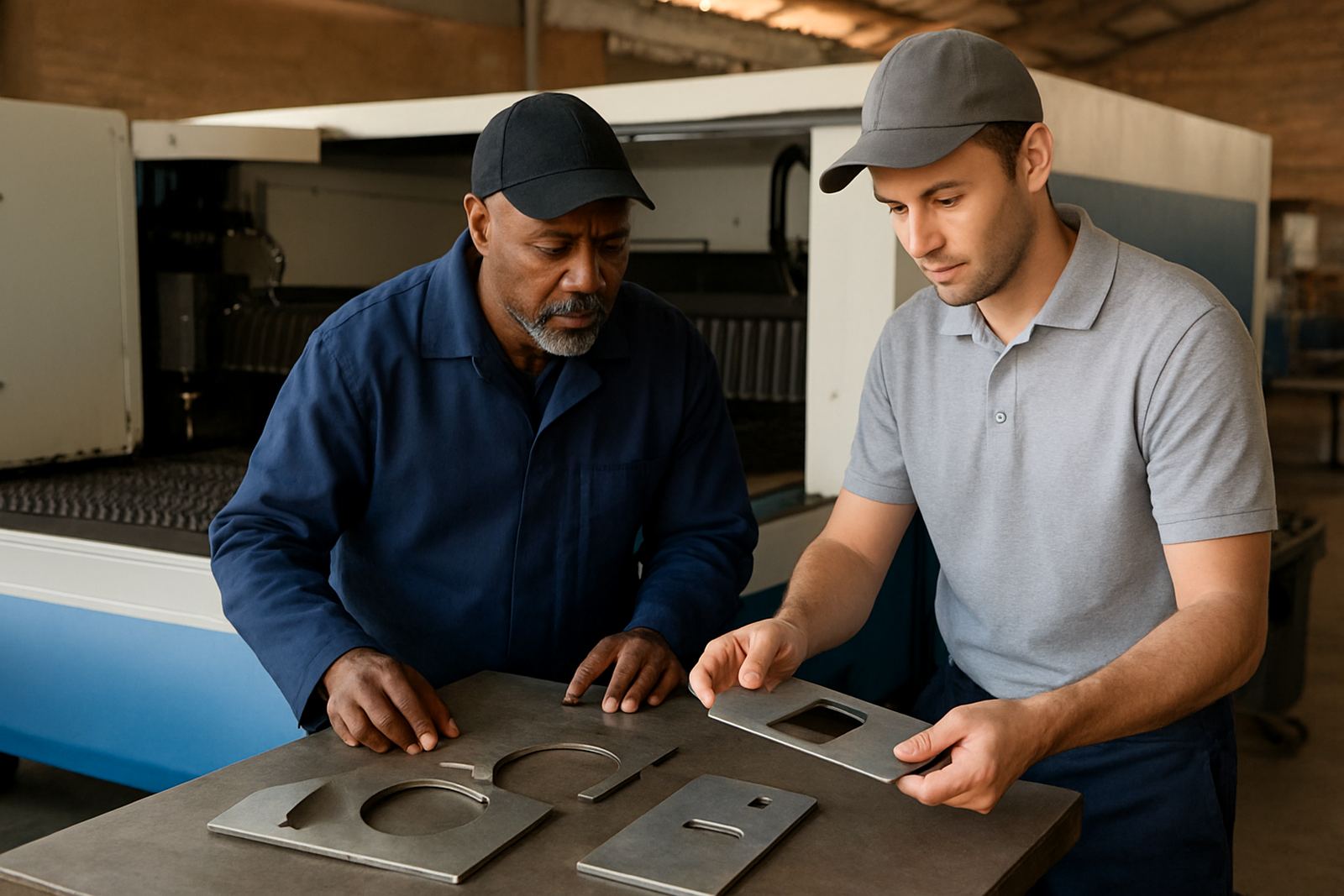
After the repair, the machine returned to stable cutting on the same mix of mild steel jobs that had been causing trouble. The dross was reduced, pressure warnings stopped, and the operator reported a cleaner cut face with less secondary cleanup. The workshop could move back to normal job flow instead of stopping to re-run parts or scrap sheets. That matters in Cape Town work where lead times are tight and material costs add up quickly.
We also gave the client a short maintenance note so their team could keep an eye on the same wear points. The main takeaway was that the cutter did not need a complete replacement, just proper fault finding and the right repair sequence. In other words, the machine was not being difficult for no reason, it was showing the usual signs of head wear and gas-path trouble.
- Cleaner edge quality on routine cutting jobs
- Less dross and fewer rework pieces
- No further pressure alarms during the test run
- Lower downtime than a full head replacement would have caused
What we would do again for a similar Cape Town job
For a similar fabricator in Montague Gardens, Paarden Eiland or Bellville South, we would follow the same approach: inspect early, test the gas path properly and avoid guessing at the fault. Too many cutting issues start with a small collision or a worn consumable, then become a bigger problem because the machine keeps running with a bad head. A proper strip, clean and alignment check saves money in the long run.
If the same symptoms return, we would again recommend a bench pressure test and a full check of the nozzle seat and protective window before any major machine work is considered. It is the kind of service that suits busy workshops, signage plants and metal fabricators who need parts turned out without waiting around for a second failure. The job was a good fit for what we do best, keeping laser cutters running and getting them back to work fast.
Key facts
| Project location | Montague Gardens, Cape Town |
|---|---|
| Client type | Metal fabricator |
| Machine type | Fibre laser cutting system with serviceable cutting head |
| Main fault | Recurring dross and gas pressure variation |
| Timeline | 2 weeks from inspection to handover |
| Service scope | On-site diagnosis, bench repair, parts replacement and return to service testing |