Pretoria East Call-Out for Unstable Cut Quality
The client was a metal fabricator in Pretoria East running a fibre laser cutting system on mixed production, mainly mild steel and stainless for short-run parts. The issue started as slight edge roughness and later turned into visible focus drift, with burn marks increasing as the shift went on. Their team needed the machine back in service quickly because orders were stacked for local delivery and the backup machine was already committed.
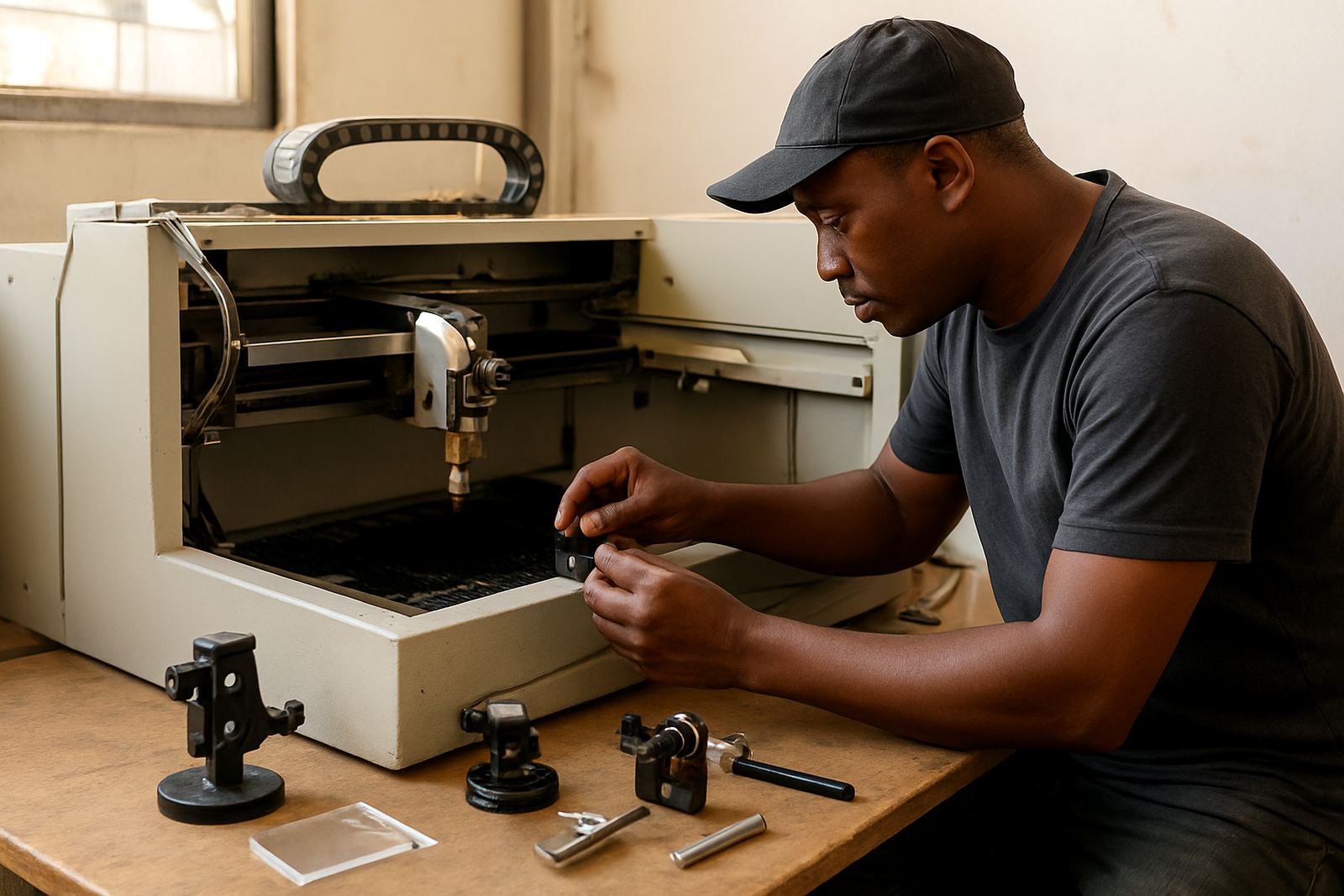
We arranged an on-site visit and carried out a full inspection of the cutting head, nozzle seat and optics path. The brief was simple: find the cause, protect the head from further damage, and get the unit cutting safely again without removing the machine from the shop floor. In Pretoria East, where many workshops work close to delivery deadlines and municipal power interruptions can complicate planning, that kind of direct response saves a lot of lost time.
What We Found During the Initial Inspection
The first signs pointed to contamination around the protective window and a focus position that had drifted after repeated use. The head had no major crash damage, but there was enough wear in the seating surfaces to affect repeatability. We also checked the ceramic holder, sensor ring, internal cleaning condition and gas path, because small faults there can show up as poor pierce quality or inconsistent kerf width.
- Protective window contamination from dust and fine spatter
- Focus drift affecting cut edge quality on thinner sheet
- Wear on the nozzle seat and signs of poor sealing
- Dust build-up inside the head body and around the gas path
- Alignment variance between the head and the beam path
The client had been wiping external parts and changing nozzles, but the core issue sat deeper in the head. That is common on busy fabrication floors. If the head is not stripped, cleaned and checked properly, the same fault keeps coming back. We reccomend a proper inspection once cut quality starts changing, especially after a collision or a long period of heavy use.
On-Site Service and Bench Checks
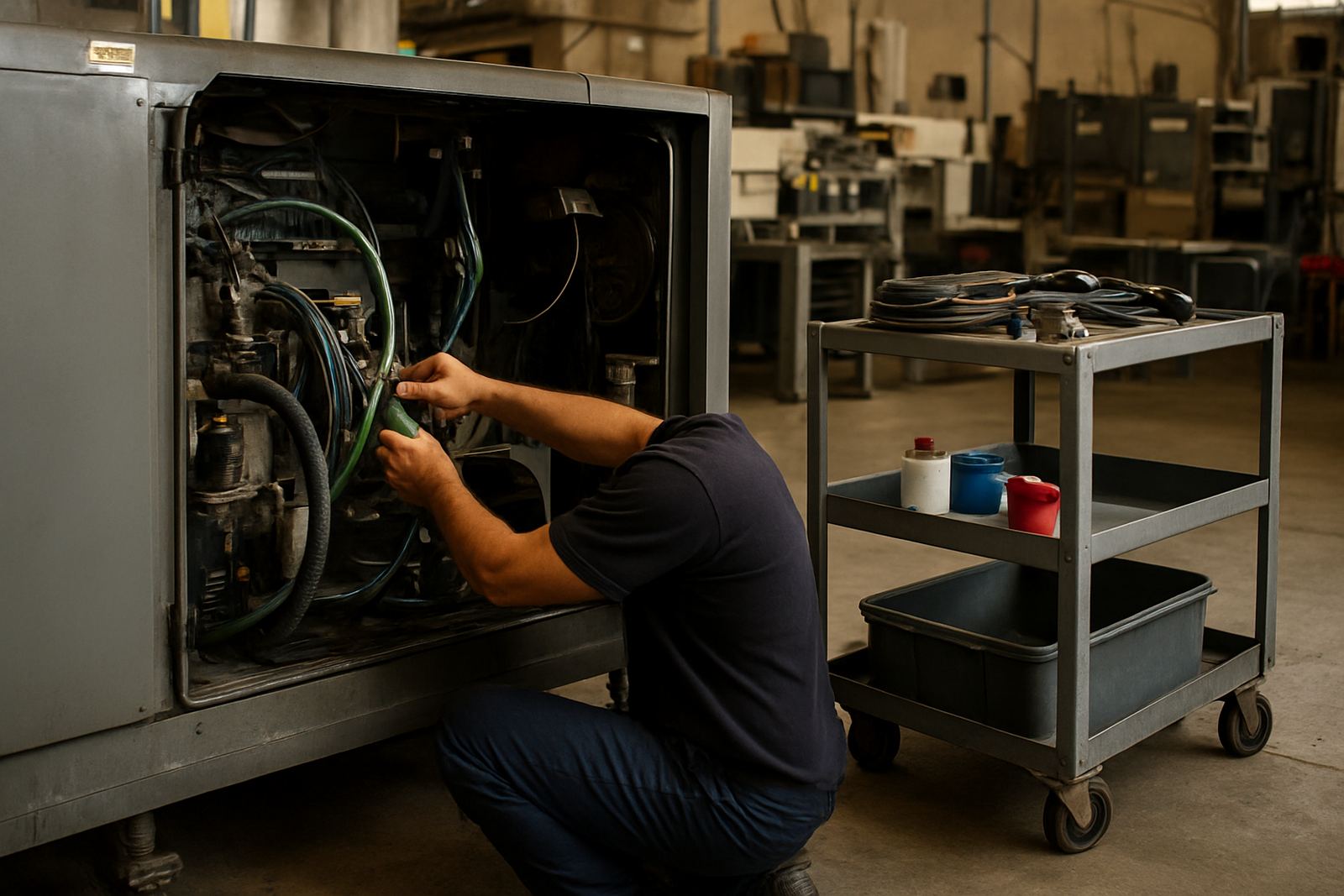
We handled the work in two stages. First we did the on-site assessment and safe strip-down of the cutting head. Then the worn and contaminated parts were taken for bench service and pressure testing. That let us restore the unit properly while keeping the machine downtime as short as possible. The complete service was finished over one week, with the machine back in production soon after final testing.
Work completed on the project included the following:
- Strip and inspection of the cutting head assembly
- Protective window replacement
- Lens replacement and seating check
- Nozzle seat restoration
- Sensor ring service
- Ceramic holder change
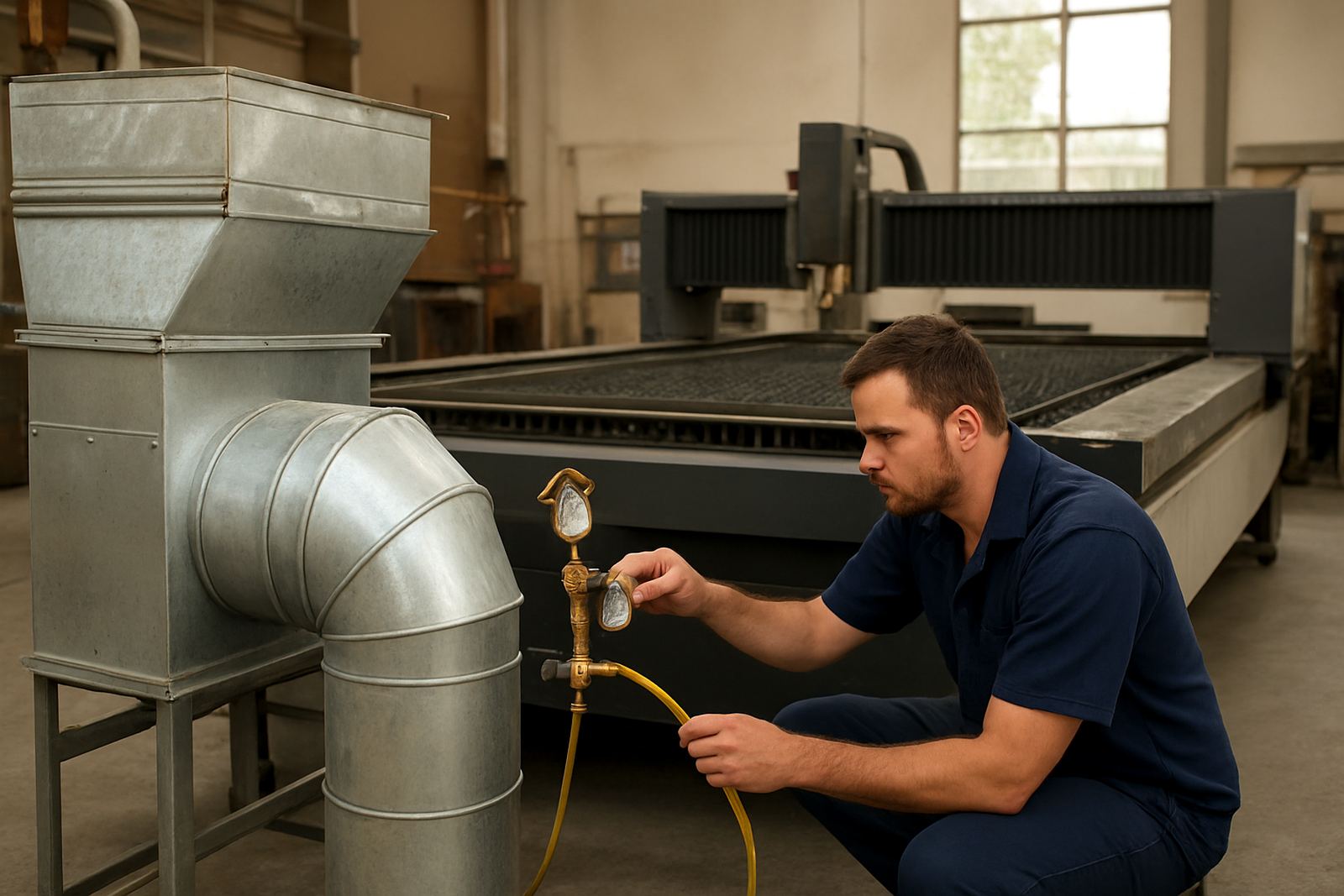
- Internal cleaning and gas path service
- Head alignment check and bench pressure test
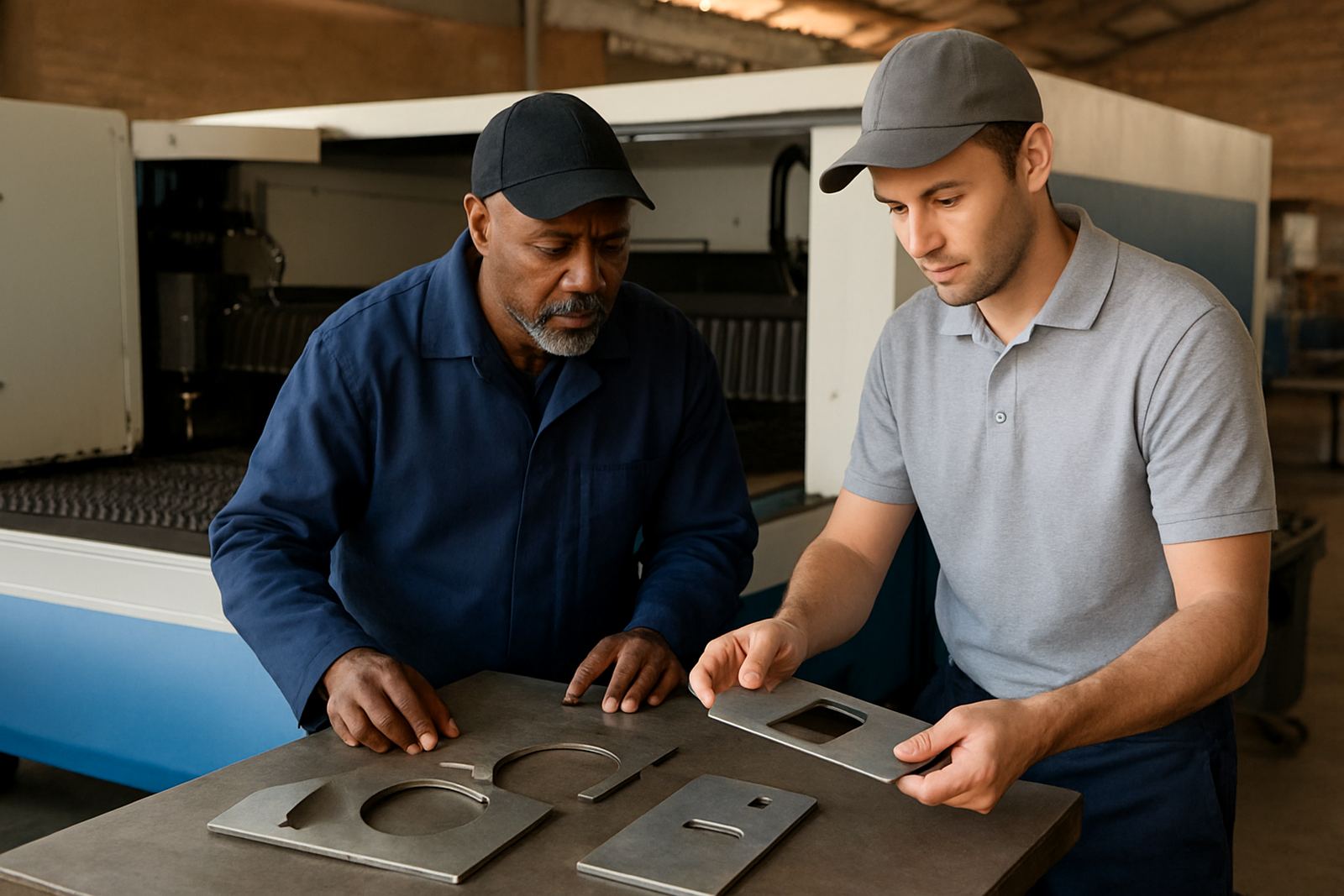
Once the head was reassembled, we carried out a return to service test with real production settings. That confirmed the beam position, pressure stability and cut consistency across the sheet sizes the workshop uses most often. The head was re-seated and the window housing checked, with the focus lens set back to spec and no further drift seen during test cuts.
Why the Pretoria East Workshop Needed Fast Turnaround
This client does not run a one-off hobby setup. They cut parts every day for local customers, and any delay affects fabrication slots, material usage and collection times. Their main constraint was time, followed by the need to avoid unnecessary part changes. They wanted a service that would correct the fault properly the first time, rather than patching it and hoping for the best.
Load-shedding also shaped the job plan. We scheduled the work around production windows and kept the visit practical, so the workshop could resume once stable power was available. The area also sees a fair amount of fine dust from nearby industrial activity, which makes routine cleaning and sealing more important than many people realise. A cutting head can look fine from the outside and still have contamination inside that will affect performance.
- Production had to resume within the same week
- The machine was needed for mixed material cutting
- Existing staff could not spare time for a long strip-down
- The workshop wanted repair, not a full machine removal
Results After Service and Test Cutting
After the repair, the machine returned to consistent cut quality with cleaner edges and better pierce control. The focus drift that had been causing variation across the sheet was corrected, and the protective window issue no longer affected the beam. The workshop reported smoother day-to-day running and less need for repeated nozzle changes during the shift.
From a practical point of view, the result was not only better cut finish but less wasted material. The operator could hold settings more reliably, which matters on production jobs where a small change can affect the whole batch. In this case the machine was back cutting again without the instability that had been slowing the team down.
The client also gained a clearer maintenance routine. We left them with guidance on when to inspect the window, how often to check nozzle condition, and what symptoms usually point to contamination rather than a software or programme issue. That helps the team spot early warning signs before the head suffers another avoidable fault.
What We Would Repeat on the Next Similar Job
If we were called to the same type of fault again in Pretoria East, we would use the same approach: inspect early, confirm the optics condition, and separate on-site diagnosis from bench repair where needed. That gives the best chance of keeping downtime low while still doing the work properly. The combination of contamination control, alignment checking and pressure testing is what keeps the cutter stable after return to service.
For workshops and fabricators across Pretoria, Johannesburg and the wider Gauteng area, this kind of service is usually the most cost-effective way to protect a laser machine that is still structurally sound. You do not always need a major rebuild. Often you need careful inspection, replacement of the worn parts, and a proper test before the machine goes back onto the line.
- Inspect early when cut quality changes
- Replace contaminated optics before they damage other parts
- Check alignment after any head collision or heavy wear
- Test under real production settings before handing back
Key facts
| Project location | Pretoria East, Gauteng |
|---|---|
| Client type | Metal fabricator working on daily production parts |
| Machine type | Fibre laser cutting system |
| Faults found | Protective window contamination and focus drift |
| Service method | On-site diagnosis with bench repair and testing |
| Timeline | Completed over 1 week |