What the Centurion workshop needed
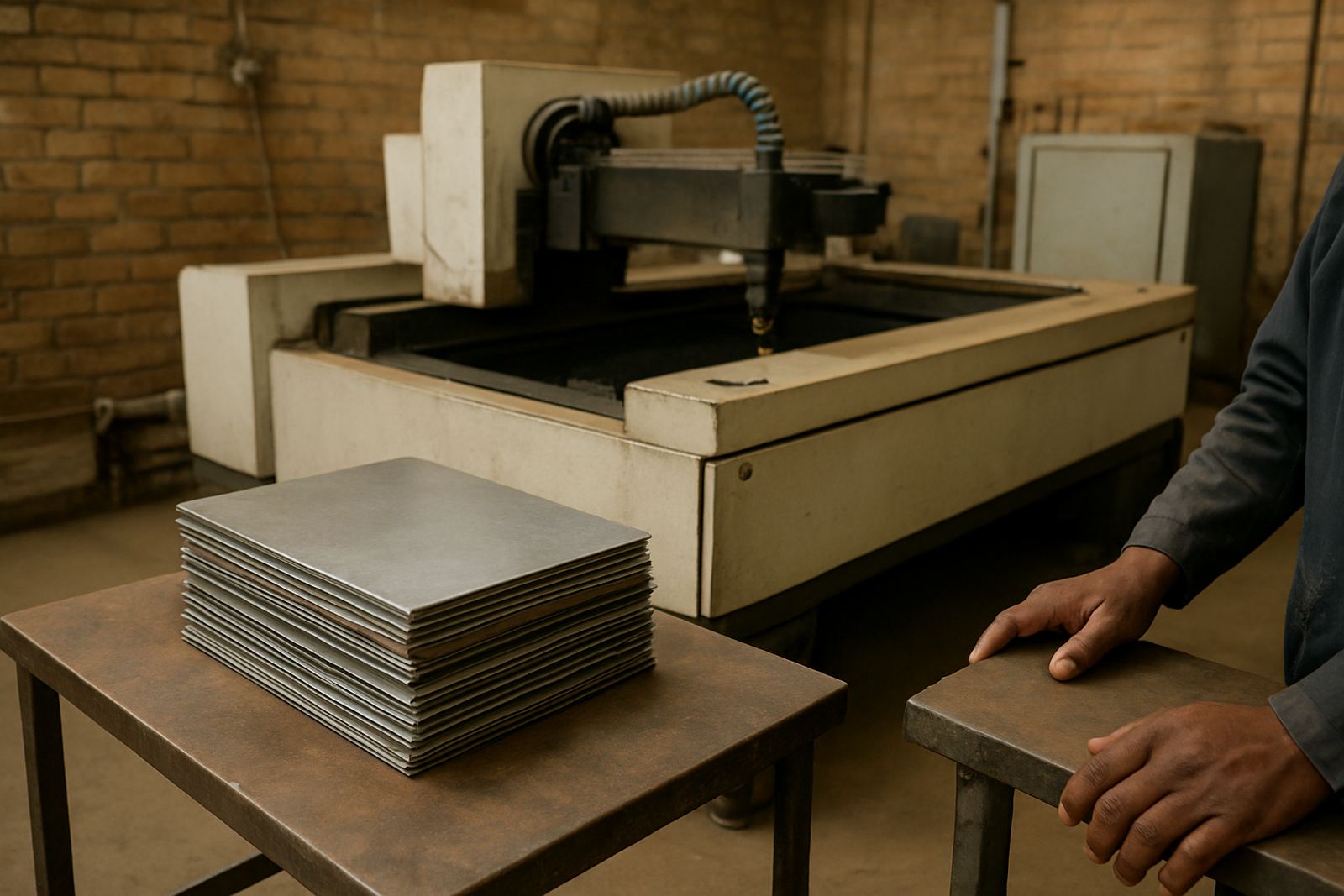
The client is a sheet metal enclosure maker in Centurion, serving electrical and industrial projects across Gauteng. Their team cuts mild steel and stainless sheet on a fibre laser, mostly panels, back plates and vented enclosure parts from 1.2 mm up to 6 mm, with some heavier trial work on thicker stock when needed. The machine was still running but the height sensing would fault from time to time, which caused ugly pierces, uneven cut starts and a lot of wasted attention from operators.
The brief was plain: find the cause, repair the cutting head where needed and get the machine back to reliable panel production. They needed a practical fix, not a long parts list. The line had to stay useful for day shift work, because once load shedding hits or a job runs late, there is not much room for drift in the cutting process.
- Intermittent height sensing fault on a fibre laser cutter
- Piercing inconsistency on flat sheet and nested panels
- Need for fast turnaround with minimal line stoppage
- Work to suit a Centurion production floor with ordinary workshop dust and heat
Workshop inspection and fault finding
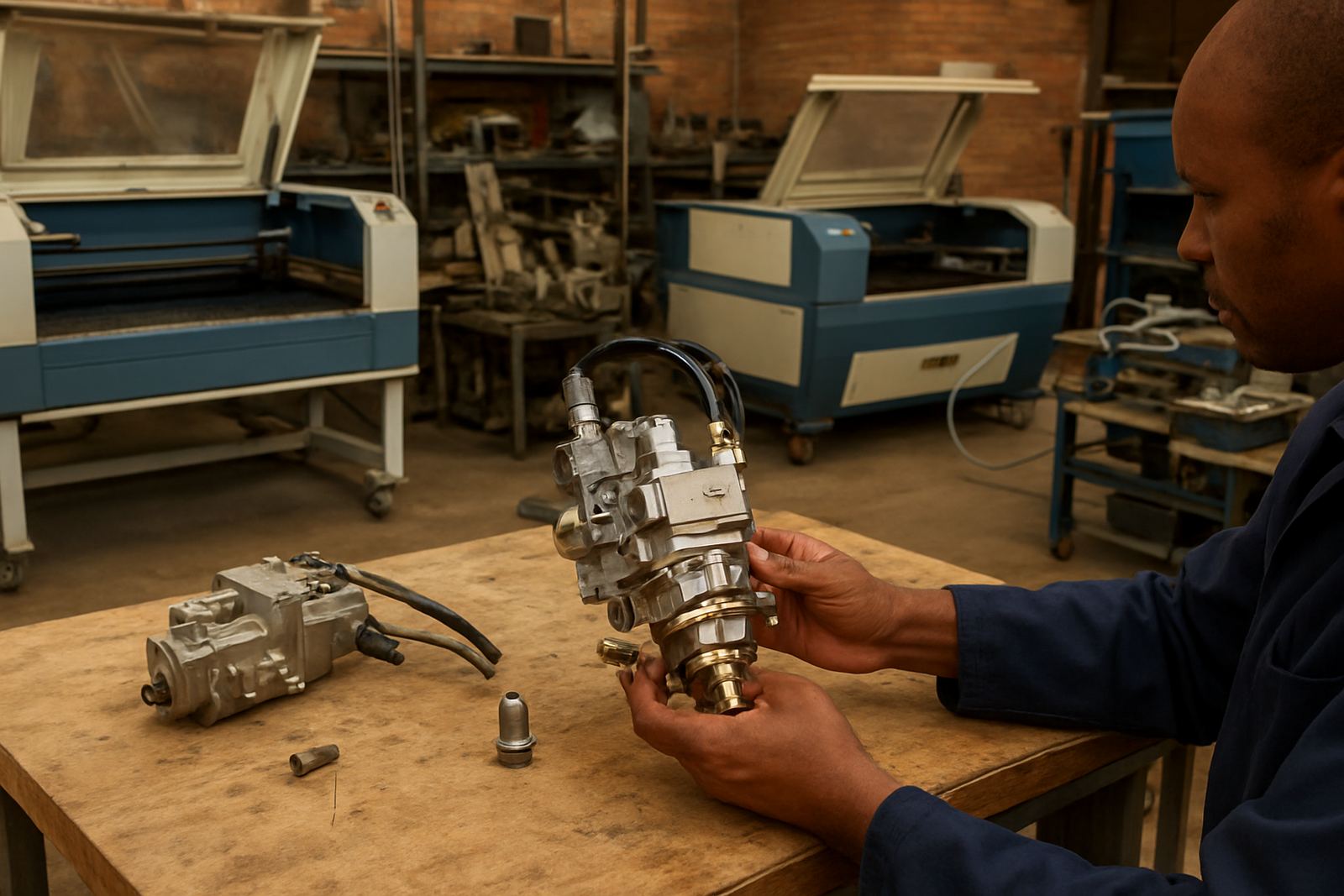
We brought the cutting head into our Boksburg bench area for strip and inspection, then checked the sensor path, cable condition, optics chamber, ceramic holder and nozzle seat. The machine had signs of wear around the head assembly, plus contamination in the internal air path. On this type of fault, the problem is not always one broken part. More often it is a mix of small issues that line up and make the height control behave badly, especially on long runs where heat build-up and fine dust start to show.
We tested the head in stages and confirmed the sensing fault was not random. There was a repeat pattern when the head moved over certain pierce cycles and when the operator changed sheet type. That pointed us to a combination of internal cleaning, sensor ring service and restoration of the working faces in the nozzle seat area. We also checked the protective window for marking and heat stress, because even a light haze can throw the signal off and make the machine think the standoff is different from what it really is.
- Strip and inspection of the cutting head assembly
- Internal cleaning of dust and fine metal residue
- Sensor ring service and continuity checks
- Nozzle seat restoration and alignment check
Repairs completed and parts supplied
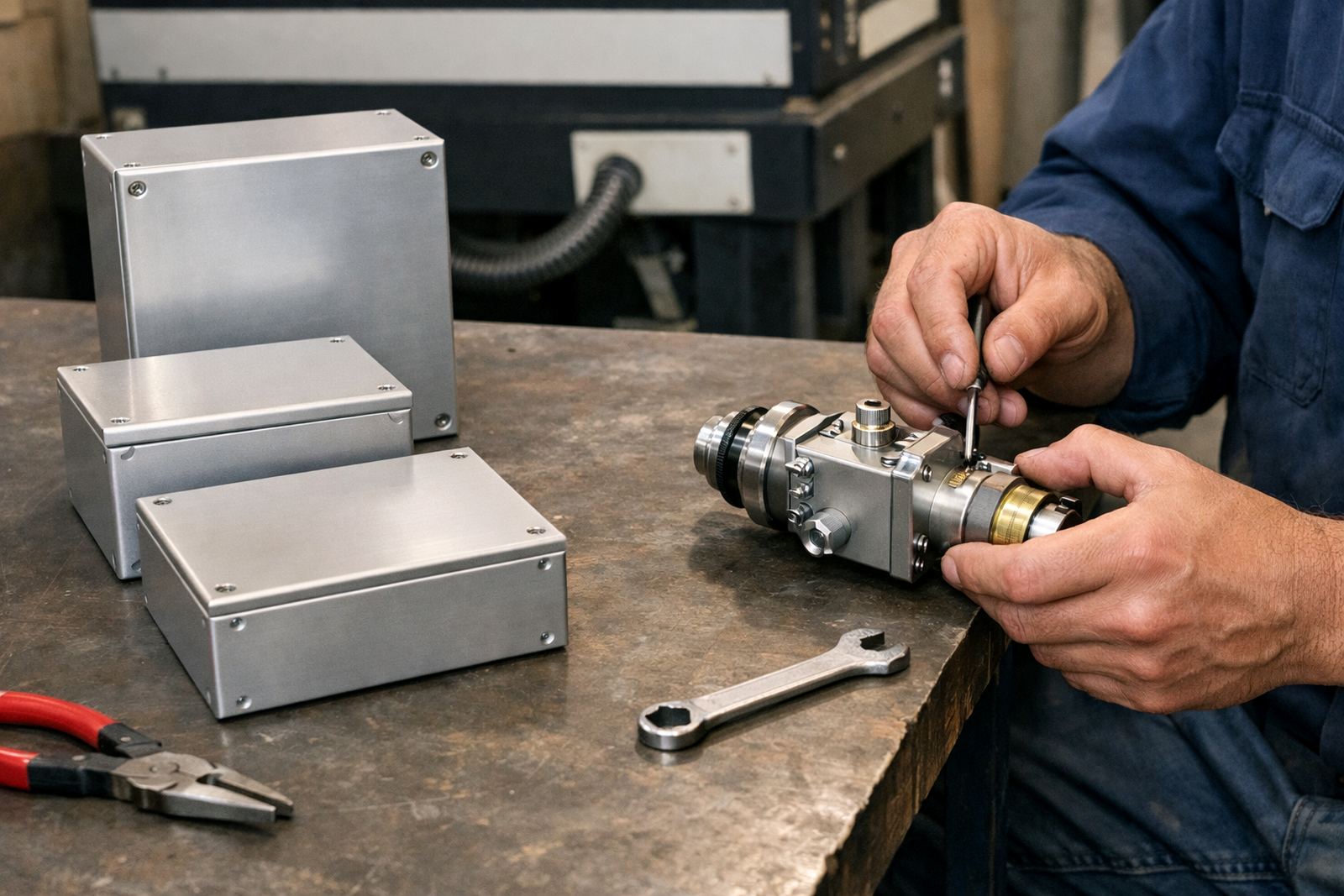
After diagnosis, we replaced the worn consumables and restored the sections that were no longer seating properly. That included nozzle replacement, lens replacement and protective window replacement, plus a ceramic holder change where the original part had heat wear. The internal surfaces were cleaned and checked again, then the head was reassembled and tested for straightness and response. This sort of work needs care because a small offset can turn into poor piercing, tapered edges or a head that alarms at the worst time.
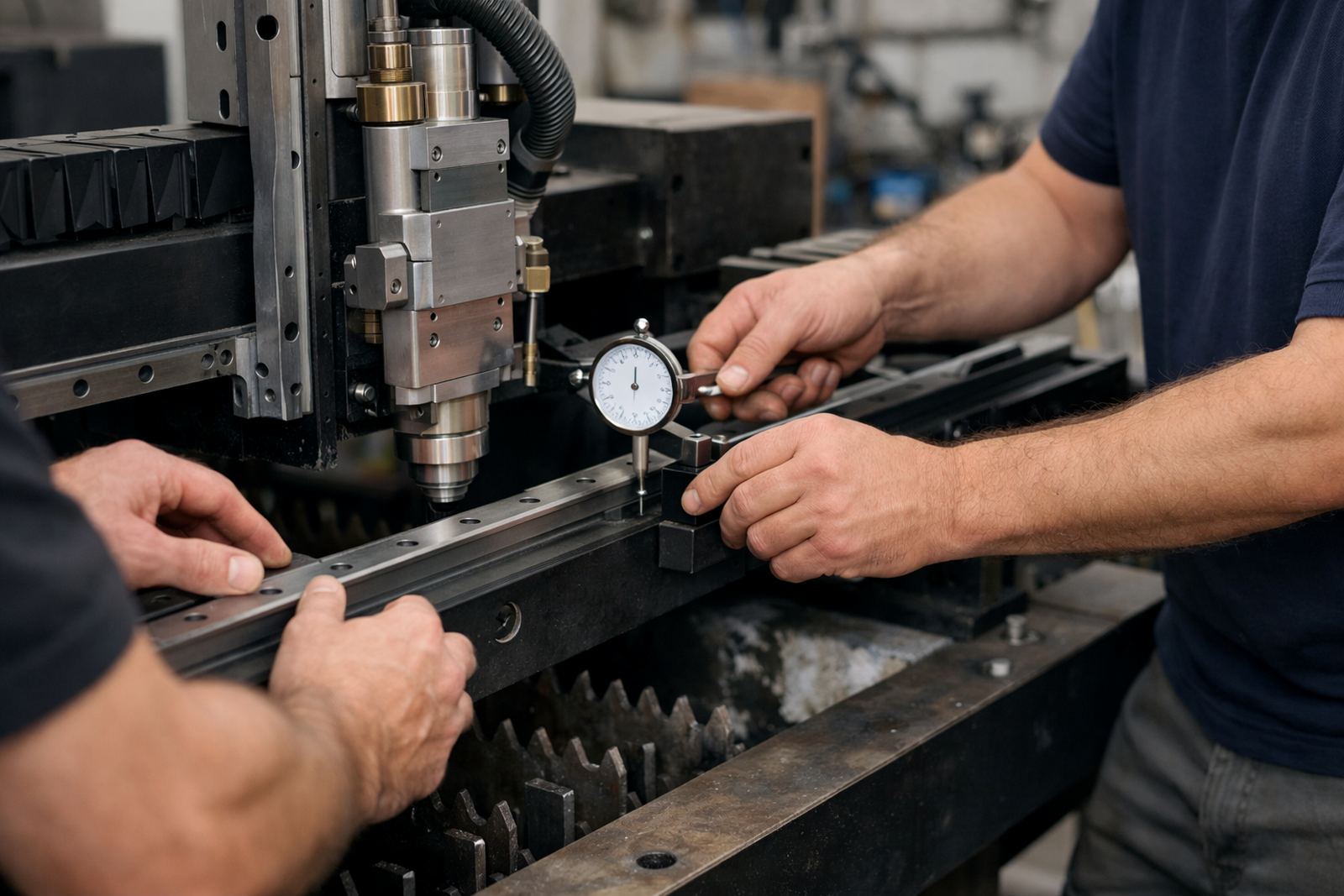
We also carried out a head alignment check and a bench pressure test to make sure the gas path was stable. In the workshop we look for clean flow, no pressure drop at the wrong point, and no signs of leakage around the fittings. That gives the customer a better picture before the machine goes back on site. It is basic work, but if it is skipped the fault can come back the same week. The whole repair was completed in a short window, with the main bench work done in week one and the final re-test after parts fitment in week two.
- Nozzle replacement and seating correction
- Lens replacement and protective window replacement
- Ceramic holder change for worn heat affected parts
- Head alignment check and bench pressure test
On-site return to service in Centurion
Once the head was repaired and rechecked, we returned to the client site in Centurion for fitment and return to service testing. On site, we confirmed the machine homed correctly, the piercing cycle stayed steady and the height sensing held its reference during normal panel cutting. We ran test cuts on common enclosure material, including 1.2 mm and 2.0 mm sheet, then checked edge quality on a few thicker samples. The operators wanted proof on actual production settings, not just a clean test plate, so we used their usual nesting style and gas settings where safe to do so.
The final result was simple but important: the machine stopped throwing the random sensing faults, piercing became more consistent, and the team could run a fuller shift without babysitting the head. Cut starts were cleaner, scrap dropped and the crew no longer had to stop and recheck every few sheets. That matters in Centurion, where enclosure work is often tied to urgent supply for contractors and plant installers, and a half day lost can throw out the rest of the week.
- Return to service testing on the client machine
- Panel cutting checks on production sheet sizes
- Stable height sensing through repeated pierce cycles
- Cleaner cut starts with less operator intervention
Why this job was worth doing properly
This project showed why laser head faults should be handled at the source and not worked around for too long. If the operator keeps restarting cycles, the machine may still produce parts, but the wear spreads to the lens, window and nozzle area. Over time the cut quality drops and the job cost climbs. For a workshop in Centurion, that can mean missed dispatches, overtime and extra material use, which is the sort of problem nobody wants when the workload is already tight.
We would approach a similar job the same way again: strip the head, inspect every wear point, test the gas path, replace damaged consumables and only then return the unit to site. If the fault shows up on both mild steel and stainless, we also check the alignment under more than one cutting condition, because one setting can hide a problem that appears later under a different pierce cycle. That extra bit of checking saves time down the line, and it helps the machine hold up better in ordinary workshop conditions.
What we would repeat on the next repair
For another enclosure maker, job shop or fabricator in Centurion, Pretoria or Midrand, we would use the same process and keep the sequence tight. First diagnosis, then strip and inspection, then the parts that are clearly worn, followed by bench pressure test and on-site return to service. That approach keeps the downtime short and gives the client clear feedback on what was actually causing the fault. It also helps when the machine has to work around South African site conditions like dust, heat, voltage swings and load-shedding starts.
Our team handles fibre and CO2 laser machines, cutting heads and related service work for workshops across South Africa. If your cutter is giving height sensing trouble, rough pierces or repeated head alarms, we can look at it on the bench or on site. Clients reach us through the enquiry form on our contact page.
- Fast fault finding with no guesswork
- Bench repair for cutting heads and related parts
- On-site support where machine removal is not practical
- Service coverage for Centurion, Johannesburg, Pretoria and beyond
Key facts
| Project location | Centurion, Gauteng |
|---|---|
| Client type | Enclosure maker and sheet metal fabricator |
| Machine type | Fibre laser cutting system |
| Fault | Intermittent height sensing fault |
| Materials cut | Mild steel and stainless sheet from 1.2 mm to 6 mm |
| Timeline | 2 weeks from bench diagnosis to return to service |