Isando signage plant and the cutting problem
The client was a signage plant in Isando, Ekurhuleni, running production for display panels, letters and thin sheet parts on a busy daily schedule. Their laser cutter had started leaving rough edges, intermittent pierce faults and small position changes between jobs, which made finishing slower and wasteful.
The brief was simple enough to say, but not simple to live with on the floor: find the cause, repair the cutting head, and get the machine back to reliable work without waiting on a full rebuild. They needed stable cutting on thin material, clean pierce starts, and a head that could keep working through load-shedding stops and restarts without losing alignment.
- Client type: signage plant and sheet cutting workshop
- Town: Isando, Ekurhuleni
- Machine type: fibre laser cutting system with automated cutting head
- Main issue: nozzle, ceramic and sensor faults affecting cut quality
Because signage work often runs in short batches, even a small head fault can throw off an entire day. The client wanted the problem sorted before it turned into a bigger mechanical or optical failure, and that was the right call. Waiting too long can damage the lens stack, the sensor ring and the ceramic seat, especially when operators keep pushing through with worn parts.
What we found on the bench
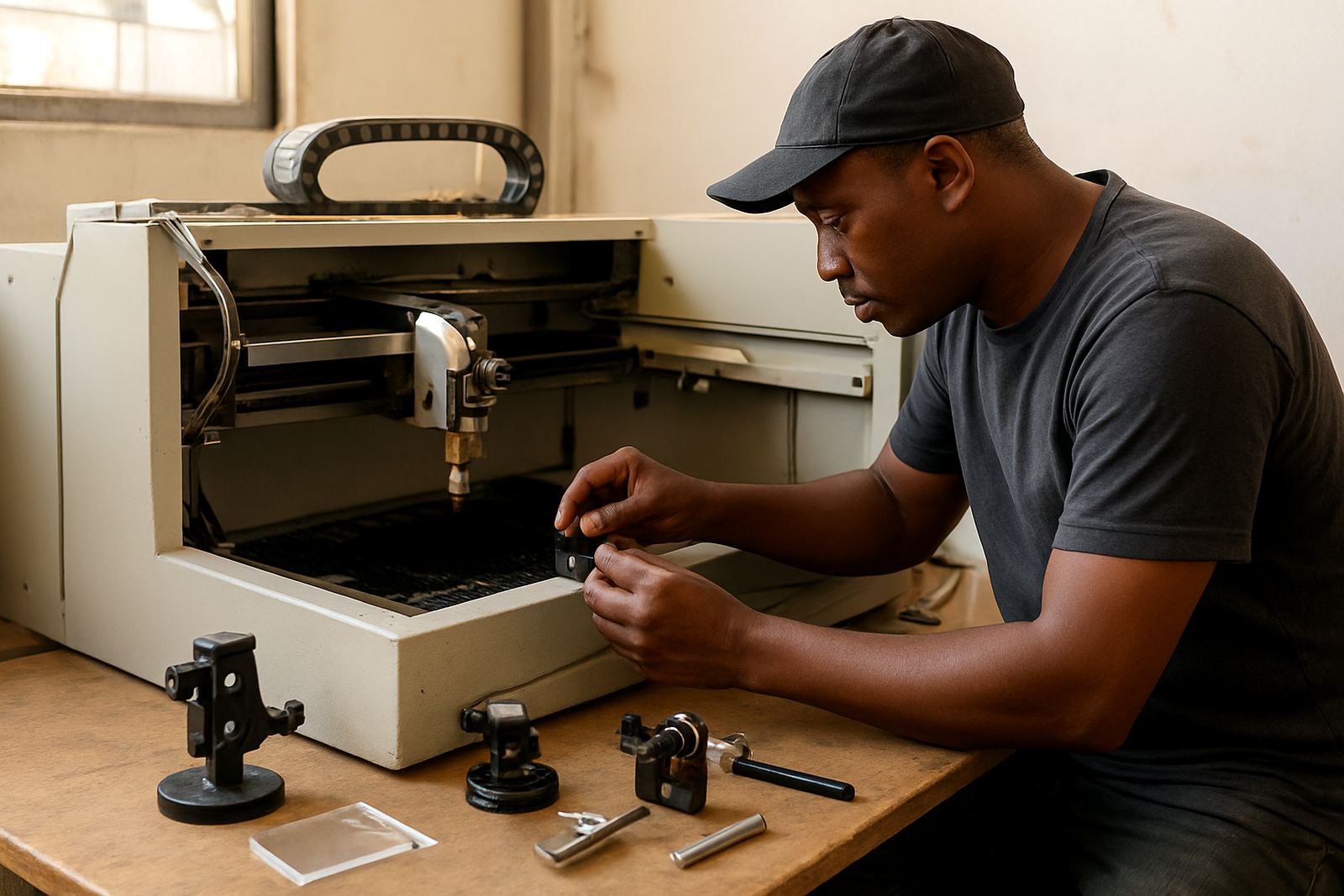
We brought the head in for bench inspection first, then confirmed the fault pattern on site before deciding what to replace and what to keep. The nozzle seat showed wear, the ceramic holder had heat marks, and the sensor signal was unstable enough to affect cutting response. The protective window was also contaminated, which added to the scatter and the poor edge finish.
The machine itself was not beyond repair. What it needed was a practical strip, inspection and restoration of the cutting head assembly, not guesswork. The bench check helped us separate normal wear from collision damage, and it saved the client from paying for parts they did not need.
- Nozzle seat wear causing poor beam centring
- Sensor instability affecting piercing and cut response
- Ceramic holder damage from heat and previous adjustment attempts
- Window contamination reducing output quality
That kind of fault set is common in busy signage shops, especially where operators change material often and the head sees frequent height adjustments. The issue usually starts small, then becomes expensive if the machine keeps running with the wrong consumables or a damaged seat.
Strip, restore and replace the worn parts
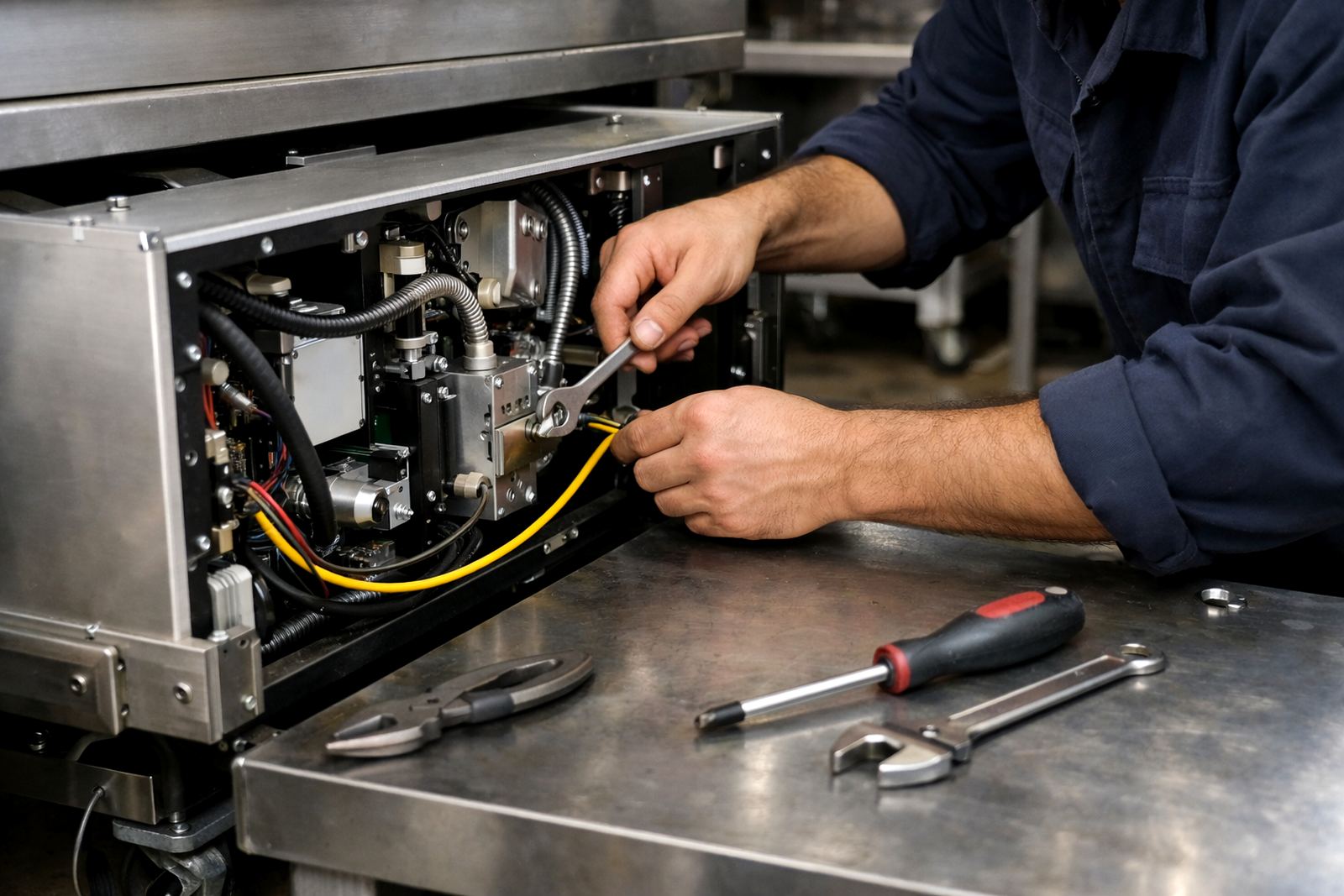
We carried out a full strip and inspection, then replaced the worn nozzle, ceramic holder and sensor components as needed. The internal cleaning covered the head body, gas path surfaces and contact points, so the new parts could sit correctly and do their job. We also fitted a fresh protective window and checked the lens condition before putting the assembly back together.
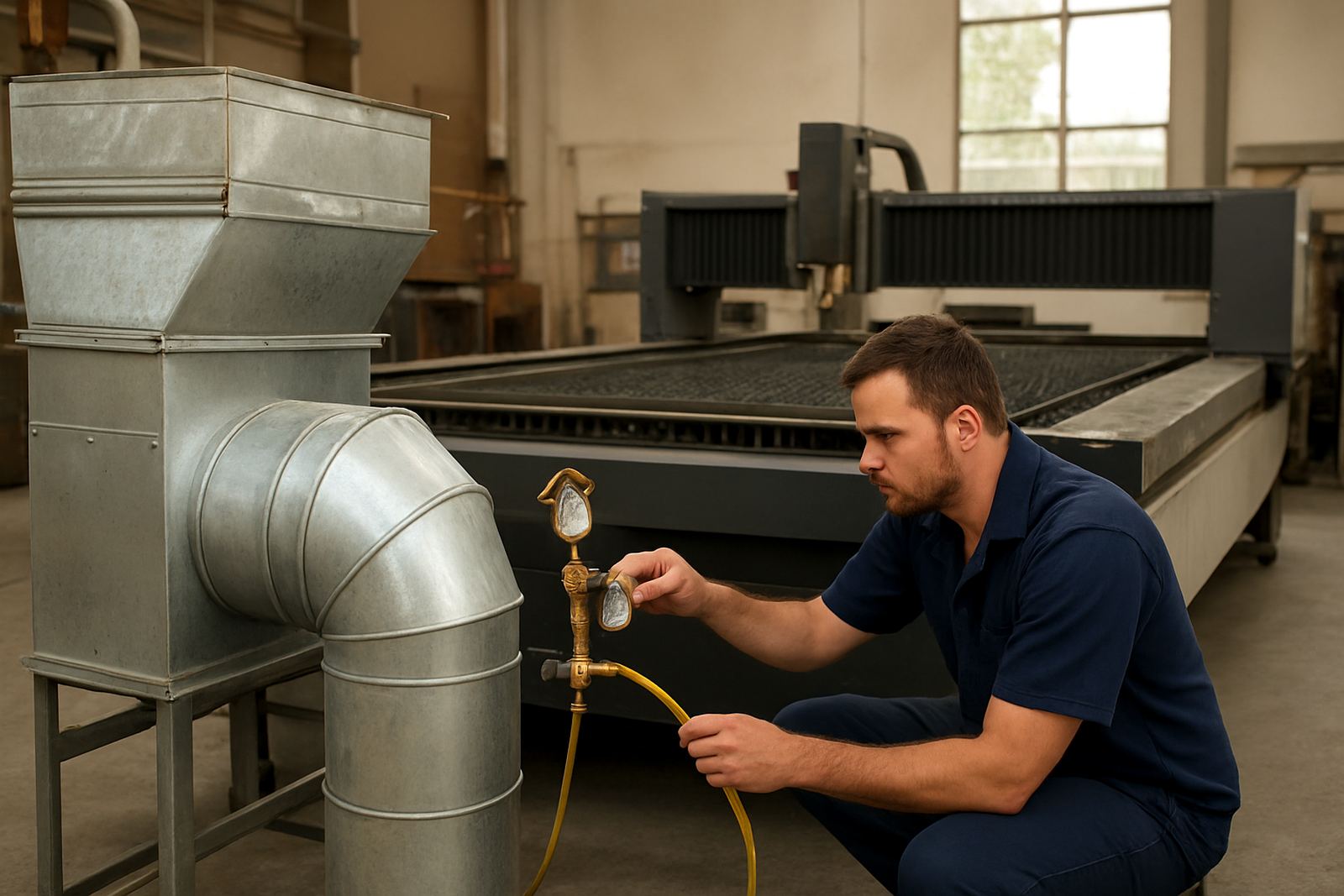
On this job, the focus was on restoring the head to proper cutting geometry. We carried out nozzle seat restoration, lens replacement where needed, window replacement, sensor ring service and a head alignment check. After assembly, we completed a bench pressure test and return to service test to confirm the gas path and response were consistent.
- Strip and inspection of the full cutting head
- Nozzle replacement and seat restoration
- Ceramic holder change and sensor ring service
- Lens and protective window replacement
- Internal cleaning and gas path service
- Bench pressure test and return to service test
The work was done to suit a production environment where downtime matters more than theory. We did not overcomplicate the repair. We fixed the worn items, checked the alignment twice, and made sure the head was ready for the actual sheet sizes the plant runs every day.
Timeline and downtime control
The project ran over one working week from first call to final sign-off. Day one was the assessment and collection of fault details, day two the bench strip and inspection, then the repair and parts replacement followed. The final checks and return to site testing were completed before the weekend shift, so the client could resume production without a long stop.
That schedule mattered because the plant was juggling several orders at once. We worked around their cut list and kept communication tight through Lerato, so the client knew what was in progress, what parts were being used, and when the head would be ready to go back. It sounds basic, but in a live factory the admin side can save a lot of wasted time.
- Week 1, day 1: fault report and site assessment
- Week 1, day 2: bench strip and inspection
- Week 1, day 3 to 4: repairs, replacements and cleaning
- Week 1, day 5: pressure test, alignment check and handover
The client did not need to shut the whole line down for days. That was the point of the bench repair path, with a field check only where it was needed. For a signage plant working under deadline pressure, cutting that downtime is often the difference between same-week delivery and missed work.
What changed after the repair
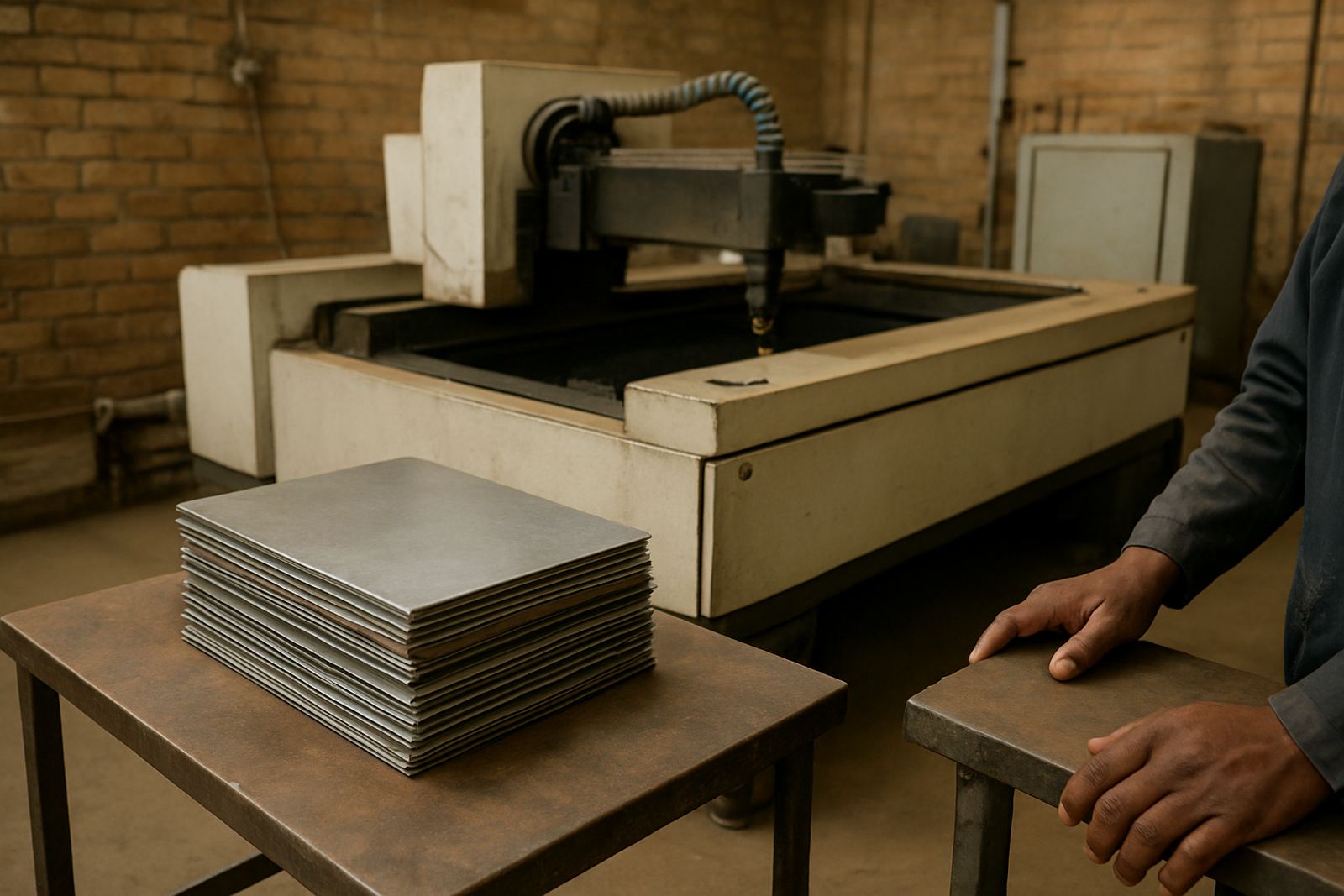
After the repair, the machine returned to cleaner thin-sheet cutting with better edge finish and steadier pierce starts. The operator reported less rework on small letters and fewer pauses to clear cut faults. Sensor response became predictable again, which made the head behave properly across repeated jobs.
The result was not just better output, but calmer day-to-day running. The workshop could move back to normal job flow without nursing the machine through every sheet. For a signage plant, that matters because a machine that cuts cleanly first time is also the machine that keeps labour and gas use under control.
- Cleaner cuts on thin sheet signage material
- More consistent pierce starts
- Less edge cleanup and rework
- Better machine uptime for short-run jobs
We also flagged the usual follow-up checks that keep a head healthy after repair. That includes keeping consumables clean, checking for collision marks, and making sure the cooling and gas supply stay within spec. Small issues in those areas can bring the fault back, sometimes faster than expected.
What we would do again on a similar job
If we were called back to a similar Isando signage plant job, we would take the same route again: bench inspect first, confirm the fault on site, then repair the actual worn items rather than replace half the head. That approach keeps costs sensible and avoids unnecessary downtime. It also gives the client a clear picture of what failed and why.
We would also keep the return-to-service checks exactly the same, because they catch the small problems that only show up under pressure, like unstable sensor reading or poor gas flow after reassembly. A repair only counts when the machine works under real production load, not just on the bench.
The team for this work drew on Sibusiso Mthembu for oversight, Johan van Rensburg for the technical strip and alignment, Thabo Molefe for field support, and Ayesha Khan for parts control and stores. Megan Naidoo kept the paperwork and handover record in order, so the client had a clear service trail.
- Use strip and inspection before ordering parts
- Replace worn consumables before damage spreads
- Confirm pressure and alignment before handover
- Keep a short record of collision and wear events
That is the kind of practical repair work we do for South African workshops and fabricators: direct, measured, and aimed at keeping cutters running when the order book is full.
Key facts
| Project location | Isando, Ekurhuleni |
|---|---|
| Client type | Signage plant |
| Machine type | Fibre laser cutting system |
| Work carried out | Nozzle, ceramic and sensor fault repair |
| Service method | Bench repair with on-site support |
| Timeline | 1 week from assessment to handover |