What the Beam Delivery Check covers
This service is a structured inspection of the beam path condition and alignment on fibre and CO2 laser machines. We look at the parts that influence how much energy reaches the cut, then measure where loss, misalignment or contamination is happening. On many machines the problem is not the source itself, but a window, lens, mirror train or head position that has moved out of spec after a collision, vibration or general wear.
A proper check is useful when the machine starts leaving dross, cutting slower than usual, burning corners or failing on thicker material. It is also worth booking after a head crash, after a nozzle strike, or when a machine has sat in a workshop with dust, grinding residue or coastal humidity. In Johannesburg and Pretoria the issue is often fine metal dust, while in Durban the salt air can show up as haze and corrosion on exposed parts.
When a beam check is the right call
Most workshops call for this service when the cut quality changes but the rest of the setup looks normal. If the machine is suddenly taking more gas, leaving a wider kerf or failing on corners, the beam path should be checked before you start changing settings blindly. That saves time and avoids wearing out consumables faster than needed.
- Cut drift from one side of the table to the other
- Poor penetration on steel, stainless or aluminium
- Black marks around the edge of the cut
- More frequent nozzle wear or pitting
- Uneven burn mark on test pieces
- Repeated alarms after a head bump or collision
It also suits owners who have moved a machine between branches, had new levelling work done, or swapped cutting heads and want to confirm the delivery path is still true. In many cases the fix is small, but if it is left too long the nozzle seat, lens and protective window can all take unnecessary damage.
Sizes, options and machine types we check
Beam Delivery Checks are carried out on a range of fibre and CO2 laser systems used by job shops, signage plants and metal fabricators. The exact checks depend on the machine size, table layout and head type, but the aim stays the same: confirm that energy reaches the work cleanly and at the right point. We work on flatbed cutters, tube systems and mixed production lines where uptime matters.
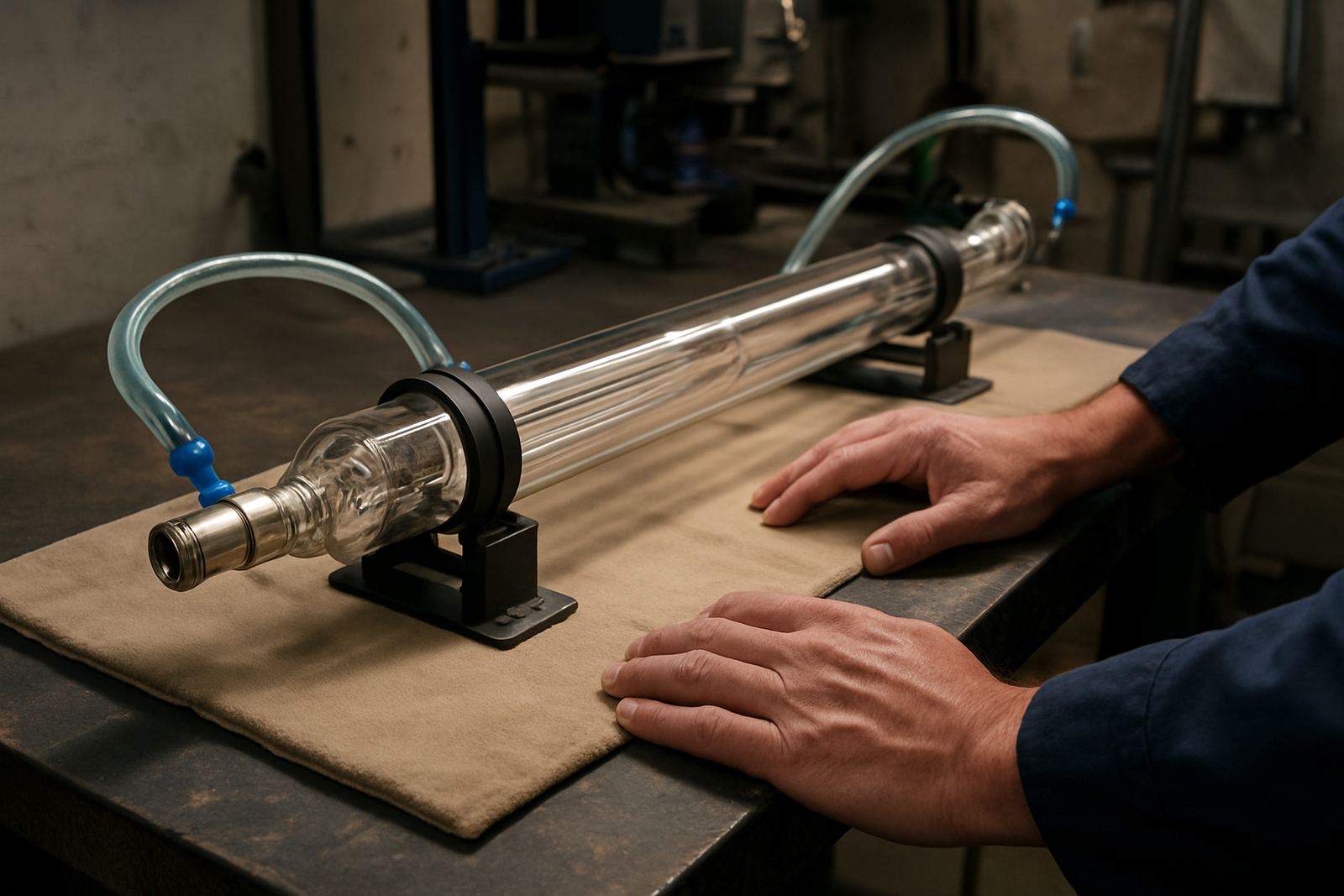
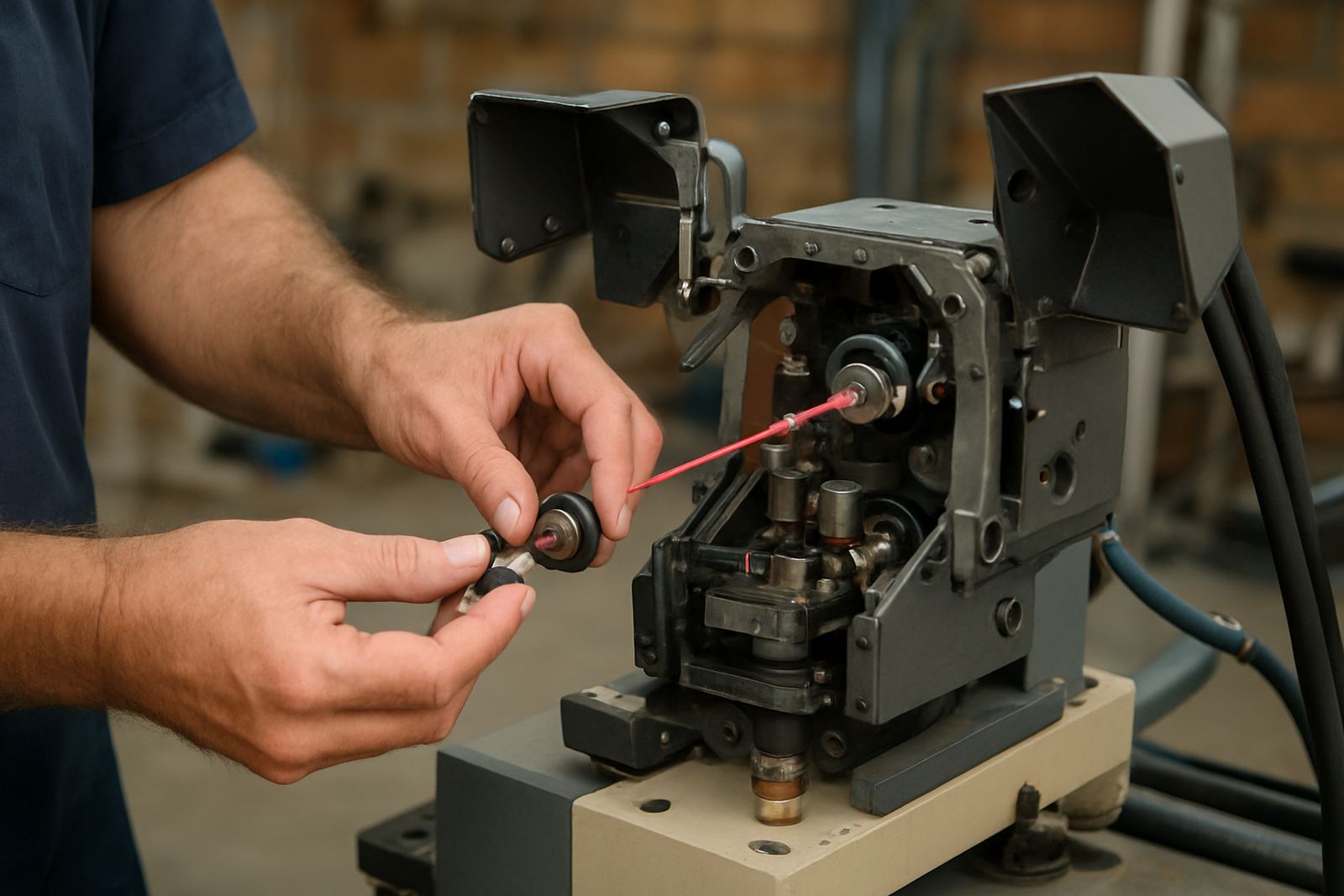
For fibre machines, the inspection usually focuses on the cutting head, protective window, lens condition, nozzle seat and any internal contamination that may affect the beam quality. For CO2 systems, we also check mirror condition, beam path stability and the alignment points that influence output over longer distances. If needed, the machine can be checked on the bench in Boksburg or on site at your premises in Ekurhuleni, Johannesburg, Pretoria, Vanderbijlpark, Durban or Cape Town.
- Fibre laser cutting heads
- CO2 laser cutting systems
- Sheet cutting tables
- Tube cutting systems
- Single head and multi head setups
Power, gas and installation points to plan for
The Beam Delivery Check itself does not need production power for long periods, but we do need the machine available in a safe condition for testing and diagnosis. If a bench test is being done, the head or affected parts may be removed, cleaned and rechecked before being returned to service. On site, we need clear access around the machine, stable mains power, and enough room to inspect the head and beam path without interruption.
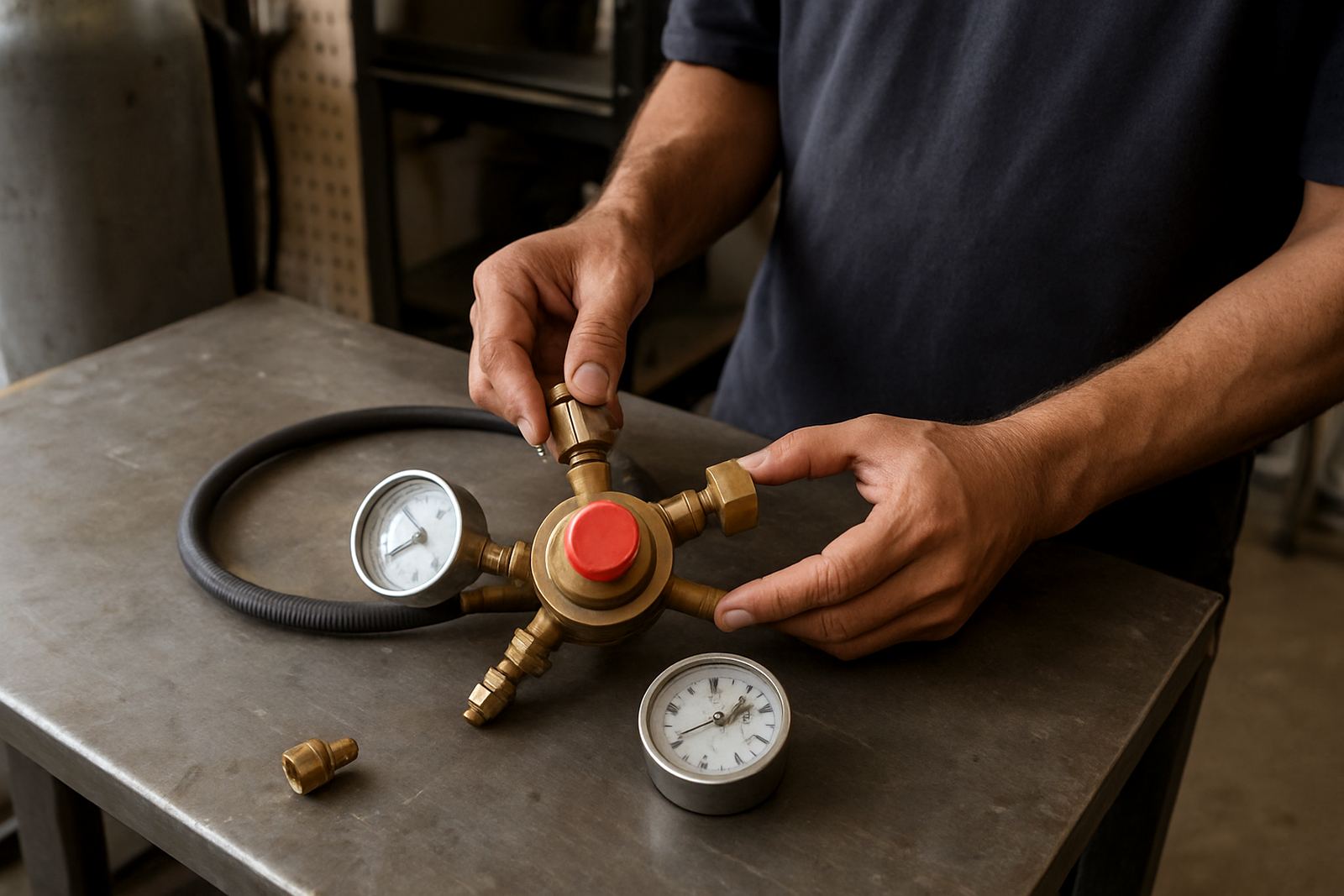
For gas assisted cutting, it is important that the gas supply is clean, dry and set correctly for the material you are running. Low pressure, wet gas or contaminated lines can make a beam issue look worse than it is. If your workshop is on a generator during load-shedding, tell us before the callout so we can plan the test properly and avoid false readings. A machine that is cutting against unstable supply conditions can seem out of alignment when the real problem is power fluctuation or poor gas delivery.
Care and servicing after the check
Once the beam path is confirmed, the machine should be kept clean and inspected at regular intervals. Dust, oil mist and fine grinding particles build up quickly in busy workshops, especially where sheet prep and welding happen close to the cutter. Even a good machine can drift again if the protective window is left dirty or if the head is not checked after a light collision.
We normally recommend scheduled checks after major production runs, after any nozzle strike, and whenever you replace a lens or window. If a machine is running near the coast, inspect it more often because humid air can accelerate corrosion and haze on exposed components. Keep the head area dry, use clean compressed air where required and avoid forcing the machine back into production before the cause of the cut problem has been confirmed.
- Check the nozzle and window for residue each shift
- Watch for changes in cut sound, spark pattern or edge finish
- Inspect after any crash, even if no alarm appears
- Record material type, gas pressure and cut settings for repeat jobs
What to have ready when you request a Beam Delivery Check
When you send through an enquiry, include the machine make and model, the material you are cutting, the thickness, and the fault you are seeing. If the problem is only on certain jobs, say so. That helps us decide whether the issue is likely in the head, the beam path, the gas setup or a combination of these. A short photo of the cut edge, nozzle condition or warning screen can also save time.
Please mention whether the machine is fibre or CO2, whether the issue started after a collision, and whether the problem is the same on all stations or only on one side of the table. If the machine is in Durban or Cape Town, tell us if it is near a coastal environment so we can factor in humidity and corrosion risk. We can then advise if the job is better handled on site or on the bench at our Boksburg base.
Key facts
| Service type | Beam path inspection and alignment check for fibre and CO2 laser systems |
|---|---|
| Typical fault signs | Cut drift, poor penetration, wider kerf, dross, uneven edge finish |
| Machine types | Flatbed cutters, tube cutters, single head and multi head systems |
| Service location | On site across South Africa or bench repair in Boksburg, Ekurhuleni |
| Common parts checked | Nozzle, lens, protective window, sensor ring, ceramic holder, beam path components |
| Turnaround focus | Short downtime with diagnosis, correction and return to service testing |