What bellows covers do on a laser machine
Bellows covers protect rails, slides, cables and other moving assemblies from metal dust, slag, offcuts and coolant mist. On a laser cutter, that protection matters because fine contamination can work its way into the cutting head area, linear motion parts and sensor points, then start causing sticky movement, position errors and premature wear.
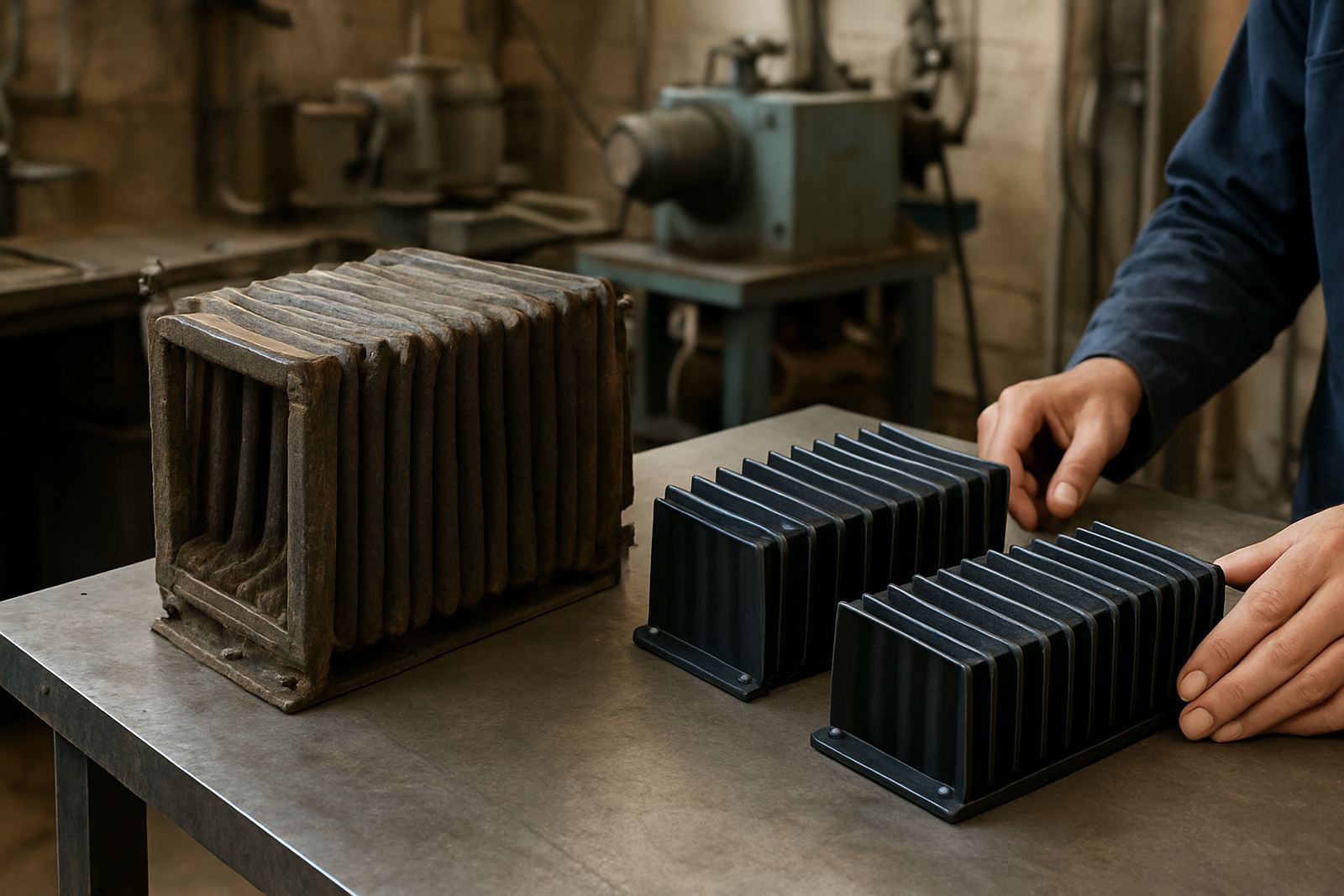
When a bellows tears, collapses or goes hard with age, the machine may still run for a while, but the small faults start adding up. You may see black dust inside the cover, uneven movement, noisy travel or repeated stoppages during long shifts. In busy job shops and fabrication bays, that usually means the cover needs attention before it turns into a bigger repair.
We repair and replace bellows covers for fibre and CO2 laser systems used by signage plants, metal fabricators and workshop teams that need proper protection around moving parts.
Sizes, materials and cover options
Bellows covers are fitted to the machine and the motion path, so there is no single size that suits every setup. We match the replacement to the travel length, folding width, mounting style and the amount of heat, dust or splash exposure around the machine. Some covers are narrow and compact for head movement, while others are longer and need stronger support to stay straight over repeated cycles.
Options usually depend on how the machine is used and what it sits near. In a steel cutting bay, heat and spatter resistance matter more. In a cleaner indoor workshop, dust sealing and smooth folding may be the bigger concern. If the machine works near load-shedding related generator power changes or in a coastal environment like Durban, we also look at how humidity and fine corrosion have affected the cover frame and fixings.
- Folding bellows for linear motion and guide protection
- Custom-length covers for cutting heads and exposed slide paths
- Heat and spatter resistant materials for tougher cutting bays
- Light-duty covers for cleaner workshop environments
- Mounted or replacement-only options depending on the machine setup
Where bellows repair suits the work
This service suits workshops that run daily production and cannot afford small mechanical issues to drag on. We see bellows damage on machines used for profiling, bracket work, signage cutting and general sheet metal jobs, especially where the head travels quickly and the area around the machine is not kept perfectly clean. A torn cover can also matter after a collision, if a moving assembly has been knocked slightly out of line.
For clients in Johannesburg, Pretoria, Vanderbijlpark, Durban and Cape Town, the practical goal is simple: keep dust away from the moving parts and get the machine back into service without waiting on unnecessary delays. Bellows repair is often done alongside a strip and inspection, head alignment check or return to service test when the machine has had a rough week on the floor.
- Fibre laser cutting machines with exposed motion assemblies
- CO2 laser systems with worn or torn protective covers
- Machines working in dusty, humid or high-spatter areas
- Units that have had a collision or abnormal travel noise
Installation, power needs and machine access
Bellows cover repair does not need separate power or gas supply on its own. It is a mechanical protection job, but access to the machine is important. We need room to inspect the travel path, check for bent brackets, verify the mounting points and make sure the replacement cover folds freely without rubbing on adjacent parts. If the machine has a compressed air system linked to the cutting head or ancillary cleaning functions, we will check that the air lines are not leaking or fouling the cover path.
Installation can be done on the bench or on site, depending on the machine size and how quickly the workshop needs it turned around. On larger units, on site repair can save time and avoid a full strip-out. On smaller machines or where the damage is tied to other wear, bench work gives more room for careful inspection and a proper fit. In both cases, the aim is to stop dust ingress and restore clean movement across the full travel.
Care, servicing and signs the cover is failing
Bellows covers do not usually fail all at once. They start with pinholes, split corners, stiff folds or broken fixings, then the damage opens up under repeated travel. Regular cleaning helps, but the cover should never be treated like a dustbin. Metal offcuts, oily grime and thick dirt load the folds and can shorten the life of the material.
During routine servicing, we check the full length of the cover, the mounting points and the surrounding motion parts. If the cover has been damaged by spatter, collapse or rubbing, we will also inspect the hidden area underneath for dust lines, wear marks and corrosion. That way the replacement is not just cosmetic, it actually protects the machine again.
- Look for tears at the folds and corners
- Check for dust trails inside the cover
- Listen for rubbing, ticking or scraping during travel
- Inspect fixings after any collision or hard stop
- Replace stiff or warped covers before they split further
What to check when ordering a replacement
To supply the right bellows cover, we need clear details from the machine and the damaged part. If the old cover is still available, the best starting point is a sample or accurate measurements. If it is too damaged to copy, we can work from the machine dimensions and the mounting style. That is especially useful when the machine has been in service for years and the original part is no longer in good shape.
Please have the following ready when you enquire through the contact page: machine type, travel length, folded width, mounting hole pattern, fitting orientation and any notes about heat, dust or coolant exposure. If the cover failed after a collision, include where the impact happened and whether anything else started rubbing afterwards. Small details save time and help us match the replacement properly.
- Overall length and folded width of the existing cover
- Mounting style and fixing position at both ends
- Machine type and axis or head location
- Any heat, dust, spatter or coolant exposure
- Signs of collision, misalignment or broken brackets
Bench or on-site repair across South Africa
Our base is in Boksburg, Ekurhuleni and we support workshops across South Africa, including Johannesburg, Pretoria, Vanderbijlpark, Durban and Cape Town. Some bellows cover jobs are quick enough for on-site fitting, while others are better handled on the bench when the machine needs a more careful inspection at the same time. If the cover failure is part of a bigger issue, such as a damaged cutting head or worn guide assembly, we can combine the work so the machine is not opened twice.
Laser Ray Tools focuses on keeping laser machines and cutting heads working properly, not on unrelated software or side services. That practical approach matters when a workshop is trying to keep production moving and every lost shift costs money. Bellows cover repair is one of those jobs that looks small, but protects the bigger machine from dust, wear and avoidable downtime.
Key facts
| Service type | Repair and replacement of torn bellows covers for laser machines and moving assemblies |
|---|---|
| Compatible systems | Fibre and CO2 laser machines with protected linear motion or cutting head travel |
| Typical cover lengths | Made to fit the machine, from short head covers to longer axis protection sections |
| Material options | Dust resistant, heat resistant and spatter resistant cover materials matched to the application |
| Installation | Bench repair or on-site fitting, depending on access and machine size |
| Power and gas needs | No separate power or gas for the cover itself, but machine access and compressed air checks may be required |