What a Cutting Head Rebuild includes
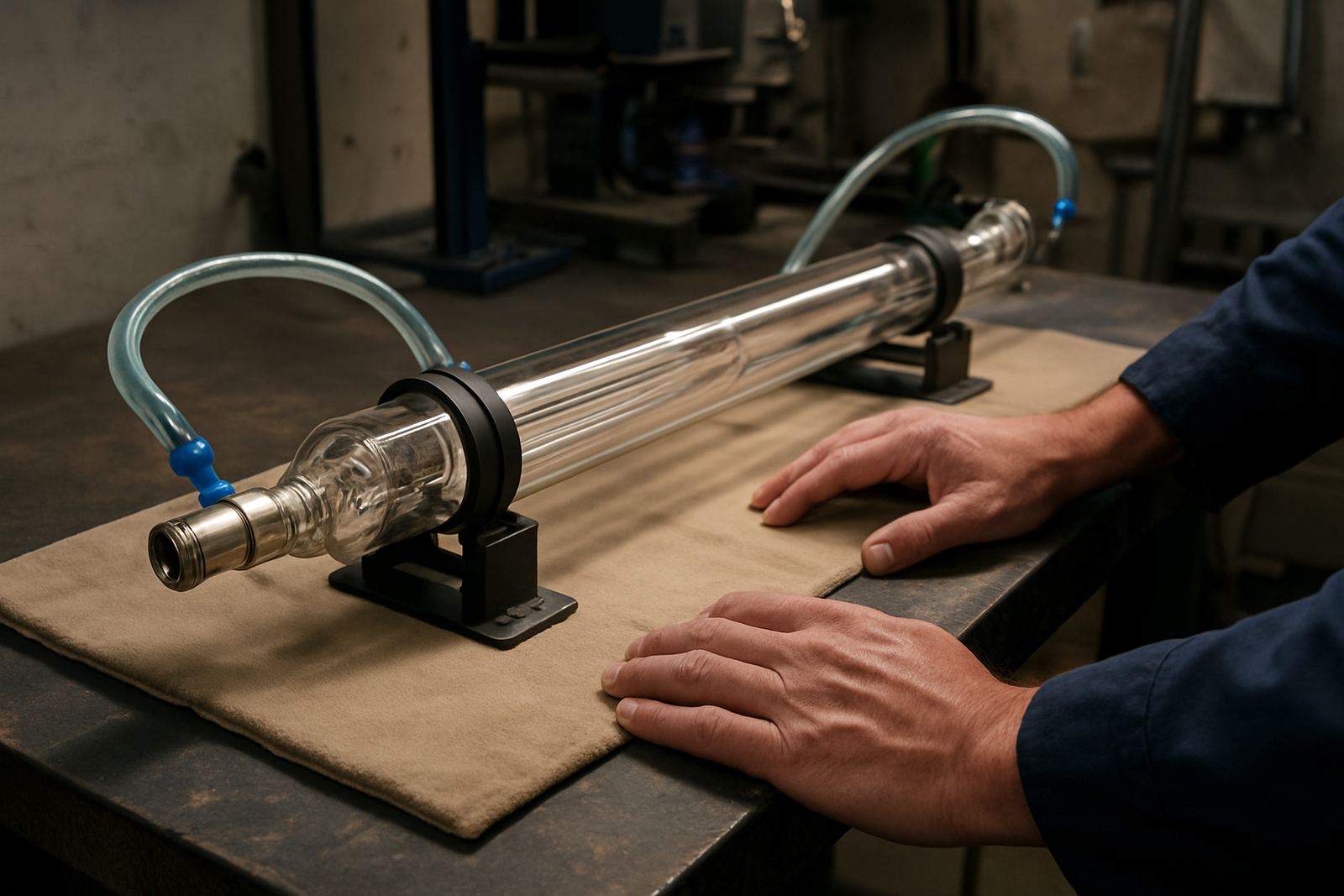
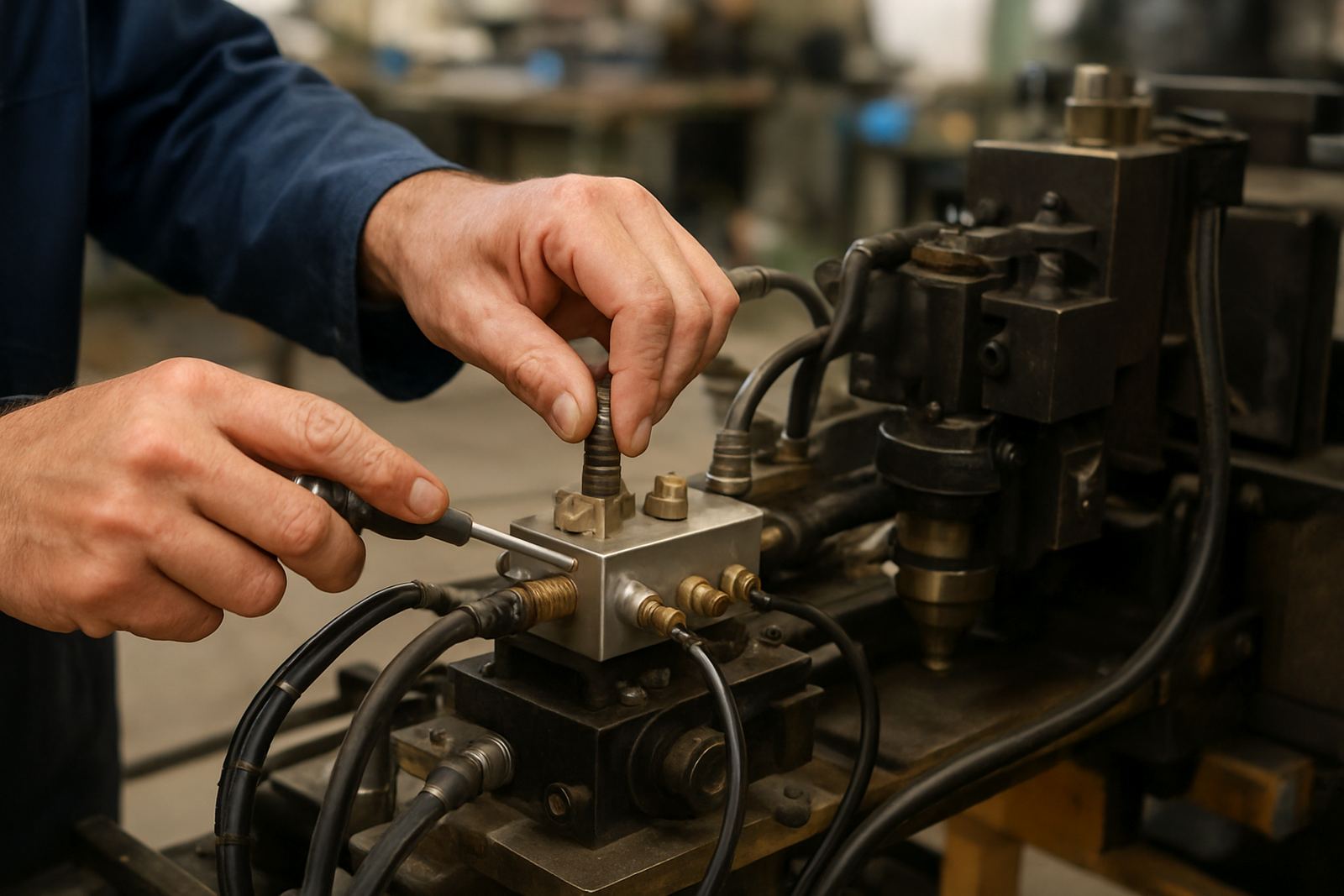
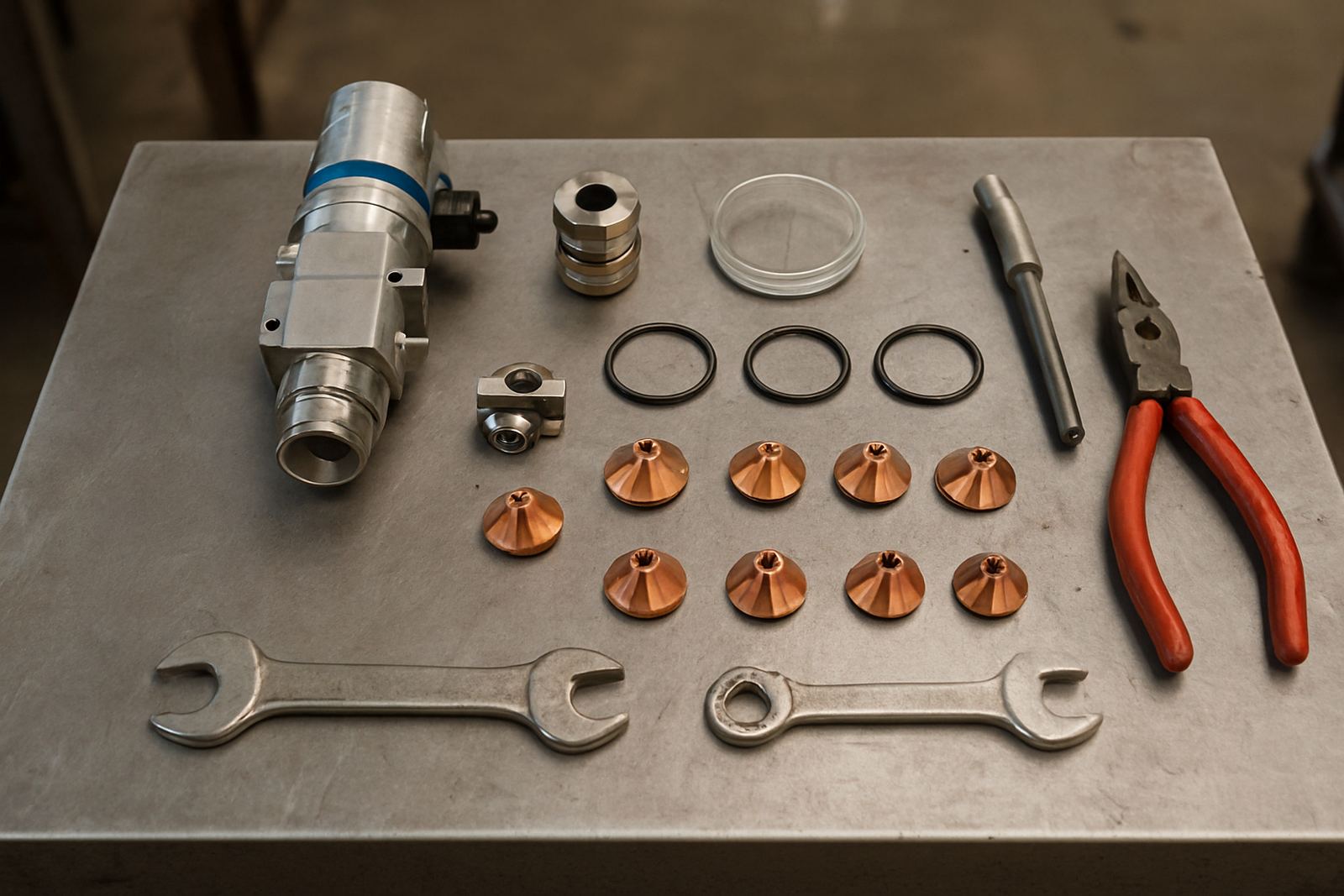
A cutting head rebuild is a workshop service for heads that still have a serviceable body but need careful restoration inside and out. We strip the head, clean the passages, inspect the optical path, check the sensor ring and ceramic holder, then replace worn parts before reassembling and testing it. The aim is to recover stable cutting performance without replacing the full head where that is not needed.
This service suits South African workshops that run mild steel, stainless steel or aluminium on daily shifts and cannot afford long stoppages. It is especially useful after a minor collision, a build-up of spatter, or months of cutting with contaminated assist gas. A proper rebuild can stop recurring nozzle faults, unstable pierces and edge flare that creep in when the head is no longer square or clean.
- Full strip and inspection of the cutting head assembly
- Internal cleaning of the body, channels and mounting points
- Nozzle seat restoration where the seat is worn or marked
- Lens replacement and protective window replacement if required
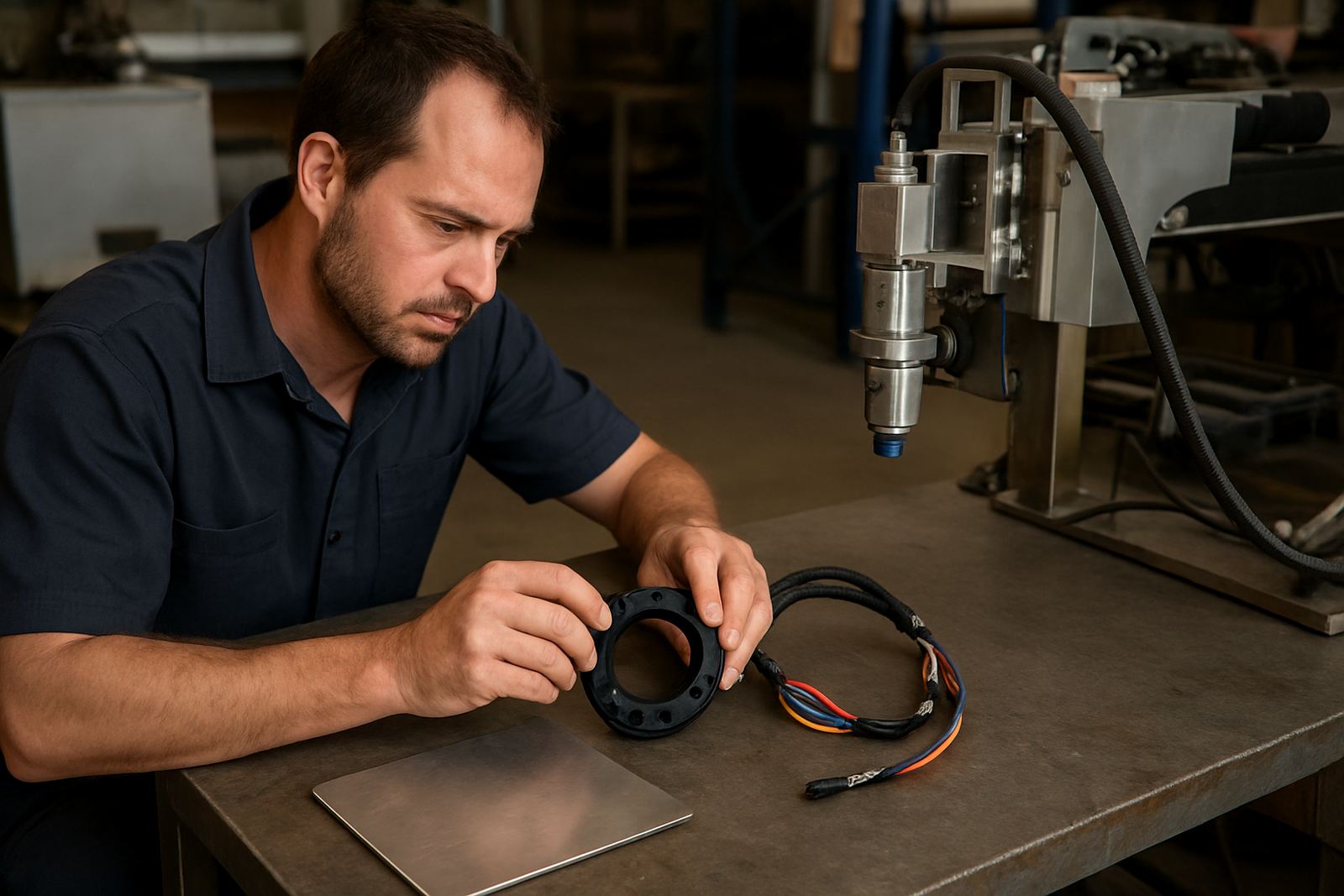
- Sensor ring service, ceramic holder change and alignment checks
When a rebuild makes sense on fibre and CO2 systems
Not every damaged head needs replacement. If the body is intact, the rebuild can often restore reliable function at a lower cost than a full unit swap. Our team checks whether the head has suffered from a collision, heat damage, dust ingress, moisture from poor storage, or wear from repeated nozzle changes. We also look for signs of gas leaks, loose seating and abnormal pressure readings that point to deeper faults.
For fibre lasers, rebuilds are common on heads that have taken a light hit during sheet changeover or have been running with worn windows and poor gas quality. On CO2 systems, the same service helps when cut quality has dropped and the focus path no longer behaves as it should. In both cases, the decision comes down to condition, parts availability and whether the head can still hold alignment after repair.
- Collision damage from sheet lifting, material movement or gantry contact
- Cut quality loss from dirty optics or damaged windows
- Frequent nozzle changes that have worn the seat
- Sensor errors, unstable pressure or poor beam centring
Sizes, options and head types we work on
We service a range of common cutting head sizes used in workshops across Johannesburg, Pretoria, Ekurhuleni, Vanderbijlpark, Durban and Cape Town. The exact rebuild depends on the head design, the optical stack and the condition of the internal components. Some units only need cleaning, seals and a new window. Others need a full strip with nozzle seat restoration, ceramic holder change and alignment verification.
When customers send in a head, we match the work to the duty it must handle. Thin sheet work on signage lines does not place the same demand on a head as heavy plate cutting in a fabrication shop. We keep the rebuild practical, so you only replace what is worn and not parts that still have life left. That saves cost and keeps lead time down, which matters when a shop is trying to recieve a finished order by Friday.
- Small format and standard industrial cutting heads
- Heads used on fibre laser cutting machines
- Heads used on CO2 laser cutting machines
- Single-head and production-line applications
Installation, power and gas checks before return to service
Before a rebuilt cutting head goes back into production, the machine side must be in order too. We check that the mounting face is clean, the beam path is aligned, the assist gas supply is dry and the pressure range is correct for the material being cut. If the machine has had a collision, we also check the carriage, sensor response and any signs that the head was knocked out of square.
There is no special mains power requirement for the head itself, but the laser machine and its gas and cooling systems must be stable. In South African workshops this often means making sure the compressor is clean, filters are changed on time, and the machine is protected from dust and power dips during load-shedding. On-site work is useful when the head is part of a bigger fault, while bench repair is best when the unit can be removed and tested properly in Boksburg.
- Clean mounting face and correct nozzle seating
- Dry, filtered assist gas at the correct pressure
- Stable cooling and machine earth connection
- Beam alignment verified after installation
Care after rebuild and signs the head needs attention
A rebuilt head will only stay in good condition if it is handled properly. Keep the nozzle clean, avoid touching the optics, and change protective windows before they are badly marked. If the cutting edge starts to show dross, taper, burn marks or unstable pierce points, do not keep pushing the machine for another shift and hope it clears itself. That usually leads to a bigger fault and more downtime.
We advise regular checks for shops that run long production hours or work in dusty areas near steel processing, fabrication and signage production. Coastal humidity can also bring extra contamination, so Durban and Cape Town users should watch for moisture in the gas line and storage issues. A simple care routine extends the life of the rebuild and keeps the machine cutting straight.
- Check nozzle condition at the start of each shift
- Replace protective windows before burn marks spread
- Watch for changing cut quality after a collision
- Keep gas lines dry and filters in service
What to check when ordering a rebuild
When you send a cutting head for rebuild or ask for collection, give us the machine model, head type, the fault symptoms and what happened before the problem started. A clear note about collision damage, poor cuts or sensor alarms helps us diagnose the unit faster. If you can, include photos of the outside of the head and the damaged parts. That lets us plan the strip and parts supply before the unit reaches the bench.
Customers from Boksburg, Germiston, Kempton Park and the wider Ekurhuleni area often use our bench service, while workshops in Johannesburg, Pretoria, Vanderbijlpark, Durban and Cape Town use our on-site support when the machine cannot be moved. We work with job shops, signage plants and metal fabricators who need practical repair rather than unnecessary replacement. The goal is simple: restore cutting-head performance and get the machine back into production with minimum fuss.
- Machine make and model
- Cutting head type and serial details if available
- Fault symptoms and recent collision history
- Whether you need bench repair or on-site support
Key facts
| Service type | Full strip, clean and rebuild of worn or collision-damaged cutting heads |
|---|---|
| Machine compatibility | Fibre laser and CO2 laser cutting systems |
| Typical work | Nozzle seat restoration, lens replacement, window replacement, sensor ring service |
| Testing | Return to service test, bench pressure test and head alignment check |
| Service area | Boksburg base with support across South Africa, including Johannesburg, Pretoria, Vanderbijlpark, Durban and Cape Town |
| Support format | Bench repair, on-site repair and parts supply by arrangement |