What Cut Quality Correction Covers
Cut Quality Correction is a practical service for fibre and CO2 laser machines that are cutting, but not cutting well enough. If edges are rough, corners are tearing, or parts are coming off with a heavy burr, the issue can sit in the head, the lens stack, gas flow, nozzle condition or the machine settings. We work through those points one by one and correct what is causing the poor finish.
The aim is not a quick tweak and hope for the best. It is a proper check of the cutting path, from the nozzle seat to the protective window and internal cleanliness. That suits workshops doing light fabrication, signage, jobbing work and production batches where every re-cut costs time and material.
- Reduces burr on mild steel and stainless steel
- Helps correct taper on thicker plate
- Improves edge stability on repeat cuts
- Supports fibre and CO2 cutting heads
Where It Suits In Daily Production
This service suits shops that are already running machines, but seeing a drop in edge quality after a collision, a nozzle change, a lens replacement or a long production run. It also helps when gas bottles are changing fast, assist gas pressure is not consistent, or a machine has been standing during load shedding and needs a proper restart check.
We support customers in Boksburg, Johannesburg, Pretoria, Vanderbijlpark, Durban and Cape Town, and also help smaller satellite operations in Germiston and Kempton Park. Coastal humidity in Durban and salt air near Cape Town can affect optics and fittings faster than expected, so regular inspection matters there. In inland areas, dust and workshop heat still take their toll, especially when machines run long shifts.
- Job shops handling mixed material and thicknesses
- Signage plants cutting brackets, panels and frames
- Metal fabricators doing repeat production runs
- Workshops needing short turnaround after a fault
Sizes, Head Types and Correction Options
Cut quality correction is not a one-size job. The right approach depends on machine power, head type, material thickness and the finish needed. On bench jobs we inspect the head assembly in detail and test the weak points first. On site, we focus on the checks that can be done safely without taking the machine out of service for longer than needed.
Options usually include nozzle replacement, lens replacement, protective window replacement, nozzle seat restoration, sensor ring service and ceramic holder change. If a head has had a collision, we may also check alignment and pressure loss before sending it back into production. For fibre machines, the work often centres on clean beam delivery and gas path condition. For CO2 machines, the optics stack and beam path alignment are usually key.
- Fibre laser cutting heads
- CO2 laser cutting heads
- Light gauge sheet work
- Thicker plate work where taper control is critical
Installation, Power and Gas Requirements
There is no special installation for the correction service itself, but the machine must be able to run a proper test cut. That means stable power, clean assist gas and a safe working area around the machine. If power quality is poor or the unit is running through frequent outages, the test results can be misleading. A laser may look fine one day, then shift after a restart or voltage dip.
For test and return to service work, we check that gas delivery is steady and that the machine can reach normal working pressures. Nitrogen, oxygen or compressed air systems all need clean lines and dry supply. If the site has been offline due to load shedding, the machine should be warmed up, cleaned and verified before full production starts again.
- Stable mains supply and correct earthing
- Clean, dry assist gas at the required pressure
- Safe access to the cutting head and enclosure
- Space for bench testing if the unit is removed
Care and Servicing After the Correction
Once the cut has been brought back into line, keeping it there depends on routine care. A clean lens stack, a sound protective window and a nozzle that matches the job all help prevent the same fault from returning. If material splash or dust builds up, the head can drift out of spec and burr will come back quickly.
We recommend regular inspection intervals based on usage, not just calendar time. Busy plants may need weekly checks, while lighter users can stretch the interval, provided the machine is kept clean. Any sign of a collision, cracked ceramic, unstable gas flow or an unusual cut mark should be checked before the next shift. Small faults are cheaper to catch early than after a batch is spoiled.
- Check lenses and windows for marks or haze
- Replace nozzles before the orifice opens up too far
- Keep gas lines dry and filters serviced
- Record cut settings for the best material and thickness
What to Check When Ordering
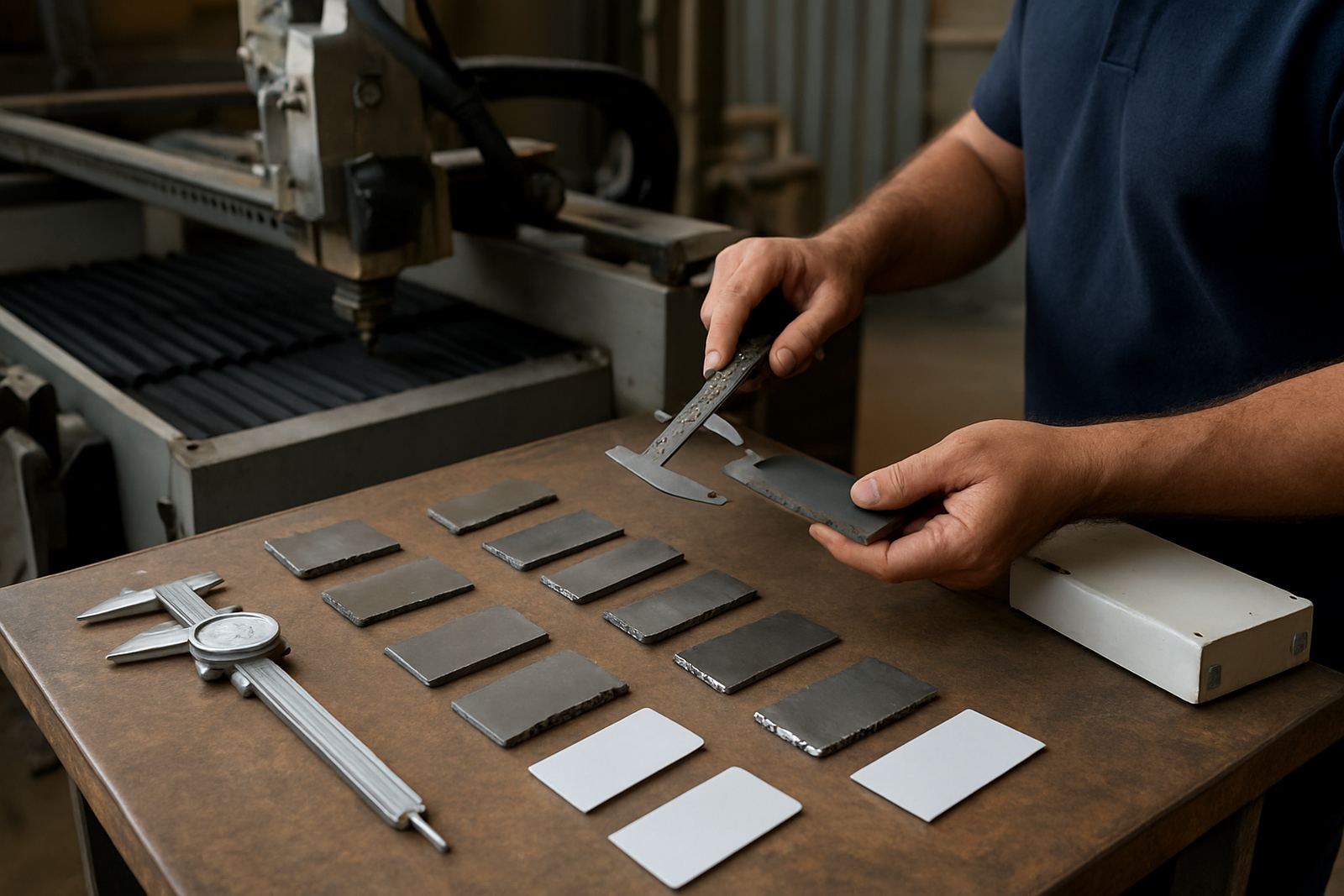
To quote and plan the right correction, we need the machine type, cutting head model if known, material type, thickness range and the fault you are seeing on the edge. Photos of the cut face help, and so do pictures of the nozzle, lens and any collision marks. If the machine has been standing due to a power cut or after a crash, tell us what happened and when.
It also helps to know whether you want bench repair in Boksburg or on site support. Some faults can be handled fast on the machine, while others need the head stripped, cleaned and pressure tested at the workshop. The more detail you give, the quicker we can put the right parts and time aside for the job.
- Material type and thickness range
- Fibre or CO2 machine details
- Current cut problem and when it started
- On site or bench repair preference
Key facts
| Service name | Cut Quality Correction |
|---|---|
| Machine types | Fibre laser and CO2 laser systems |
| Typical faults addressed | Burr, taper, dross, unstable edges, rough corners |
| Common parts involved | Nozzles, lenses, protective windows, sensor rings, ceramic holders |
| Service modes | On site support and bench repair |
| Base and coverage | Boksburg, Ekurhuleni with support across South Africa |