What the ceramic ring does in the cutting head
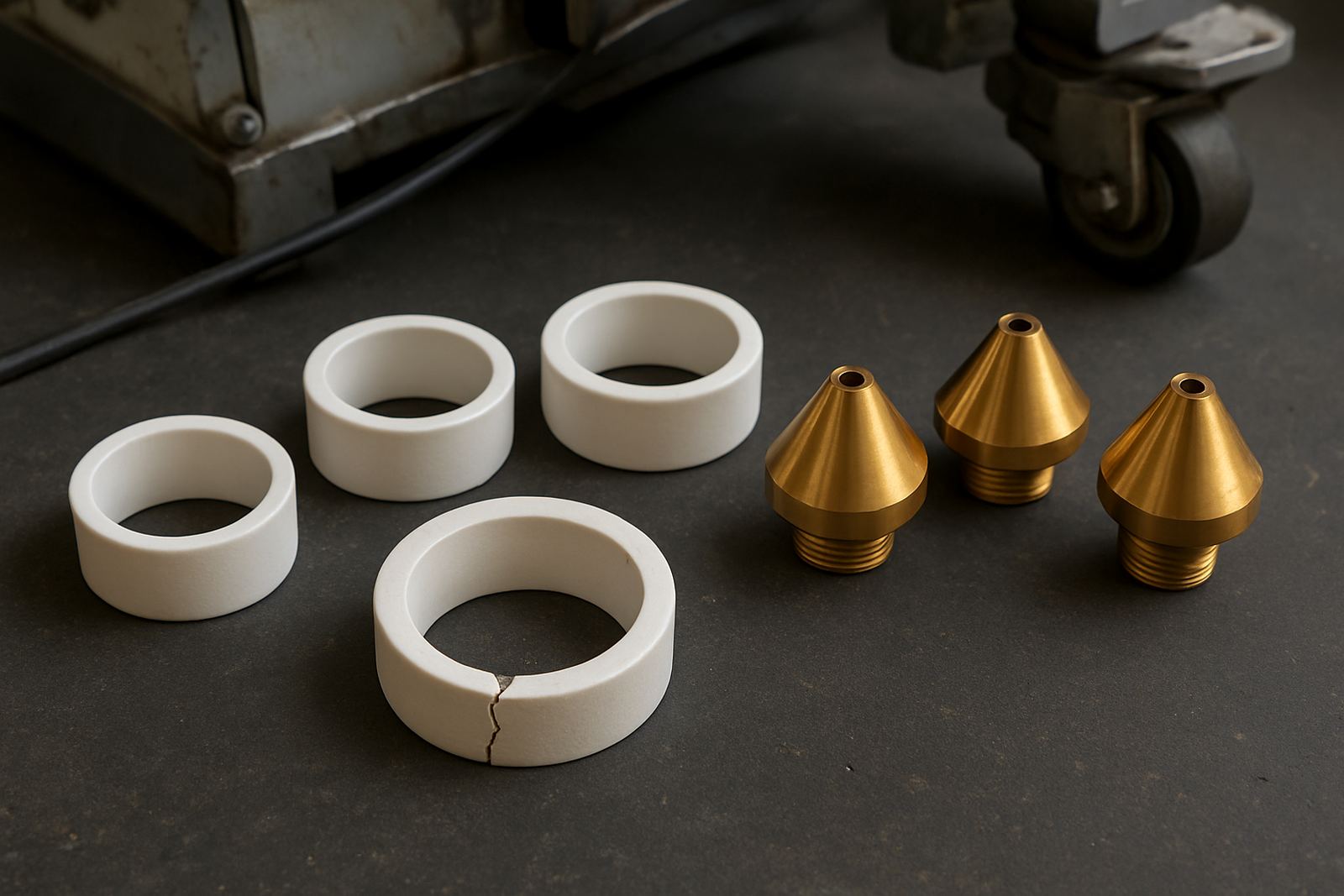
The ceramic ring sits in the laser cutting head and helps hold the nozzle, sensor parts and related components in the correct position. In day to day work it does a small job, but a damaged ring can cause big trouble. If it is cracked, chipped or heat damaged, the nozzle may not seat squarely and the head can start giving uneven cuts, poor pierce quality or unstable sensor behaviour.
On fibre systems the ring often works close to high heat, slag and fine dust from mild steel, stainless steel and aluminium work. On CO2 systems it is just as important, because alignment and insulation around the head must stay consistent. A ring that has taken a hit from a collision, worn from repeated nozzle changes, or been affected by contamination can leave the operator chasing faults that keep coming back.
Sizes, fitment and head types we work with
Ceramic rings are not one size fits all. The correct replacement depends on the cutting head model, nozzle holder style, sensor layout and the way the head is built. We supply and fit replacement rings for common fibre and CO2 laser heads used in workshops, job shops and fabrication plants around Boksburg, Johannesburg, Pretoria, Vanderbijlpark, Durban and Cape Town.
We match the replacement to the head itself rather than guessing from appearance alone. That matters because the wrong ring can sit loose, bind on the nozzle assembly or leave the sensor ring out of position. If you send the full head for bench work, we can confirm the fit before anything goes back into production.
- For fibre laser cutting heads used on plate and tube cutting lines
- For CO2 heads used in signage, sheet work and light fabrication
- For heads with integrated sensor rings and ceramic insulation sections
- For units that have suffered collision damage or repeated thermal stress
Where ceramic ring replacement suits best
This service suits machines that are still cutting, but not cutting well enough to trust for production. Typical signs include intermittent alarms, poor nozzle contact, odd cut edges, unstable pierce results and a head that feels rough or inconsistent during setup. If the machine has recently clipped a sheet, lifted into a warped plate or taken a bad crash during nesting, the ring should be checked straight away.
It also suits shops that run multiple shifts and cannot afford guesswork. One cracked ceramic ring can be the reason a good machine starts wasting gas, scrap material and operator time. In humid coastal conditions such as Durban and parts of the Eastern seaboard, extra care is needed because moisture and contamination can aggravate tracking and wear around the head.
- Job shops needing quick turnaround on small and medium batches
- Signage plants working with fine detail and repeatable pierce quality
- Metal fabricators running high duty cycles on mild steel and stainless
- Plants where load-shedding interruptions have caused stop start wear and head knocks
Installation, power and gas considerations
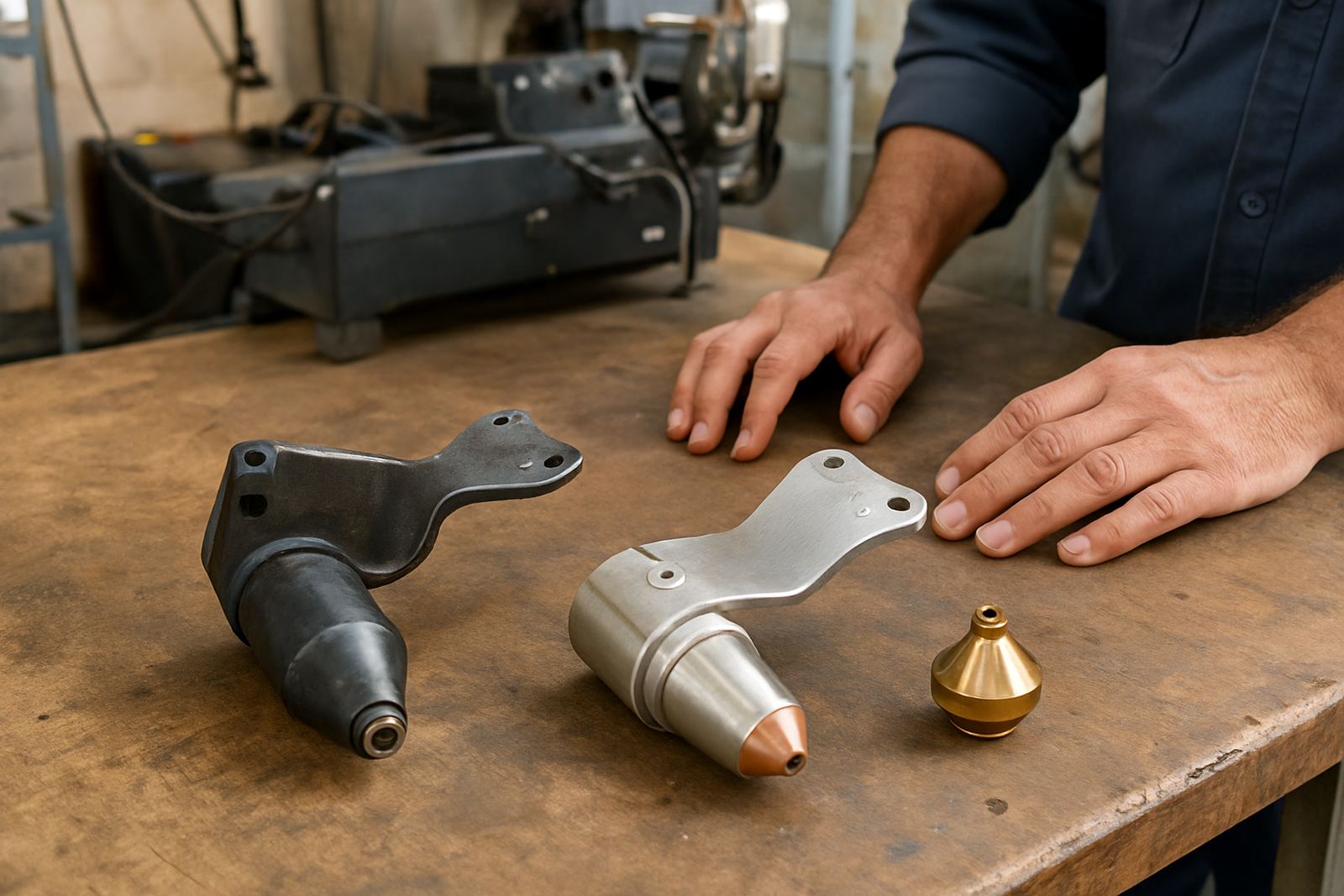
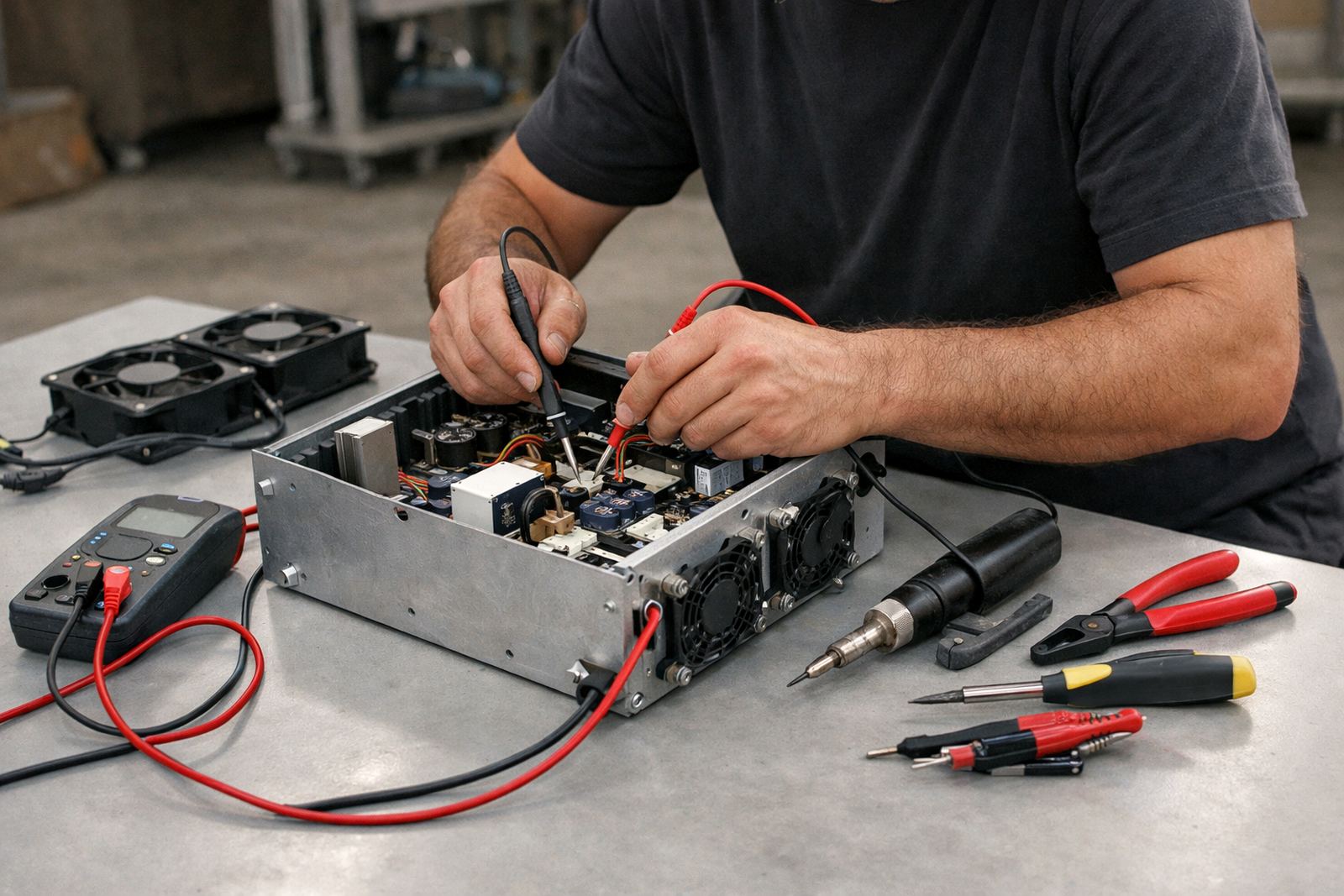
Replacement is done with the head isolated, cleaned and inspected. We remove the damaged ring, check the seating faces, inspect nearby sensors and confirm that the nozzle, lens path and holder parts are not carrying damage from the same fault. If needed, we carry out a strip and inspection before the new ring is fitted. That reduces the chance of fitting a new part onto a head with hidden damage.
The ring itself does not need a power supply, but the laser head around it is part of a wider system that depends on stable machine power, clean assist gas and correct pressure. Poor gas quality, water in the lines or unstable supply can shorten part life and affect the return to service result. For oxygen, nitrogen or air systems, we check the head setup against the cutting process being used. Clean dry gas matters more than many operators think, especially on stainless and aluminium jobs.
Where the machine has suffered a collision, we may recommend a bench pressure test and a return to service test after fitment. That way the head is not only repaired, it is checked under working conditions before it goes back to the line.
Care, cleaning and servicing after fitment
A new ceramic ring should not be treated as a standalone fix. It works best when the rest of the cutting head is kept clean and correctly aligned. Fine dust, slag and spatter build-up can make a good ring look bad very quickly. A simple cleaning routine at the end of shift helps keep the nozzle area free of residue and makes faults easier to spot early.
We usually advise a short inspection schedule for busy sites: look for surface cracks, loose seating, witness marks around the holder and any change in cut quality after a collision or heavy run. If the head has been running in a shop with frequent power interruptions, it is worth checking the full gas path and sensor parts as well, because start stop cycles can reveal other worn items.
- Keep the nozzle area clean and dry after every shift
- Do not force nozzle changes if the holder feels tight or misaligned
- Inspect after any crash, scrape or sudden alarm condition
- Replace related worn parts before they damage the new ring
What to check when ordering a replacement
Before you order, check the cutting head model, machine type and the reason the ring failed. If you can provide the head serial details, photos of the old ring and a note on whether the machine is fibre or CO2, it helps us supply the correct part the first time. If the ring failed after a crash, mention whether the nozzle, lens or protective window also showed damage.
For South African workshops, turnaround time matters. That is why we keep the process practical: identify the head, confirm the fit, replace the worn part and test the result. If the machine is in Johannesburg, Pretoria, Vanderbijlpark, Durban, Cape Town or nearby areas such as Germiston and Kempton Park, we can advise on bench work or on site support depending on the fault and the downtime window.
We supply replacement ceramic rings as part of a proper repair path, not as a loose part with no follow up. The goal is simple: stable nozzle performance, fewer cut faults and a head that is ready for work again.
Key facts
| Service | Ceramic ring replacement for fibre and CO2 laser cutting heads |
|---|---|
| Typical issue | Cracked, worn or heat damaged ceramic ring affecting nozzle seating and sensor stability |
| Related checks | Strip and inspection, collision damage repair, nozzle seat restoration, sensor ring service |
| Work method | Bench repair or on site support, depending on fault and machine access |
| Region | Boksburg, Ekurhuleni with support across South Africa |
| Output | Restored fitment, checked alignment and return to service test where required |