What this repair covers on a laser machine
A laser power supply unit does more than switch the machine on. It feeds stable electrical output to the laser source and related control circuits, so when it starts failing you can see weak cutting, random shut downs, erratic starts, alarm trips, or a machine that will not fire at all. In busy shops in Boksburg, Johannesburg and Pretoria that can stop a shift fast, especially on thin sheet work where every minute counts.
Our repair service is for shops that need the unit checked properly, not guessed at. We work on fibre and CO2 laser systems used in metal fabrication, signage and jobbing work. Where a repair makes sense, we replace failed components, restore output stability and confirm the unit is safe to put back into service. If the damage is too far gone, we say so before extra time is wasted.
- Output faults and unstable firing
- Intermittent shutdowns and alarm trips
- Power loss under cutting load
- Damage linked to dust, heat or poor earthing
Typical sizes and power options we see
Laser power supplies come in a range of ratings depending on the machine size, tube type or source setup. Small workshop systems may use compact units for lighter duty work, while larger production machines need higher current capacity and more cooling. We test units as individual components, because the right repair depends on the actual output rating and fault history, not just the machine model.
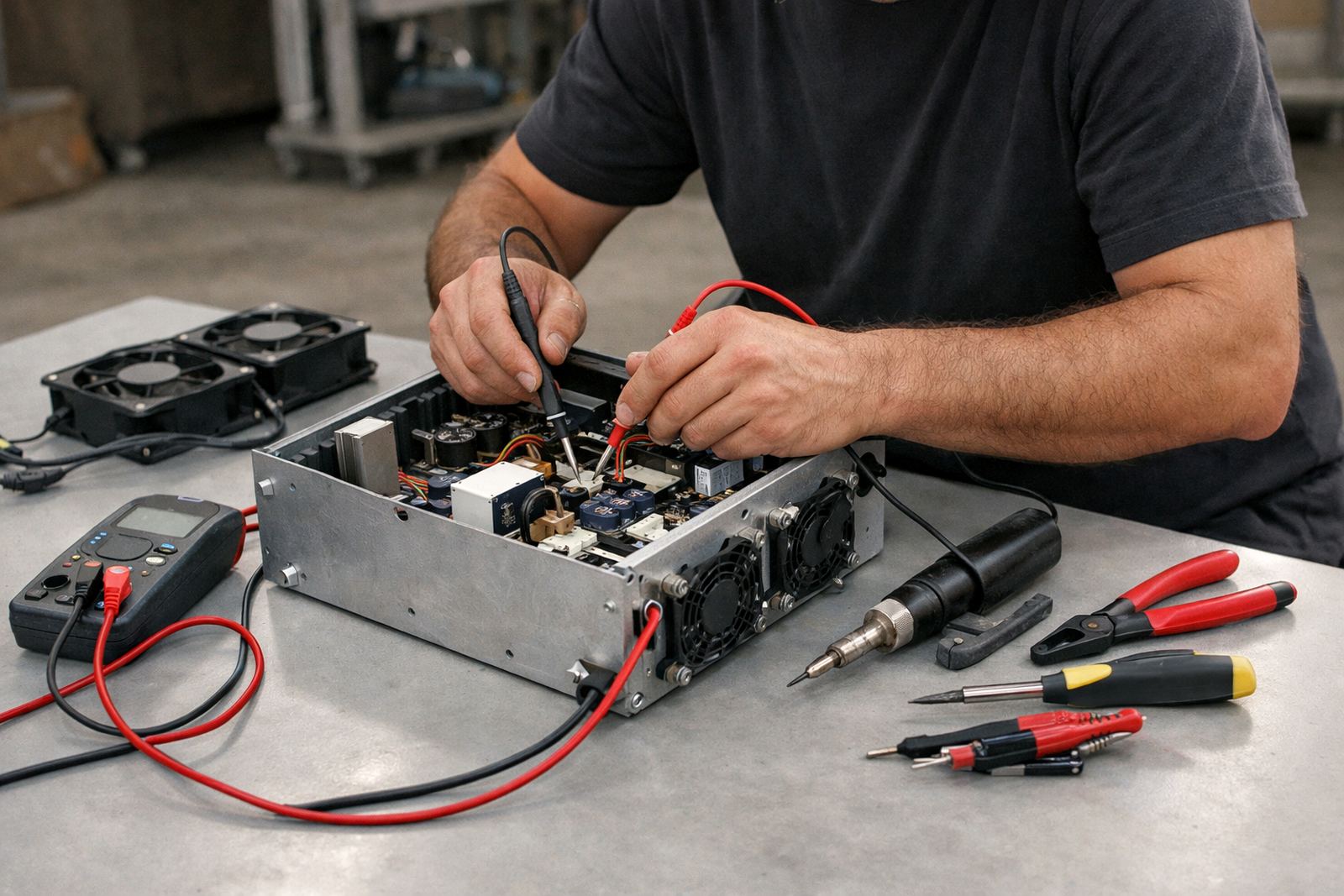
On the bench we check the input side, control signals, output section and protection circuits. That helps identify whether the issue sits in the supply itself or whether something else in the machine is pulling it down. In some cases the real fault is in the cable run, connector ends or cooling arrangement. A power supply that has been installed in a hot cabinet in Durban, for example, may fail differently to one that has spent years in a dry inland workshop.
- Lower output units for light duty laser systems
- Mid range units for general fabrication work
- Higher output units for heavier production machines
- Units with matched control interfaces and protection circuits
Where the repair suits best
This service suits workshops that cannot wait for long machine downtime. We see it on laser cutters used by fabricators, sign makers, sheet metal shops and repair teams handling mixed production. If the machine is still mechanically sound but the power unit is causing the stoppage, repair is often the most practical route.
It also suits sites where replacement lead times are awkward or where the original setup needs to stay as close as possible to the existing machine configuration. That matters in factories with tight schedules and municipal power interruptions, because a rushed swap can create new faults if the replacement unit is not matched correctly.
Clients from Germiston, Kempton Park, Vanderbijlpark and further afield use this service when they need a fast diagnosis and a proper return to service test. We also handle units removed from the machine and sent in for bench work when on site repair would take too long.
Installation, power and cooling requirements
When a repaired unit goes back into service, the machine needs the basics right. Stable mains supply, correct earthing, clean cable terminations and proper cooling all matter. A laser power supply works hard, and if the cabinet is full of dust or the fans are weak, the same fault can come back within weeks. That is why we check for heat damage, loose connections and signs of arcing before the unit leaves the workshop.
For site work, we confirm the incoming power arrangement and any control interlocks tied to the machine. We also look at the cooling path and cabinet ventilation. In coastal areas like Durban, moisture and corrosion can affect connectors and terminals quicker than many owners expect, while inland dust and fine grit can build up around heat sinks and boards.
- Stable mains supply with proper earthing
- Clean, secure electrical terminations
- Working cabinet fans or cooling path
- Dry, dust controlled installation area
Care and servicing after repair
A repaired power supply should be treated as part of a full machine system, not a stand alone box. Regular cleaning, inspection of connectors and checking for heat build up will extend service life. If the machine has had a collision, water ingress or repeated tripping, it is worth checking the cutting head, cabling and control signals too, because a fault in one area can put stress on the supply.
We recommend a periodic service schedule for shops running long shifts. That can include internal cleaning, inspection of contact points, confirmation of cooling performance and a test under operating load. For older machines, small faults like a tired fan or a loose plug can grow into expensive board damage if ignored. Good housekeeping saves time and rand in the long run.
What to check before you send an enquiry
To speed up the repair, have the machine details ready and note what happened before the unit failed. A clear fault description helps us decide whether we should collect the unit, repair it on site, or ask for it to come to the Boksburg workshop. If you are not sure which model it is, send the serial details and any photos of the labels or connectors.
- Machine make, model and serial number
- Whether the system is fibre or CO2
- Exact fault symptoms and alarm messages
- Any recent collision, power surge or water exposure
- Whether the unit is still fitted or already removed
- Preferred site location for Johannesburg, Pretoria, Durban, Cape Town or other areas
Our enquiry form on the contact page is the best way to reach us. We will come back with the next step, whether that is a bench assessment, on site callout, or parts check from our stores.
Key facts
| Service type | Laser power supply unit repair for fibre and CO2 systems |
|---|---|
| Common faults | Output loss, instability, shutdowns, alarm trips, heat damage |
| Work method | Bench diagnosis, parts replacement, on site repair where practical |
| Testing | Input check, output verification, load test and return to service test |
| Coverage | Boksburg base with support for Johannesburg, Pretoria, Vanderbijlpark, Durban and Cape Town |
| Typical client | Job shops, signage plants and metal fabricators |