What the motion axis service covers
The motion axis is the part of the machine that moves the cutting head, gantry or table along the programmed path. When rails, carriages, drive parts or alignment points wear, the machine may still run but the cut starts drifting, the squareness goes out and parts stop fitting first time. Our motion axis service looks at the full travel path, from mechanical wear to straightness and backlash, then puts the machine back into proper working condition.
We service machines in Boksburg and on site across Johannesburg, Pretoria, Vanderbijlpark, Durban and Cape Town, with support for job shops, signage plants and metal fabricators that cannot afford long downtime. The work suits laser systems that have picked up years of use, a collision, poor lubrication or fine dust and grit from daily production.
- Inspection of linear rails, carriages, belts, racks, pinions and drive couplings
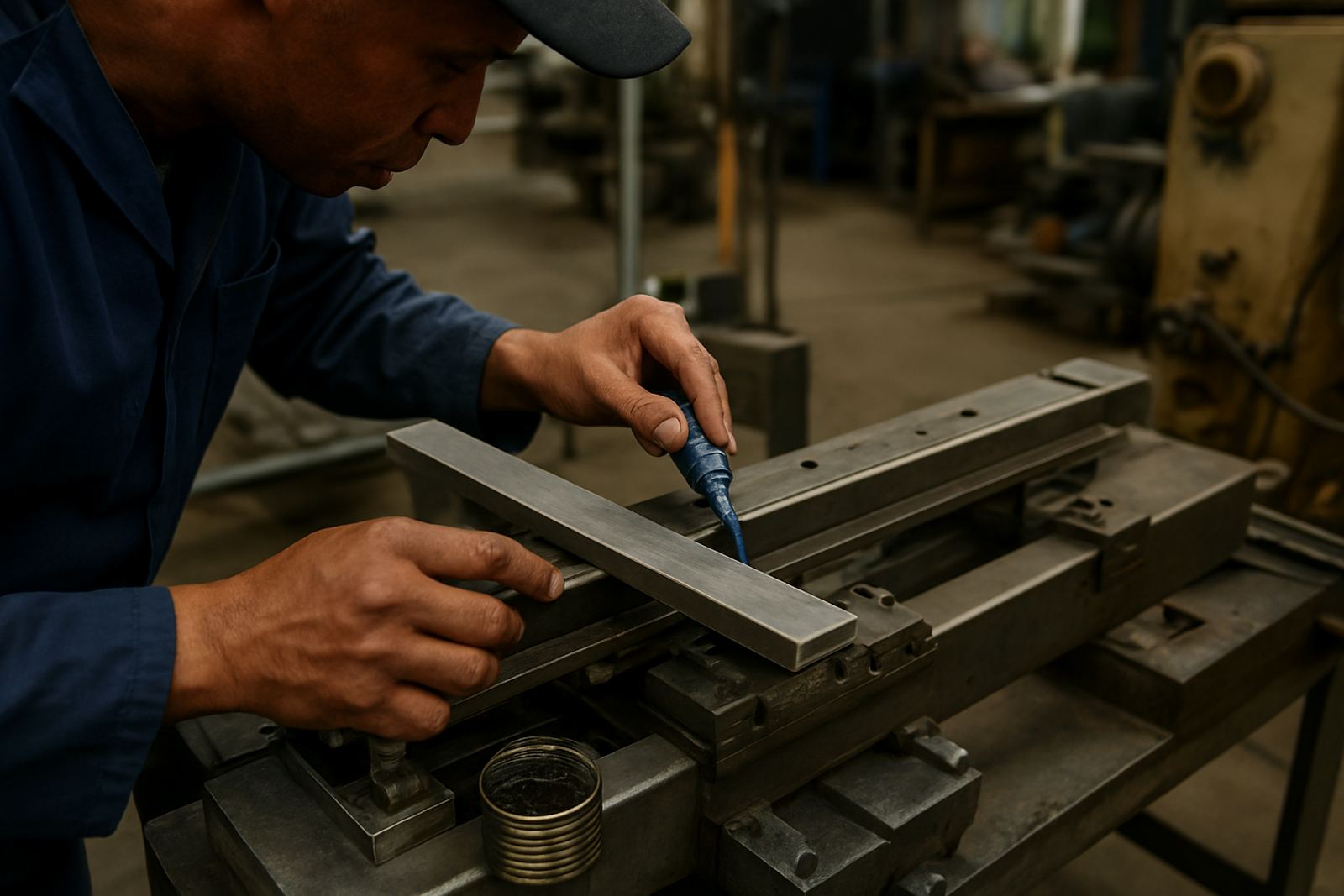
- Alignment checks for squareness, parallel travel and repeatability
- Wear checks on mounting surfaces, fasteners and support points
- Diagnosis of noise, binding, hunting and position drift
When a worn axis starts affecting output
Motion problems do not always show as a complete breakdown. More often the signs are small at first: corners that no longer close properly, circles that come out oval, burrs on one side of the part, or a cut that measures slightly different from one end of the sheet to the other. If the operator keeps adjusting power and speed but the fault keeps returning, the issue is often in the motion axis rather than the cutting parameters.
We also see machines where the axis has taken damage after a crash, a loose fixture or a sheet that lifted during cutting. In those cases the head can appear fine, but the axis may now travel out of line or catch at one point in the stroke. That is when a proper strip, measurement and test run matter more than a quick clean. If the machine is cutting worse only on long runs or at higher speed, wear in the drive system is often involved.
- Loss of squareness between X and Y travel
- Repeat cuts that shift by a small but visible amount
- Rattling, grinding or tight spots during travel
- Uneven quality across the full bed size
Sizes, travel lengths and machine layouts we service
Laser machines come in different bed sizes and axis arrangements, so the service has to match the machine, not a generic checklist. We work on compact workshop machines as well as larger flatbed cutters used in fabrication and production. The same service approach applies whether the machine uses a bridge style gantry, moving table or another common layout. The aim is to restore smooth travel and accurate positioning across the full working area.
Typical service work covers common bed sizes from 1300 x 900 mm up to 6000 x 2000 mm and beyond, depending on the machine type and how it is built. We assess the full stroke, the end stops, the support structure and the driven side so the machine does not only pass a short test near the centre. On larger systems, we pay extra attention to long travel and side-to-side consistency, since small errors show up more clearly over a full sheet.
Where the machine has a separate motion axis for the cutting head, we also check head carriage movement, cable routing and any points where dust or vibration can affect movement. That is especially important in humid coastal conditions around Durban and Cape Town, where corrosion and fine contamination can become a problem faster than many owners expect.
Installation needs, power and air requirements
A motion axis service does not usually need new utility connections, but the machine must be isolated correctly before work starts. On most laser systems the service is done with the main electrical supply locked out, then the axes are tested under controlled conditions after reassembly. For machines that use pneumatic components or air-assisted cleaning, we need stable compressed air and dry lines so the parts can be tested properly.
If the machine forms part of a larger cutting line, the site should provide clear access around the bed, control cabinet and drive side. Poor access slows inspection and makes it harder to measure movement accurately. In busy workshops, we often arrange the service around production breaks or after-hours so the machine can go back into use the same day where possible.
- Stable mains supply with proper isolation for the machine
- Dry compressed air where the system uses pneumatic parts
- Clear working space around the full travel of the axis
- Safe lifting or handling support for heavier covers and assemblies
What gets checked during strip and inspection
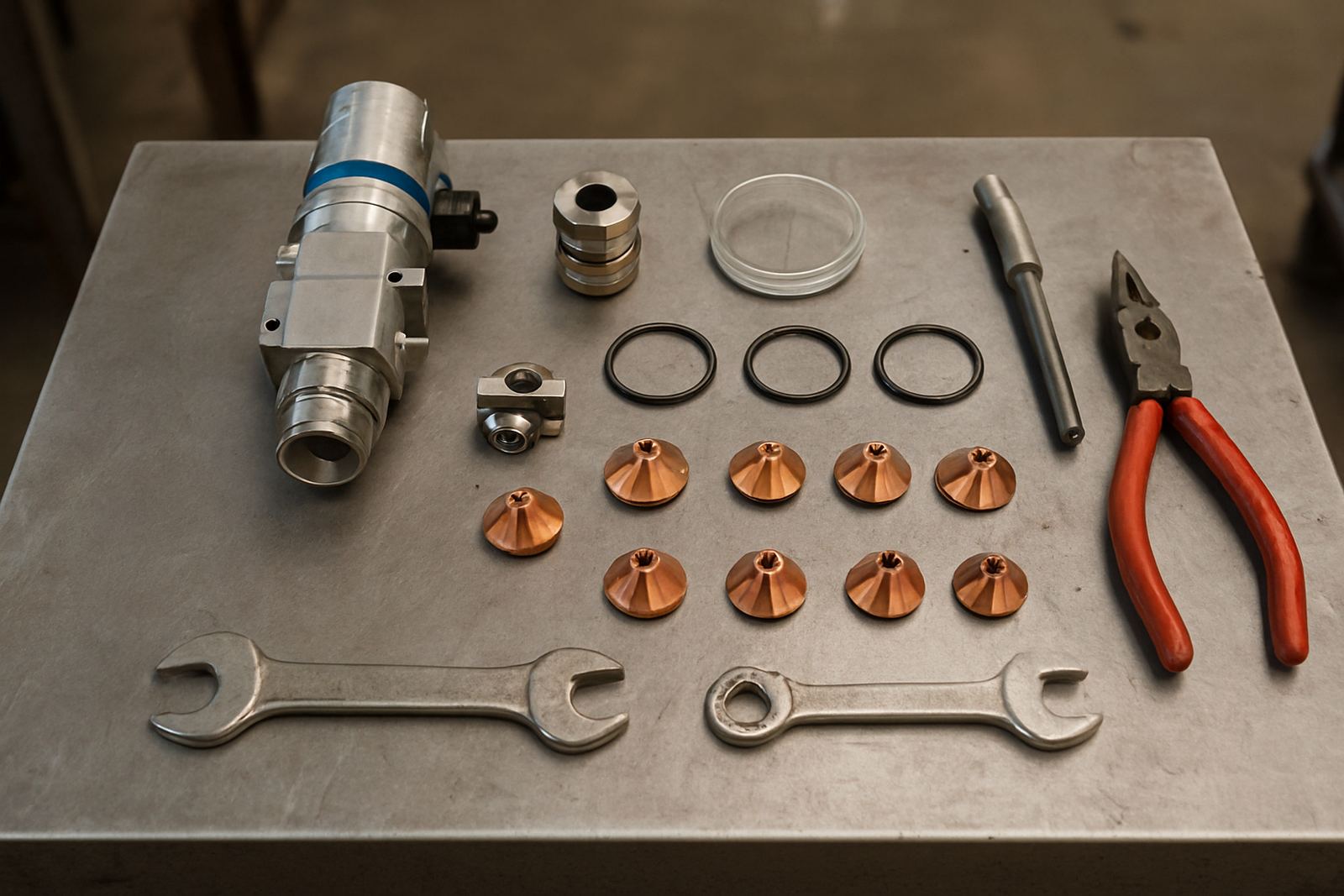
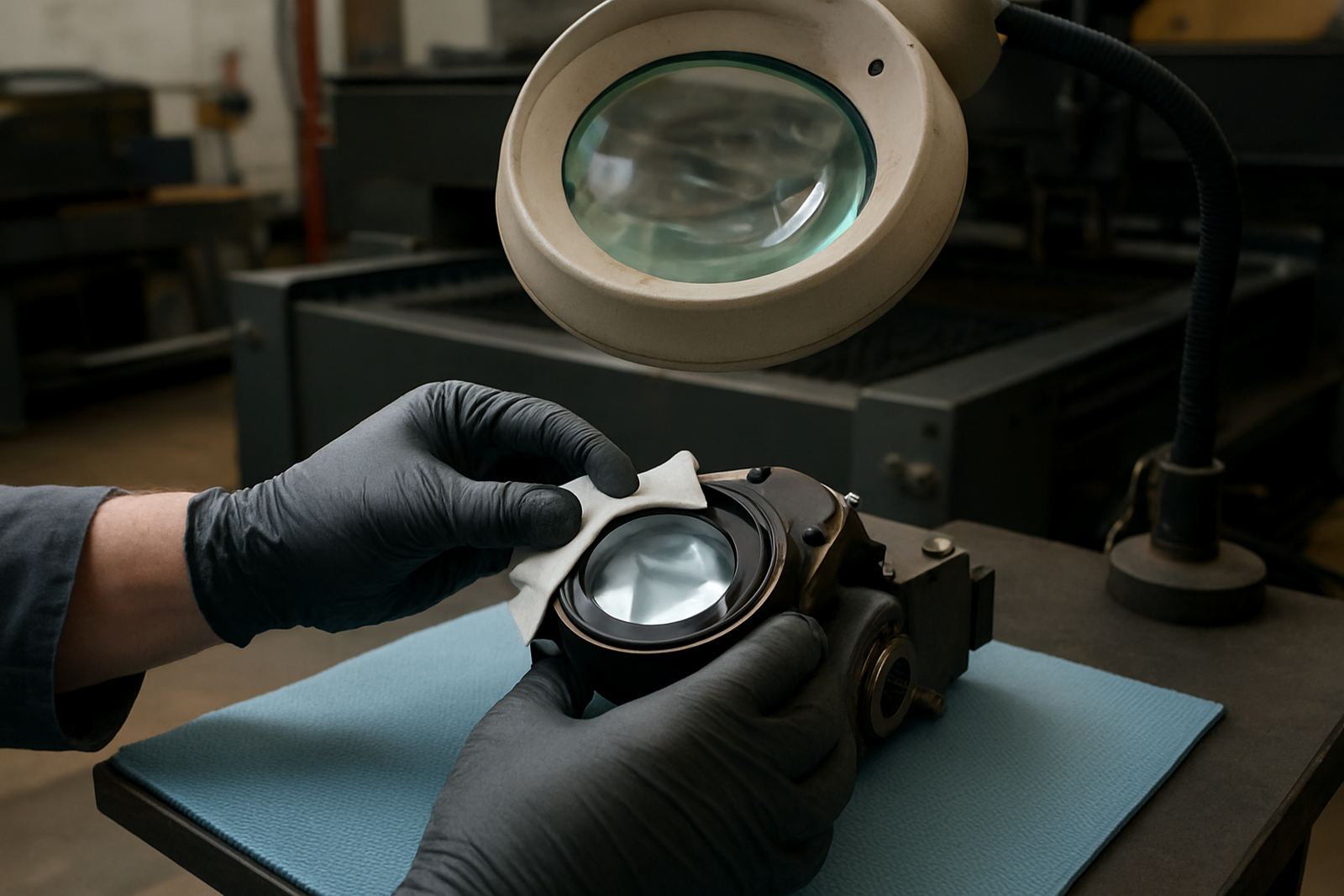
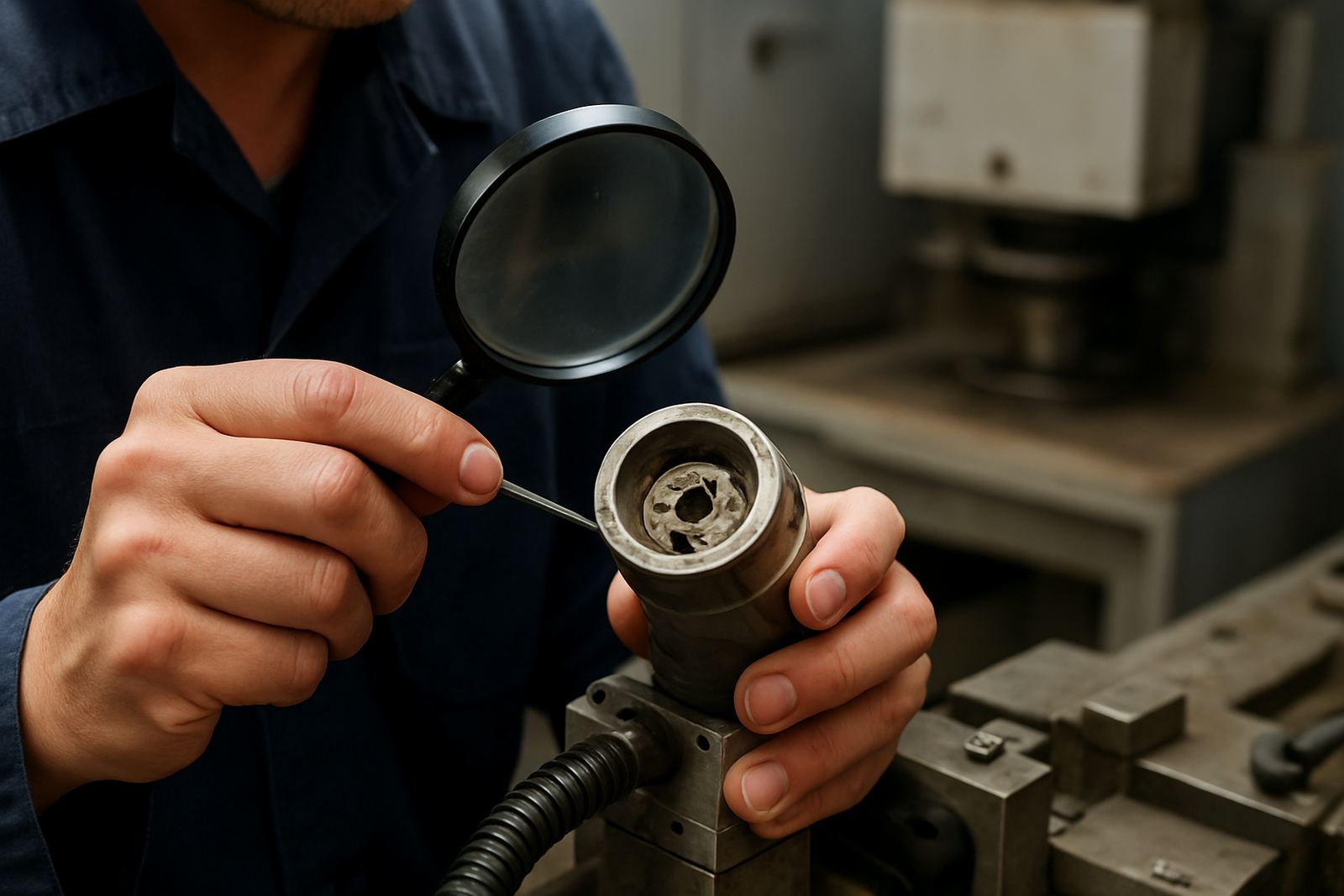
Our strip and inspection process is practical and detailed. We open the affected section, clean out built-up dust and residue, then inspect the parts that actually control movement. That includes contact surfaces, bearing points, drive elements and all the fasteners that hold alignment. If there is visible wear, play or damage, we report it clearly and carry out the needed repair before the machine is tested again.
For many machines, the problem is not one major failure but several small issues at once. A slightly loose mount, worn guide surfaces and a dirty drive path can combine into poor cutting performance. That is why we do not stop at a quick adjustment. We look for the cause of the movement error, then verify the result with a bench pressure test or a return to service test once the mechanical work is complete. The goal is not just movement, but accurate movement under load.
- Guide rail condition and carriage movement
- Drive backlash, looseness and uneven travel
- Mounting security and frame alignment
- Final movement check after reassembly and test cutting
Care and servicing between visits
Motion axes last longer when the machine is kept clean and checked on a regular schedule. Fine metal dust, soot and oil residue can build up on rails and drive parts, especially in shops that cut all day and leave the machine open to the work area. In places with load-shedding, machines may also sit longer between runs, which can let contamination settle and grease dry out. A short service plan prevents that from becoming an expensive repair later.
Operators should watch for early changes in sound, speed and part quality, then report them before the machine starts losing production time. On systems that run near capacity, a monthly visual check and a planned service interval makes sense. In many South African workshops, that means a cleaner machine, fewer emergency callouts and better part consistency across the week.
- Keep rails and drive paths free of dust and offcut debris
- Check for unusual noise, drag or uneven movement
- Lubricate only as specified for the machine type
- Log any collision, alarm or quality shift straight away
What to check when ordering a motion axis service
When you send an enquiry through our contact form, include the machine make if available, bed size, the symptom you are seeing and whether the issue is on one axis or across the full machine. It helps us know if the problem started after a collision, after maintenance, or gradually during normal use. If you have part numbers, photos or a short clip of the fault, that also helps the technician arrive prepared.
We can support the service on site or on the bench depending on the fault and the machine layout. For workshops in Germiston, Kempton Park and the greater Ekurhuleni area, bench work can often shorten turnaround. For bigger systems or machines that cannot be moved safely, on site service is usually the better choice. Either way, the aim is the same: get the axis running straight, smooth and repeatable again.
- Machine type, bed size and axis affected
- Symptoms such as drift, noise, binding or poor squareness
- Any recent collision, maintenance or power interruption
- Preferred location for service, bench or on site
Key facts
| Service type | Inspection, repair and alignment of worn motion axes on laser machines |
|---|---|
| Machine compatibility | Fibre and CO2 laser systems with linear or gantry axis movement |
| Typical bed sizes | From 1300 x 900 mm up to 6000 x 2000 mm and larger systems |
| Service modes | Bench repair, on site repair, strip and inspection, return to service test |
| Faults addressed | Backlash, wear, misalignment, binding, drift, collision damage and noise |
| Coverage | Boksburg, Johannesburg, Pretoria, Vanderbijlpark, Durban, Cape Town and surrounding areas |