What Servo Drive Repair Covers
Servo drive repair deals with the motor drive side of a laser machine when motion becomes unstable, alarms keep returning, or an axis no longer tracks properly. In a cutting room that runs long shifts, those faults show up as rough movement, poor positioning, missed cuts, or a machine that will not home correctly. We test the full drive path, not just the drive unit itself, so the cause is found properly the first time.
On fibre and CO2 laser machines, servo problems can be linked to overload, encoder feedback faults, loose plugs, contamination, power supply issues or mechanical resistance in the axis. A drive that only fails under load often looks fine in a quick check, then trips again after 20 minutes. That is why our servce starts with diagnosis, fault tracing and controlled testing before any parts are changed.
- Unstable axis motion and hunting
- Encoder related alarms and feedback faults
- Drive trips under load or after warm-up
- Loss of positioning, poor repeatability and missed starts
- After-collision checks on affected axes
When a Fault Points to the Servo Drive
Not every alarm means the drive is bad, but certain symptoms usually point in that direction. If a machine powers up, then throws a position or encoder alarm before cutting starts, the problem may be in the feedback loop, cabling, drive parameters or the motor itself. If the axis moves unevenly or makes a knocking sound, there may be a mechanical bind as well as an electrical fault.
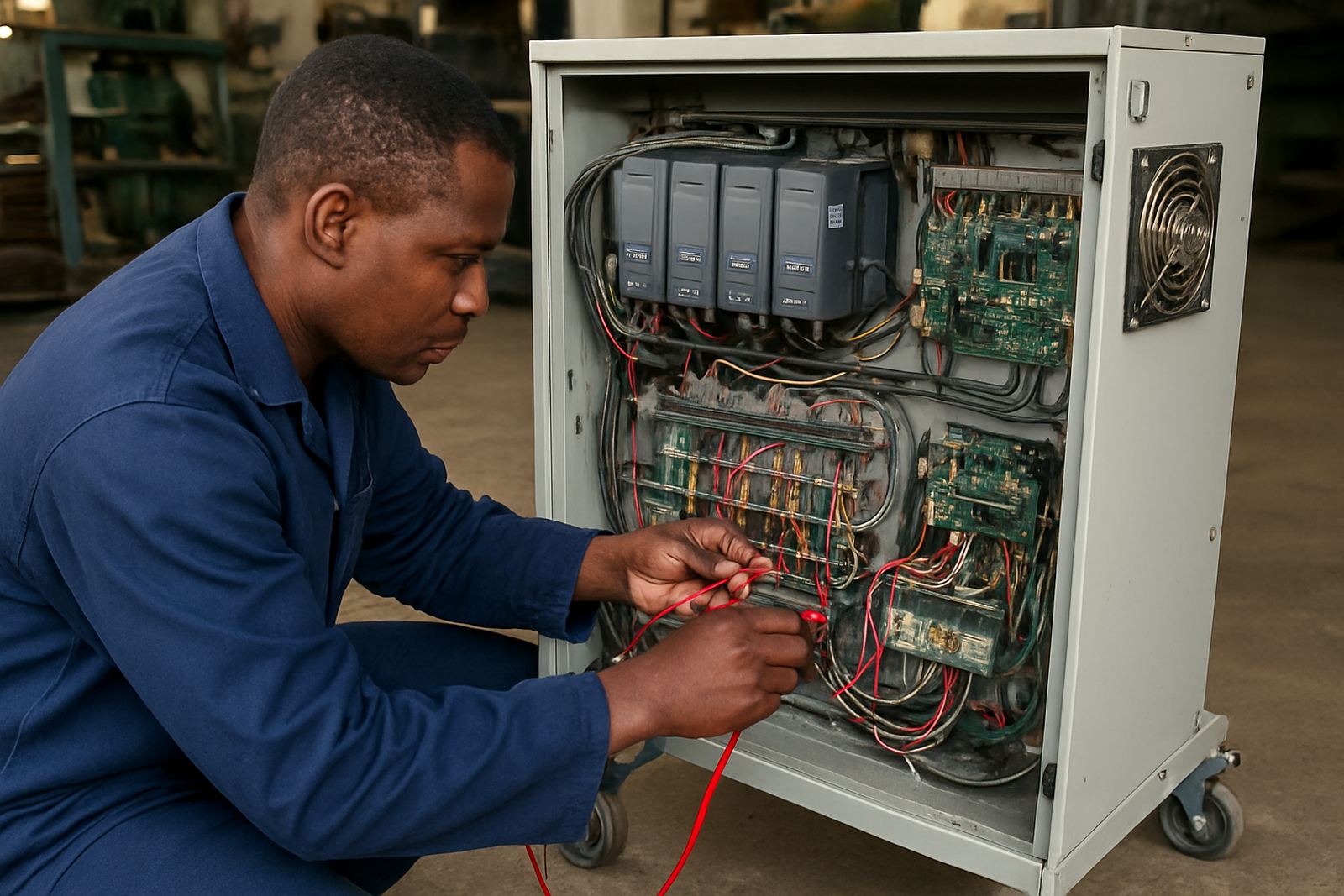
We check the complete chain so you do not replace the wrong part. For many workshops in Johannesburg, Pretoria and Germiston, the issue only appears after a power interruption or a brownout, especially during load-shedding. On-site checks help identify if the fault is in the drive, the motor, the encoder cable, the connectors or the machine side alignment.
- Axis overshoot or lag
- Motor overheating or abnormal noise
- Intermittent alarms after vibration or a collision
- Machine stops during rapid movement
- Faults that return after reset
Drive Types, Sizes and Options We Work On
Laser machines use different servo drive sizes depending on axis load, machine travel and motor rating. We work on compact drives used in smaller job-shop machines, mid-size units on general purpose cutters, and higher output drive systems on heavy gantry machines. The correct repair approach depends on the exact model, the motor rating, feedback type and the fault code history.
Where possible, we repair the original drive unit so the machine stays matched to its motor and control system. If a unit is too badly damaged, we assess whether component-level repair is practical or whether a replacement unit is needed. We also handle related parts such as encoder leads, connectors, terminals and control cabinet cooling items if they are contributing to repeat failure.
- Low, medium and high output servo drives
- Analog and digital feedback systems
- Single axis and multi-axis machine setups
- Fibre laser cutting machines and CO2 systems
- Bench repair or field diagnosis on the machine
Installation Needs and Site Conditions
Servo drive repair is only part of the job. The machine also needs stable supply conditions, clean cabinet airflow and sound earthing. Many local faults come from poor electrical quality rather than the drive alone. We recommend checking supply voltage, phase balance, cabinet fans and loose terminations before a unit is put back into service. In coastal areas like Durban and Cape Town, humidity and fine dust can also affect connectors and boards over time.
For on-site work, we confirm machine access, safe isolation and the condition of surrounding components. If a drive has failed after a head crash or collision, we may need to inspect cable routing, motor coupling and axis movement before refitting the unit. This avoids putting a repaired drive back into a machine that will damage it again within days.
- Clean, dry control cabinet with working cooling
- Stable power supply and correct earthing
- Accessible axis and motor connectors
- No active mechanical binding on the axis
- Confirmed machine alarm history and fault codes
Power, Cooling and Operating Checks
Servo drives are sensitive to heat, dust and electrical noise. If the cabinet runs hot, the drive may derate or trip, especially in summer or when a dust filter is blocked. For South African workshops dealing with load-shedding, generator changeover and fluctuating supply, we pay close attention to voltage stability and return-path quality. A clean power feed matters just as much as the drive electronics.
Before returning a machine to production, we carry out practical checks that show whether the repair is holding under load. That includes jogging, homing, movement testing and observing alarm behaviour during repeated cycles. If needed, we inspect the motor connection under load and verify that encoder signals remain stable across the full travel range.
- Cabinet temperature and fan operation
- Supply stability during start-up and jogging
- Encoder signal consistency
- Axis movement under repeated cycles
- Alarm reset and return-to-service behaviour
What to Check When You Order
When you send in a servo drive or request on-site support, the right details save time and reduce guesswork. Please note the machine make and model, the exact alarm text, the affected axis, and whether the fault appeared after a collision, power cut or maintenance job. If the machine will still power up, clear photos of the drive label, connectors and cabinet layout help us prepare the repair properly.
For Benoni, Boksburg, Kempton Park and the wider Ekurhuleni area, we can often arrange bench removal and return. For Johannesburg, Pretoria, Vanderbijlpark, Durban and Cape Town, we assess whether on-site diagnosis is the quicker option. If the fault is repeatable, tell us what the machine is doing just before the alarm appears, even if it seems like a small detail.
- Machine model and control type
- Exact fault code or alarm message
- Affected axis and fault history
- Photos of labels, wiring and connectors
- Whether the fault followed a collision, outage or service work
Key facts
| Service type | Servo drive diagnosis, repair and return-to-service testing |
|---|---|
| Machine types | Fibre laser and CO2 laser cutting machines |
| Faults handled | Unstable axis motion, trips, encoder alarms and positioning errors |
| Support mode | Bench repair and on-site service |
| Coverage area | Boksburg, Johannesburg, Pretoria, Vanderbijlpark, Durban and Cape Town |
| Typical turnaround | Depends on fault severity, parts availability and whether the unit is repairable |