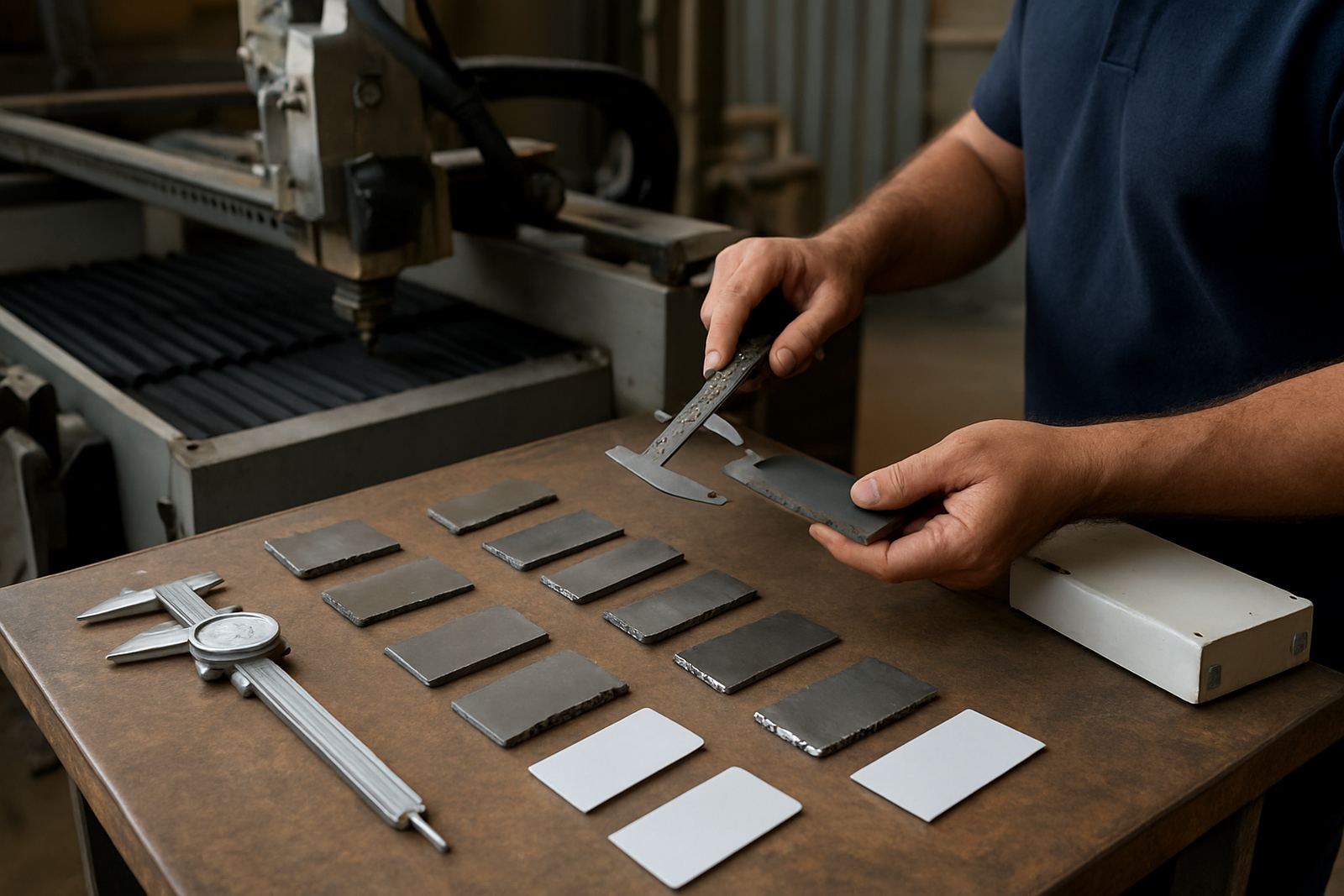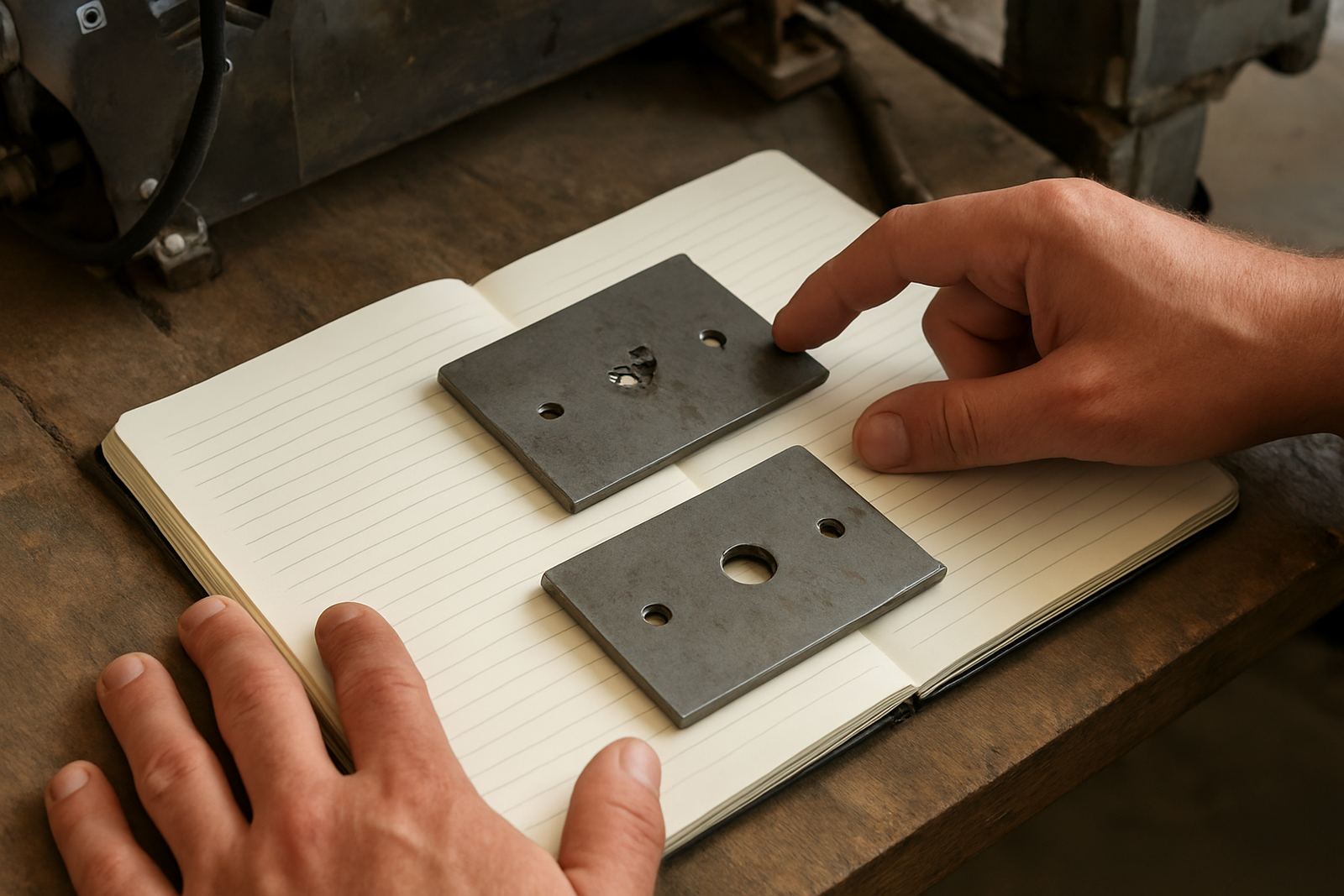
What start-up fault repair covers on fibre and CO2 lasers
Start-up fault repair is for machines that power up but do not complete their normal sequence. That can mean a failed home move, an alarm during safety checks, a head that does not reference, or a controller that stops before the machine is ready to cut. We work on fibre and CO2 systems for workshops, signage plants and metal fabricators in Boksburg, Johannesburg, Pretoria, Vanderbijlpark, Durban and Cape Town.
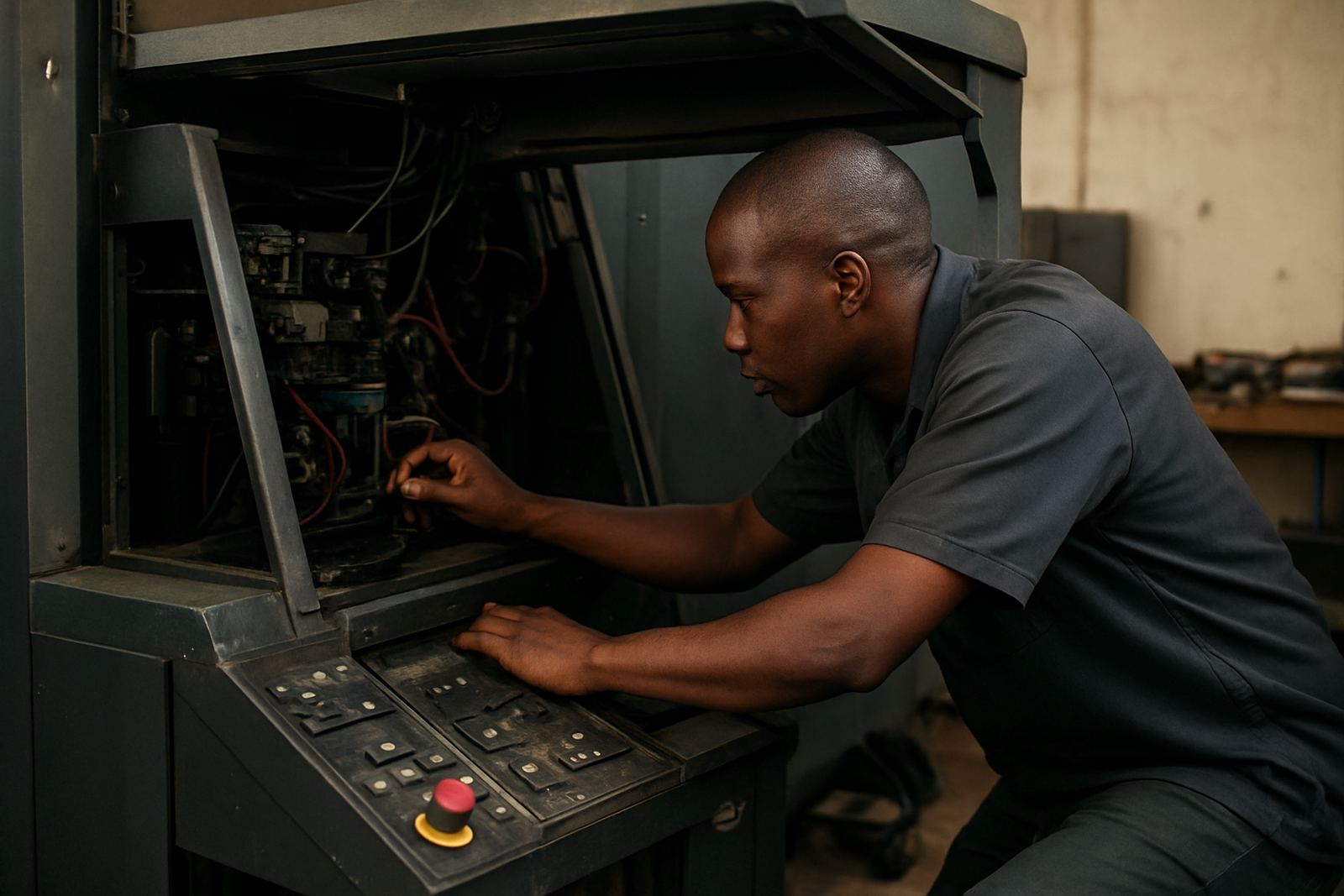
In practice, the fault may be in the cutting head, a sensor ring, a limit switch, a cable, a door interlock, gas pressure, cooling, or a worn internal part. Sometimes the machine is not far off at all, it just needs proper diagnosis and the right parts fitted. We service machines on the bench or on site, depending on the fault and how urgently production needs to restart.
- Machines that will not boot past the start sequence
- Heads that fail to home or return to position
- Safety checks that stop the cycle before cutting starts
- Repeated alarms after a collision or a recent service
Common symptoms and what they usually point to
A machine that will not initialise can show many different signs. Some units freeze on the start screen, others move partway and stop, and some complete power-up but still refuse to fire the laser. We look at the full sequence, not just the first error message, because a small fault often triggers a larger lockout. A loose connector can look like a major control failure, and a worn protective window can cause false readings that keep the machine out of service.
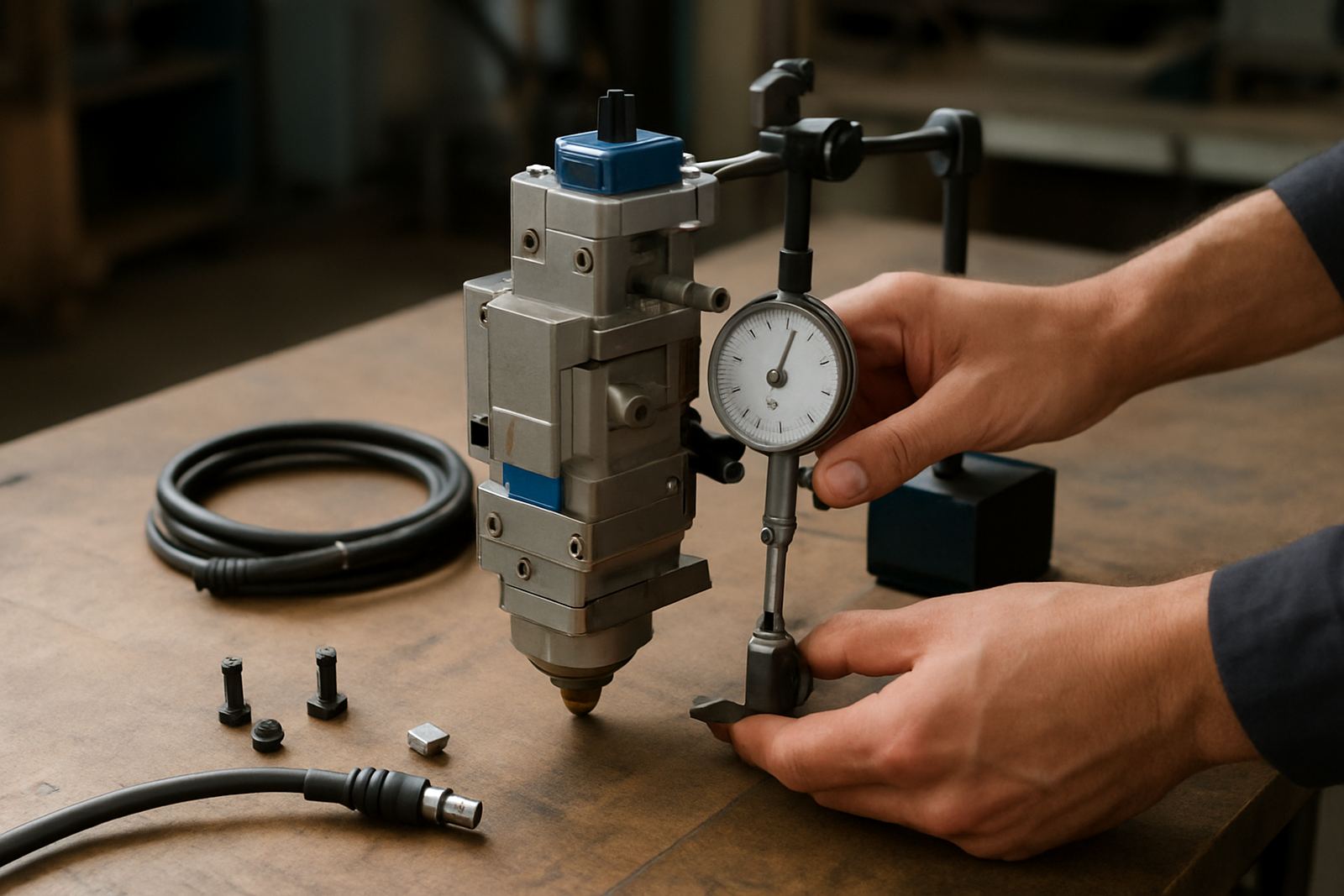
Our technicians check the head, optics and machine controls together. Where needed, we strip and inspect the cutting head, replace nozzles or lenses, test the protective window, clean the internal gas path and check alignment. If a collision has bent a seat or damaged a sensor ring, we repair that first so the machine can pass its start checks again. On many jobs the issue is a combination of wear and poor gas pressure, so a proper diagnosis saves a lot of guessing.
- Alarm codes linked to homing or reference failure
- Safety gate or interlock faults
- Gas pressure or assist gas warnings
- Head contact, sensor ring or ceramic holder damage
- Optics contamination after heavy cutting or dusty conditions
Sizes, machine options and when this repair suits your setup
This service suits a wide range of flatbed laser cutting machines, from compact workshop units to larger production lines. We support fibre systems and CO2 systems, including manual and automatic heads, depending on the machine set-up. For many customers the job starts with a failed morning start-up and ends with the machine running normally again by the same shift, which matters when orders are stacked up.
Start-up fault repair is especially useful for job shops handling mixed work, signage plants running thinner sheet, and fabricators cutting mild steel, stainless steel or aluminium. If your machine has recently had a head knock, a lens change, a window failure or intermittent alarms after load-shedding, this service is a good fit. We also handle cases where the machine starts only after repeated attempts, because that usually means a fault is being ignored instead of solved.
- Fibre laser machines for sheet cutting and workshop production
- CO2 laser machines used on general fabrication and signage work
- Heads with nozzle wear, lens contamination or window damage
- Machines that need bench testing before a return to site
Installation, power and gas checks before the machine goes back into service
Before a machine is signed off, we check the basics that often cause start-up failure. Power supply must be steady and correctly earthed, especially after outages or generator use. Cooling must be within spec, because overheating can stop a machine from completing its checks. Assist gas should be clean and stable, with the correct pressure at the machine and at the cutting head. If there are leaks, blocked lines or poor regulator settings, the start sequence may fail before cutting even begins.
We also look at the working environment. Dust, metal fines and humidity can affect sensors and optics, particularly in coastal areas like Durban. In some workshops the fault shows up after a night shift or during wet weather, when moisture in the air starts to affect fittings and contacts. If the machine is on a compressed air system, that line must be dry and clean, not full of oil or water. A proper install check now can prevent repeat call-outs later.
When the fault is repairable on site, we bring the parts and test equipment needed to get the machine back into production. If the unit needs deeper strip work, we take it to the bench for inspection and rebuild. That keeps the repair practical and avoids chasing the same problem twice.
How we test and return a repaired machine to production
Once the fault is found, we carry out the repair, then run the machine through start-up checks again. This includes head alignment checks, bench pressure tests where relevant, and return to service testing to confirm the machine starts normally and stays stable. We do not hand the machine back after a single successful boot if the fault was intermittent, because those faults have a habit of coming back at the worst time.
Our support covers diagnosis, parts supply, bench repair and on-site work across South Africa. Clients can reach us through the enquiry form on our contact page, and our service team will arrange the next step based on the symptoms and location. For a busy fabricator in Boksburg or a signage plant in Pretoria, that quick response can mean the difference between one missed order and a full day lost.
- Fault confirmed with inspection notes and repair plan
- Worn or damaged parts replaced as required
- Machine retested through the full start sequence
- Return to service only after stable operation is confirmed
Care, servicing and what to check when you order
To keep start-up faults from coming back, the machine needs regular care. Clean optics, fresh consumables and correct gas settings all help. So does a clean work area, especially where metal dust builds up around the head and guide components. After a collision or a rough stop, do not keep forcing start-ups, because that can turn a small issue into a bigger and more expensive one. A quick inspection is usually the smarter move.
When you order repair support, tell us the machine type, the fault message if there is one, the last time the head was serviced, and whether there was a collision, power cut or gas issue before the failure. If the machine has already had parts changed, say which parts were fitted. That helps us bring the right nozzles, lenses, protective windows or sensor items. It also helps our team decide whether the job should be done on site or on the bench, which saves time for everyone.
- Machine make and model, plus fibre or CO2 type
- Exact symptom at start-up or homing
- Recent collision, outage or alarm history
- Any parts already replaced
- Whether the machine is on site in Johannesburg, Durban, Cape Town or another branch area
Laser Ray Tools was founded in 2011 and has grown around one clear job: keeping laser cutters running for South African workshops. That focus matters when you need the machine back quickly and the repair must hold under real production pressure, not just on the first test cycle.
Key facts
| Service type | Start-up fault diagnosis and repair for fibre and CO2 laser machines |
|---|---|
| Repair methods | On-site support, bench repair, strip and inspection, return to service testing |
| Typical fault areas | Homing failure, safety checks, alarm lockouts, head faults, power or gas issues |
| Supported regions | Boksburg, Johannesburg, Pretoria, Vanderbijlpark, Durban, Cape Town and surrounding areas |
| Consumables and parts | Nozzles, lenses, protective windows, sensor rings, ceramic holders and related components |
| Best suited to | Job shops, signage plants and metal fabricators needing short downtime |