
Start With The Fault, Not The Distance
The right repair route depends on what failed, how badly it failed, and whether the machine can still be moved safely. A head that has suffered a collision, has a damaged nozzle seat, or shows contamination inside the optics usually benefits from bench work. A machine that is down because of alignment drift, air supply problems, or repeated alarms may be better handled on site first, especially if moving the gantry or head risks making the damage worse.
For South African workshops, time matters. A signage plant in Boksburg may be able to remove a head and send it in the same day. A fabricator in Durban with a full production queue may need a technician to inspect the machine in place before any parts are ordered. That decision saves courier costs, avoids guesswork and helps you get back to cutting sooner.
When Bench Repair Is The Better Choice
Bench repair works best when the head needs careful stripping, cleaning, measurement or part replacement. It gives the technician clean access to lenses, nozzles, protective windows, ceramic holders and sensor parts. If the cutting head has taken a hard knock, the bench also makes it easier to check the body for distortion and confirm whether the internal channels are still in spec.
This is usually the right path when you see one or more of these signs:
- Visible impact marks on the head or nozzle area
- Repeated piercing faults after a known collision
- Burn marks, smoke ingress or dust build-up inside the head
- Cut quality falling off even after nozzles and lenses have been checked
- Suspected gas path blockage or a leaking seal
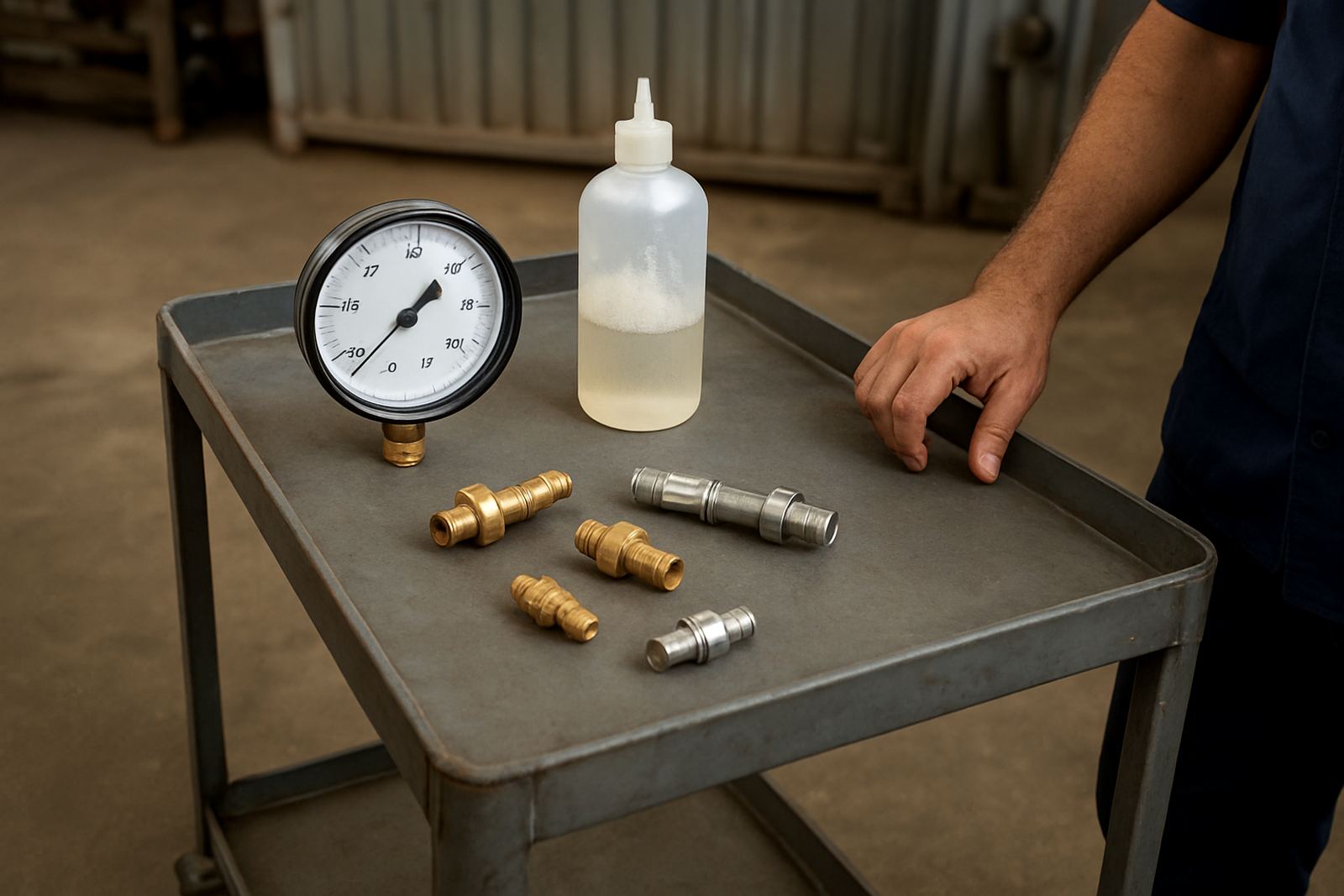
On the bench, a proper strip and inspection can include a pressure test, internal cleaning, gas path service and return-to-service check. It is slower than a quick in-place look, but it is the safer route when the head needs proper attention and not a patch-up.
When A Site Visit Saves Time And Risk
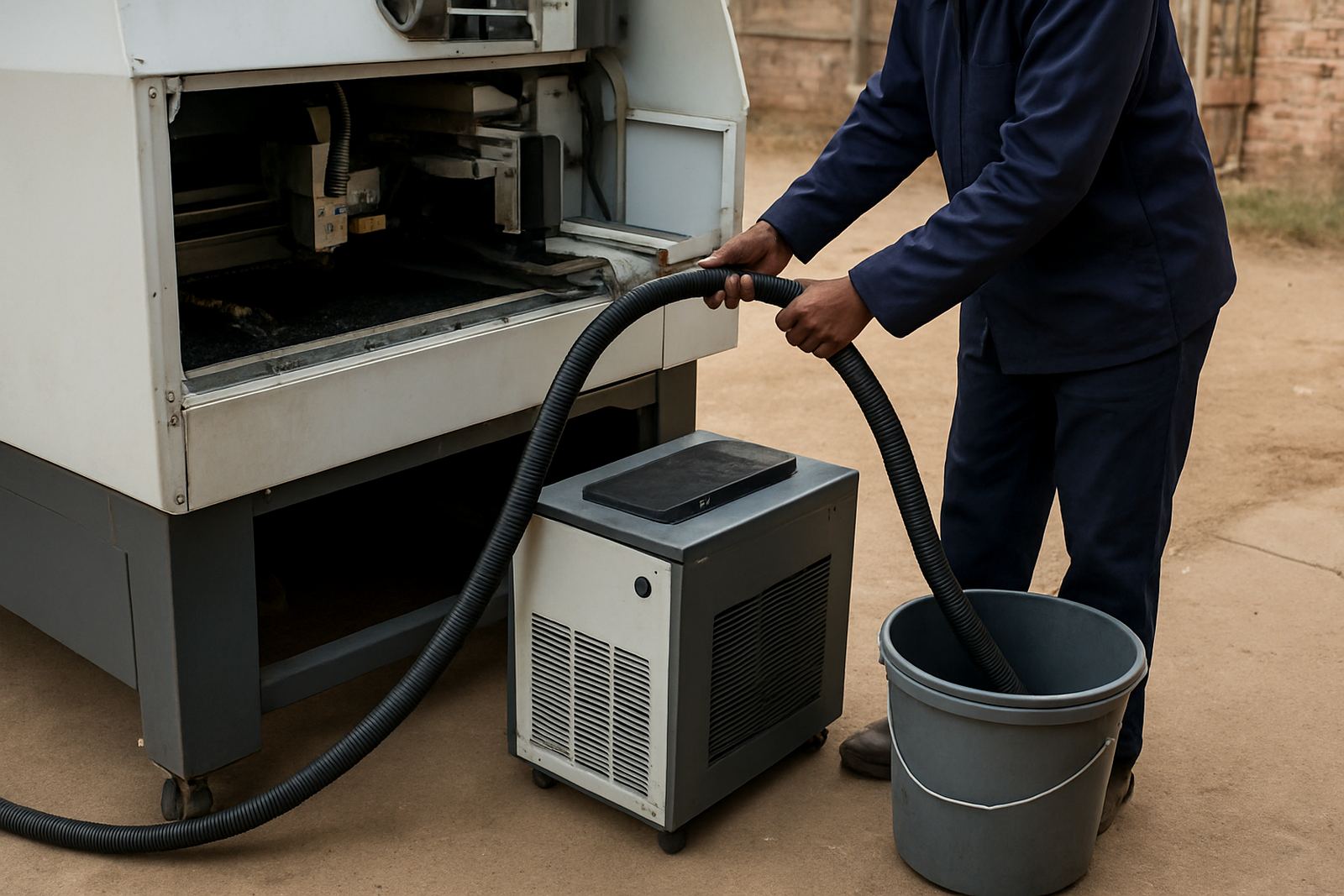
Some faults are not really head faults at all. If the machine is losing cut quality because of poor air supply, unstable gas pressure, dirty optics further up the line or an alignment issue after maintenance, a site visit makes more sense. The same goes for systems in production where the operator needs the machine checked without removing the head from the gantry on a tight floor layout.
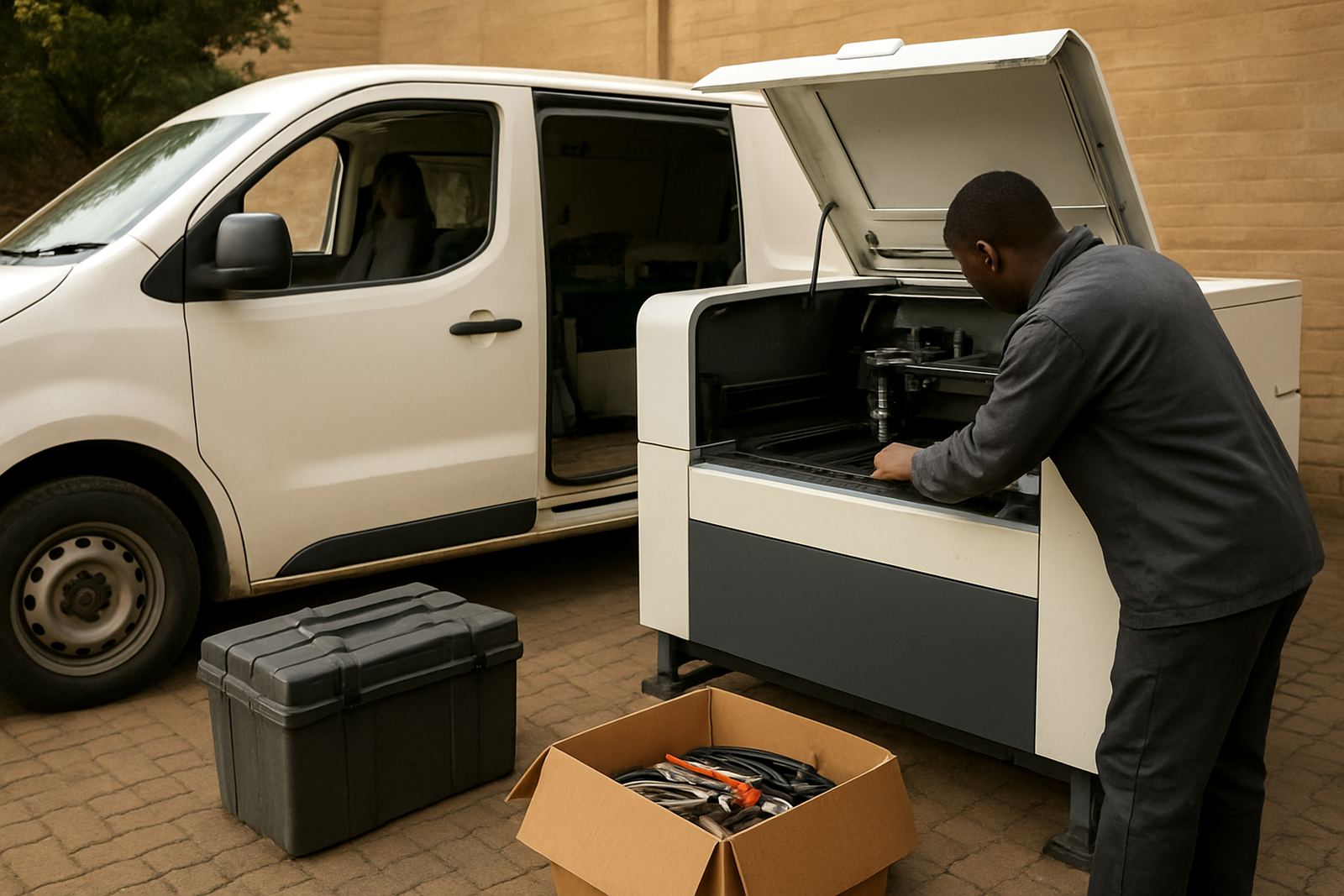
On-site work is also useful when a machine cannot be lifted easily, or when the workshop does not have a spare head ready to fit. In Gauteng, many job shops run with one primary laser and cannot afford a long stop. A field technician can assess the full setup, confirm whether the fault is in the head or elsewhere, and advise if the unit should come back to the Boksburg workshop for deeper repair.
- Choose on-site diagnosis if the fault is not yet confirmed
- Choose on-site repair if the machine is difficult to move or realign
- Choose bench repair if the head needs detailed strip down or parts replacement
What We Check Before We Decide
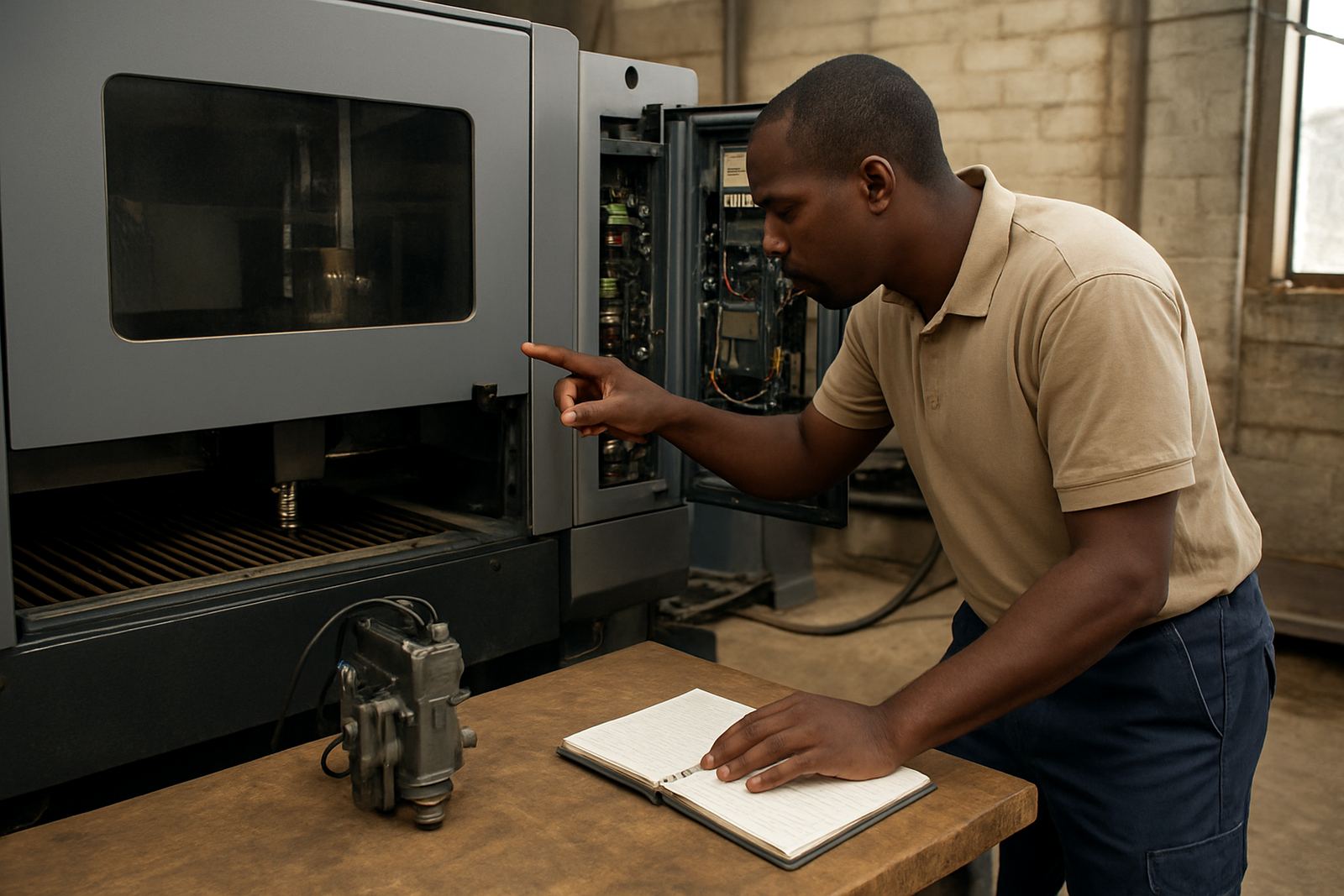
A good repair decision starts with a proper diagnosis. Before any part is swapped, the technician checks the symptom pattern, the cut finish, the machine history and the condition of the head body. That includes nozzle wear, lens condition, window clarity, ceramic holder fit, sensor ring condition and any signs of overheating or contamination. If the head has been struck, the alignment check becomes critical because a slight shift can send the beam off centre and damage fresh parts again.
In practice, the choice between bench and on-site often comes down to three things: access, contamination and alignment. If the head can be removed cleanly and tested properly in the workshop, bench repair is usually the best call. If the machine needs a wider system check, a field visit helps avoid swapping parts that were never the real problem. It’s practical, and it keeps the bill from growing without reason.
A Local Example From Ekurhuleni Production
A metal fabricator in Germiston called after a fibre laser started leaving rough edges on 3 mm mild steel and then began refusing to pierce on tighter nests. The operator had already changed nozzles and cleaned the lens, but the fault kept returning. Our first step was an on-site visit to check air pressure, gas delivery and machine setup. That showed the supply side was fine, but the head had taken a light collision during a shift change and the nozzle seat was no longer true.
The head came back to the Boksburg workshop for strip and inspection, nozzle seat restoration, lens replacement and a bench pressure test. After that, it went back out for a return to service test at the factory. The result was simple: the machine was back cutting, the scrap rate dropped, and the team did not lose another day trying random parts. That is the value of choosing the right repair path first.
How To Keep Downtime Short In South Africa
Load-shedding, courier delays and tight production schedules all work against a busy workshop. The trick is to make the repair move once, not three times. If the head can be safely removed, package it carefully and send clear photos of the damage, the alarm screen and the cut edge. If the machine must stay in place, make sure the area around the cutter is clear and the operator is available to show the fault live.
For customers across Johannesburg, Pretoria, Vanderbijlpark, Durban and Cape Town, quick communication helps us plan the right response. It also helps us decide whether parts should be sent with the technician, whether the head should come to the bench, or whether a return visit is needed after the first test. Good service is not about rushing blindly, it is about doing the right thing first time.
- Send clear photos of the head, nozzle area and fault message
- Tell us what material was being cut and what thickness
- Note whether the fault started after a collision, service or power interruption
- Keep a record of recent part changes so we do not duplicate work
The Practical Rule Of Thumb
If the fault is inside the head and needs proper stripping, send it in. If the fault may involve the machine around the head, book a site visit first. If you are not sure, start with diagnosis and let the symptoms guide the repair route. That approach suits busy workshops because it avoids wasted transport, protects expensive optics, and shortens the time between breakdown and production again.
At Laser Ray Tools, we handle both routes from Boksburg, Ekurhuleni. Our team supports fibre and CO2 laser machines and cutting heads on the bench and on site, with services that cover strip and inspection, collision damage repair, nozzle seat restoration, lens replacement, window replacement, sensor ring service, ceramic holder change, internal cleaning, gas path service, head alignment check, bench pressure test and return to service test.