
Why a weak cooling loop upsets the whole cutting process
The cooling loop does more than keep water moving. It holds the laser source, cutting head and related components within a tight temperature range so the beam stays stable and the machine cuts to size. When flow falls off, filters clog or the chiller struggles in a hot shop, the first sign is often not a full breakdown but a change in cutting quality.
In Boksburg and other industrial areas around Ekurhuleni, many workshops run long shifts in warm bays with dust in the air and doors open for loading. That means the cooling system works harder, especially in summer. If the loop cannot reject heat quickly enough, the source can drift, the optics can heat unevenly and the head may start showing repeated fault messages or cut edge changes that are hard to pin down at first.
Cooling trouble is not only about the machine stopping. It can also affect how long nozzles, lenses and protective windows last. Heat stress, vibration and poor water condition all add up over time. That is why cooling faults should be treated as a root cause, not just another nuisance to be reset and ignored.
The early warning signs workshops should not shrug off
Most cooling loop problems give warning before they become expensive. The trick is knowing what to watch for and linking the clue back to heat control rather than assuming the laser source or cutting head is failing on its own.
- Cut quality starts drifting from job to job, even with the same material and settings.
- Head alarms appear after longer runs or on hotter afternoons.
- The machine pauses more often during start-up or after a shift change.
- Water level drops, the sight glass looks dirty or the coolant changes colour.
- Fans run harder than usual, or the chiller cycles on and off too often.
- Optics show repeated contamination even when the gas path is being cleaned.
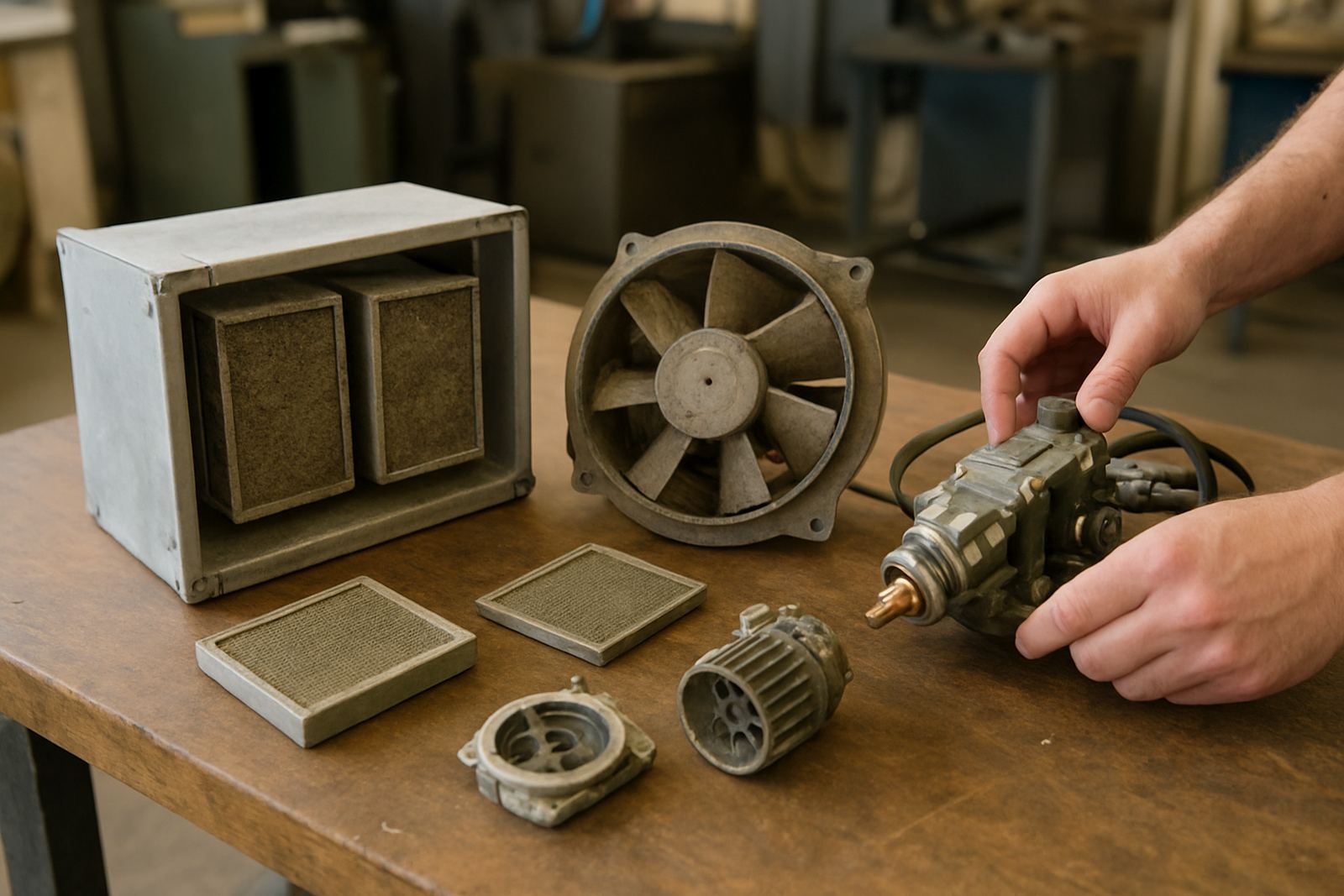
In many cases the issue is a mix of small faults. A blocked strainer, tired pump, air in the lines or scale inside the circuit can all reduce performance. Add a damaged nozzle seat or worn protective window and the machine may seem as if it has several unrelated problems. A proper strip and inspection helps separate the cooling issue from the head wear, so the right repair is done first.
What poor cooling does to source stability and cut consistency
When temperature swings, the laser source can become less consistent. The beam output may vary slightly, which is enough to affect kerf width, piercing, edge finish and how the machine behaves on thicker plate. On fibre systems, that can show up as unstable cuts that force the operator to slow the process down. On CO2 systems, the result may be more obvious in beam quality and alignment sensitivity.
Cutting heads also take a beating. Heat can deform seals, soften internal parts and make contamination stick faster to lenses and windows. If the cooling loop is not doing its job, the head may need repeated cleaning, sensor ring work, ceramic holder changes or full alignment checks more often than it should. That is money lost on parts and labour, but the bigger cost is the time spent stopping production to chase the same fault.
For fabricators running municipal work, signage batches or contract cutting, repeatability matters as much as raw speed. A machine that cuts well at 08:00 and poorly at 14:00 creates scrap, delays and rework. That is why a cooling loop problem should be treated as a production issue, not just a maintenance note.
A practical fault-finding route before the damage spreads
A good response starts with a sensible check rather than random part replacement. The aim is to confirm whether the fault is in the chiller, the lines, the source side or the cutting head. That saves time and stops a workshop from replacing the wrong item while the real issue stays in place.
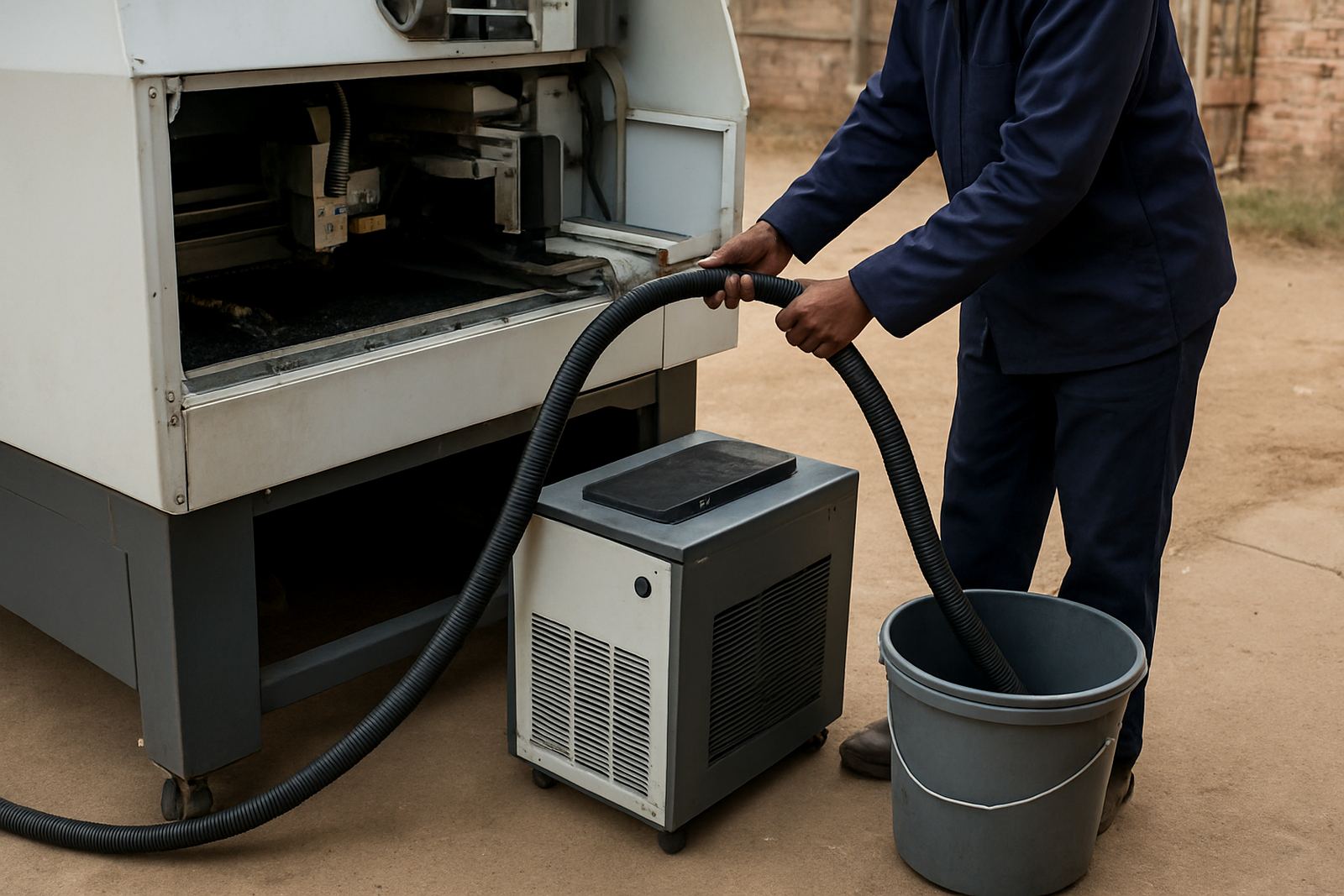
- Check coolant condition, level and circulation first.
- Inspect hoses, fittings and filters for restriction or leaks.
- Look for trapped air, blocked passages and weak pump output.
- Test temperatures under load, not only when the machine is idle.
- Inspect the head for contamination, worn seals and heat damage.
- Verify the return to service with a pressure test and cutting check.
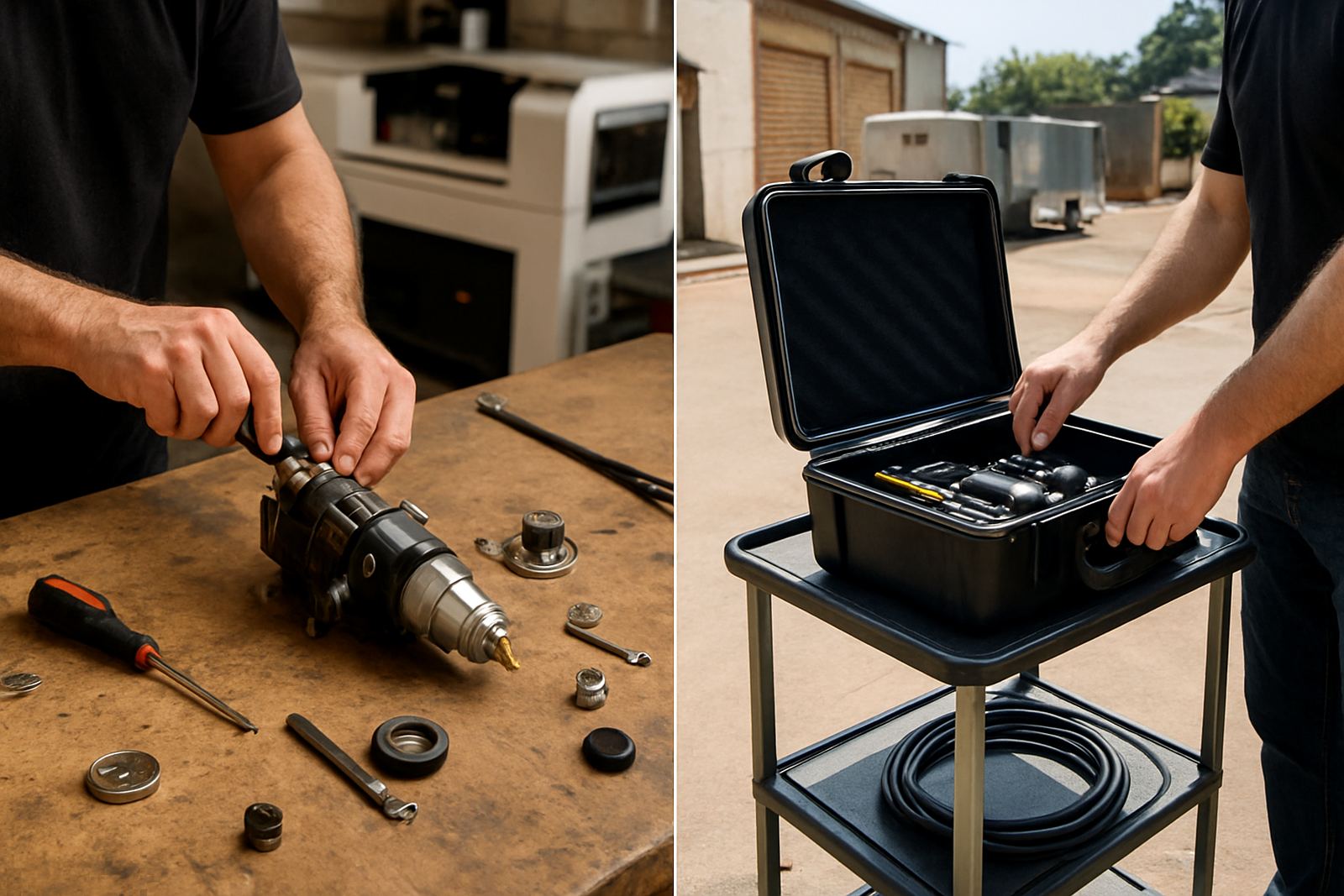
At Laser Ray Tools, that approach is used on the bench and on site, depending on the job and how quickly the customer needs the machine back. A nozzle seat repair or lens replacement may be enough on one machine, while another needs a full internal cleaning and gas path service because the cooling issue has been running for weeks. The point is to get to the cause, not just clear the alarm and hope for the best.
Why South African workshops need cooling discipline all year round
Cooling problems do not only happen in peak summer. In winter, machines can still suffer from poor maintenance, stale coolant and neglected filters. In coastal areas like Durban, humidity can add to corrosion risk, while inland workshops can see more dust and heat soak. Load-shedding makes things harder too, because repeated power interruption can disturb circulation, trigger faults and leave a system standing in a half-cooled state.
For firms in Johannesburg, Pretoria, Vanderbijlpark and Cape Town, the answer is not guesswork. It is a regular maintenance routine that includes coolant checks, head inspections and proper cleaning around the machine. A workshop that keeps those basics under control will usually get longer head life, steadier source output and fewer mid-job interruptions. That means more time cutting and less time waiting for the next fault to show itself.
Cooling loop trouble is rarely dramatic at the start. It creeps in through heat, dirt and wear. Catch it early, and the machine stays productive. Leave it too long, and the repair bill grows along with the downtime.