
Why the journey matters as much as the repair
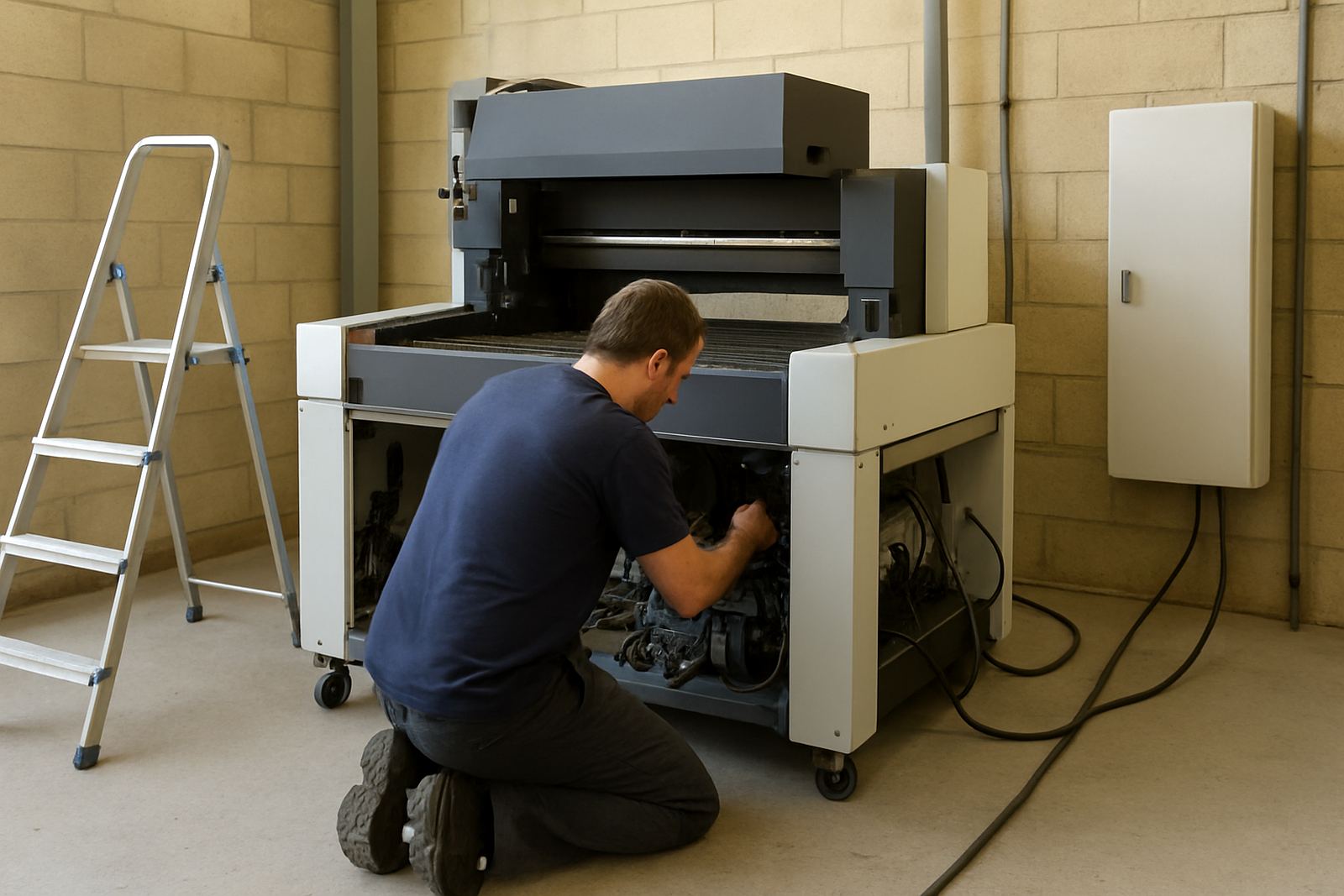
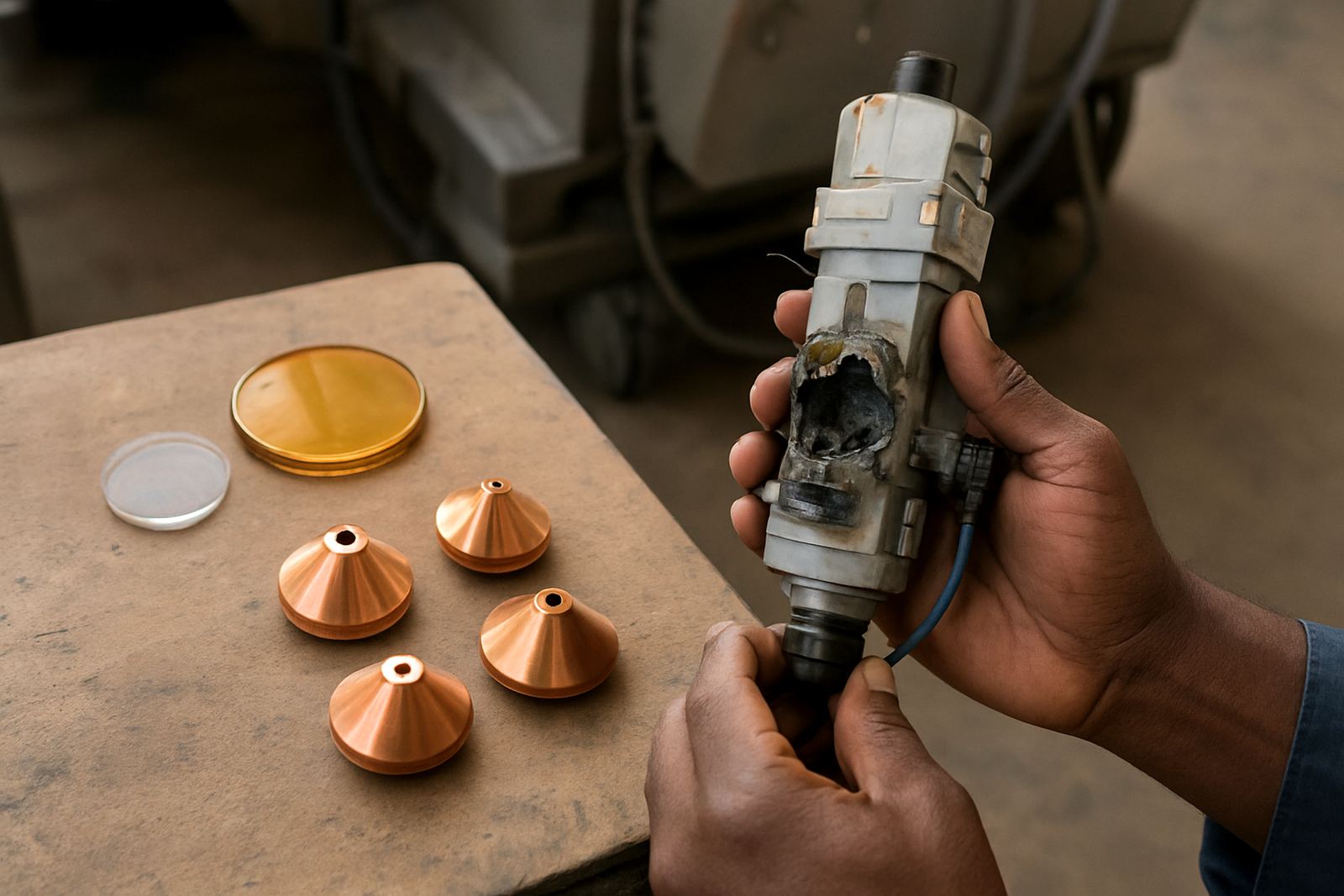
When a fibre or CO2 cutting head comes in for bench repair, the work is usually about restoring fine tolerances. That means the nozzles, lenses, protective windows, sensor ring and ceramic holder all need to arrive in a condition that allows a proper check. If the unit bounces around in the back of a bakkie or is packed loose in a carton, even a small hit can shift the nozzle seat or scratch a window that was still serviceable.
We see this often from Boksburg, Germiston and Kempton Park where a job shop needs the head back quickly after a collision or wear issue. A careful handover saves time at the bench and helps the technician get straight to strip and inspection instead of first dealing with transport damage.
Prepare the head before you box it
Before a cutting head leaves site, give it a simple clean and make a note of what happened. If there was a collision, a pressure drop, unusual cut quality, or a sensor fault, write that down. The more exact the fault note, the faster the diagnosis. A head that arrived after an accidental crash on a Pretoria line, for example, may show a bent nozzle seat and a cracked window, while the same symptom from a Durban coastal workshop could also include moisture related contamination.
- Remove loose off-cuts, dust and slag from the body.
- Cap open ports where possible so dirt does not enter the gas path.
- Take out consumables that are meant to be removed for transport, such as a loose nozzle.
- Keep the original fault note with the head, not in a separate office file.
- Do not try to realign internal parts on site unless you are trained for that exact model.
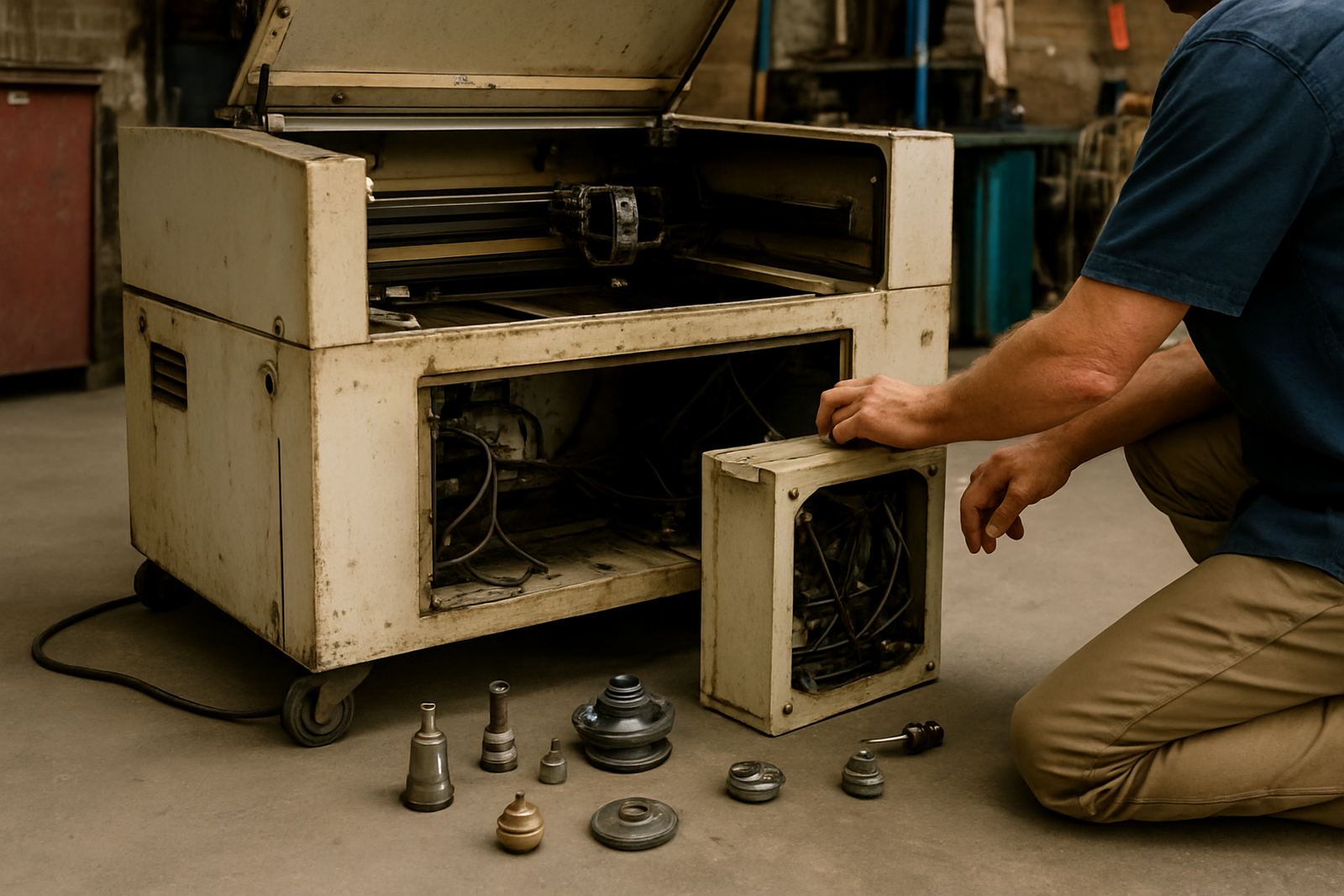
If the head has already been opened, keep the removed parts together in a sealed bag and label it clearly. A mixed bag of screws, washers and ceramic pieces slows things down and can lead to missing parts.
Pack it so the optics stay protected
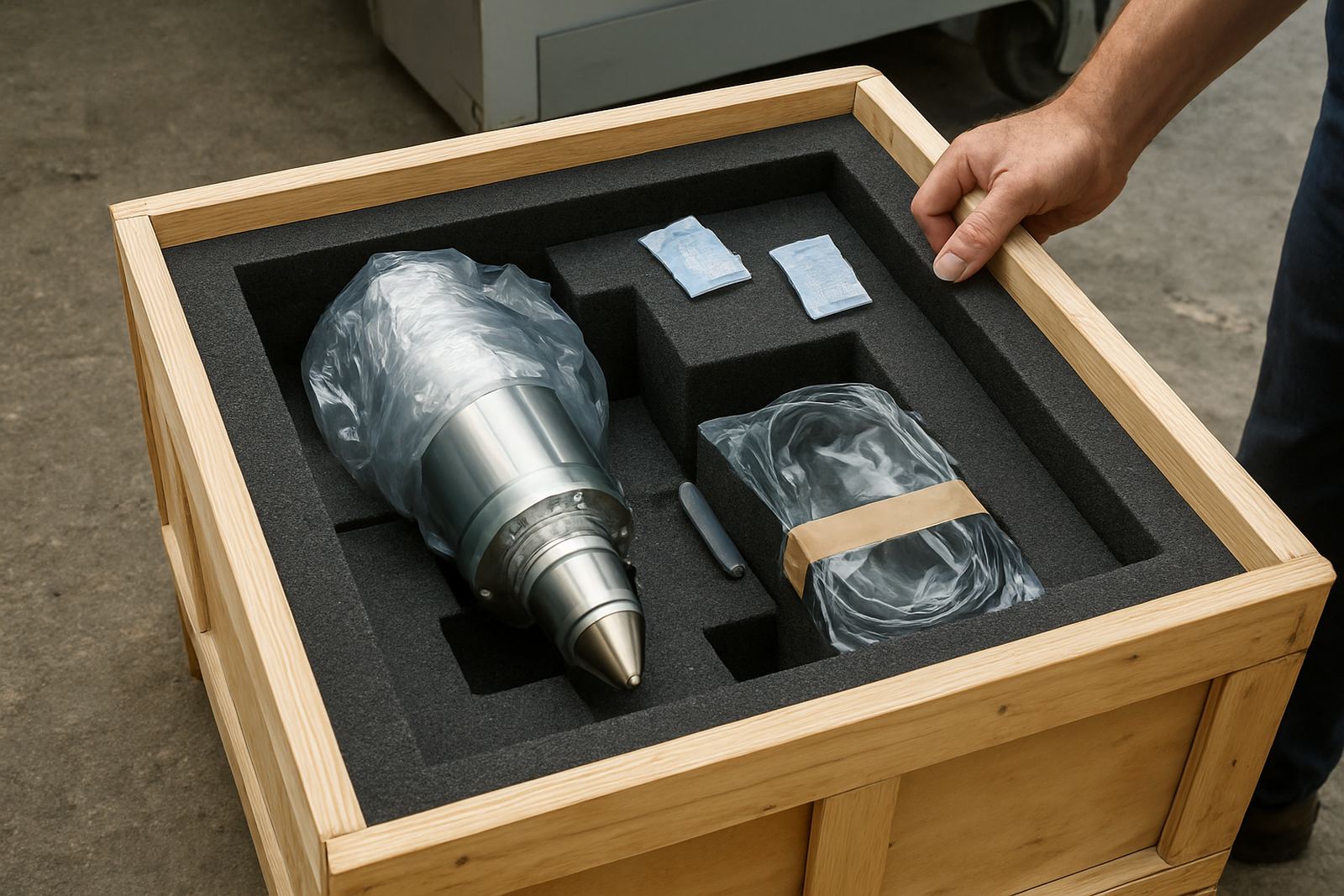
The biggest mistake is letting the head move inside the box. Optical parts do not forgive vibration. Use a rigid carton or crate with enough depth for padding on all sides. Wrap the head in clean material first, then add shock protection so the body cannot roll or tilt. Avoid newspaper, loose foam chips and oily rags because they shed dirt and leave residue.
For heads coming from long distances like Cape Town or Durban, the box should be able to handle rough sorting, wet roads and the odd drop off a loading bay. A workshop in Vanderbijlpark sending a head through a courier should think about the same thing a fabricator in Johannesburg would think about after a courier hub transfer: the box has to survive more than one handover.
- Use a box that closes tightly and does not flex under hand pressure.
- Pad the top, bottom and sides so the head cannot shift.
- Separate lenses, windows and nozzles into marked pouches.
- Seal the carton with strong tape across all joins.
- Mark the outside as fragile and keep upright where possible.
Keep the parts list simple and complete
A cutting head does not need every spare from the store room sent with it. What helps most is a clean list of what is inside the box and what symptoms were seen before removal. If a lens replacement is suspected, say so. If the gas path service is due, mention that too. If the head was removed after an intermittent fault during a night shift under load-shedding, note whether the problem started before the power change or after restart.
At the bench we can work faster when the package includes only the relevant items and a clear note on machine type, head behaviour and recent damage. That allows us to carry out the right checks such as head alignment, pressure test and return to service test without wasting time on guesswork.
It also helps to keep serial numbers, job cards and the old nozzle in one place. If the unit is moving between branches in Johannesburg Support, Pretoria Support or Germiston Support, make sure the internal note travels with it so no-one needs to hunt through messages.
Local conditions that change how you send a head
South African workshops work in different conditions, and the travel plan should match that reality. Coastal humidity in Durban can leave residue on exposed metal if a head is stored open for too long. Inland dust around Boksburg, Kempton Park and Vanderbijlpark can get into the lens cavity very quickly if the ports are not sealed. A head that sits in a hot delivery vehicle at midday may also see seal softening or condensation when it later moves into an air-conditioned office.
If you are sending a unit from a signage plant or a metal fabricator, choose a route that avoids unnecessary storage stops. When there is load-shedding, try to book collection after the machine has been properly shut down and cooled. Hurrying the removal while the system is still warm can leave condensation on the optics and make the inside dirtier than it needs to be.
For larger plants, it is worth assigning one person to hand over the head and another to check the box before it leaves the gate. That small step cuts mistakes, especially where several machines are down and everyone is trying to move fast.
What to expect when the repaired head comes back
Once a repaired cutting head returns from bench repair or on-site service, unpack it carefully and check the packing before the head itself. If the carton was damaged in transit, photograph it first. Then inspect the external body, lens seat and nozzle area before fitting it back into service. Do not rush to put it straight onto the machine if the box has been dropped or the seals look disturbed.
A good return process should include clear notes on what was repaired, what parts were replaced, and what test was done. That might include nozzle seat restoration, ceramic holder change, internal cleaning, or a bench pressure test. If the unit passed a return to service test before dispatch, it should go back into production with far less risk of another interruption.
- Check the box for impact marks before opening.
- Inspect all ports and optical faces under good light.
- Re-fit the head only after the machine area is clean.
- Run a short test cut before restarting full production.
- Store the service note with your maintenance file for future reference.
That final test cut is worth the time. It confirms the head is running properly and it gives the operator confidence before the next shift starts.
A practical Boksburg example
A fabricator in Boksburg once sent in a fibre laser head after a collision during plate loading. The unit was wrapped in a soft cloth but had been left loose in the box, so the nozzle had picked up an extra knock before it reached the workshop. The repair itself was straightforward enough, but the extra handling added time. The next time, the team packed the head in a rigid carton, sealed the ports and added a simple fault note with the machine details. That second unit came in clean, was stripped and inspected faster, and went back out with less down time.
That is the point of careful packing. It is not about being fussy. It is about keeping the repaired head in the same condition as it was when the technician finished the work. If you treat transport as part of the repair process, you give the optics and mechanical parts a far better chance of lasting through the next production run.