Start With The Cut, Not The Guesswork
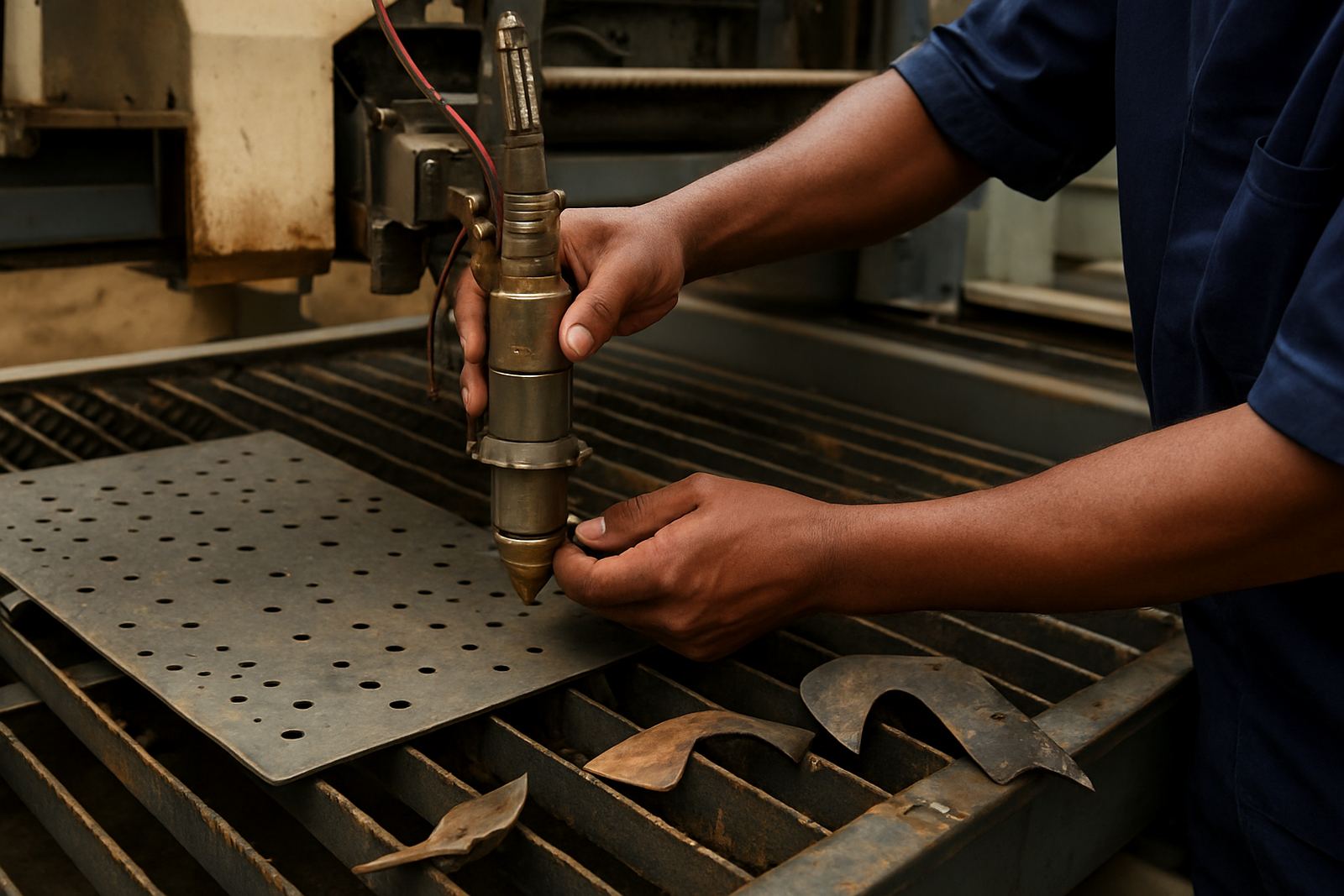
If a fibre or CO2 laser starts leaving dross, rough edges or incomplete cuts, begin with the cut sample before touching the machine settings. A worn nozzle or dirty lens can look very similar to a damaged cutting head, which is why many workshops in Boksburg and Johannesburg waste time changing parts one by one.
A good first question is simple: did the problem appear gradually, or did it start after a crash, strike or pressure loss? Gradual change usually points to consumables and cleaning. Sudden change often means alignment trouble, a cracked ceramic holder, damaged sensor ring, or internal contamination. A quick visual check can save hours on the line, especially when load-shedding has already shortened the shift.
- Check whether the cut edge is consistently poor or only bad on one side.
- Look for spatter, burrs or flare marks around the entry point.
- Confirm if the issue changes between thin sheet and heavier plate.
- Note whether the fault appeared after a nozzle change, collision or power interruption.
Consumables That Wear In Normal Production
Consumables are the parts expected to take daily abuse. They are not always cheap, but they are supposed to be replaced at regular intervals. In many cases, replacing the right consumable brings the machine straight back into spec. The trick is knowing which part is actually worn and not guessing based on colour or appearance alone.
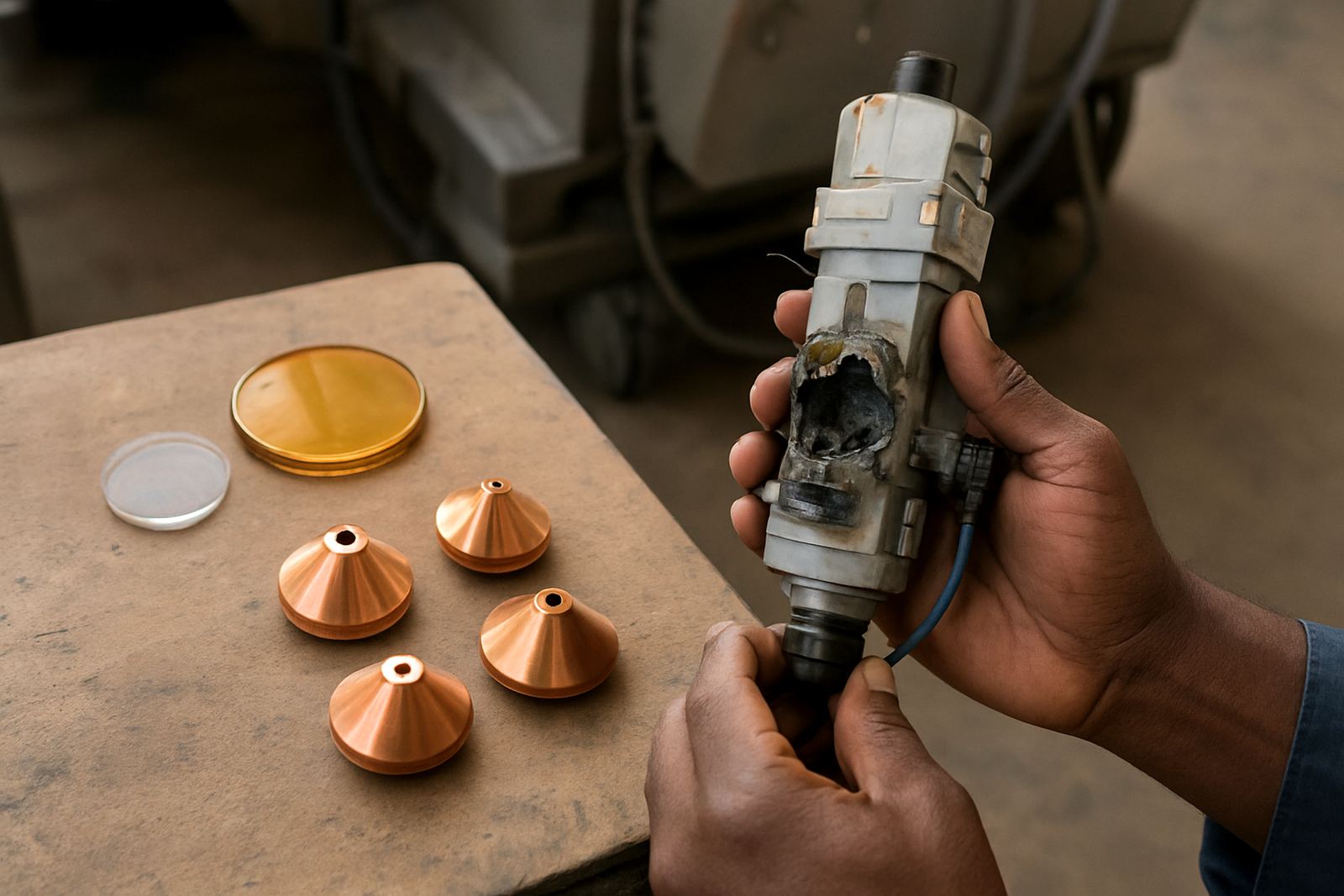
On a busy shop floor, nozzles, protective windows and lenses often show wear first. Dirty assist gas, slag backflow and poor cleaning practice shorten their life. If the machine is cutting mild steel all day in humid coastal conditions, the optics can pick up moisture and fine residue faster than many operators expect.
- Nozzle wear can cause unstable gas flow and wider kerf.
- A dirty or marked lens can reduce power at the work face.
- A protective window can cloud, pit or crack after contamination.
- A sensor ring may become erratic if heat or debris gets into the head.
These are repairable issues only in the sense that they need correct replacement and setup. If the head is otherwise sound, a proper service gets the machine back quickly without stripping out parts that are still usable.
Signs The Fault Goes Beyond Consumables
When fresh consumables do not improve cut quality, the problem usually sits deeper inside the cutting head or machine path. That is where a proper strip and inspection matters. Collisions are a common cause. A light tap can shift alignment just enough to affect focus and gas flow, while a heavier strike can damage the ceramic holder or nozzle seat.
Another warning sign is repeat failure. If the same nozzle keeps burning, or the protective window fogs up again within a short time, there may be an internal leak, poor pressure stability, or contamination in the gas path. These faults are easy to miss if the workshop only changes visible parts and sends the machine back into production too soon.
- Uneven cut quality across the sheet, not just at the lead-in point.
- Frequent head alarms after cleaning or restart.
- Visible chatter, drag marks or inconsistent pierce behaviour.
- Excessive heating around the head, ceramic, or sensor area.
At that stage, a bench pressure test and return to service test are usually better value than another round of trial and error.
A Boksburg Example From A Busy Fabrication Floor
A fabrication workshop in Boksburg called in after repeated poor cuts on 6 mm plate. The team had already replaced the nozzle and lens, but the machine still left heavy dross on the underside. The first assumption was consumable wear. The real issue was a collision that had shifted the head just enough to disturb alignment and damage the nozzle seat.
Once the cutting head was stripped, inspected and cleaned, the seat was restored, the ceramic holder changed, and the internal path checked for debris. After that, the bench pressure test showed the leak had stopped and the return to service test confirmed stable cutting again. The workshop lost less time than if they had kept swapping parts blindly. It was a small lesson but an expensive one if ignored.
For fabricators from Pretoria to Durban, the same rule applies. If the cut quality changes after a crash, a pressure drop or a sudden alarm, a repair check is usually the safest next step. Waiting for the failure to grow can turn a manageable service into a much bigger outage.
What A Proper Service Check Actually Covers
A practical repair is not only about changing a broken part. It should confirm the full condition of the head and related parts so the machine can go back to work with confidence. That is the difference between a quick patch and a service that holds up under production pressure.
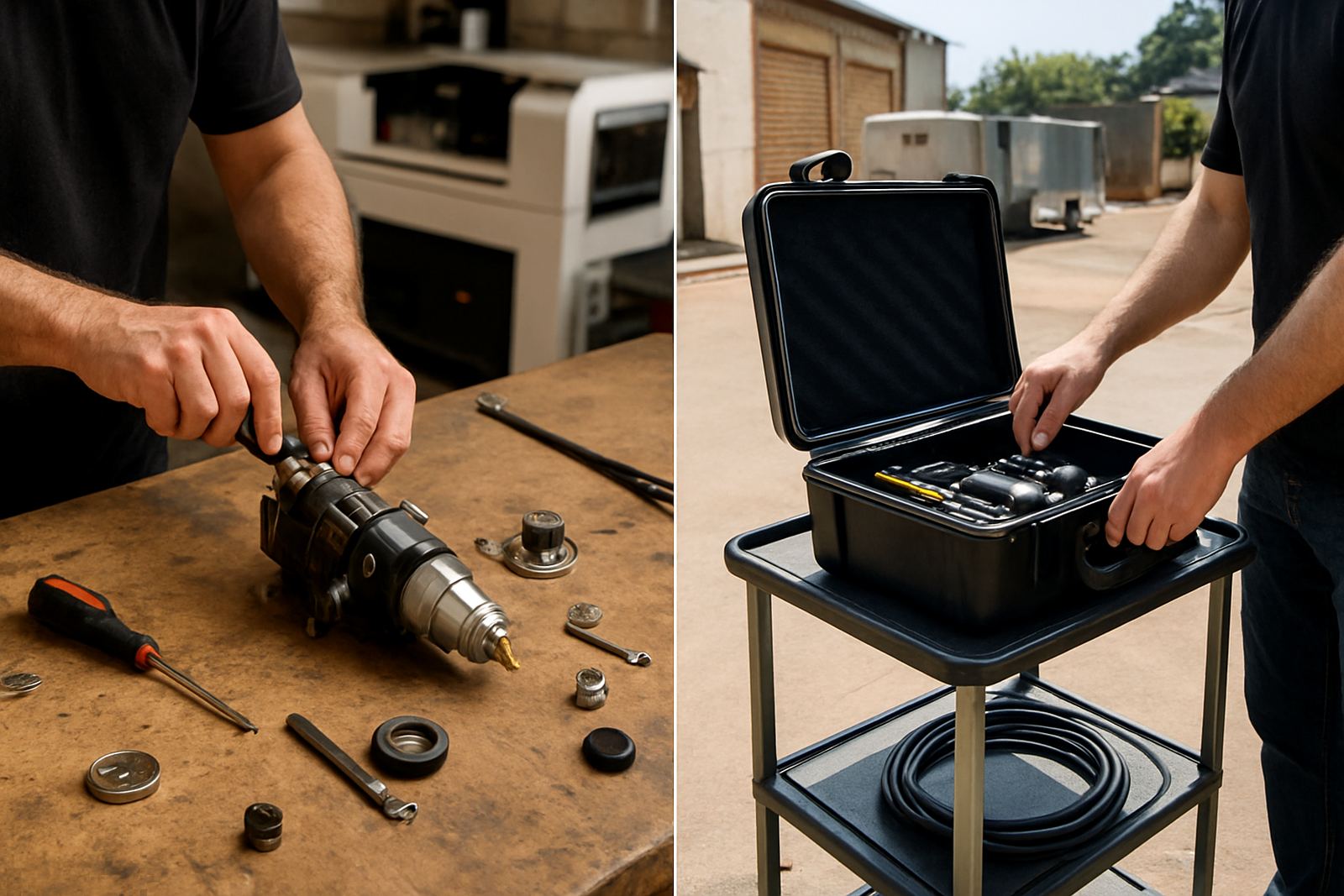
At Laser Ray Tools, service can include bench or on-site support depending on the fault and the urgency. The aim is to get production moving again with the least disruption. For some jobs, a simple consumable change and clean is enough. For others, the repair must include inspection of the gas path, alignment checks and restoration of the damaged seat or holder.
- Strip and inspection for collision or wear damage.
- Nozzle seat restoration where the fit has been compromised.
- Lens replacement and protective window replacement.
- Internal cleaning and gas path service.
- Head alignment check, bench pressure test and return to service test.
How To Decide Before You Waste More Money
The easiest way to avoid overspending is to follow a simple sequence. Replace only the parts that show clear wear. If the fault remains, stop and inspect the head before adding more consumables. That approach protects both the machine and the budget.
Workshop managers in Ekurhuleni, Germiston, Kempton Park and further afield often work under tight deadlines, so this discipline matters. You do not want to order a box of parts because a cut edge looked rough on one shift. Nor do you want to keep a machine running when the cutting head is already out of spec. Small faults become expensive very quickly.
- If the issue follows a crash, suspect repair fault first.
- If the issue builds slowly, inspect consumables and cleanliness first.
- If fresh parts do not fix it, stop and test the head properly.
- If alarms repeat, do not keep pushing the machine through production.
That is the practical line between consumables and repairs. Get the diagnosis right, and the machine spends more time cutting and less time sitting idle.