
Why Thin Sheet Behaves Differently Under Laser Cut
Thin mild steel, stainless steel and aluminium do not sit still the way heavier plate does. When the sheet is only 0.8 mm, 1.0 mm or 1.5 mm thick, the heat from the beam and the gas assist can push the part around before the cut is complete. That is when you see vibration, blowback at the pierce point, or holes that come out larger on one side than the other.
The problem is not always one big fault. Thin material reacts to a few small issues at once: head height drifting, a worn nozzle, a lens with contamination, or gas pressure that is slightly off. On a busy line in Boksburg or Germiston, those small faults turn into scrap very quickly because thin sheet is usually cut in high quantities and tight nests.
What Usually Causes Vibration And Edge Lift
Thin sheet starts to move when the cut force exceeds what the sheet can hold. That can happen if the pierce is too hot, the cutting speed is too slow, or the assist gas is not matched to the material. A poor clamp or a rough bed can add to the movement too. On some jobs the sheet hums or chatters as the head passes close to small webs and narrow tabs.
- Excess pierce energy that blows material back into the nozzle
- Nozzle wear that breaks the gas stream and widens the cut
- Lens or protective window contamination that weakens focus
- Incorrect stand-off or height sensing on the cutting head
- Loose sheet support, lifted corners or uneven slats under the job
When these issues stack up, the operator often raises the gas pressure and slows the program, but that can make the edge worse. The better fix is to find where the instability starts and repair that point first.
Small Holes Need A Different Approach
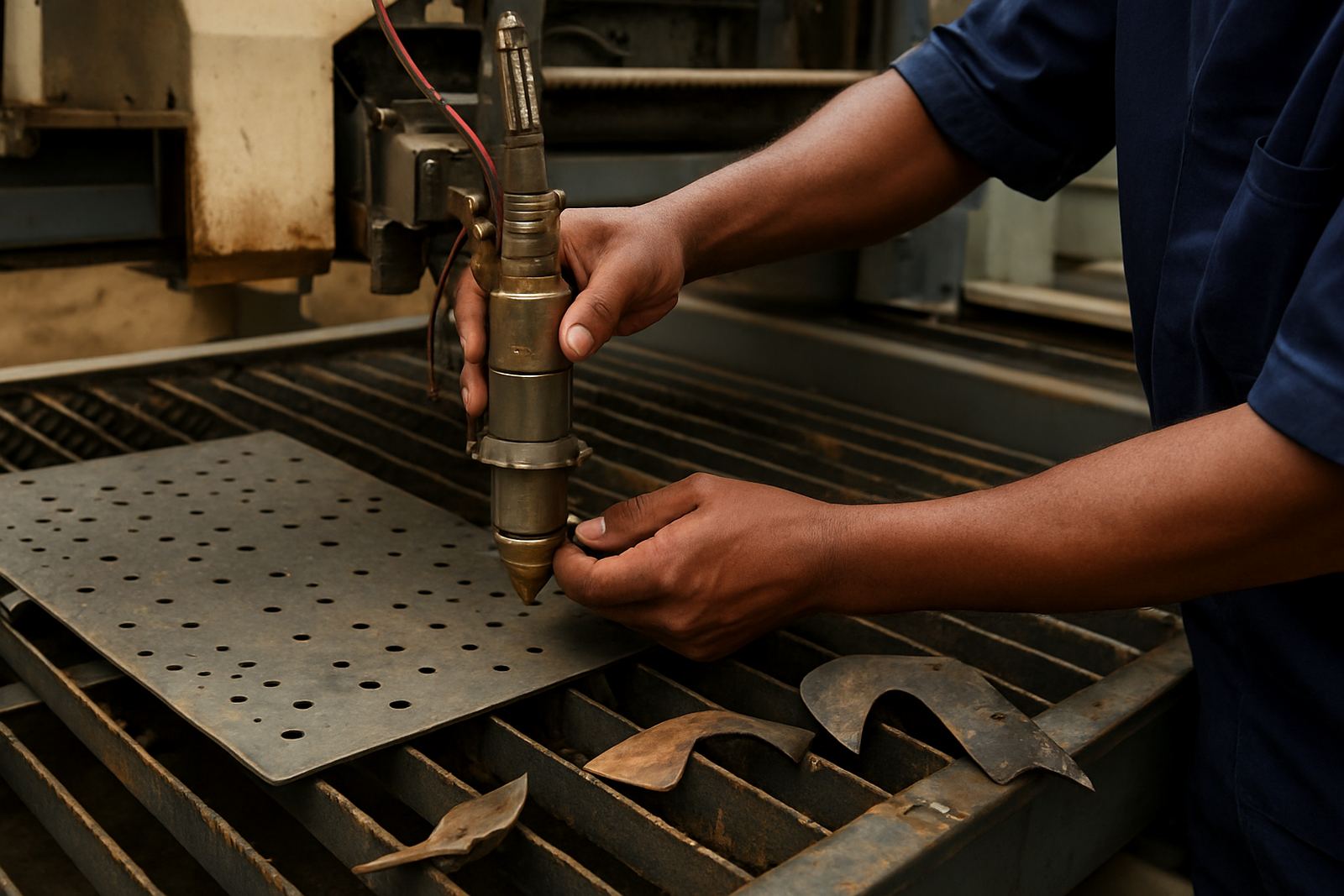
Small holes are usually the first place where thin sheet shows trouble. A 2 mm hole in 1.2 mm sheet has very little room for error. If the beam is not centred, the gas stream is not clean or the focus is drifting, the hole may come out oval, tapered or too large. In stainless steel, you may also see dross hanging on one side because the molten edge had nowhere to go.
For job shops in Pretoria or Johannesburg doing brackets, signage parts or cabinet work, the repeated issue is consistency across the whole sheet. One corner may cut fine, then the next pack shows poor roundness because the head has warmed up, the nozzle has picked up spatter, or the sensor ring is not reading properly.
- Check pierce height before chasing software settings
- Confirm lens and window condition under strong light
- Inspect the nozzle seat for wear after any collision
- Use the same material thickness and grade when testing
- Review small-hole settings separately from long contour cuts
Head Condition Matters More Than Most People Think
A cutting head that has had a bump, a bad pierce or a near miss can still move, but it may no longer cut straight. A slightly damaged ceramic holder, a tired sensor ring or a nozzle seat that is no longer true will show up first on thin sheet. The machine may still make a cut, yet the kerf can wander enough to spoil close-fitting parts.
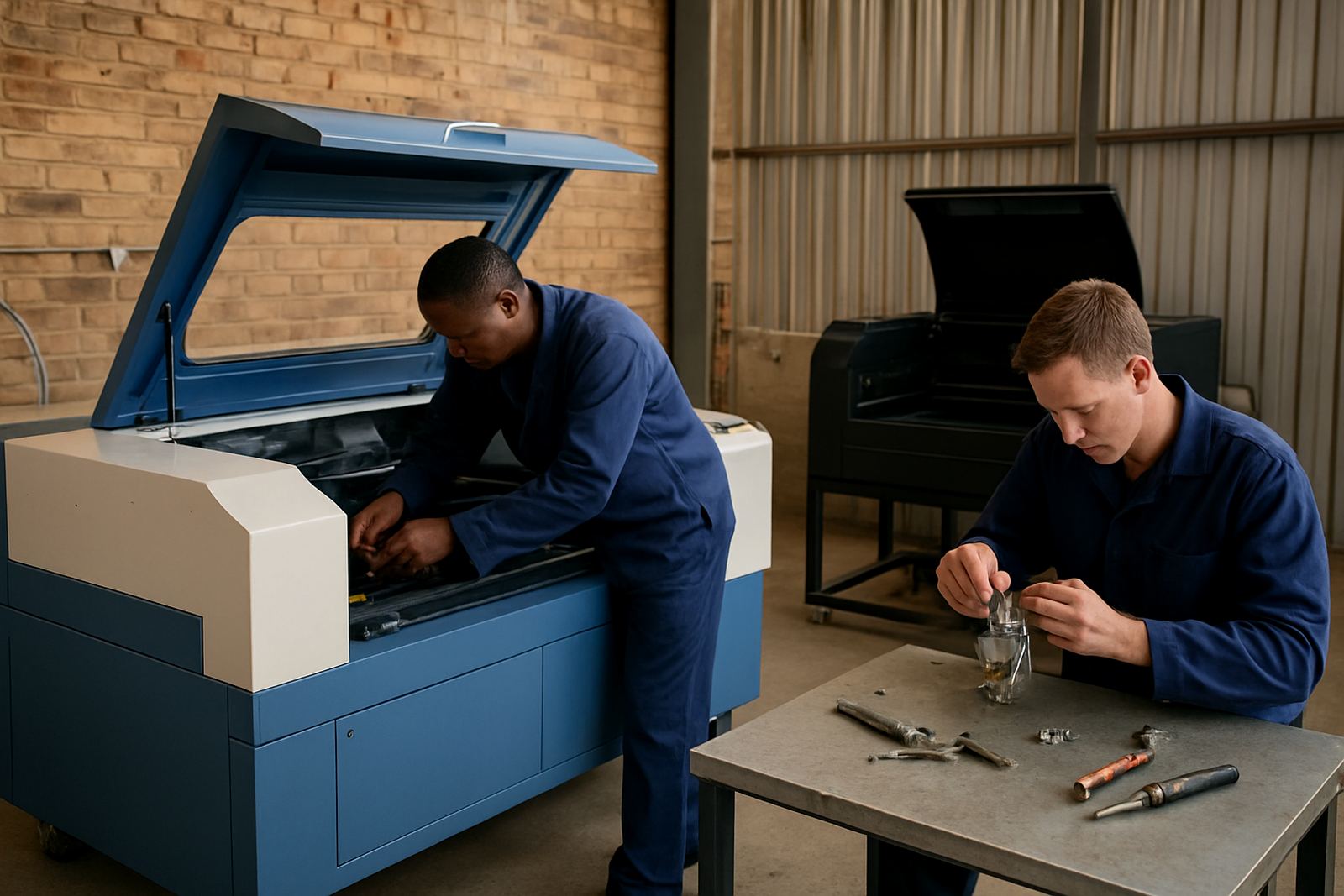
At Laser Ray Tools, head checks usually start with strip and inspection, then move to collision damage repair, nozzle seat restoration and lens or window replacement where needed. If the head has lost alignment, the beam path is checked and the unit is tested on the bench before it goes back into service. That order matters because a thin sheet fault is often a head fault in disguise.
Gas, Pressure And Cleaning Need To Stay In Step
Assist gas does two jobs on thin sheet: it clears molten material and protects the cut edge. If the gas path is dirty, the pressure unstable or the nozzle passage blocked, the jet loses shape. That is when you get blowback at pierce, uneven edge colour, or a finish that changes from one side of the nest to the other.
Workshop teams should also keep an eye on internal cleaning and gas path service. In coastal areas like Durban the extra humidity can affect stored parts and increase the chance of contamination in the head assembly. In winter months around Cape Town, jobs may sit longer between setup and cutting, so dust and moisture can creep in. Small habits help:
- Keep nozzles, lenses and windows packed clean and dry
- Replace damaged consumables before the next urgent job
- Confirm pressure at the machine, not only at the regulator
- Check for leaks, blocked passages and worn seals
- Record which thicknesses are prone to blowback on that machine
A Boksburg Example From A Busy Fabrication Floor
One fabrication shop in the Ekurhuleni area had a recurring problem on 1.0 mm stainless steel. The parts looked fine on outer profiles, but the 3 mm holes kept showing a slight taper and heavy dross on one side. The operator had already tried slower speeds and a higher gas setting, but the issue stayed the same.
After inspection, the cutting head showed nozzle wear, light contamination on the window and a sensor ring that was not reading consistently. Once the damaged parts were replaced and the head was brought back to alignment, the holes became round again and the scrap rate dropped. The shop did not need a full machine overhaul, only the right checks in the right order.
That is the practical difference between guessing and servicing. Thin sheet problems often look like a settings issue, but the real cause can be mechanical wear, heat build-up or a head that needs bench repair before it can be trusted on site.
What To Do Before The Next Thin Sheet Run
If thin sheet keeps vibrating or blowing back, start with the simplest checks and work outward. Confirm material flatness, support and clamping. Then inspect the head, nozzle, lens and protective window. After that, test pressure, focus and stand-off on a known good sample. If the fault appears after a collision or a long period of wear, take the head out of production and put it on the bench for proper diagnosis.
For workshops in Johannesburg, Pretoria, Vanderbijlpark, Durban and Cape Town, the goal is the same: short downtime and clean repeatable cuts. When the machine is ready, the material should cut without chatter, the small holes should stay round, and the sheet should leave the bed in one piece, not as a pile of rework.