When the same fault keeps returning, stop treating it as a one off
In a busy workshop, repeat faults are easy to dismiss as bad luck. A head starts cutting cleanly again after a quick clean, then a week later the cut edge burns, the nozzle clogs, or the machine trips out with poor beam quality. That pattern matters. It usually means the real cause was not removed, only the symptom.
We see this often on fibre and CO2 systems in Boksburg, Johannesburg and Pretoria, especially where the machine is running long shifts and the local air carries dust, oil mist or fine metal particles. If the same problem comes back after a nozzle change or a lens swap, the issue may be in the gas path, the seat inside the head, or a collision that shifted alignment just enough to keep causing trouble.
Repeat faults also cost more than a single breakdown. They waste consumables, slow production and create poor quality parts that have to be reworked. In many cases the machine is telling you the head needs a proper strip and inspection, not another quick patch.
Patterns that often point to one underlying head problem
There are a few warning signs that show up again and again. A machine may cut well at the start of the day, then go off line once heat builds up. Another may run for a few sheets and then start leaving dross, heavy burrs, or uneven kerf width. If the same faults keep returning after operator adjustments, the problem is usually deeper than settings.
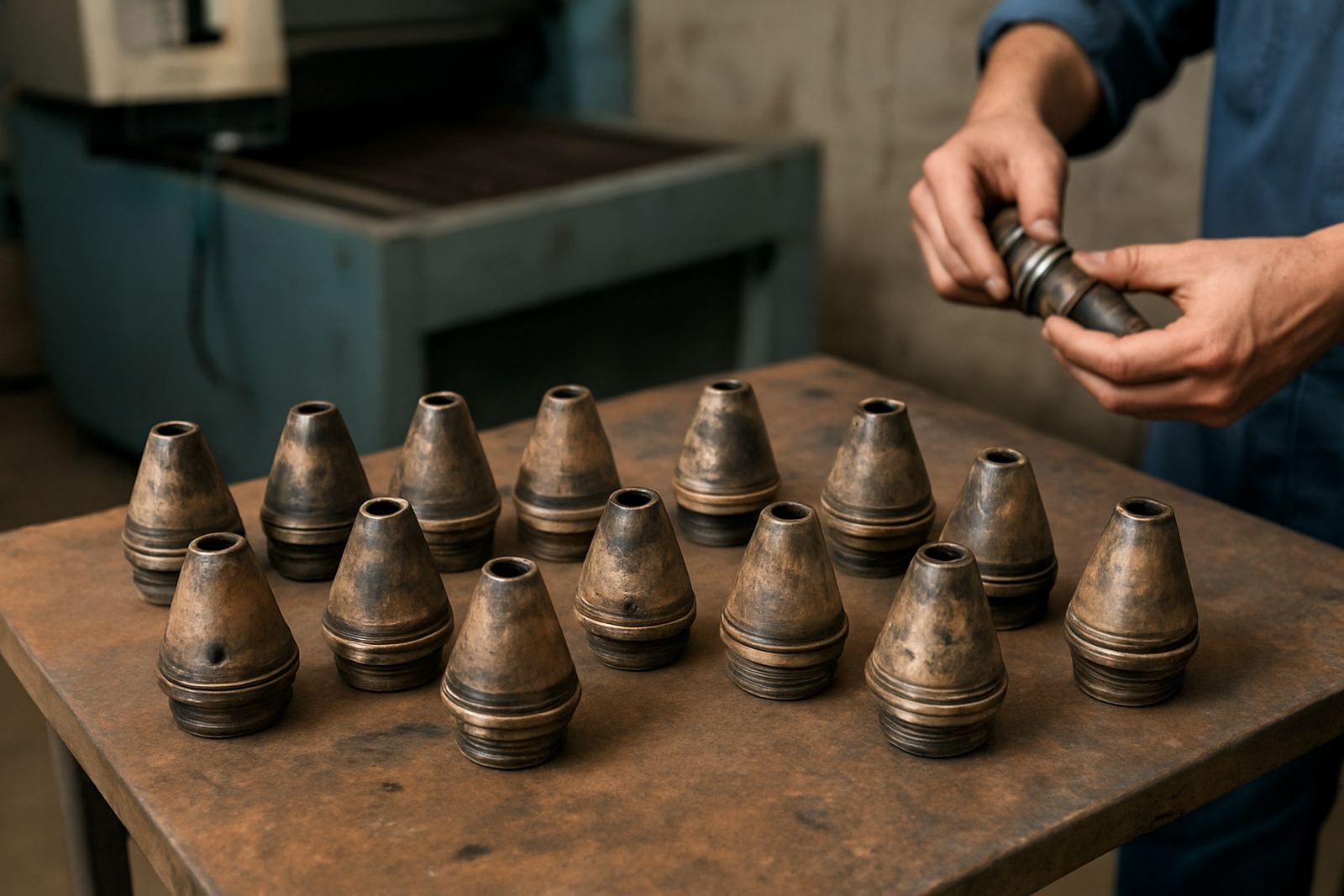
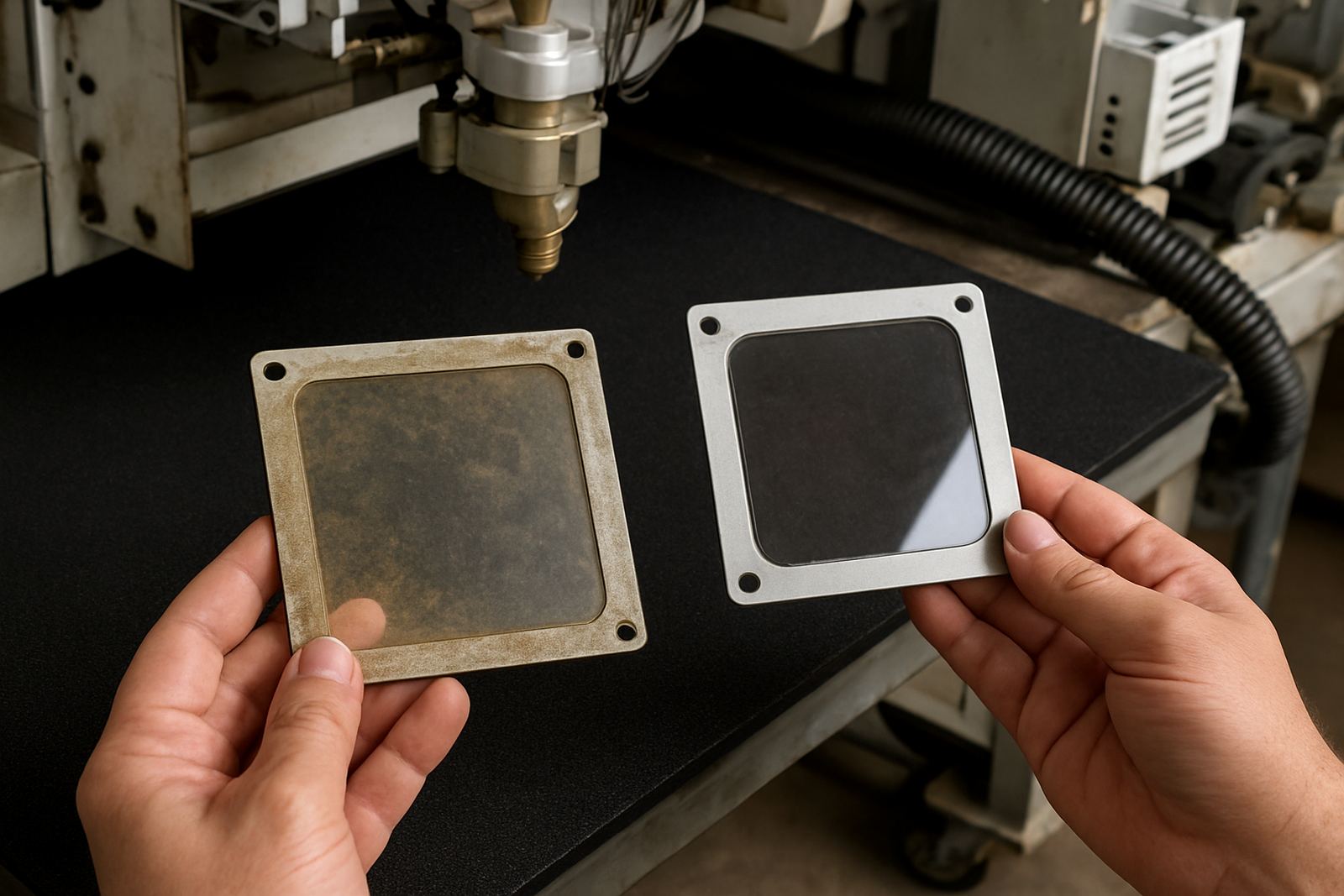
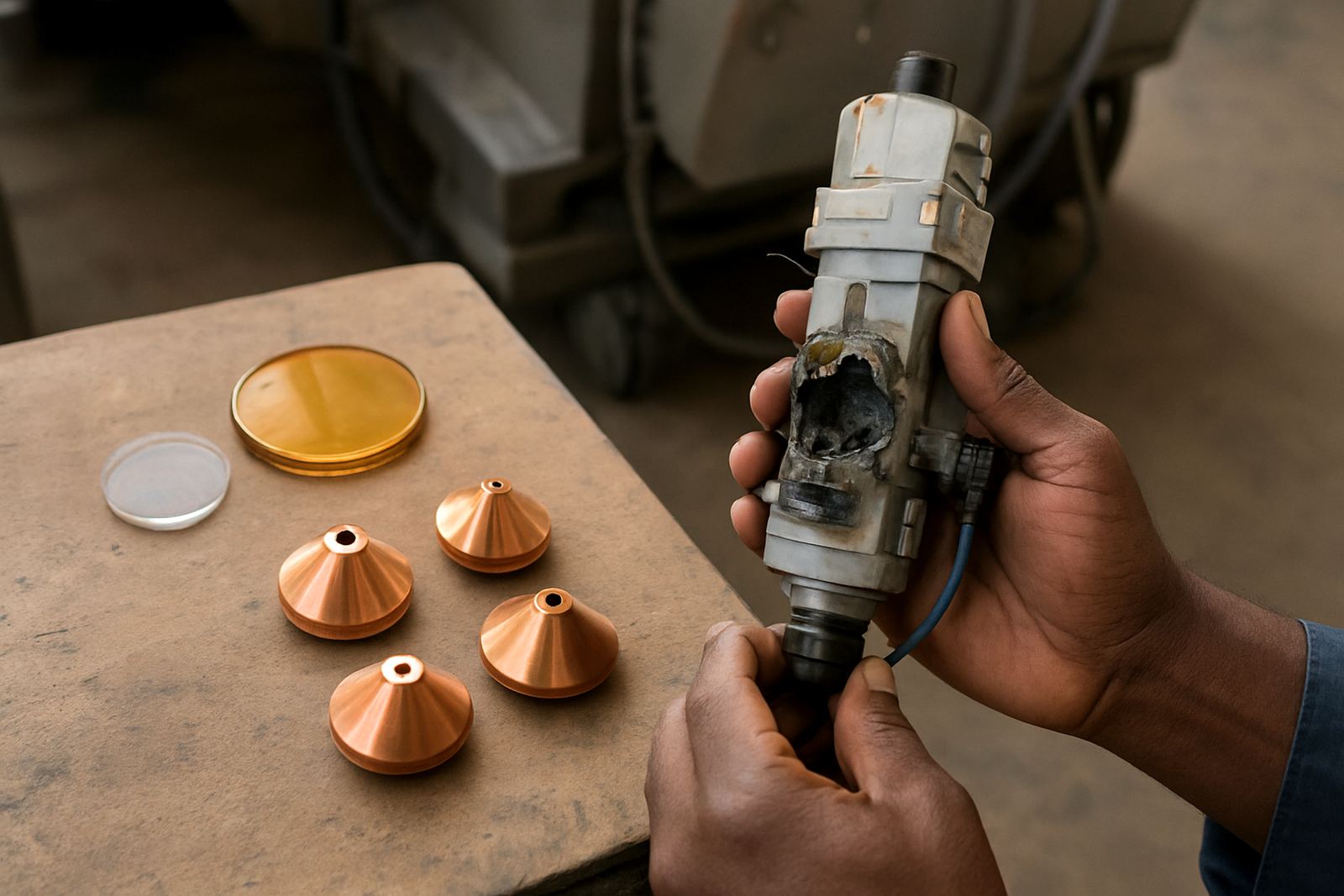
On the bench, these issues often trace back to wear inside the cutting head. A nozzle seat that is no longer true can throw off the beam position. A cracked or dirty protective window can create repeated power loss. If the ceramic holder is damaged, the head can lose stability and the cut quality will drift from job to job.
- Repeated nozzle blockage after cleaning can point to contamination upstream or a damaged seat.
- Frequent window burn marks may mean gas flow is carrying debris into the optical path.
- Cut quality that changes after a minor bump often suggests head alignment has shifted.
- Intermittent alarms after a collision can mean internal parts need inspection, not only reset.
Gas path faults are easy to miss, but they keep the same trouble alive
Many recurring faults are blamed on optics, when the real issue sits in the gas path. If assist gas is not reaching the head cleanly, or if pressure drops under load, cutting performance will vary from one nest to the next. That is why a machine can seem fine on a short test but fail during full production.
Blocked passages, poor seals, worn fittings and dirty internal channels can all disturb the gas flow. On some machines the pressure looks acceptable at the regulator, but the head still sees poor delivery because the restriction is inside the assembly. Once that happens, the nozzle heats unevenly, spatter builds up faster and the same fault comes back after every clean-up.
For workshops in Durban and Cape Town, coastal humidity can make this worse. Moisture in the air and poor storage conditions can lead to corrosion, sticky residue and contamination in the head. In those cases, a proper gas path service and internal cleaning can save a lot of repeat downtime.
Why a proper strip and inspection saves more time than quick fixes
A quick clean can get a job moving again, but it does not always tell you what happened inside the head. A strip and inspection lets a technician check the nozzle seat, ceramic holder, lens stack, protective window, sensor ring and internal surfaces in one go. That is the fastest way to find the real fault pattern.
We often find that the visible problem is only the last stage of a longer issue. For example, repeated lens damage may come from a damaged protective window that was left in service too long. Or the head may have been returned to work after a collision without a proper alignment check, so the machine kept cutting off centre until the optics started failing again.
- Strip the head fully before replacing the same part twice.
- Check the seat and holder for damage after any collision.
- Test pressure and gas flow under working conditions, not only idle pressure.
- Confirm cut quality after service on actual material thickness used in production.
A local example from a Boksburg workshop
A metal fabricator in Boksburg came to us with a fibre laser head that kept dropping cut quality on mild steel. The team had already replaced a nozzle, then a lens, and later cleaned the head twice. Each time the machine worked again for a short period, then the same problem returned. They were losing half a shift every week, which was costly on a job with a tight delivery date.
Our bench check showed a damaged nozzle seat and contamination inside the gas path. The protective window had also taken heat marks from repeated poor flow. After a full strip and inspection, the seat was restored, the internal cleaning was completed and the head was aligned again. A return to service test confirmed stable cutting across the material grades they run most often. Since then, the repeat fault has not returned.
That kind of case is common across Johannesburg, Germiston and Kempton Park as well. The machine usually is not failing at random. It is repeating the same message until someone looks at the full head assembly.
What to report before the fault becomes another shutdown
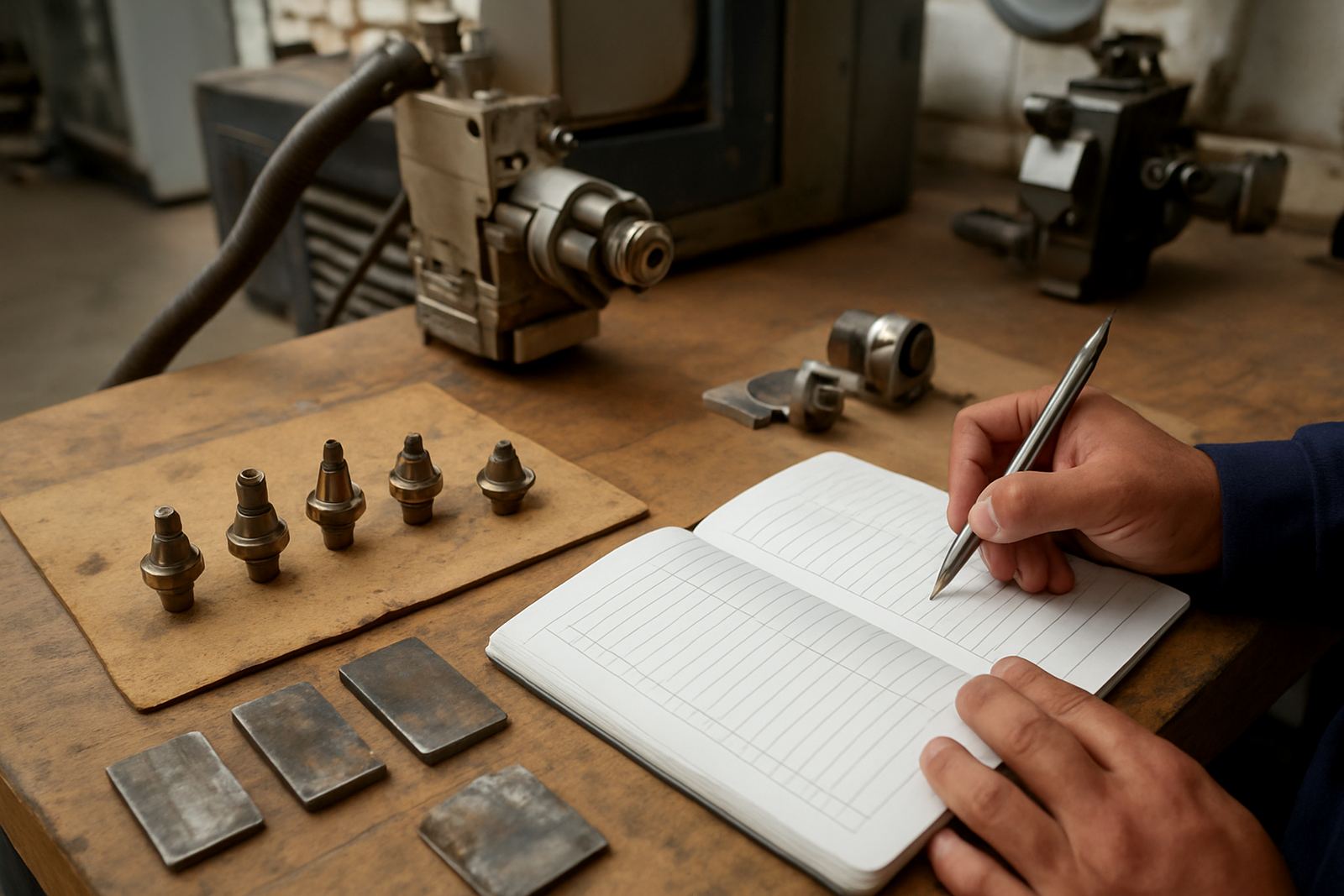
The earlier a technician sees the pattern, the faster the repair can be planned. It helps to record what the machine was doing, when the fault started and whether it happened after a collision, a nozzle change or a long production run. Small details matter, especially when a fault only appears under load.
If you are sending a machine in for diagnosis or requesting on site support, note the following:
- Which material thickness is affected most often.
- Whether the fault appears at startup, mid shift or after warm up.
- Any alarms, unusual noises or pressure drops.
- Whether the issue started after a crash, maintenance job or gas cylinder change.
- How often the same part has already been replaced.
That information helps us decide whether the job needs bench repair, a field visit or a full return to service test. It also keeps downtime shorter, which matters when orders are stacking up and the workshop needs the machine back in production fast.