What ageing laser machines usually need first
When a fibre or CO2 cutter gets older, the first signs are often small. Cuts start needing more clean-up, the assist gas flow seems inconsistent, or the head leaves marks after a collision. In many Boksburg and Germiston workshops, the machine is still powering on but it is no longer holding the same cut quality it had when new.
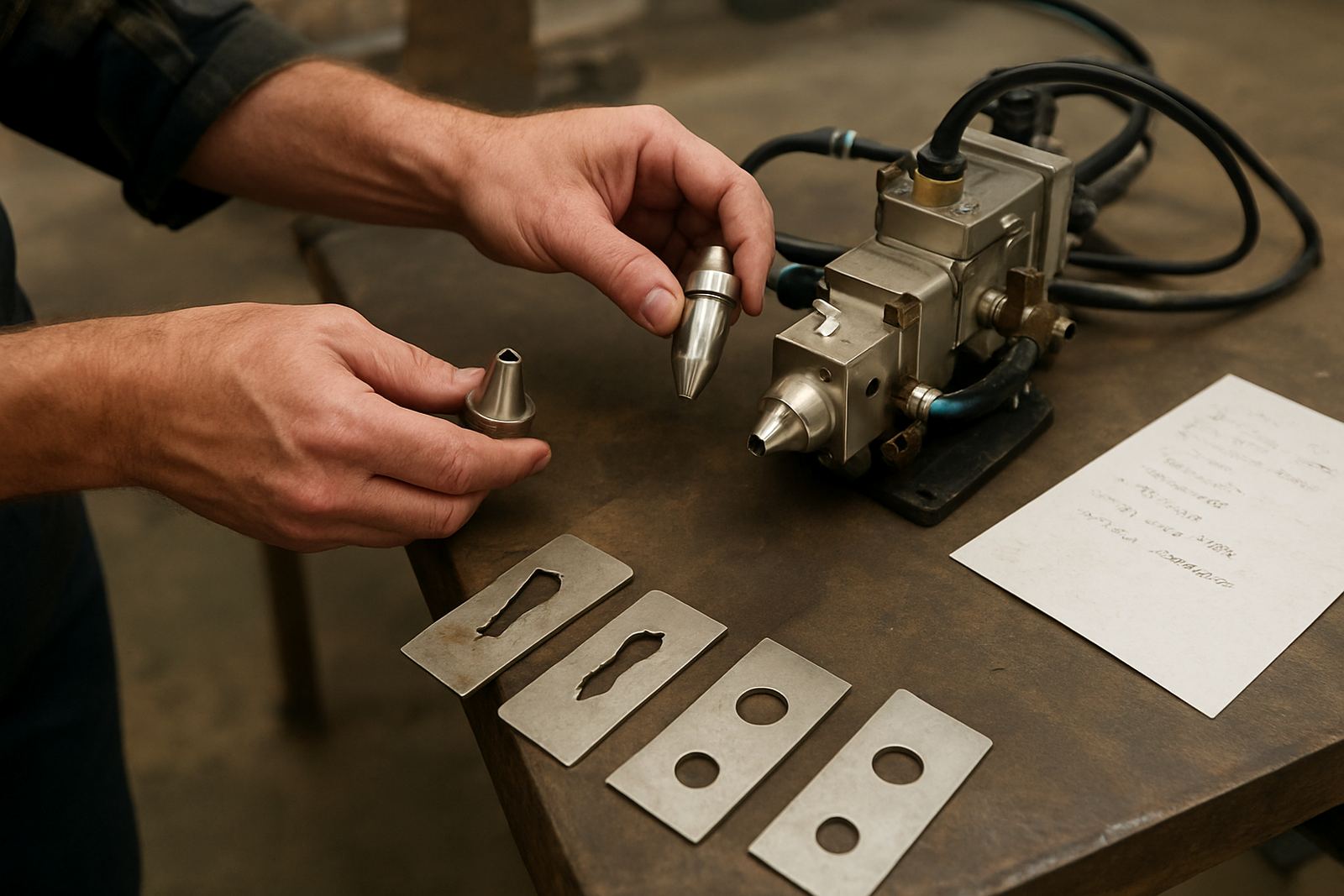
The usual causes are worn nozzles, damaged lenses, dirty protective windows, a tired sensor ring or a ceramic holder that no longer sits right. If the machine has had repeated starts and stops during load-shedding, or has run in a dusty bay near grinding and welding, the internal cleaning needs can build up quicker than people expect.
Why worn cutting heads need proper diagnosis
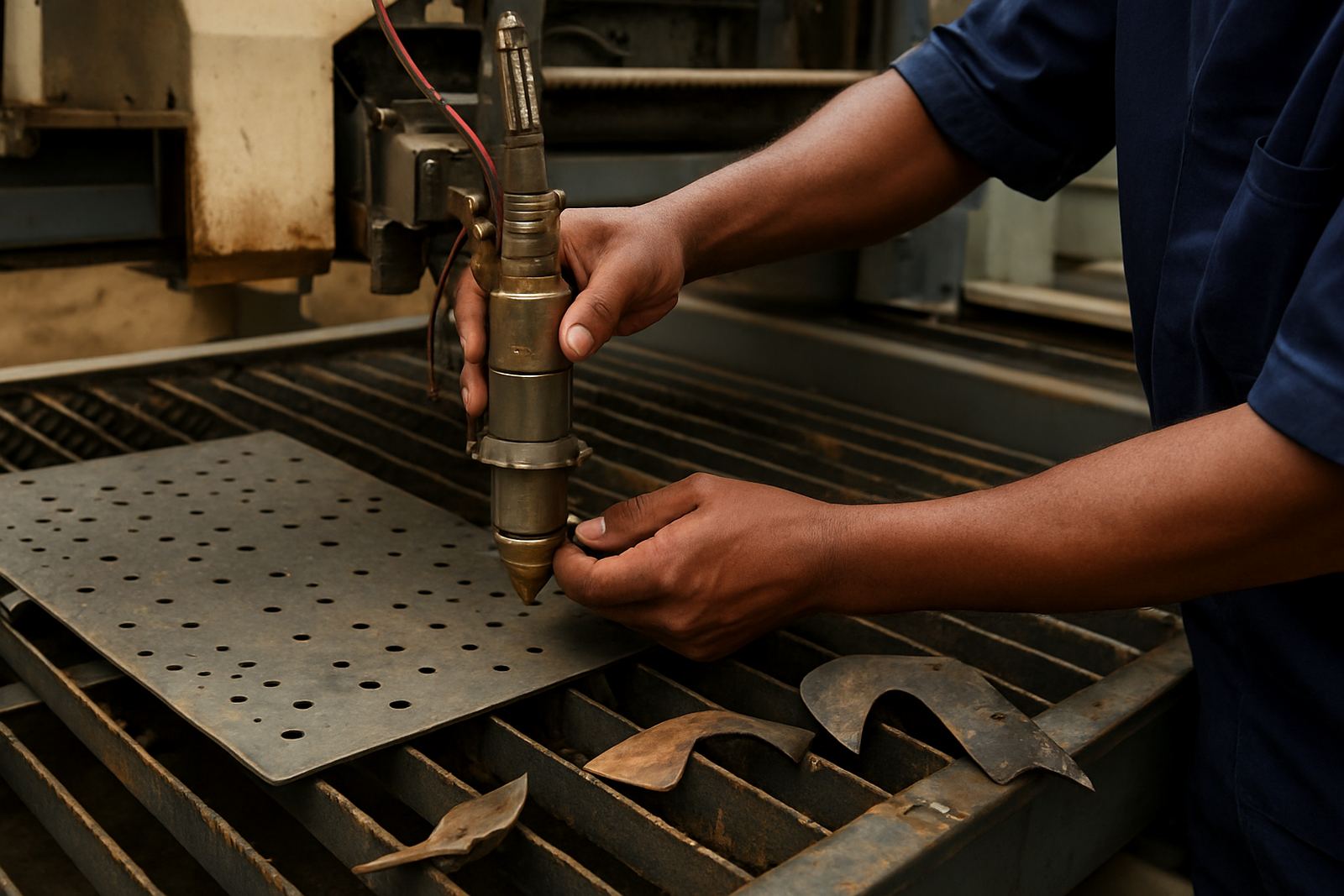
A cutting head can look fine from the outside and still be out of tolerance inside. After a collision, the nozzle seat may be slightly off centre, the lens tube may not sit square, or the head body may have internal damage that causes uneven cuts. That is why a proper strip and inspection matters before parts are changed one by one.
We check the full head assembly on the bench and on site where needed, then confirm what must be repaired and what must be replaced. This saves time and avoids throwing parts at the problem. For job shops in Pretoria or Cape Town, that can be the difference between one short repair and a week of wasted downtime.
- Strip and inspection to find hidden wear
- Collision damage repair before new parts go in
- Nozzle seat restoration for proper centring
- Lens and window replacement when optics are marked or cloudy
Keeping an older machine useful, not overworked
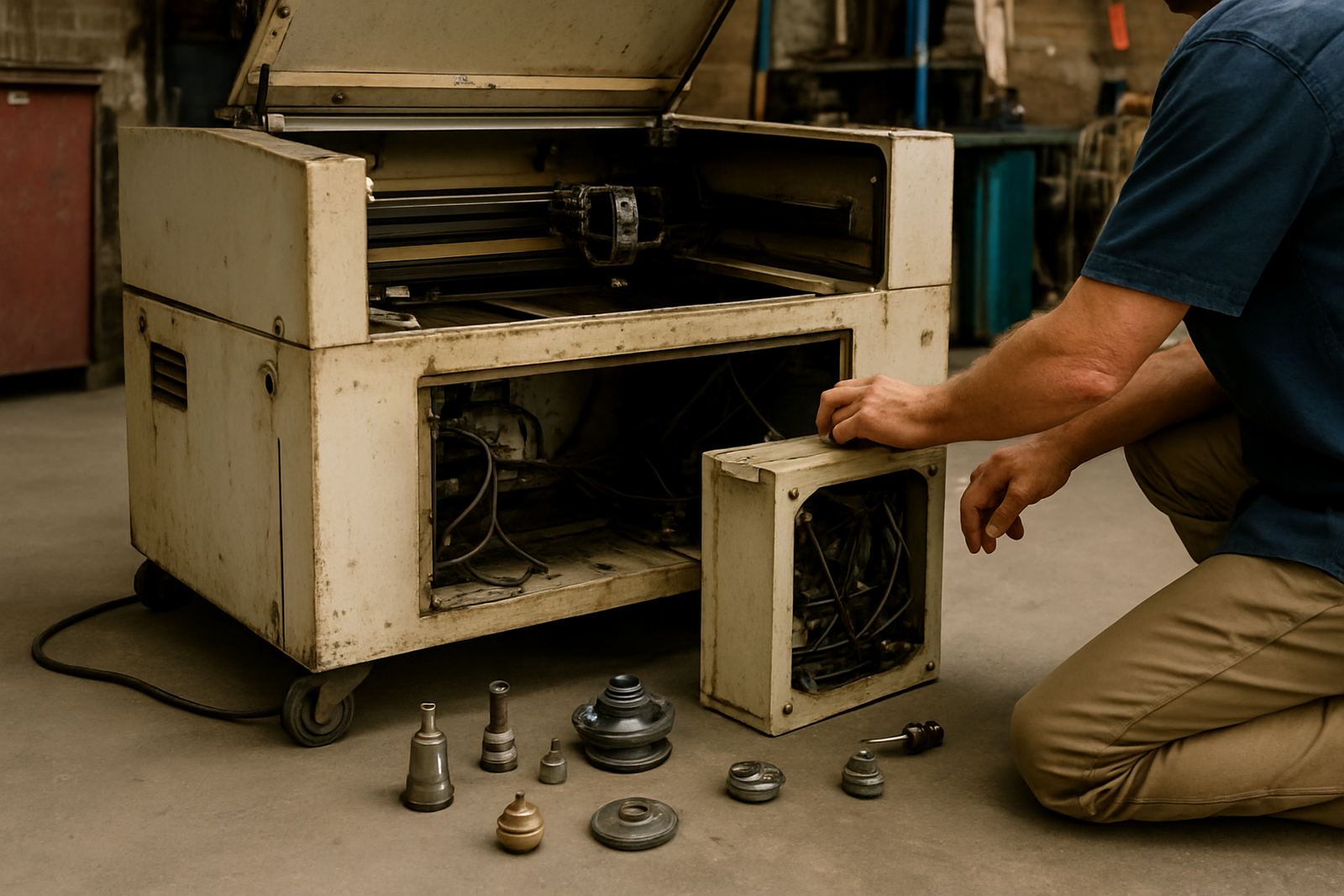
Some older machines are still worth keeping in service, especially if the frame is sound and the controller is stable. The key is to know where the limits are. A machine that is cutting mild steel for signage work in Johannesburg may still be worth repairing, but a unit that has been repeatedly run with poor gas quality and poor cleaning may need a more careful approach.
Good maintenance is about making the machine predictable again. That means checking the head alignment, cleaning the gas path, testing the pressure, and confirming the machine returns to service with no drift. A quick fix that only gets the laser running for one shift usually costs more later.
Common warning signs before a full breakdown
Older workshop machines often give warning signs long before they stop completely. If the beam starts producing rough edges, the assist gas sounds uneven, or the head keeps needing adjustment after a short run, the machine is asking for attention. Some operators also notice more scrap when changing material thickness, especially on thin stainless or mild steel.
Look out for these signs:
- Burn marks or slag that were not there before
- Frequent nozzle changes with no real improvement
- Cloudy windows or lenses that keep fouling
- Intermittent alarms after head contact or a light bump
- Loss of cut quality after power interruptions
If you are in Durban or along the coast, humidity can also play a part. Moisture and contamination can affect stored parts, optics and air quality, so the workshop needs a tighter routine than a dry inland site.
What our bench and on-site service covers
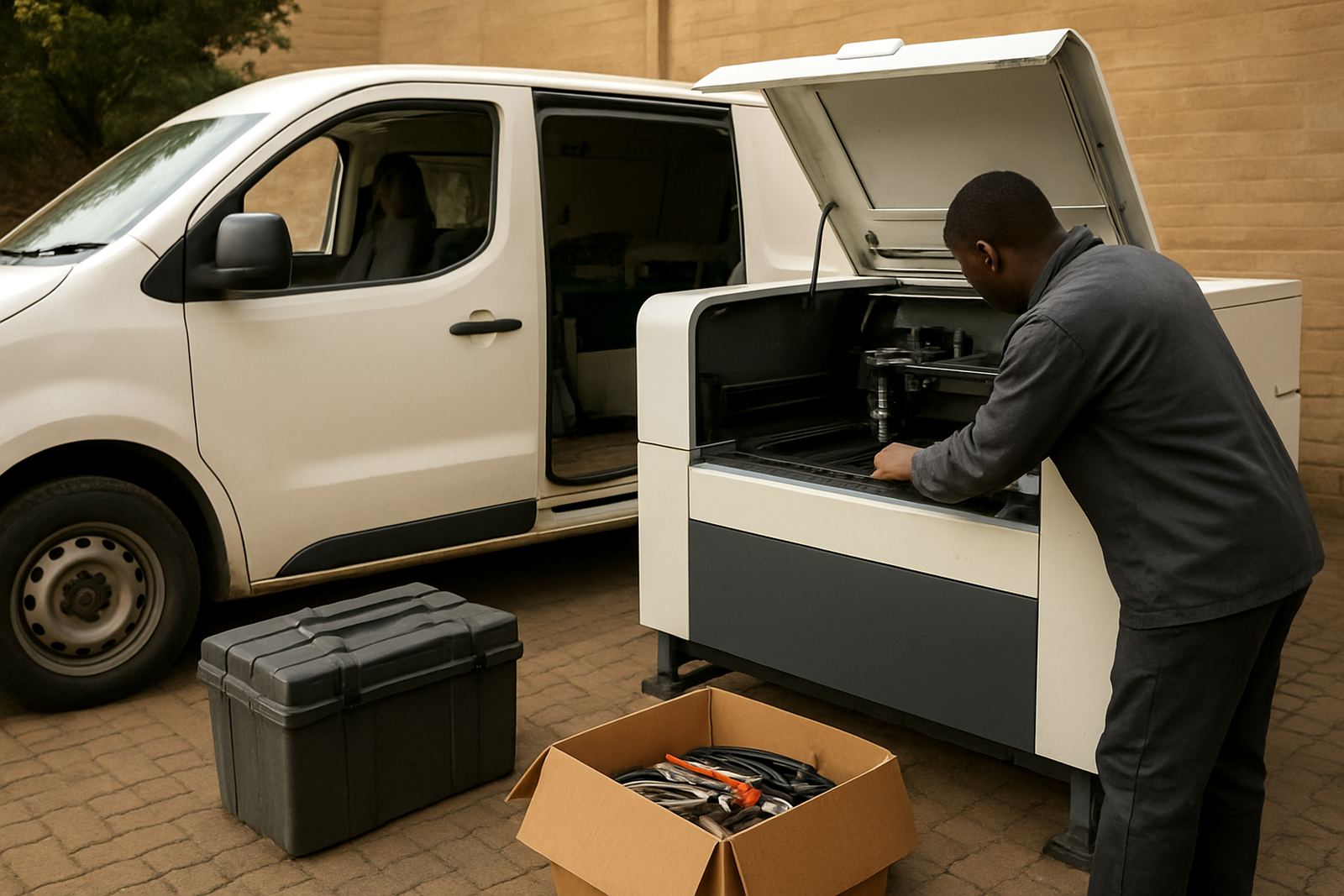
Older machine support is most effective when the technician can work both at the machine and in the workshop. Some problems are best handled on site, especially when the issue is alignment, pressure, or a head that needs immediate inspection after a collision. Other issues are better resolved on the bench where the full assembly can be stripped and tested properly.
Our repair work includes diagnosis, parts supply and return to service testing. We handle fibre and CO2 systems, and we support workshops across Johannesburg, Vanderbijlpark, Durban and Cape Town from our Boksburg base. Where the machine allows it, we also do a final pressure test and a return to service test before the machine goes back into production.
- Lens replacement and protective window replacement
- Sensor ring service and ceramic holder change
- Internal cleaning and gas path service
- Head alignment check and bench pressure test
A local example from a busy fabrication shop
A fabricator in Ekurhuleni came in with an older fibre machine that still had a good frame but was giving rough edges and repeated head alarms. The operators had already changed a few consumables, but the fault stayed. On inspection we found collision damage, a worn nozzle seat and a contaminated optical path. The machine had also been sitting through a few load-shedding cycles, which made the restart pattern worse.
After the head was stripped, cleaned and rebuilt, the nozzle seat was restored, the window and lens were replaced and the head was aligned again. The machine went back into service with steadier cuts and less rework. It was not a full rebuild, just the right repair in the right place, which is what most older machines need.
Planning repairs around production, not around panic
Older machines are easier to live with when you plan around them. That means setting aside time for inspection, keeping a small stock of consumables and knowing when to stop running the machine before a minor issue becomes a major one. It also means using service support that understands workshop pressure and does not waste your shift on guesswork.
If your machine is still useful but it is starting to need more attention, the best next step is to get it checked properly. That gives you a clear view of what can be repaired, what should be replaced, and how long the machine can keep earning before the next service interval.