
When a field call makes sense
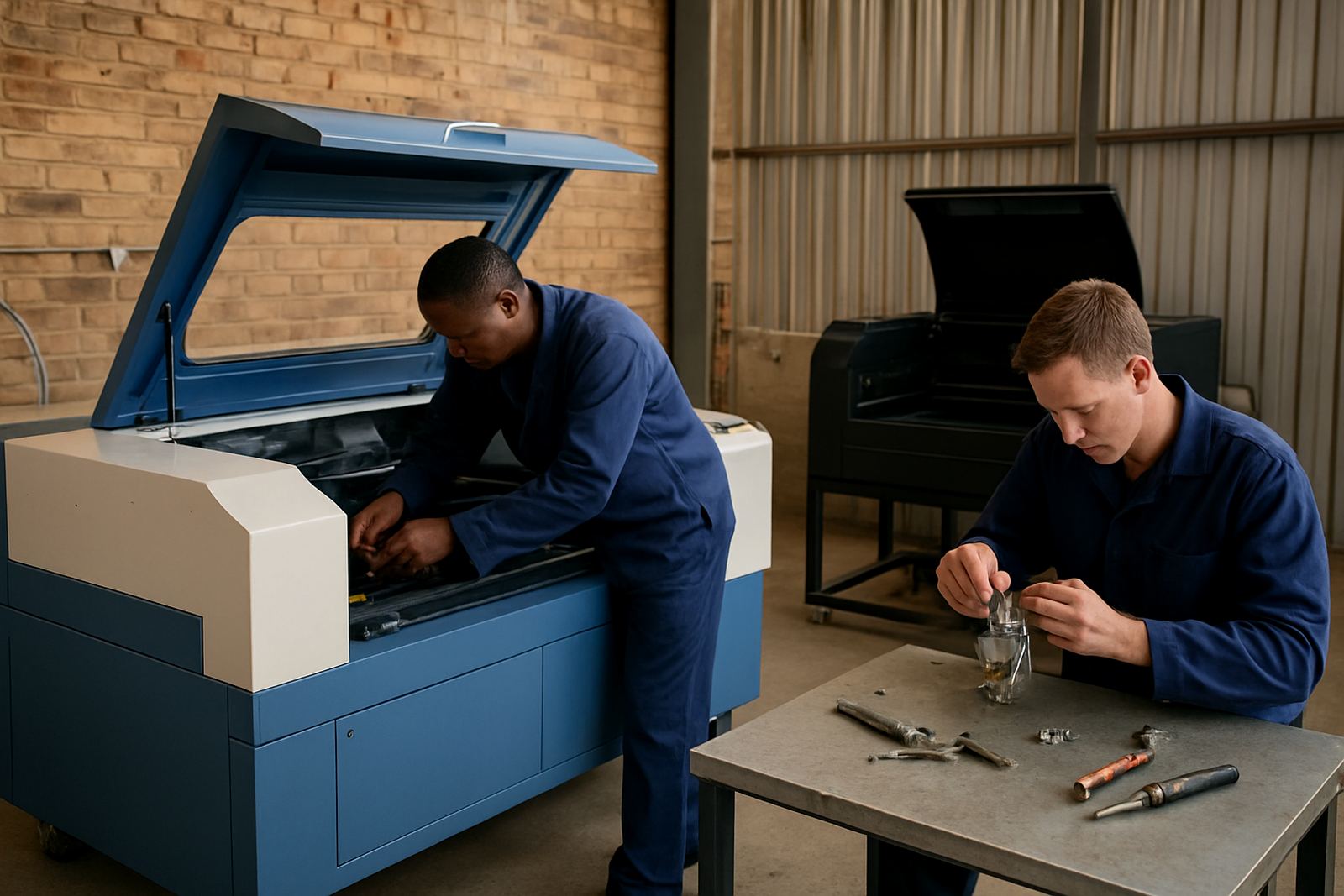
Field service is the right move when the machine is down for a clear, contained fault and the cutting head can be made safe without stripping the whole system. In Boksburg and the wider Ekurhuleni area, that often means a damaged nozzle, a failed protective window, a dirty lens, a sensor ring issue or a head that needs a careful alignment check after a light bump. If the machine is otherwise healthy and the problem is local to the head, a site visit can save a full day of lost production.
It also suits jobs where the machine is installed in a fixed production line and moving it would take more time than the repair itself. Signage shops, small fabrication yards and busy job shops often need the laser back in service quickly, especially when orders are stacked and the load-shedding schedule has already eaten into the shift. A field technician can assess the fault, carry out the basic repair and confirm whether the machine is safe to continue or if it needs bench work next.
- Lens, nozzle and protective window changes
- Sensor ring, ceramic holder and light service items
- Head alignment checks after minor knocks
- Internal cleaning where contamination is light
Repairs that usually belong on the bench
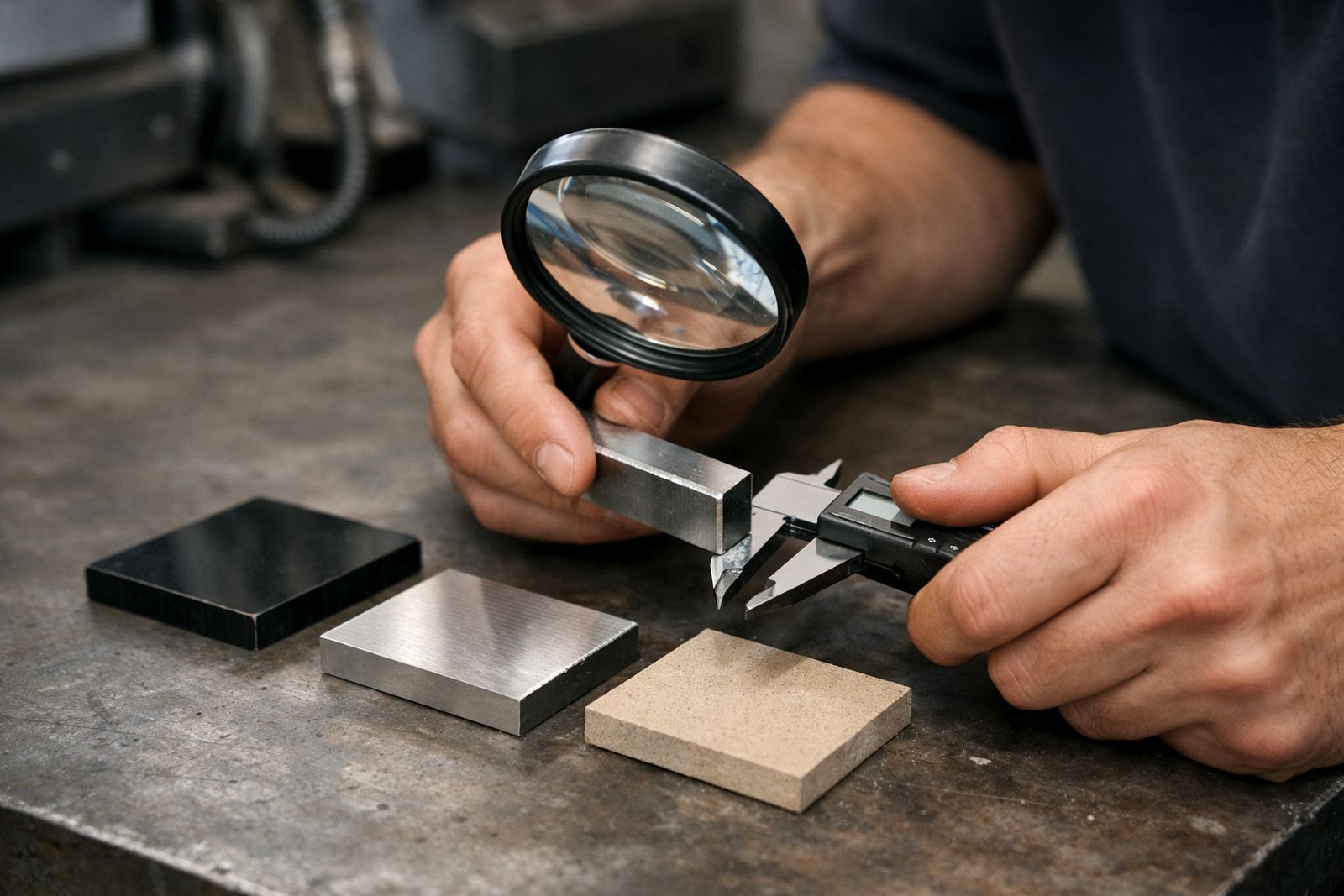
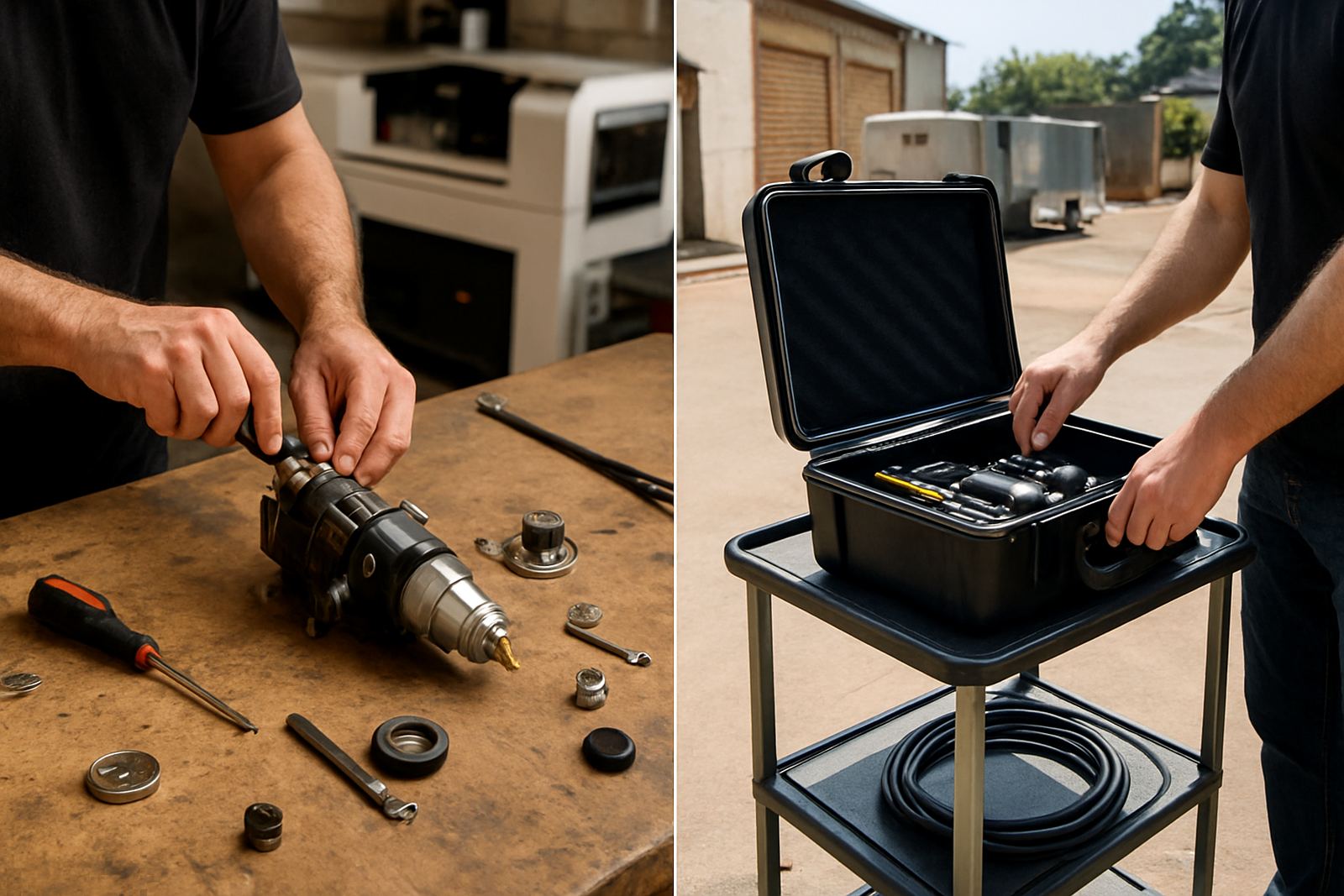
Some faults can be looked at on site, but they should not be finished there. Anything involving serious collision damage, a warped nozzle seat, recurring cut quality problems or pressure issues inside the cutting head is better handled on the bench where the technician can strip the unit properly. A bench repair gives space for strip and inspection, accurate parts matching and a proper return to service test before the head goes back into production.
On CO2 systems, and on fibre units too, the signs are often the same: cuts that start clean then trail off, burn marks on the edge, unstable pierce points, or repeated consumable failure after only a short run. These faults can point to hidden damage in the gas path, cracked internals or an optical stack that has shifted. Trying to patch that up at the machine can stretch the downtime out longer, not shorter.
- Collision damage repair after a crash or probe contact
- Nozzle seat restoration when the head no longer centres properly
- Lens replacement where the housing or stack must be checked
- Bench pressure test for gas path faults and leaks
- Return to service test before refitting
What field service can do without turning into a bigger job
A good field repair is about discipline. The technician should do only what can be checked, cleaned and confirmed on the spot without risking contamination or a rushed reassembly. That means opening the head only as far as needed, keeping the optical path clean and stopping if the fault points deeper. A quick patch that sends the machine back out of line for another failure is no help to a production manager trying to keep a shift moving.
At Laser Ray Tools, field work is aimed at practical recovery. That includes inspection, replacement of service parts and setting the head back to a working state where the cut can be verified. The aim is not to force every fault into a same-day fix. The aim is to get the machine stable again, and to say clearly when a bench repair will save time in the long run.
- Site diagnosis and fault isolation
- Consumable replacement and cleaning
- Basic alignment and function checks
- Advice on whether the unit should be removed for bench repair
Why the bench matters for fibre and CO2 heads
A bench gives the technician the one thing a busy workshop never has during a stoppage: proper working space. When a head comes in from Johannesburg, Pretoria, Vanderbijlpark, Durban or Cape Town, it can be opened, measured and tested without the pressure of machines waiting behind it. That matters with fibre heads because tiny misalignment can ruin cut quality, and with CO2 systems because contamination and heat damage often show up only after a full inspection.
Humidity on the coast, dust in industrial yards and power interruptions all affect laser equipment in different ways. In Durban, moisture can creep into housings and affect optics. In Gauteng, fine dust and shop grit can work their way into the head after a busy week. After load-shedding, start-up checks get skipped more often than anyone likes to admit. The bench is where those hidden faults are caught before they become another breakdown.
There is also the matter of verification. A proper bench pressure test and return to service test give a workshop confidence that the repair is not just neat, but actually fit for production.
A practical rule for choosing on site or off site
If the fault is visible, localised and the rest of the machine is behaving, a field visit is usually sensible. If the fault is repeated, internal or linked to cut quality that keeps coming back, send it in for bench service. That is the short version. In practice, the decision depends on the machine age, the state of the head, the parts on hand and how hard the line is being pushed.
A sheet metal shop in Germiston gives a good example. The operator reported poor edge quality after a minor head knock on a fibre cutter. The first visit identified a damaged nozzle and a tired protective window, which were replaced on site. But the cut still drifted under load. Once the head came back to the bench, the technician found a worn nozzle seat and contamination deeper inside. The bench repair cleared the issue and the machine went back out with stable output. If the team had kept chasing the fault on site, they would have lost another shift and likely another batch of parts.
- Choose site service for local, visible faults
- Choose bench service for repeat faults and internal damage
- Choose bench service when testing must be done under controlled conditions
- Choose site service when removing the unit would slow production more than the repair itself
How workshops can shorten downtime before the technician arrives
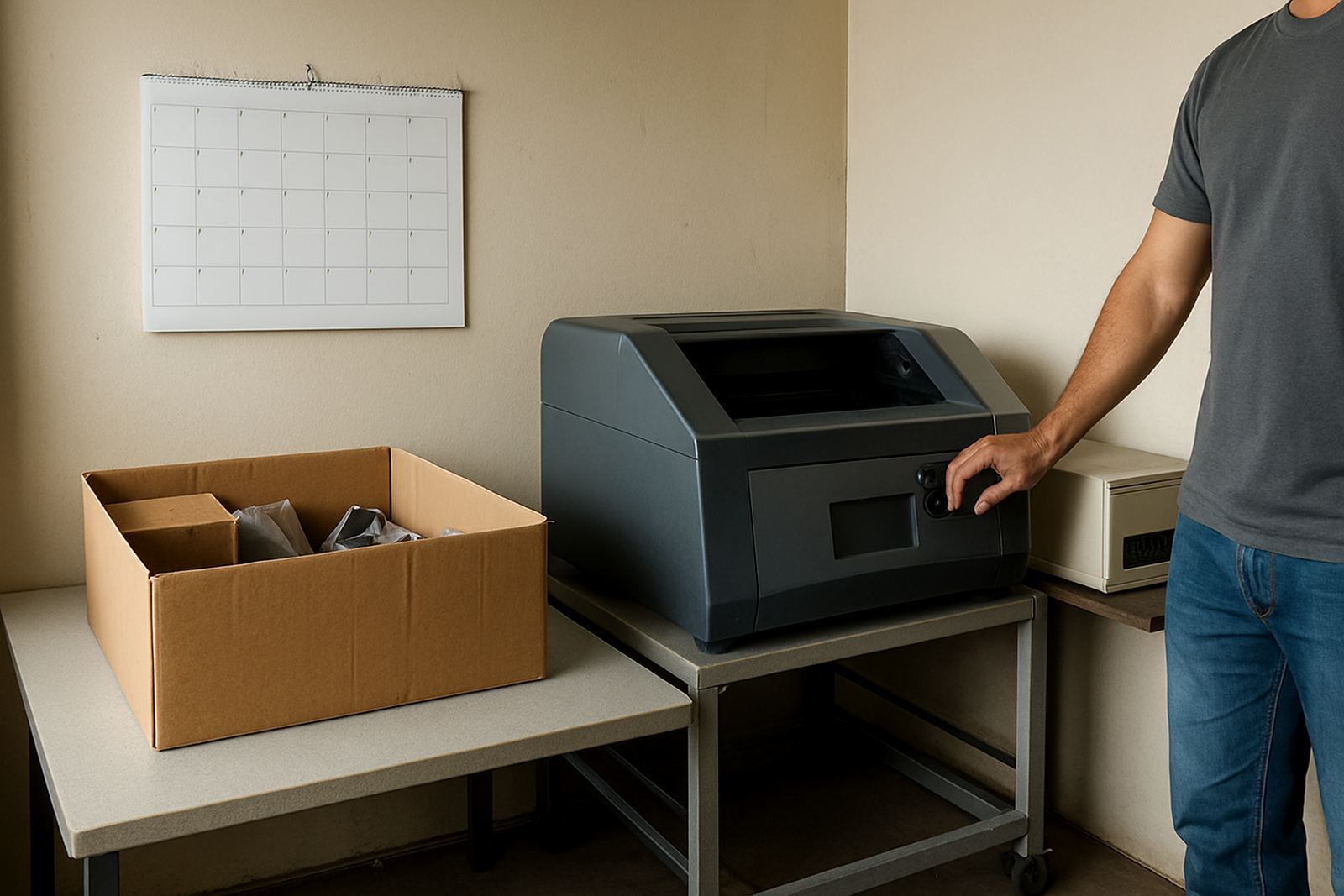
A site call goes faster when the workshop can give clear symptoms, cut samples and a simple fault history. Note when the problem started, what the material was, whether the machine was just restarted after a power dip and whether the fault is constant or intermittent. It helps too if the operator leaves the machine in a safe state, clears access around the head and keeps the relevant consumables nearby. Small things, yes, but they save time.
For workshops across South Africa, the main goal is not to guess the fault perfectly. It is to avoid the wrong kind of repair for the situation. A head that needs careful restoration should not be rushed on site just because the line is busy. A simple consumable change should not be turned into a full strip if the problem is already clear. That balance is where good field service earns its keep.
Laser Ray Tools works from Boksburg and supports workshops through the enquiry form on the contact page, with help for Johannesburg, Pretoria, Vanderbijlpark, Durban, Cape Town and surrounding industrial areas. The service is straightforward: assess, repair where it makes sense, and send the machine back only when it is fit to cut.