Why weekend failures hit harder than weekday faults
A laser machine that fails on a Friday afternoon can leave a workshop with a full order book and no cutting capacity until Monday. That is when the real cost starts showing, not only in lost production but in missed delivery dates, overtime planning and the pressure on staff who must explain the delay to customers.
Weekend breakdowns are usually more urgent because the machine has often been running hard all week. Dust build-up, worn consumables, alignment drift and heat stress can all show up after long shifts. In Boksburg and the wider Ekurhuleni area, many fabricators run late shifts to keep up with sign work, plate cutting and repeat parts, so a failure outside normal hours can knock a whole schedule off balance.
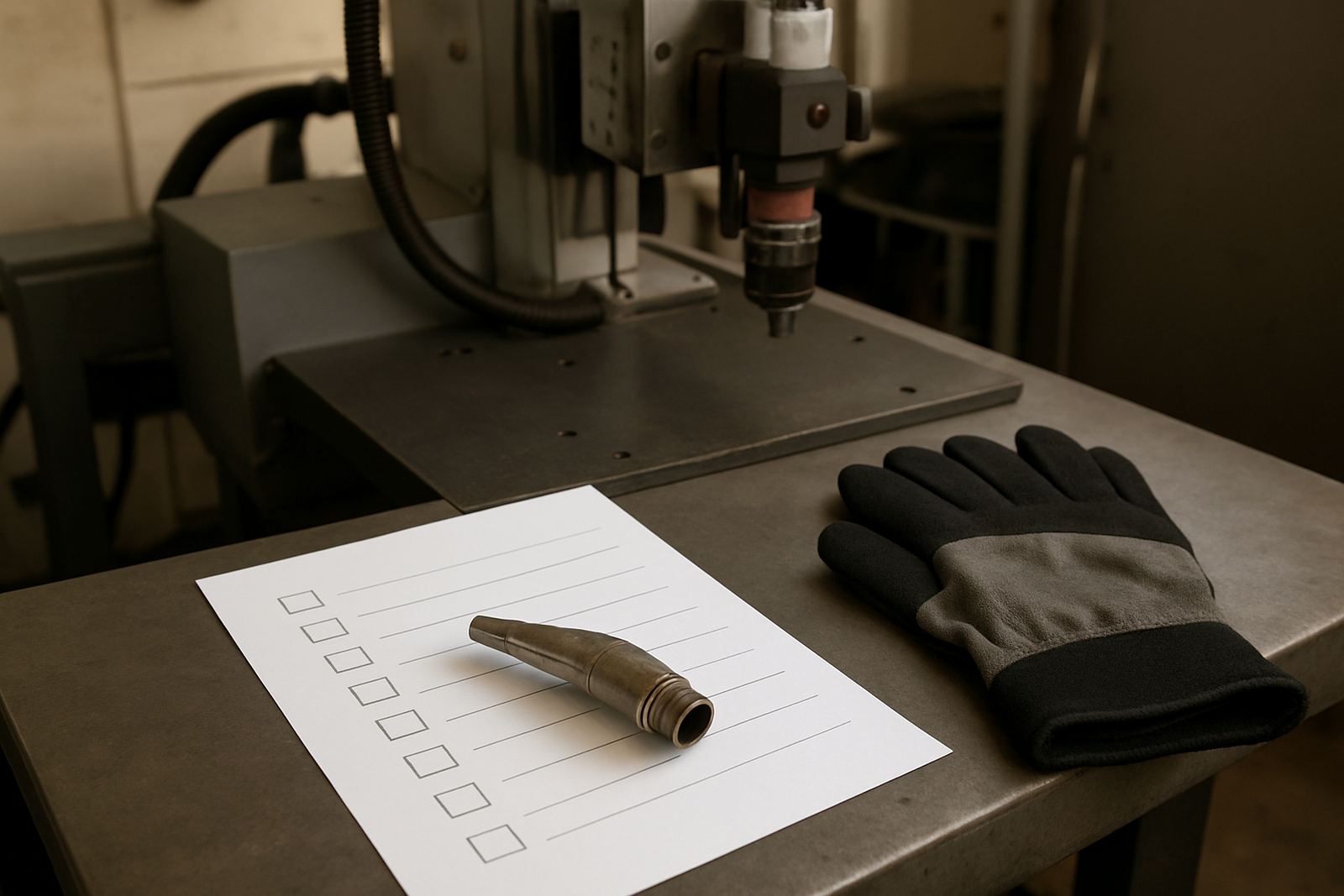
- Have the machine serial details and head model ready before calling for support.
- Keep a note of the last cut quality, alarm codes and any unusual noise or vibration.
- Isolate the machine safely and do not keep trying test cuts on a damaged head.
What to check before the technician arrives
Good weekend response starts with a simple inspection at the machine. If the fault came after a collision, check whether the nozzle is bent, the ceramic holder is cracked or the protective window has failed. If cut edges turned rough before the stop, the issue may be contamination, gas path trouble or a lens that is already past its best.
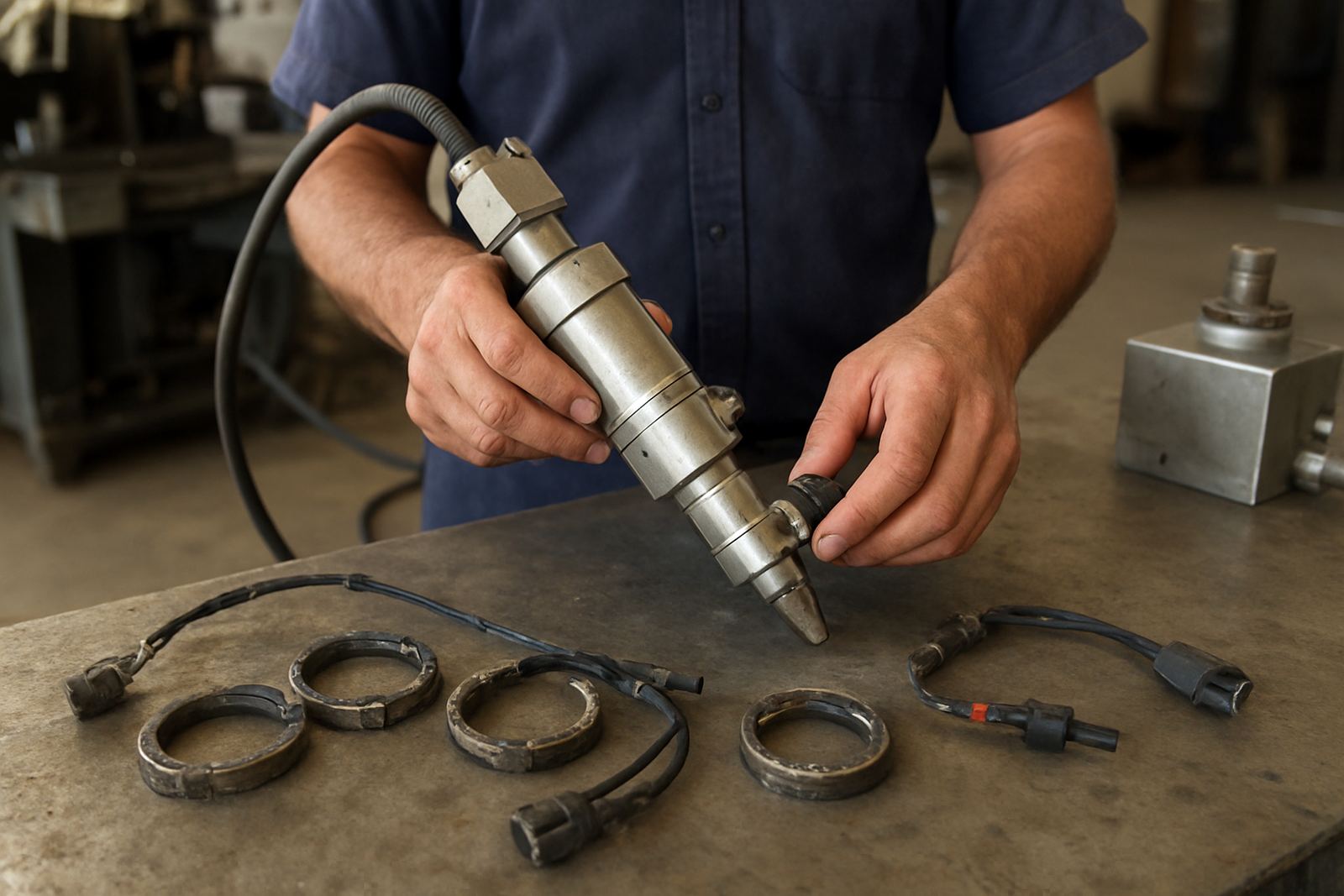
Power interruptions and unstable supply can also trigger faults, especially where load-shedding has been heavy or a generator changeover caused a spike. A machine that looked fine on Thursday can arrive on Saturday with an alarm from the cutting head, weak beam transmission or a sensor ring issue that needs proper bench testing.
- Switch off safely and lock out the machine before opening any covers.
- Do not wipe optics with cloths that leave fibres or residue.
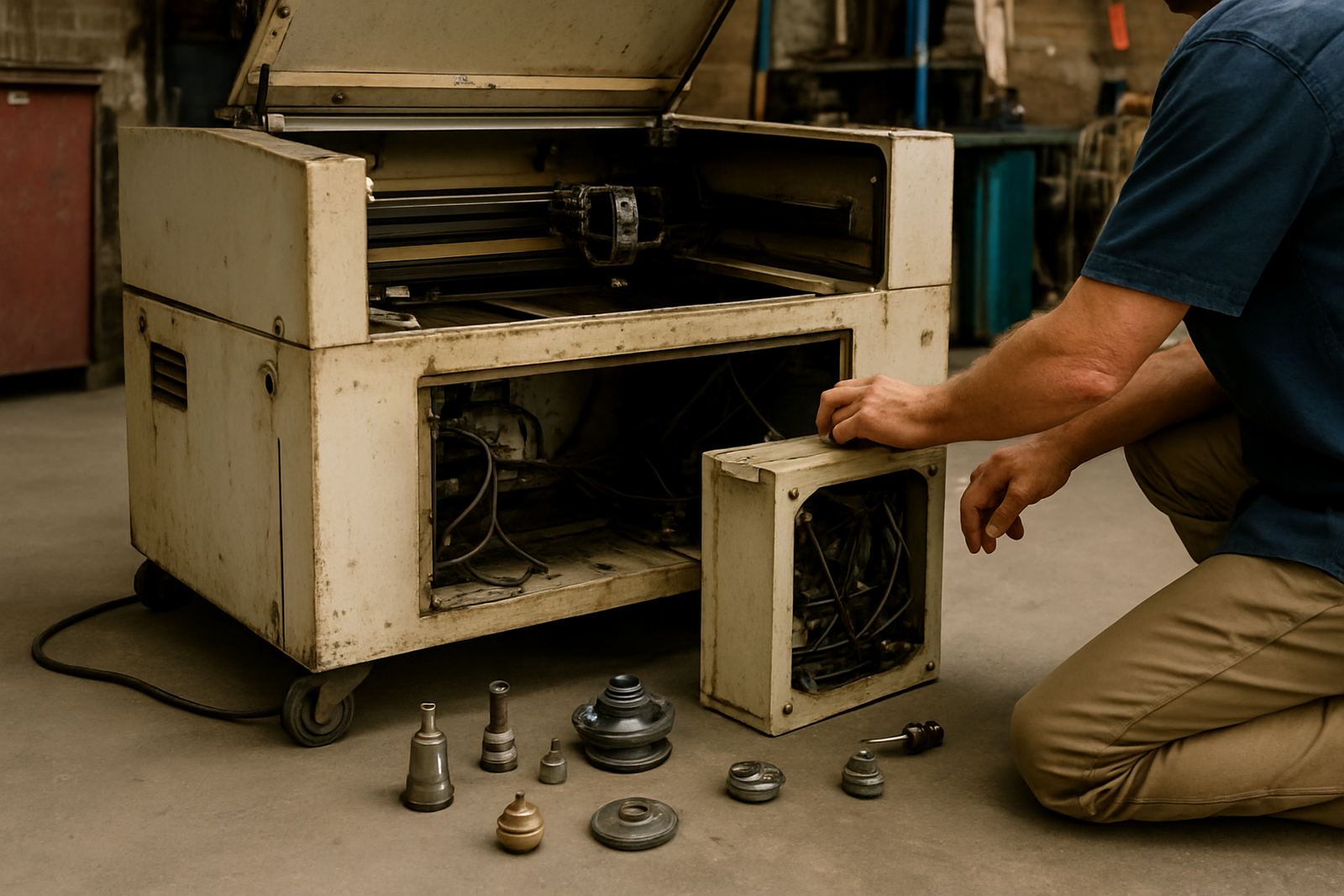
- Keep removed parts in a clean tray so nothing is lost on the floor.
Choosing on-site repair or bench work
Not every fault needs the cutting head to come into the workshop, but not every job can be sorted on site either. A quick sensor ring change or nozzle seat check may be handled at the customer’s premises, especially if the aim is to get one machine running again before the next shift. More serious collision damage, internal contamination or a poor pressure result usually needs bench repair and testing.
The key is to decide fast. If the head has suffered a hard impact, pushing it straight back into service can cause repeat damage and worse cut quality. A proper strip and inspection gives a clear view of what needs replacing and what can still be saved. That saves money and avoids the false economy of fitting parts one by one without checking the full head assembly.
- On-site work suits urgent checks, alignment confirmation and simple part changes.
- Bench work suits collision damage, internal cleaning, pressure testing and return to service testing.
- If the fault is unclear, diagnosis should come before any parts are ordered.
What parts usually fail after a hard stop
Weekend call-outs often point to the same set of wear items. Nozzles pick up damage from plate contact or slag. Lenses can be marked by heat, dust or poor sealing. Protective windows may cloud over after a flashback or a dirty gas path. Ceramic holders and internal seals can also suffer after a collision or if the machine has been running with poor air quality.
When these parts fail, the symptoms can look broader than they are. A shop may see poor pierce quality, dross on the lower edge or a beam that seems weak, when the real cause is a damaged window or a nozzle seat that no longer centres properly. That is why a careful strip and inspection matters more than guesswork, especially when the machine must be back in production by Monday morning.
For fibre and CO2 systems alike, the aim is the same: restore cutting-head performance, protect the source and keep repeat failures from coming back in the next shift.
A practical weekend plan for workshops in Gauteng and beyond
A plant in Germiston with one laser table cannot afford to wait for Monday if Saturday work is in the queue. The same is true for a signage shop in Johannesburg or a metal fabricator in Pretoria that promised parts for an assembly line. Good planning means having a breakdown contact process, a clean area for removed parts and a clear decision-maker who can approve repair work without delay.
For customers outside the immediate Boksburg area, speed also depends on how much information is ready when support is requested. Photos of the head, the alarm screen and the damaged nozzle help cut wasted time. If the issue is in Vanderbijlpark, Durban or Cape Town, accurate details make it easier to prepare the right parts and decide whether a field visit or bench repair is the better route.
- Keep a weekend fault log for each machine, even if it is only one page.
- Store common consumables such as nozzles, windows and lenses in a clean, dry cabinet.
- Train operators to stop a cut early if the sound, spark pattern or cut edge changes suddenly.
How Laser Ray Tools keeps urgent downtime short
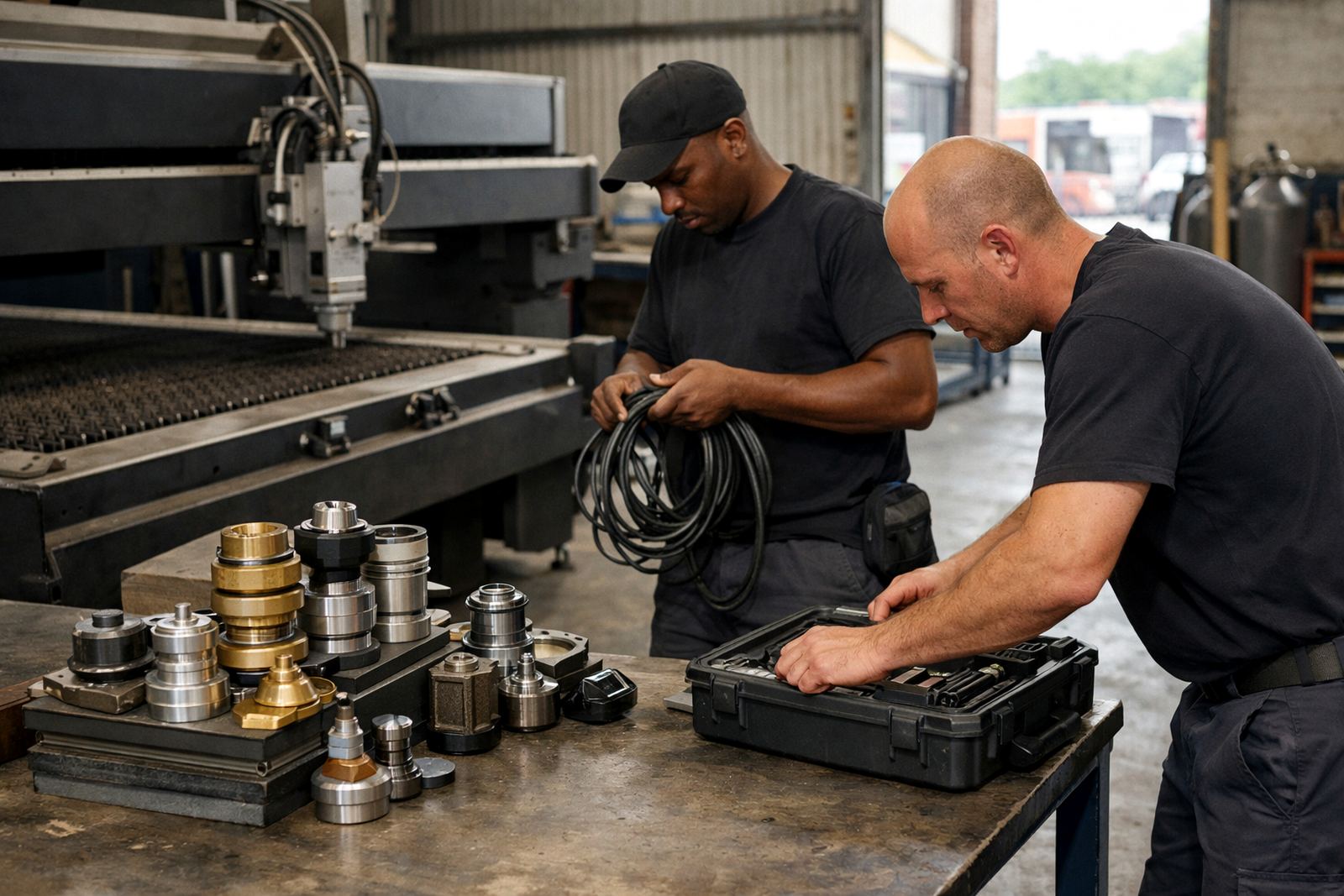
Laser Ray Tools handles urgent repairs for fibre and CO2 laser machines and cutting heads from the Boksburg base, with support across Johannesburg, Pretoria, Vanderbijlpark, Durban and Cape Town. The service approach is practical: diagnosis first, then the right repair path, then a proper return to service test so the machine is not handed back half checked.
The workshop and field teams handle strip and inspection, collision damage repair, nozzle seat restoration, lens replacement, window replacement, sensor ring service, ceramic holder change, internal cleaning, gas path service, head alignment check, bench pressure test and return to service test. That mix matters because a weekend fault is rarely just one thing. A collision can damage the nozzle, shift alignment and contaminate the optics all in one go, so the machine needs a proper look rather than a quick reset.
For local shops, the point is simple: when prodction stops on a weekend, the right response is fast and methodical. Fix the actual cause, protect the head and get cutting back with as little drama as possible.