
What a healthy cutting head should feel like during a shift
Most heads are designed to stay cool enough for steady work, even on long production runs. If the outside of the head is getting uncomfortably hot, or the cut starts drifting after a few sheets, something in the system is not right. Heat is usually a sign that the beam path, cooling or assist gas is being forced to work harder than it should.
In workshops around Boksburg and Germiston, we often see the same pattern. The machine starts the morning well, then by mid-afternoon the head is running hotter, the edge finish gets rough and the operator keeps trimming parameters to stay on spec. That is normally not a power problem alone. It can be a nozzle seat issue, a damaged ceramic holder, a contaminated lens stack, or a cooling fault that only shows up once the machine has been working for hours.
Once heat starts to build, the head stops behaving like a precise tool and starts acting like a stressed part. The job still runs, but only just.
The main reasons heads run hot on fibre and CO2 machines
There is rarely one single cause. More often, heat comes from a chain of small faults that add up. Dirty optics make the beam work harder, worn seals let contamination in, and poor alignment sends extra energy into places it should never go. On CO2 systems, cooling and airflow faults can make this worse because the head never gets a proper chance to shed heat.
Common causes include:
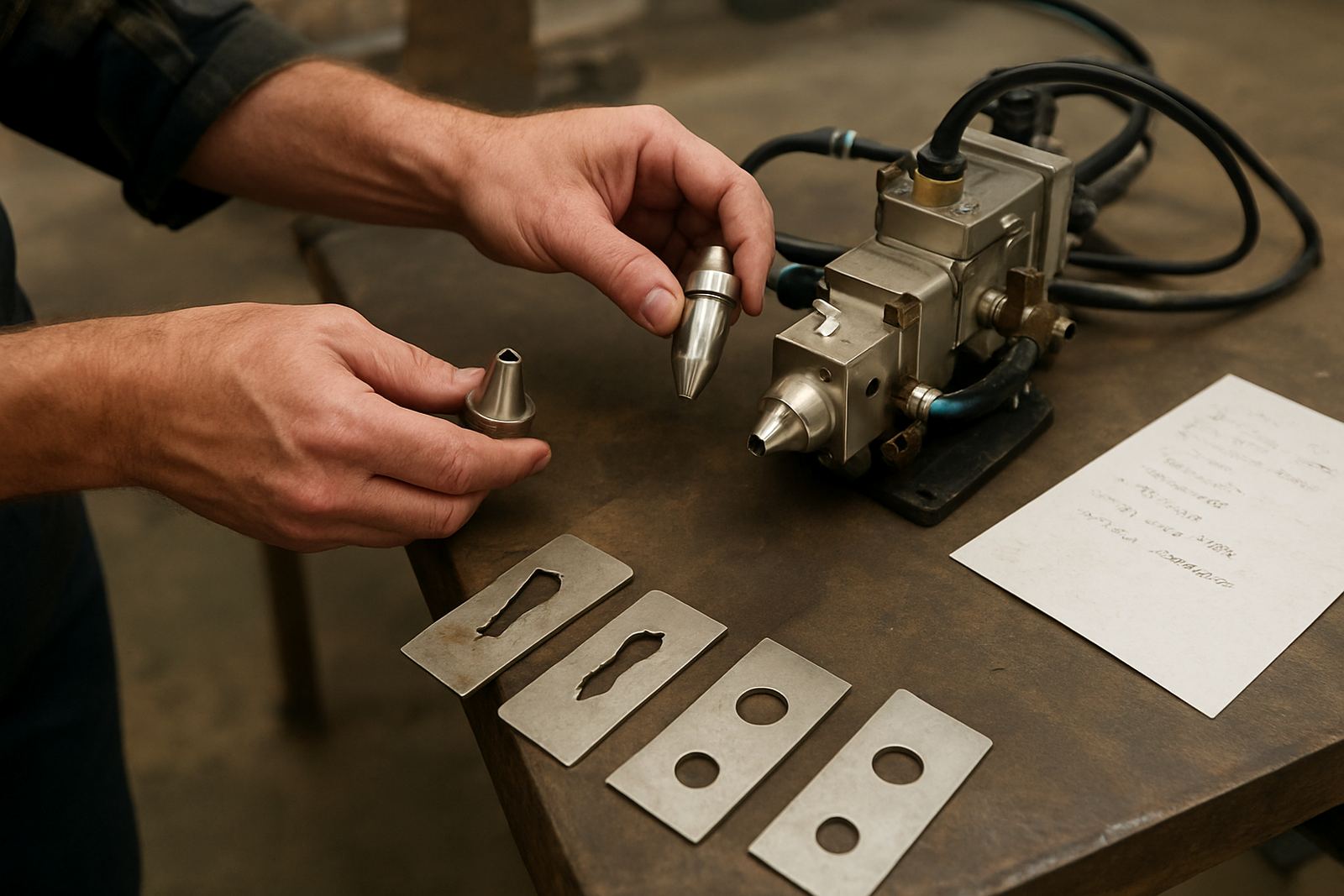
- Blocked or incorrect nozzles that disturb gas flow
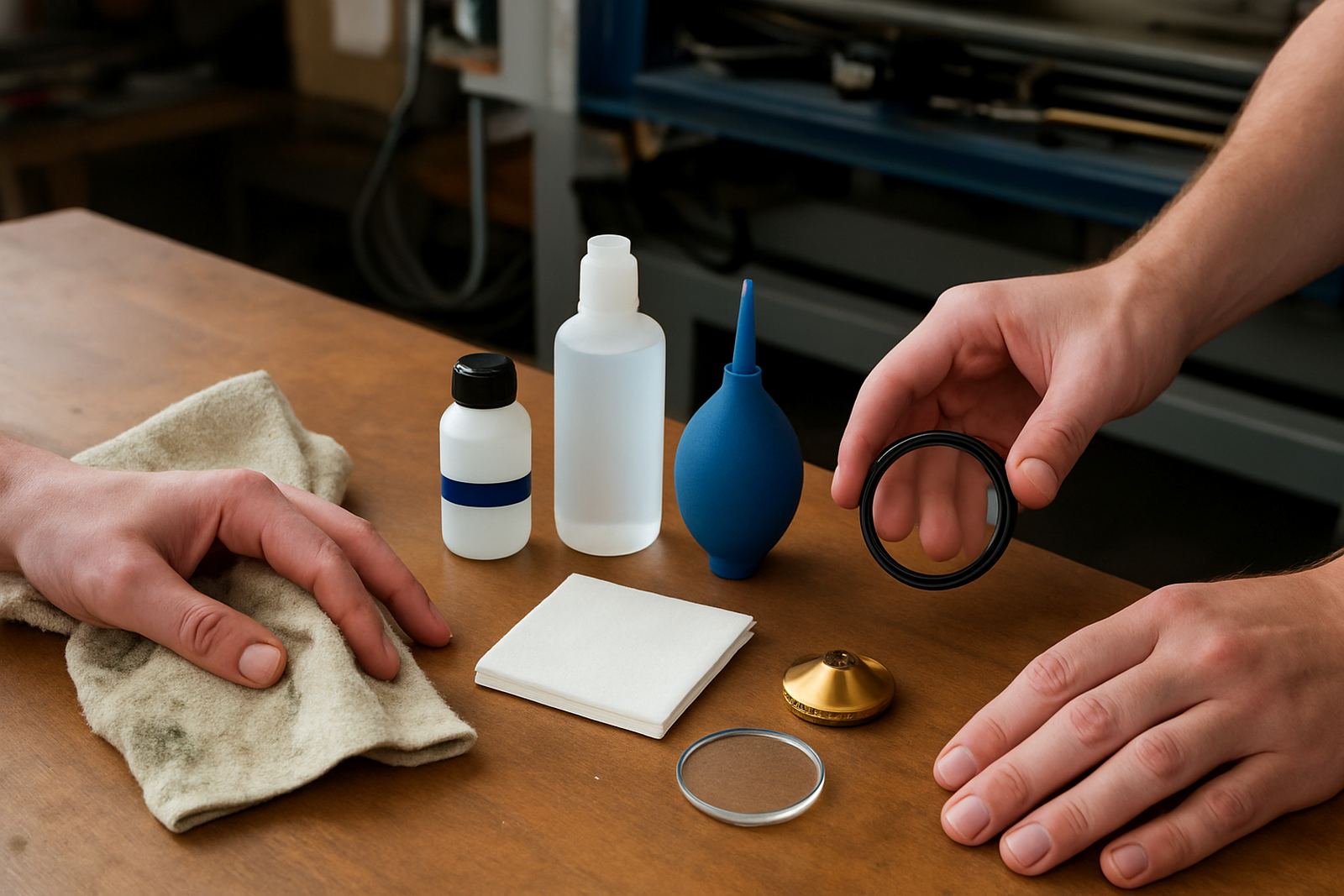
- Lens contamination from dust, dross or vapour
- Damaged protective windows that absorb heat instead of passing the beam cleanly
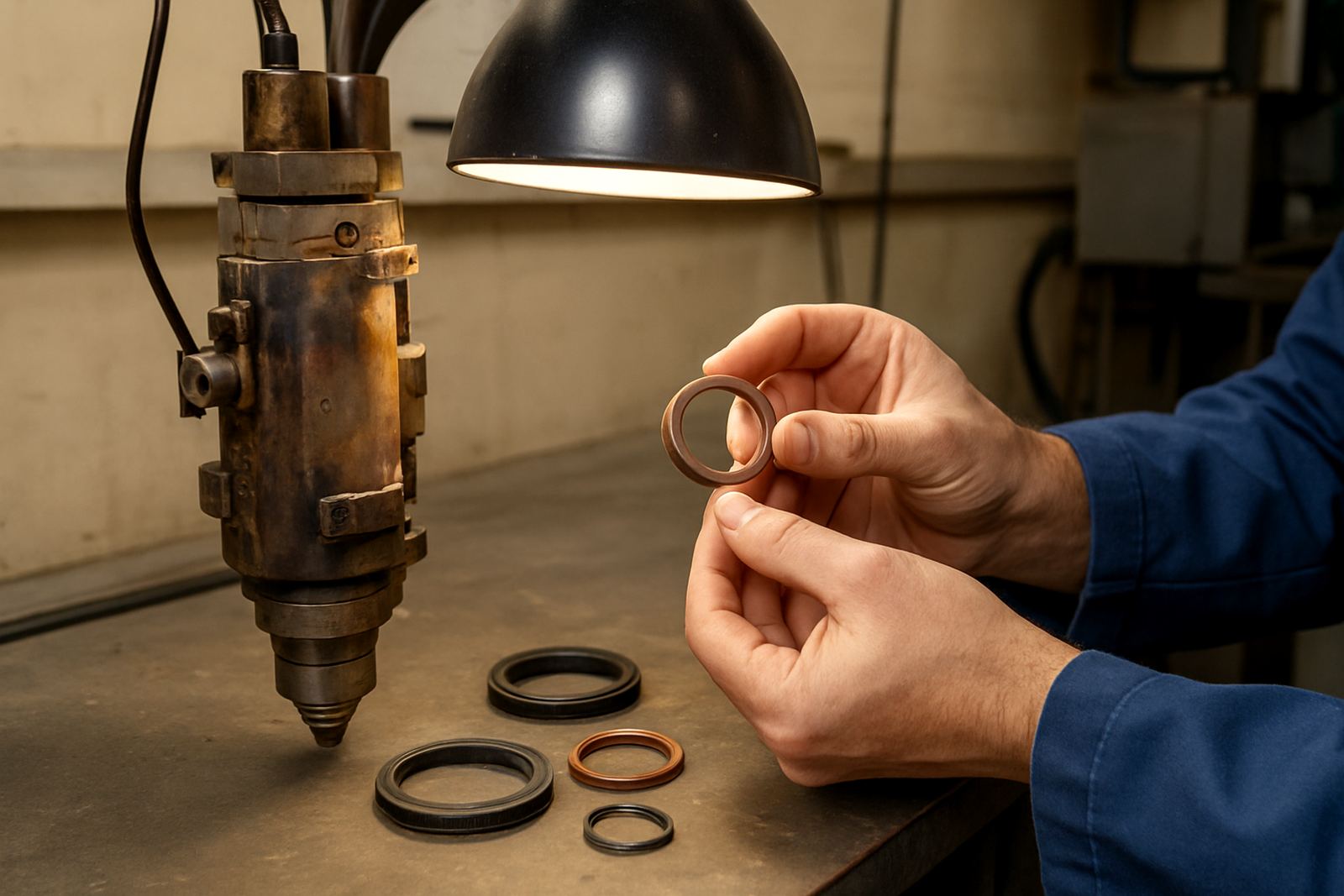
- Wear around the nozzle seat or ceramic holder
- Head collisions that shift alignment by a small but important amount
- Insufficient cleaning inside the head, especially on dusty sites
- Cooling issues, including poor water quality or low flow
A lot of these faults are hidden until the machine has been cutting for a while. That is why a quick visual check is not enough. A head can look fine and still be running hot because the beam is fighting through residue or a slightly out of true optical path.
How excess heat damages optics, seals and accuracy
Heat does not only make the head uncomfortable to touch. It changes how the machine cuts. The first part to suffer is often the protective window. Once it starts taking too much thermal load, it can haze, pit or craze. Then the lens follows, because a dirty or stressed window sends more rubbish down the line and the lens picks up the damage.
Seals and internal parts also take a knock. Rubber and polymer parts harden faster, small gaps open up, and the gas path becomes less controlled. That affects kerf quality, piercing and edge finish. If the head is already slightly misaligned, the extra heat can make the problem worse by shifting parts just enough to change the cut.
This is where many shops lose time. They keep changing settings to compensate for heat when the real answer is a mechanical fault inside the head. In practical terms, that means more rejects, slower cycle times and more wasted sheet. On a busy fabrication floor, even a small drop in head performance can back up the whole cutting queue.
What operators can watch for before the head fails
Operators usually notice the warning signs before a complete breakdown. The trick is to act on them early, not after the head has taken a hard hit or the lens has been cooked. A head that overheats will often give a few clues first.
- Cut edges start turning yellow, rough or inconsistent
- More spatter builds up around the nozzle
- Piercing takes longer than normal
- The machine needs repeated focus changes
- The head smells hot or feels hotter than usual after a run
- Assist gas behaviour sounds irregular or weak
If those signs show up, stop treating it as normal wear. Check the nozzle condition, inspect the protective window and look for contamination inside the head. On some sites, especially where mild steel dust and fine grit are always in the air, it pays to inspect more often than the service interval suggests. Dust plus heat is a bad mix.
Load-shedding can also add risk. When a machine is stopped and restarted often, condensation, dust and thermal cycling can put extra strain on seals and optics. That is one reason regular checks matter so much in South African workshops.
Why a collision can leave a head running hot even if it still cuts
After a light collision, a head may keep cutting for a while and still be badly compromised. The beam path can be slightly off centre, the nozzle seat can be bruised, and a ceramic holder can crack without falling apart straight away. Once that happens, the head can run hotter because the beam and gas flow are no longer where they should be.
We see this often in job shops and metal fabricators that run fast turnarounds. One small knock during sheet loading or part drop-off is enough to start a problem that only shows up later. The machine might finish the shift, then start overheating on the next run because the damaged part is building friction, contamination or reflection in the wrong place.
That is why collision damage repair has to be more than a quick visual check. A proper inspection should include:
- Strip and inspection of the head assembly
- Nozzle seat restoration where needed
- Lens replacement or window replacement if heat has already marked them
- Head alignment check
- Bench pressure test before it goes back to the machine
When the damage is caught early, the repair is usually simpler and far less expensive than replacing the whole head.
A Boksburg example that shows the real cost of running hot
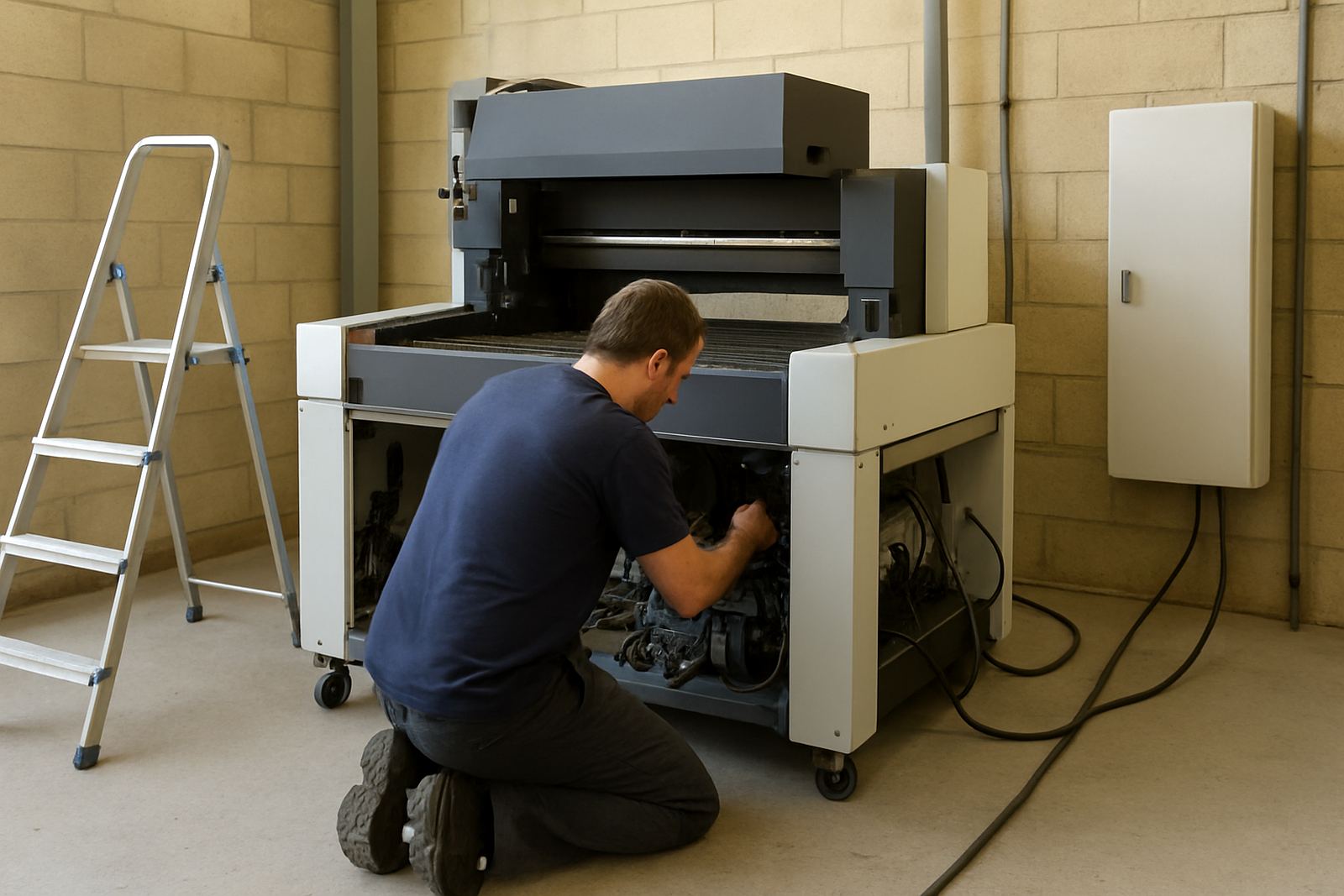
A fabricator in Boksburg recently called in with a fibre machine that was still cutting, but the head was getting very hot by lunchtime and the edge quality was sliding. The team had already changed settings a few times and cleaned the outside of the head, but the issue kept coming back. On inspection, the protective window was heat stressed and the nozzle seat had wear from a previous minor collision. The gas path was also carrying fine debris from the workshop floor.
After a full strip and inspection, the damaged parts were replaced, the internal cleaning was done properly, and the head went through a return to service test. The machine came back to steadier cutting, with less spatter and a more even edge finish. More importantly, the workshop stopped chasing the same fault from one shift to the next.
That is the practical lesson: a hot head is usually telling you something. Ignore it and the optics suffer, the seals harden and the downtime gets longer. Deal with it early and the machine stays useful for much longer.
What a proper repair should include before the machine goes back to work
There is no value in sending a head back out if it has not been checked under proper working conditions. A good repair should do more than swap a single part. It should confirm that the whole cutting head is ready for production again and not just temporarily behaving.
A thorough service normally includes diagnosis, parts supply, bench repair or on-site repair where suitable, and a final test that checks pressure, alignment and cutting performance. If the head has been repaired after heat damage, it is especially important to confirm that the gas path is clean and the optics are sitting correctly. That saves another shutdown next week.
For workshops in Johannesburg, Pretoria, Vanderbijlpark, Durban and Cape Town, the aim is the same: keep the machine earning and keep the downtime short. Heads overheat for reasons that can be found and fixed. The sooner they are opened up, inspected and put right, the better the odds of keeping the rest of the machine in good condition.