Why aluminium cutting punishes weak laser setup
Aluminium reflects more than mild steel and it reacts fast when the beam is not centred or the assist gas is off spec. That is why many workshops in Boksburg, Johannesburg and Pretoria only notice a problem once the edge starts to dross, the cut face goes dull, or the machine begins stopping on alarms. In a busy shop, that can mean rework on 3 mm sheet one hour and scrap on 6 mm plate the next.
For aluminium cutting operations, the laser head has to stay clean, aligned and free from heat damage. A small knock, a worn nozzle or a cracked protective window can throw the cut off enough to cause flare-ups, poor corner quality and inconsistent pierce results. Our team repairs that kind of fault on the bench or on site, so you are not left guessing whether the issue is optics, gas path or a collision mark inside the head.
Typical equipment in an aluminium cutting shop
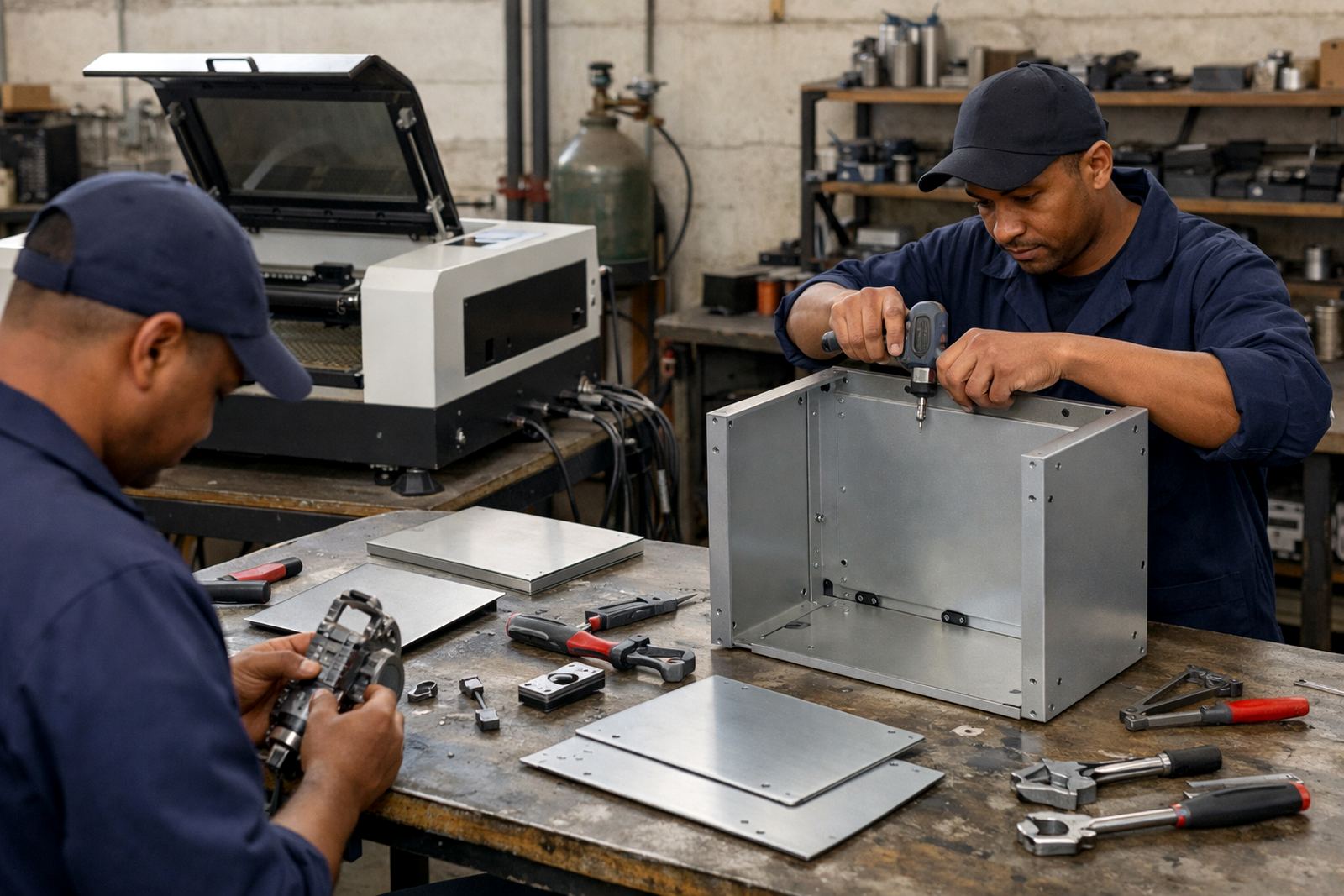
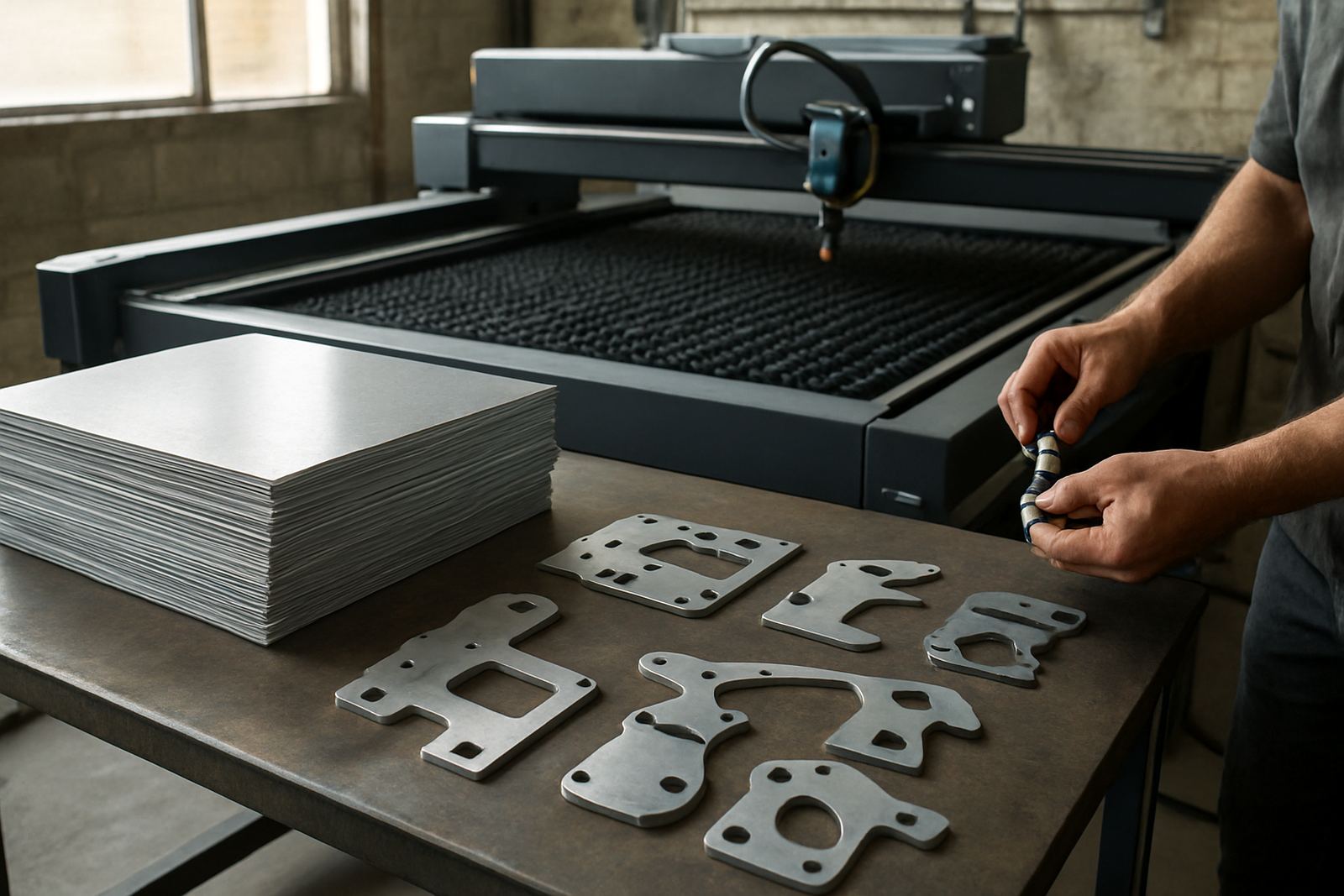
Most aluminium cutting shops use a fibre laser cutter for sheet work, with CO2 systems still found in some mixed workshops and older plants. The usual set includes a cutting head, chiller, gas delivery line, height sensing, nozzle set, lenses, protective windows and a motion table sized for 1 500 x 3 000 mm or 2 000 x 4 000 mm sheets. Some firms also run a separate machine for nesting thinner sheet and another for heavier plate work.
When a laser head has repeated faults, the issue is often not one part alone. A bent internal carrier, worn ceramic holder, dirty lens stack or damaged sensor ring can all show up as the same poor cut. We inspect the full head assembly, check the gas path and test the return to service before the machine goes back into production.
- Fibre or CO2 cutting machine
- Cutting head with nozzle, lens and window stack
- Chiller and gas supply
- Height sensing and sensor ring components
- Work tables for sheet, offcuts and profile packs
- Loading gear for aluminium sheets and bundles
How to plan the cutting area for less downtime
Aluminium cutting shops do best when the machine area is kept dry, clean and easy to service. In coastal towns like Durban and Cape Town, humidity can shorten the life of windows and optical parts if the machine room is left open or dusty. In Gauteng, fine dust from fabrication, grinding and forklift traffic tends to collect in the head and around the gas fittings. Good housekeeping saves parts and time.
Leave enough space around the machine so technicians can remove the head, check the beam path and work without lifting awkwardly. Keep consumables within reach but away from heat and swarf. If your workshop runs load-shedding, plan for safe shutdowns, stable power back-up and a restart routine that checks pressure, alignment and alarms before cutting starts again. The goal is simple: less wasted sheet and fewer stoppages.
- Keep the cutting bay closed where possible to limit dust and moisture
- Store nozzles, lenses and windows in sealed containers
- Separate grinding and welding stations from the laser area
- Check compressed air or assist gas quality before each shift
- Allow access for bench repair, not only machine operation
Common faults we see on aluminium cutting machines
Shops that cut aluminium often call after a collision, a failed pierce or a sudden change in edge quality. One day the machine cuts well, the next day it starts leaving burrs, showing heat marks or failing to pierce cleanly on thin sheet. In many cases the head has taken a bump, the nozzle seat is damaged, or the lens and window have taken too much heat and contamination.
We handle strip and inspection, collision damage repair, nozzle seat restoration, lens replacement, window replacement, sensor ring service, ceramic holder change, internal cleaning, gas path service, head alignment check, bench pressure test and return to service test. That means the machine is checked as a working unit, not just as loose parts on a bench. If the cut is still not right after cleaning and part replacement, we look deeper at alignment and gas delivery. Usually the fault is found there.
Budget ranges for repair and upkeep in Rand
Every job is different, but aluminium shops need a working budget for regular wear parts and unscheduled repairs. Small service items such as nozzles, seals and cleaning can run from about R850 to R3 500 depending on the head type and what needs replacing. A more detailed bench repair with inspection, optical parts and pressure testing can sit in the R4 500 to R12 000 range, while collision damage or a full head rebuild may move higher if parts are badly worn.
For production shops in Johannesburg, Vanderbijlpark and Durban, it is wiser to keep a monthly service allowance than to wait for a full stoppage. A single bad week on aluminium can cost far more in scrap, overtime and missed delivery than a planned repair. If your operation runs tight margins, we can help you choose the right level of intervention for the fault and the machine condition, so you do not overspend on parts you do not need.
- Minor consumable replacement: about R850 to R3 500
- Bench inspection and standard repair: about R4 500 to R12 000
- Collision or major head damage: often above R12 000
- On-site diagnosis can reduce unnecessary strip-down time
How our Boksburg team supports aluminium cutters nationwide
Laser Ray Tools is based in Boksburg, Ekurhuleni and supports aluminium cutting shops across South Africa, including Johannesburg, Pretoria, Germiston, Kempton Park, Vanderbijlpark, Durban and Cape Town. Some customers send the head or machine component to the workshop for a bench repair, while others need a field technician on site to stop a line from sitting idle. We work with job shops, signage plants and metal fabricators that need reliable laser uptime.
Our service team is led by Sibusiso Mthembu, with Johan van Rensburg handling senior technical work, Lerato Ndlovu coordinating service, Ayesha Khan managing parts and stores, Thabo Molefe on field service, and Megan Naidoo in workshop administration. If your aluminium cutting work is slowing down because of a faulty head, contact us through the enquiry form on our contact page. We will advise on the next step, whether that is diagnosis, parts supply or repair on site. No fuss, just practical support that keeps the machine working.