Why enclosure work puts extra pressure on the laser
Electrical and control enclosures leave very little room for error. A slot that is 0.5 mm off can throw out a hinge line, door gap or gland plate fit, and once the job reaches powder coating or assembly, the cost of a bad cut rises fast. Workshops in Boksburg, Johannesburg and Pretoria often run mixed batches of mild steel, stainless steel and aluminium, so the cutting head has to stay true across different thicknesses and sheet conditions.
When a fibre or CO2 machine starts leaving dross, taper or inconsistent pierce points, enclosure makers feel it immediately. Holes for cable glands, louvers, vents and mounting points need consistent size, and edge quality matters because many panels are bent, sealed or gasketed after cutting. A small head collision, worn nozzle seat or damaged protective window can create repeat faults that show up as poor fit on the brake press or during final assembly.
Typical laser setup for enclosure fabrication
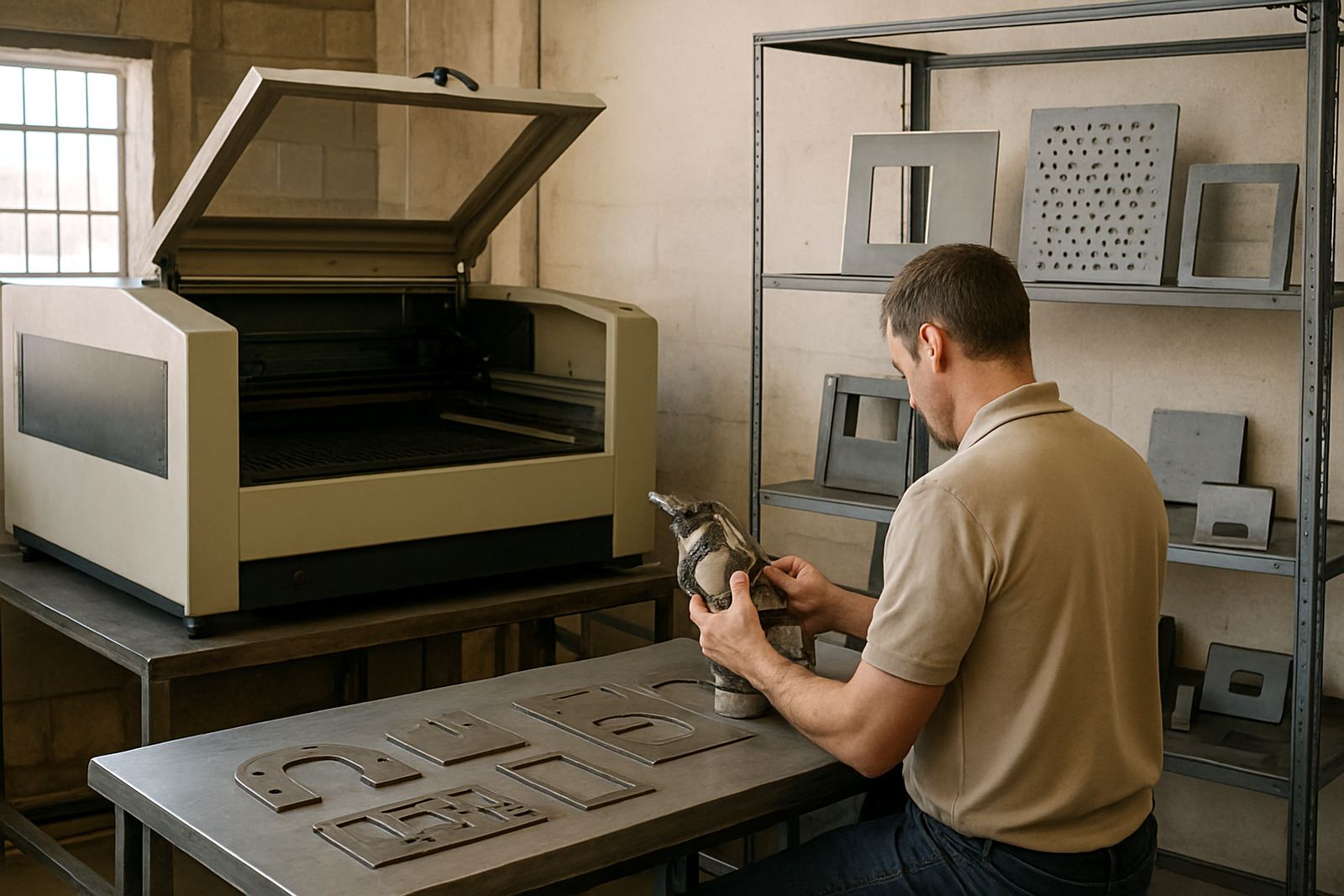
Most enclosure shops use a mix of flat-sheet cutting and secondary processes, with the laser feeding punch-free panel work, service doors and internal brackets. A typical set-up may include a fibre laser for faster cutting on mild steel and stainless, plus CO2 where older sheet programmes or certain edge finishes still need it. The head condition, gas path and lens stack must be kept clean because enclosure work often runs lots of small perforations, tight corners and repeated pilot holes.
- Fibre laser cutters for sheet metal panels, mounting plates and bracket work
- CO2 laser systems for mixed workshop production or older job files
- Cutting heads with nozzles, lenses, protective windows and ceramic holders
- Compressed gas supply, pressure control and clean lines for assist gas stability
- Material handling for flat sheets, offcuts and nested panel batches
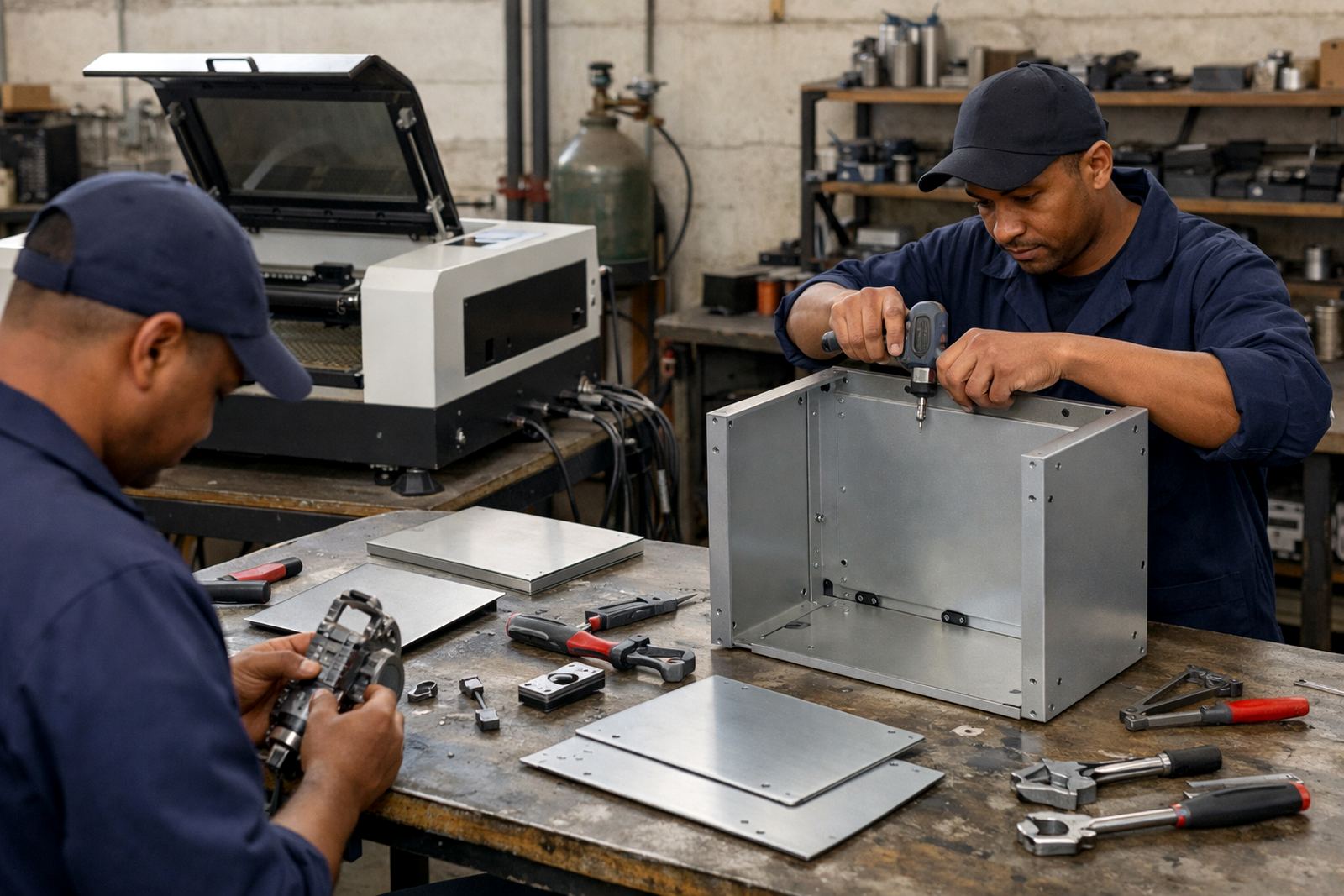
On the support side, Laser Ray Tools handles strip and inspection, collision damage repair, nozzle seat restoration, lens replacement, window replacement, sensor ring service and internal cleaning. That combination helps when a machine is still running but the cut quality is drifting, which is often the first sign of wear.
Layout and planning advice for repeatable panel runs
Good enclosure cutting starts before the sheet goes onto the bed. If the workshop is set up for frequent panel sizes, it helps to keep a clear loading zone, a safe offload path and enough space for labelled sheet stacks. In Ekurhuleni, where many teams work around tight floor plans and shared yards, it is worth planning for the movement of full sheets, finished panels and scrap without crossing the same route every time.
For repeatable work, separate your common jobs into standard nests, and keep the machine area clean around the head and rail system. Dust, oil mist and fine offcut particles can build up quickly in a fabrication shop, especially near the coast in Durban or Cape Town where humidity can also affect stored consumables. A daily wipe-down and weekly inspection can prevent a simple contamination issue from becoming a costly cutting fault.
- Keep common panel sizes grouped by thickness and material
- Mark separate bays for raw sheet, in-process work and finished parts
- Allow space for safe head access during inspection and cleaning
- Store lenses, nozzles and windows in sealed, dry containers
- Plan maintenance around production peaks so downtime stays short
Common mistakes that cost enclosure makers time and money
One of the biggest mistakes is assuming a poor cut is only a programme issue. In many cases the file is fine, but the head has taken a knock, the nozzle seat is worn, or the protective window has contamination that changes the beam path. Another common issue is leaving small faults until they become a full stoppage, which is how a short maintenance job turns into a lost shift and a late delivery.
Another trap is not matching the support method to the fault. A simple lens change might be enough for one job, while another machine needs bench pressure testing, head alignment checking and a return to service test after a collision. Shops sometimes replace consumables in isolation without checking the gas path or sensor ring, so the same problem comes back on the next batch. That creates avoidable scrap, and it is frustrating when you are trying to keep enclosure schedules on track.
For Cape Town, Durban and other humid areas, storage matters too. Spare optics and delicate parts should not sit open on a shelf near sanding or welding dust. If you run a busy enclosure line, a small parts cabinet and a clean handover process save real money over a year.
What repair and service usually cost in Rand
Enclosure makers usually want a realistic budget before they approve a call-out or bench repair. Costs vary by machine age, head type, damage level and whether the fault is on site or needs workshop time in Boksburg. As a working guide, a basic diagnostic visit may start from around R950 to R2 500, while bench inspection and strip-down work can move into the R2 500 to R6 500 range depending on what is found.
Consumable and component replacement changes the picture further. A nozzle or sensor-ring service can be relatively modest, but a collision repair with lens replacement, window replacement and alignment checks can run from about R4 500 to R18 000 or more. Major damage, especially after a hard crash or long-term neglect, can cost more if several parts need replacing at once. The point is not to overspend on one fault, but to restore the head properly so the machine holds its cut quality after it returns to production.
For repeated enclosure work, the best value is usually planned maintenance. That means scheduled inspection, cleaning and wear-part replacement before the machine starts to reject panels or slow down a shift. It is cheaper than emergency downtime, and a lot easier on the production team.
How Laser Ray Tools supports enclosure workshops across South Africa
Laser Ray Tools supports enclosure manufacturers from Boksburg and across Johannesburg, Pretoria, Vanderbijlpark, Durban and Cape Town, with on-site field service and bench repair for fibre and CO2 systems. The team focuses on practical machine uptime, not unrelated software or add-on services. That matters for job shops, signage plants and metal fabricators that need accurate holes, slots and repeatable panel work every week.
Support can begin with diagnosis, then move into parts supply, repair and final testing so the head is ready to go back into service. When the fault is local and quick, an on-site visit can keep the line moving. When the cutting head needs deeper attention, bench service gives the technician room to inspect wear, restore alignment and test the head before it goes back onto the machine. Clients reach the team through the enquiry form on the contact page, and the branch support areas include Boksburg, Johannesburg, Pretoria, Vanderbijlpark, Durban, Cape Town, Germiston and Kempton Park.
For enclosure makers, the goal is simple: clean cuts, predictable fit and less rework. If the head is right and the machine is maintained properly, the rest of the production line is easier to manage, and the next batch starts on time.